
The city's water system strings on one thread: the Songhua descends from the Changbai range, pools into Songhua Lake behind Fengman Dam, then runs through town unfrozen, mothering the rime. Three days follow the thread from lake to river to the river's winter artwork.
Water is the protagonist: lake surface, dam face, river bend, ferry crossing, hoarfrost, all states of one substance. Summer walks the open-water version, winter the distilled ice-and-frost one, the same system in two seasons.
Itinerary at a glance
| 08:30 | Fengman Dam: Where the Water System Begins |
| 10:00 | Songhua Lake: Sailing Upriver |
| 13:00 | Wuhu Island: Noon at the Lake's Heart |
| 16:00 | Vanke Songhua Lake Resort: Lake Views from the Lift |
| 08:30 | Zhuque Hill: The Mountain That Watches Water |
| 13:30 | Linjiangmen Bridge and the Embankment: The Water Through Town |
| 15:30 | The Jilin Confucian Temple: Learning by the River |
| 06:30 | Rime Island: The Water's Winter Artwork |
| 10:30 | Wula Town: A Manchu Lunch by the Crossing |
The route, stop by stop
Fengman Dam: Where the Water System Begins
Start at the dam, because it causes everything: blocking the Songhua creates a hundred-plus-kilometer lake, and water leaving the generators carries residual warmth that keeps the urban reach unfrozen and rims the trees with frost. Understand this dam and the next two days gain coordinates.
The flank observation stretch frames the drop between dam and lake, and the station's display tells the old dam's history. Lake mornings carry thin mist, so after the dam you connect neatly with the first sailing.
Songhua Lake: Sailing Upriver
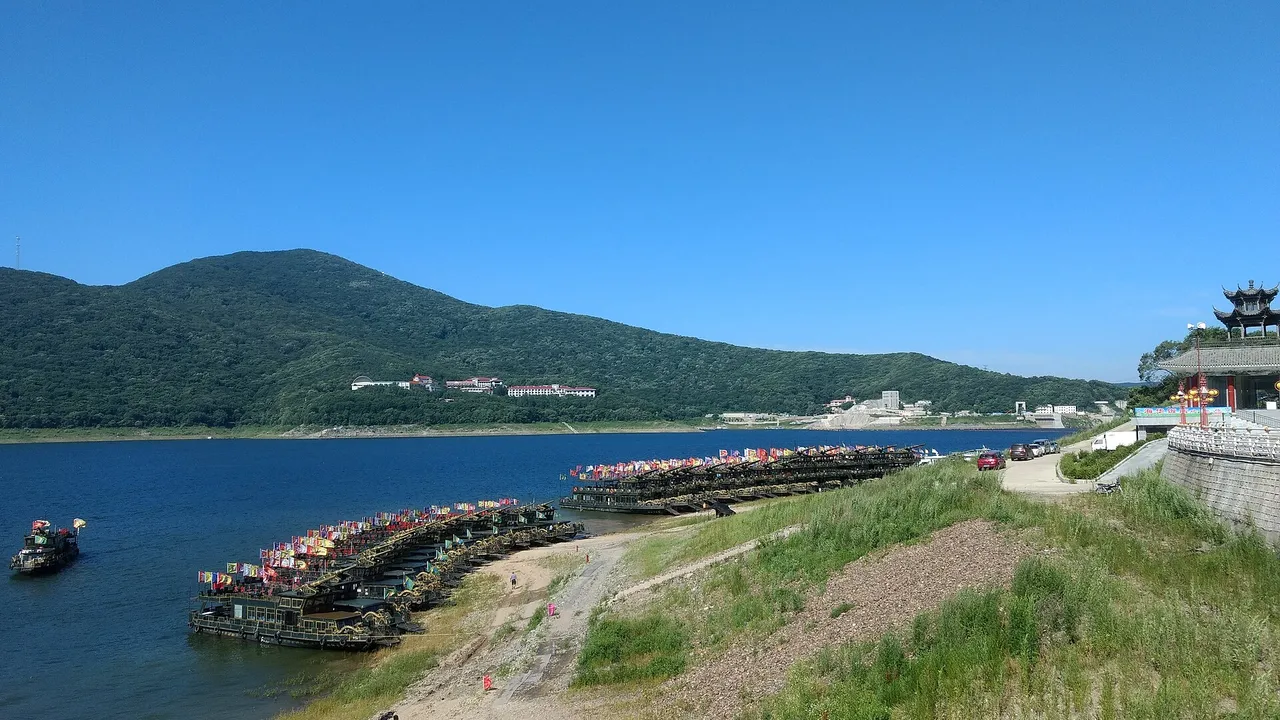
The cruise leaves the pier and works uplake, ridges retiring layer by layer as the surface narrows and widens. From the boat the lake reads as a river still moving, which it once was.
The ten o'clock sailing gets the best light, with complete mountain reflections when calm. Seasick passengers take the stern, calmest and least wind. Boats run two degrees cooler than shore in every season, so add a layer.
Wuhu Island: Noon at the Lake's Heart
Land for lunch and walk the round-island path. The island's high point ranks among the lake's best views: water spreads below while boats drag white wakes across it. The rides target families; for a waterfront itinerary, the lake itself suffices.
Return sailings space out after lunch, so keep the island loop inside ninety minutes. Summer shade is scarce on the island; claim a lakeside chair and wait for the boat slowly.
Vanke Songhua Lake Resort: Lake Views from the Lift
Close the afternoon at the resort: the sightseeing lift tops a ridgeline whose view folds in a corner of Songhua Lake, layering best in evening light. In winter the same lift runs over the ski area, so riding and skiing combine freely.
The summit platform is windy, half an hour at most; the top cafe's window seats shelter the lake view. Descend and return to town, about forty minutes.
Zhuque Hill: The Mountain That Watches Water
Day two opens at Zhuque Hill, whose value is the summit deck: river, town and the lake direction in one frame, yesterday's water system drawn into a single map at your feet. The hill is modest, forty minutes up, and morning light makes the river shine brightest.
The descent runs through woods, so take it slowly; before nine the hill is nearly empty, birdsong and river wind the main soundtrack.
Linjiangmen Bridge and the Embankment: The Water Through Town
Back downtown, walk the embankment downstream from the Linjiangmen bridge section. The bridge marks the river, which flows year-round on the dam's residual warmth, and this reach often frosts on winter mornings. The path strings civic life together: anglers, swimmers, strollers.
Forty minutes to the next bridge completes the urban reach. The waterfront itinerary lives in details: watermark lines, embankment construction, high-tide marks on the piers, the river's growth rings.
The Jilin Confucian Temple: Learning by the River
The temple is the waterfront's cultural node: standing near the river, its siting itself samples civilization living by water. After the embankment it gives concrete form to the idea that the city stands because the river does: wharf, trading quarter, schooling, all growing along the current.
An hour covers the axial sequence and displays. The afternoon temple is nearly empty, cedar shadows shifting with the light, the quietest stretch of the three days.
Rime Island: The Water's Winter Artwork
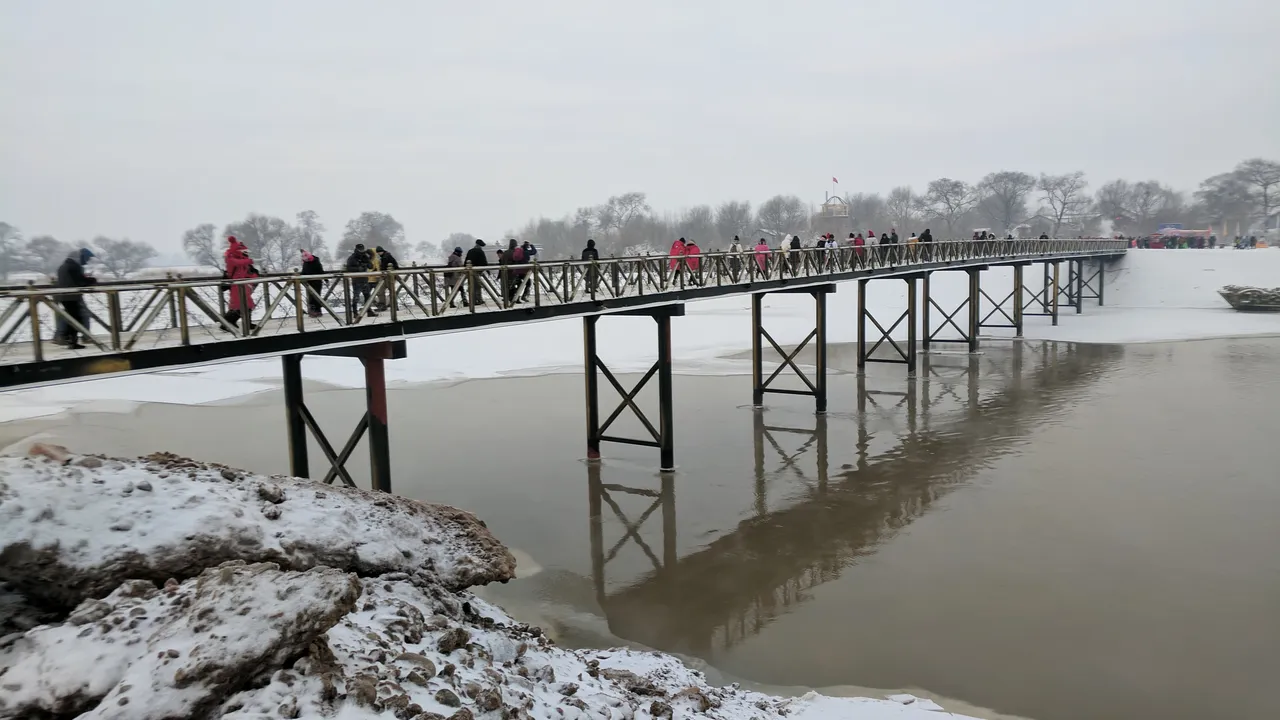
Day three's core comes before dawn: leave at five, reach the Rime Island crossing by 6:30. The island's hoarfrost is the water system's winter artwork, vapor freezing on twigs at first light, silver at its peak around sunrise. For walkers of the previous two days, this scene is the whole waterway's punctuation.
The island ticket includes the ferry, and the viewing window closes by nine; frost sheds as temperatures rise, so watch a full pass and withdraw.
Wula Town: A Manchu Lunch by the Crossing
After the frost, drop into Wula and hand your frozen body to a pot of hot soup: Manchu hotpot or boiled pork in sour cabbage. After lunch walk the old street twenty minutes, reading a riverbank town's layout, for this water system nourishes villages as well as cities.
Closing at Wula makes sense: lake, dam, river bend, crossing, village, the downstream logic walked to its end. An hour back to town, afternoon at rest.
| Getting around |
|
| Budget | About RMB 450-700 pp: tickets, boats and lift total RMB 250-400, with chartering the other main line. |
| Best time | June to September opens the full waterway at lake peak season; December to February is Rime Island's spotlight, two expressions of one water system. |
FAQs
How different are the winter and summer versions of this waterfront line?
Large but both complete: summer opens all sailings with Wuhu and the lift at their best; winter halts cruises, swapping in skiing, lift sightseeing and rime. The dam, embankment and temple hold constant. Choose by taste: water wants summer, ice and snow want winter.
Is three days of chartering expensive?
The lake and island days run RMB 800-1200, with the urban day essentially charter-free. Split across four to six people the per-head cost is low, the best-value play. Solo travelers can switch to group day tours, trading schedule flexibility for price.
What about those prone to seasickness?
Songhua Lake runs calm, and sailings stop in strong wind, so real risk is low; take the big boat's middle deck or stern and fix your gaze on the horizon, not the waves. The anxious can skip the island for a short lake loop or the resort lift's lake view, and the waterfront core survives intact.
How does Rime Island differ from the urban embankment's rime?
The island's open water and tall trees give rime its grandest form, the signature; the urban bank's frost clings to willows and railings inside living scenes with river mist and morning exercisers. On a tight schedule the urban bank suffices; with slack, see both, and the island's spectacle earns the early alarm.