
Seven days opens Jinan differently: no more point-to-point sprinting, but five hands of cards, spring, town, hill, temple, village, one played per day. Two days steep in the springs and lanes, three heading into hills and ancient structures, the last two out to Zhangqiu and the southern valleys, meeting Jinan's other half as a city of mountains and water.
The long game is rhythm: two anchors per day, afternoons deliberately blank, suburban days bunched in the middle four under one charter, and nights split between Quancheng Road and, mid-journey, Changqing or Zhangqiu. Seven days run as a steady pace, not a dash.
Itinerary at a glance
| 08:30 | Day 1, Baotu Spring: Setting the Tone for Seven Days |
| 14:00 | Day 1, Black Tiger Spring and the Spring Pool: The Springs' Street Face |
| 17:30 | Day 1, Daming Lake and Chaoran Tower: The First Lighting |
| 09:00 | Day 2, the Old Lanes All Day: Furong Street to Baihuazhou |
| 13:30 | Day 2, Wangfu Pool and the Confucian Temple: One Loud, One Hushed |
| 09:00 | Day 3, Shandong Museum: The Required Course |
| 14:00 | Day 3, the Old Port and Little Guanghan: Modern Jinan in the Afternoon |
| 08:30 | Day 4, Thousand Buddha Mountain: A Day on the South Hill |
| 14:00 | Day 4, Fohui Hill: The Buddha Head and a Quiet Cliff |
| 08:30 | Day 5, Lingyan Temple: The Hall and Its Song Arhats |
| 13:00 | Day 5, the Pizhi Pagoda and Pagoda Forest: A Song Tower and Its Abbots |
| 08:30 | Day 6, the Four Gate Pagoda: The Oldest Stone Tower and Tang Cliffs |
| 14:30 | Day 6, Mingshui Old Town and Baimai Springs: Zhangqiu's Water |
| 08:30 | Day 7, Zhujia Valley: The Old Village's First Half |
| 13:30 | Day 7, Red Leaf Valley or Jiuru Mountain: The Valleys' Coda |
The route, stop by stop
Day 1, Baotu Spring: Setting the Tone for Seven Days
Deep travel still starts at Baotu Spring, but walks it differently: within two hours, read the Li Qingzhao hall's exhibits properly, then sit ten minutes in a Wanzhu Garden courtyard. The spring's correct use is not a checklist but an answer to why water surfaces everywhere in this city.
After the park, take the trip's first pot of spring-brewed tea at a south-gate teahouse and set the word for the week: slow. Keep the afternoon blank, catch the square fountains at night, and let jet lag and tired legs both settle on day one.
Day 1, Black Tiger Spring and the Spring Pool: The Springs' Street Face
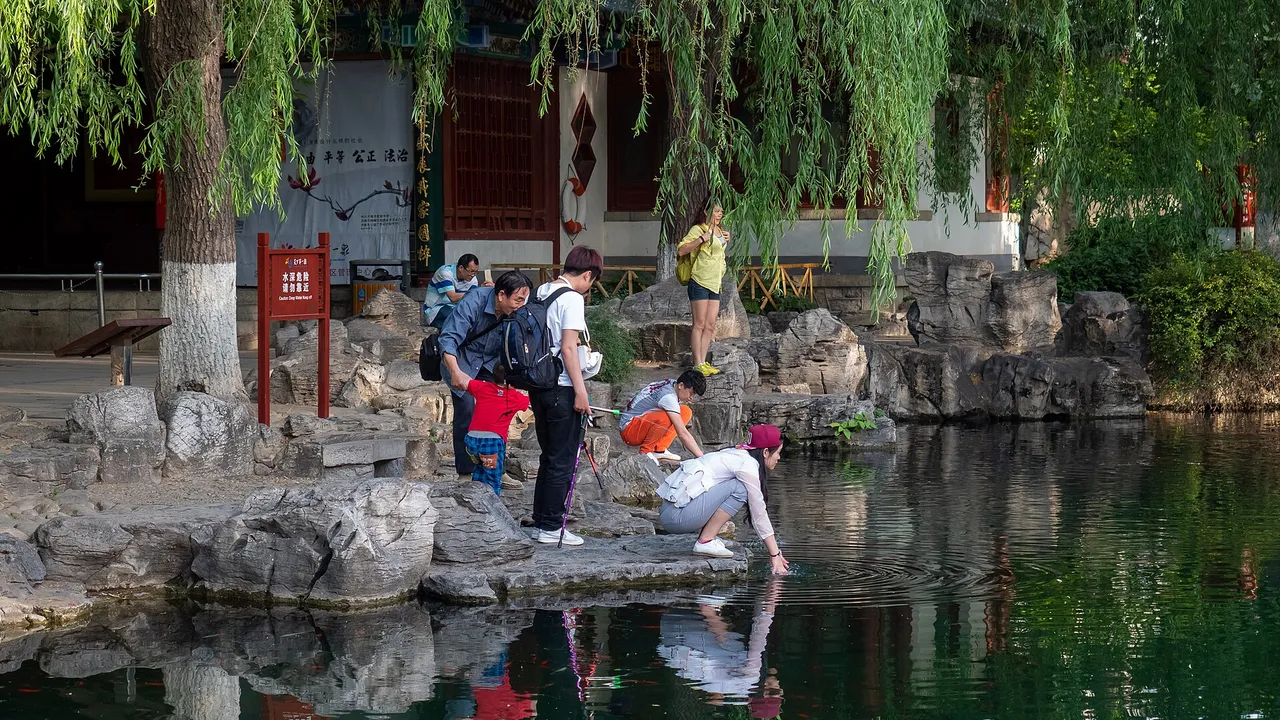
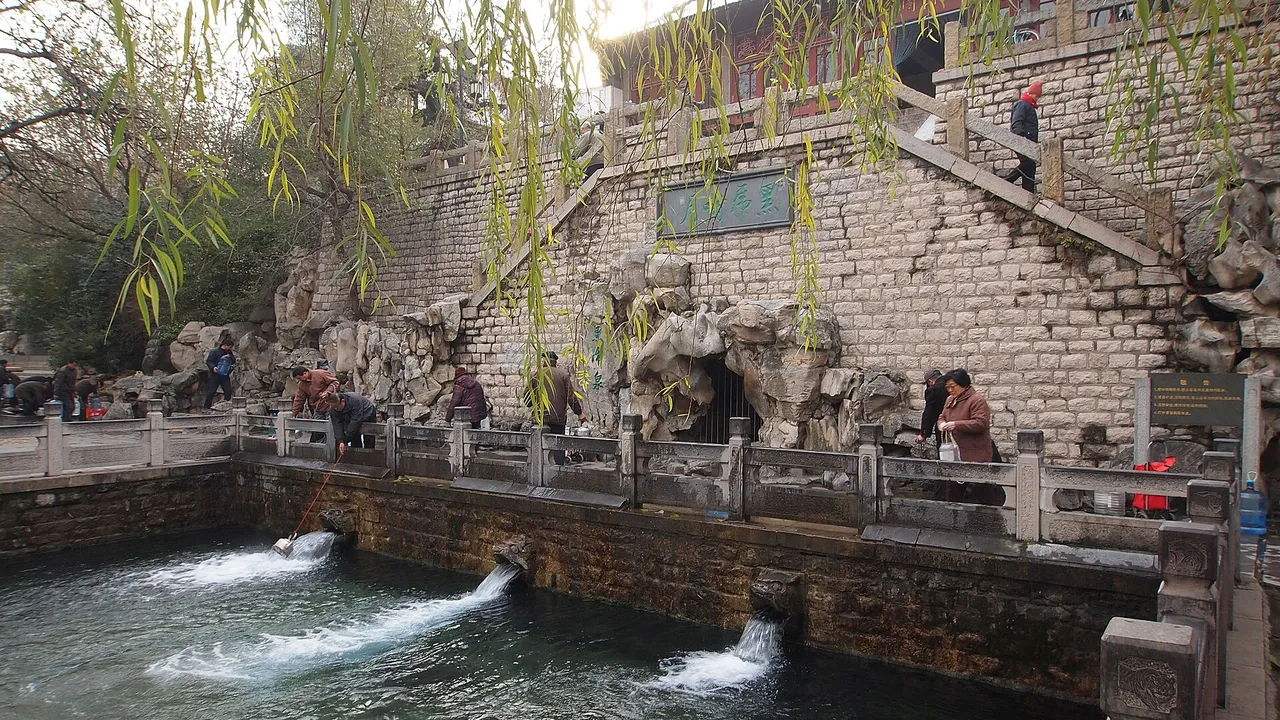
In the afternoon walk the moat to Black Tiger Spring for the pouring heads and the bucket queues; in summer the swimmers below Liberation Pavilion stage the words Spring City as living theater. This stretch rewards repetition, dawn and dusk each with their own humanity.
Dine on the first proper Lu cuisine beside the moat, one dish of the milky cattail casserole or sweet-sour carp; do not spend a week's appetite in one night.
Day 1, Daming Lake and Chaoran Tower: The First Lighting
Enter the lake at dusk and let the tower lighting close day one. You will return to this lake within the week; the first time, just feel it: water, evening wind, and the twenty seconds when the lights climb the tower.
Skip the climb, walk the south shore back to the west gate, and note the spots missed; day five comes back this way. A good first day plants wishes rather than clearing them.
Day 2, the Old Lanes All Day: Furong Street to Baihuazhou
Day two belongs wholly to the old town: morning on Furong Street and its spring, midday tea on Qushuiting, afternoon among Baihuazhou's craft sessions and waterside seats. The route's value is how well it survives repetition, the old town's sheer density of life.
Today's assignment is orientation: trace where each channel runs, which lake it feeds, which spring hides in which courtyard. Your sense of the city after seven days starts in these lanes.
Day 2, Wangfu Pool and the Confucian Temple: One Loud, One Hushed
The afternoon opens loud: swimmers at Wangfu Pool, idlers under Qifeng Bridge. A quarter hour on, the Confucian temple, from the most everyday pool straight into the most upright academy, the contrast itself being one of Jinan's layers.
Sit half an hour in the temple courtyard, then loop back along Xianxi Lane toward your lodging and dinner at Kuanhouli. Day two's theme is living inside the old town, and by tonight the streets start recognizing you.
Day 3, Shandong Museum: The Required Course
The deep version earns three hours: walk the chronological galleries in full, then return to the Han slips and reliefs for detail. Come carrying your questions about Lingyan and the Four Gate Pagoda, the halls answer half of them.
Lunch at the neighboring mall, then shift to the old port. Today's word is foundation: with the artifacts under you, the monuments ahead start showing their craft.
Day 3, the Old Port and Little Guanghan: Modern Jinan in the Afternoon
Give the afternoon a slow pace on Jinger Road: enter Rui Fu Xiang, Hongjitang and the Little Guanghan one by one, living modern history in counters and posters. Rest at a corner cafe; the street's ease suits deep travel.
Dinner in the port district, then the twin towers of Hongjialou Cathedral under night lights. By the end of day three you have touched all four of Jinan's suits: ancient, modern, Chinese and foreign.
Day 4, Thousand Buddha Mountain: A Day on the South Hill
Morning climbs Thousand Buddha Mountain properly: the temple, the carved cliff and the ten-thousand-Buddha cave, then the lake-view pavilion for the city entire. Deep travel walks up from the foot, forty minutes of steps filtering the city's noise away layer by layer.
Lunch at the hill's foot, where the old town begins, and a fifteen-minute taxi returns you downtown. Keep the afternoon blank and sleep early; the mountains start tomorrow.
Day 4, Fohui Hill: The Buddha Head and a Quiet Cliff
The afternoon goes to Fohui east of its famous neighbor, for the Song Buddha head and the Kaiyuan temple site, an order quieter, cliff-cooled, with a half-wild ruined temple, the kind of corner only deep travel reaches.
The pairing teaches by contrast: the famous hill kept and groomed, Fohui half-feral, both faces of Jinan's mountains in one day. Descend for noodles in town, then prep tomorrow's Lingyan homework.
Day 5, Lingyan Temple: The Hall and Its Song Arhats
Day five belongs entirely to Lingyan Temple, an hour by charter into Changqing. Commit the morning to the Thousand Buddha Hall: forty Song painted arhats, taken one by one, until you can tell each one's temperament apart. This is the summit of Chinese clay sculpture, in situ.
Lunch at a farmhouse outside the gate, then the Pizhi Pagoda and the pagoda forest after. The temple's scale deserves the whole day; half a day here equals not coming.
Day 5, the Pizhi Pagoda and Pagoda Forest: A Song Tower and Its Abbots
The afternoon starts at the pagoda's base reliefs, one full circle, then the forest: a hundred-plus stupas holding the evolution of brick-and-stone towers since the Tang. The deep way is choosing five and reading them closely, Tang roundness yielding to Song uprightness, visible to the naked eye.
Toward dusk walk the final ginkgo row; in late autumn it is the most expensive yellow in Shandong. Sleep in Changqing or return downtown as the legs decide, the charter's perk being plans that bend.
Day 6, the Four Gate Pagoda: The Oldest Stone Tower and Tang Cliffs
Day six morning goes to the Shentong ruins in the southern outskirts, covering tower, Dragon-Tiger pagoda and cliff niches. As China's oldest surviving stone Buddhist pagoda, the Four Gate moves by honesty: freed of ornament, structure is the whole story.
Hold yesterday's Song clay against today's Tang carvings and the two high points of Shandong's Buddhist art connect into a line. Farmhouse lunch nearby, then set out for Zhangqiu after.
Day 6, Mingshui Old Town and Baimai Springs: Zhangqiu's Water
Reach the old town by afternoon for springs threading the streets and woks under the hammer, then a waterside pavilion by the Qingzhao garden at dusk to watch Baimai's bead-string wells. Zhangqiu's springs share the vein with downtown but not the temperament: denser, quieter, barely bothered.
Sleep in Mingshui on Zhangqiu mutton soup and scallion pancakes, then walk the old town's night, arch reflections its signature frame.
Day 7, Zhujia Valley: The Old Village's First Half
The last day starts from Mingshui, half an hour to Zhujia Valley. Four hundred years of stone lanes, the double-track bridge, the pavilion and the old school explain how a mountain village studied and lived; the week's final step, from city to countryside, lands here.
Two hours in the lanes, farmhouse lunch at midday. A deep trip should end not at an airport or a mall but somewhere that explains the six days before it, and Zhujia Valley earns that role.
Day 7, Red Leaf Valley or Jiuru Mountain: The Valleys' Coda
Cross the hills from Zhangqiu back toward Yingxi and give the afternoon to one of the two valleys: Red Leaf Valley in autumn color, or Jiuru for waterfalls and timber paths. Ending the week inside a valley lets the journey close to the sound of water and shadow of trees.
The tourist road runs back into Jinan by evening, and the week closes its last page on wheels: springs, old town, museum, Buddha hills, a Song temple, a Sui pagoda, an old village, a green valley, one complete map.
| Getting around |
|
| Budget | Tickets RMB 350-420 in all; three charter days average RMB 400-500 pp shared; meals and lodging RMB 150-300 daily; RMB 2500-3500 per person overall, excluding long-distance transport. |
| Best time | September-October is the year's ceiling: full springs, cooling hills, first red leaves; late spring blossoms run second; winter works but the hill days shrink. |
FAQs
Is seven days too long? Can Jinan really sustain it?
It sustains, if you accept what deep means: two anchors a day, blank afternoons, the city split into spring, town, hill, temple and village taken slowly. Stuff four sights into every day and fatigue arrives by day five; the comfortable seven-day version actually sees more than a rushed three.
Is chartering mandatory for the suburban days, and what on a tight budget?
No, but it is the least effortful. Substitutes exist: bus transfers reach Lingyan, taxis reach the Four Gate Pagoda, and trains and coaches run to Zhangqiu. On a tight budget cut one charter day and keep Lingyan, the one unsubstitutable suburban stop. Three continuous days run seven to eight hundred yuan, fair split three ways.
How should lodging be arranged for the week?
Four fixed nights at Quancheng Road plus two flexible works best: no bed changes early in the week; decide night five by tiredness, Changqing or back downtown; and take night six in Mingshui to save an hour on day seven. Pick hotels near bus hubs, and confirm luggage storage by phone when booking.
Which month is truly best for seven days?
Early-to-mid October solves the year: springs near their fullest, hills turning, Lingyan's ginkgoes on the verge, and the air at its kindest. Mid-to-late September runs second, and in early years the leaves arrive by month's end. Dodge the Golden Week itself, whose crowds cancel any seasonal advantage.