
The old town's secret is that the springs are not attractions but infrastructure: they pass under courtyard walls, gather into open channels at street corners, host swimmers at Wangfu Pool and chill watermelons under Qifeng Bridge. This route covers five or six unhurried kilometers and a full day spent watching the old phrase about springs in every courtyard come true.
Start on Furong Street to warm up in the crowd, then slip into Qushuiting Street and Baihuazhou as the pace slows; give the afternoon to the living courtyards around Wangfu Pool and Qifeng Bridge, and close between the Confucian temple and Kuanhouli. Everything is free; teahouses and snacks punctuate the walk.
Itinerary at a glance
| 09:00 | Furong Street and Furong Spring: The Loudest Hour of the Morning |
| 10:30 | Qushuiting Street and Baihuazhou: Springs at Every Doorstep |
| 13:00 | Wangfu Pool and Qifeng Bridge: Daily Life on a Spring Pool |
| 16:00 | The Confucian Temple and Kuanhouli: From Old Academy to New Quarter |
The route, stop by stop
Furong Street and Furong Spring: The Loudest Hour of the Morning
Furong Street at nine is more itself than at noon: shops still rolling up their boards, residents cycling through the narrow lane for breakfast. This was always a mixed living-and-trading lane, and morning shows its true face. Midway along, at the west wall, sits Furong Spring, a small stone-railed pool of remarkably cold clear water worth finding on purpose.
The street mouth at this hour solves breakfast: millet porridge, pastry spirals and tofu pudding all have veteran stalls. Tour groups flood in after 9:30, so shoot empty frames before nine and eat early, ahead of the crowd.
Qushuiting Street and Baihuazhou: Springs at Every Doorstep
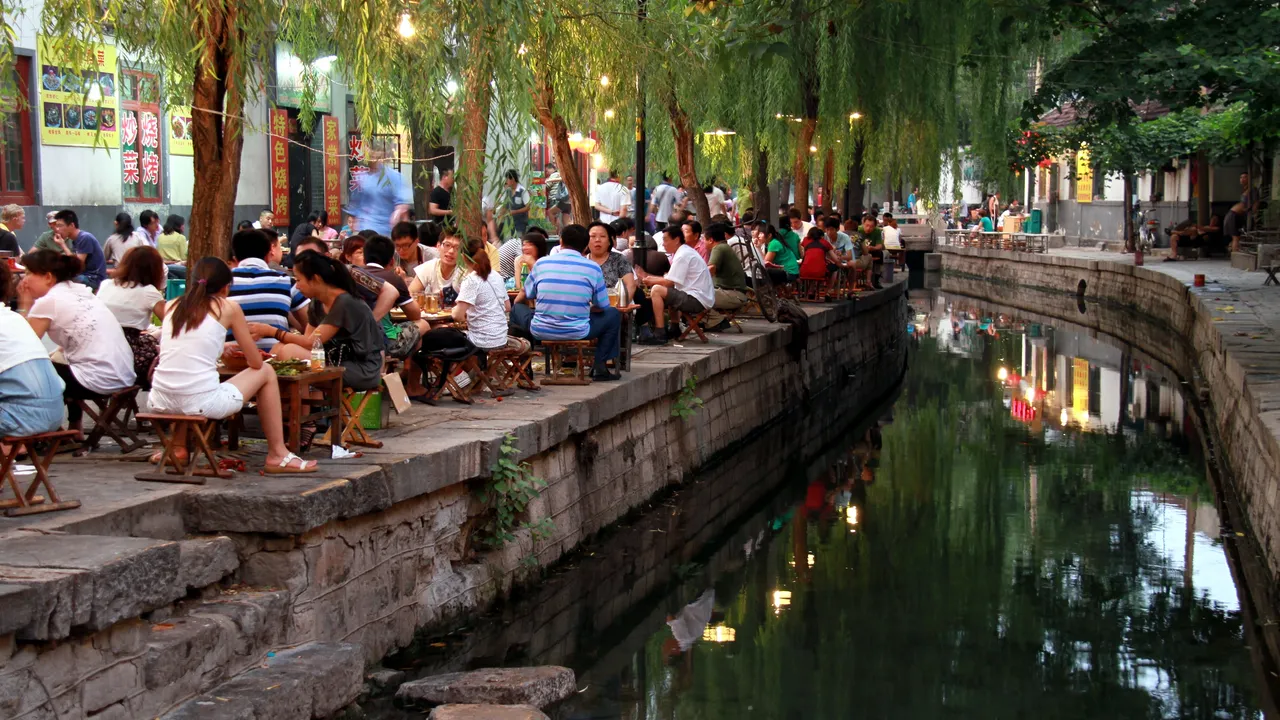
Qushuiting Street is the old town's calling card: a living channel of spring water runs the length of it, flanked by grey-tiled houses where residents still rinse rice and laundry at the water's edge. The pavilion that named the street is long gone; the flow remains. At its south end spreads Baihuazhou, a marshy pool where the water system meets the Ming city wall remains.
Walk this stretch slowly: old courtyards behind doorways, rope grooves worn into wellheads, cats sunning by the channel. Around Baihuazhou, heritage craft courtyards run standing sessions in cloisonne and spring-water tofu, worth a seated half hour if time allows.
Wangfu Pool and Qifeng Bridge: Daily Life on a Spring Pool
Wangfu Pool is the route's most theatrical stop: a spring pool set in the middle of a residential block where locals swim in summer while neighbors and spectators line the stone rim. It was once the private spring of a Ming princely estate; today it is the city's most public living room, with no ticket and no gatekeeper.
A few steps north stands Qifeng Bridge, a small stone span under which spring water threads through courtyards and chills watermelons in summer. The Hozaimen lanes around it mix old houses with craft studios; when legs tire, pick a waterside teahouse and let the sound of running water do the talking.
The Confucian Temple and Kuanhouli: From Old Academy to New Quarter
The Confucian temple hides in the old town's northeast: founded in the Song dynasty and rebuilt across the centuries, its Great Hall ranks among the larger temple halls of northern prefecture cities. Ancient cypresses fill the courtyard, and even the pan pool draws spring water. Crowds are rare here, a place in the old town where you can hear your own footsteps.
A fifteen-minute walk brings you to Kuanhouli, a rebuilt lanes quarter at its liveliest at dusk: snacks, teahouses, bars and design shops packed together, ending the old-town day on a bright note. One stop hushed, one loud, the day keeps its layers.
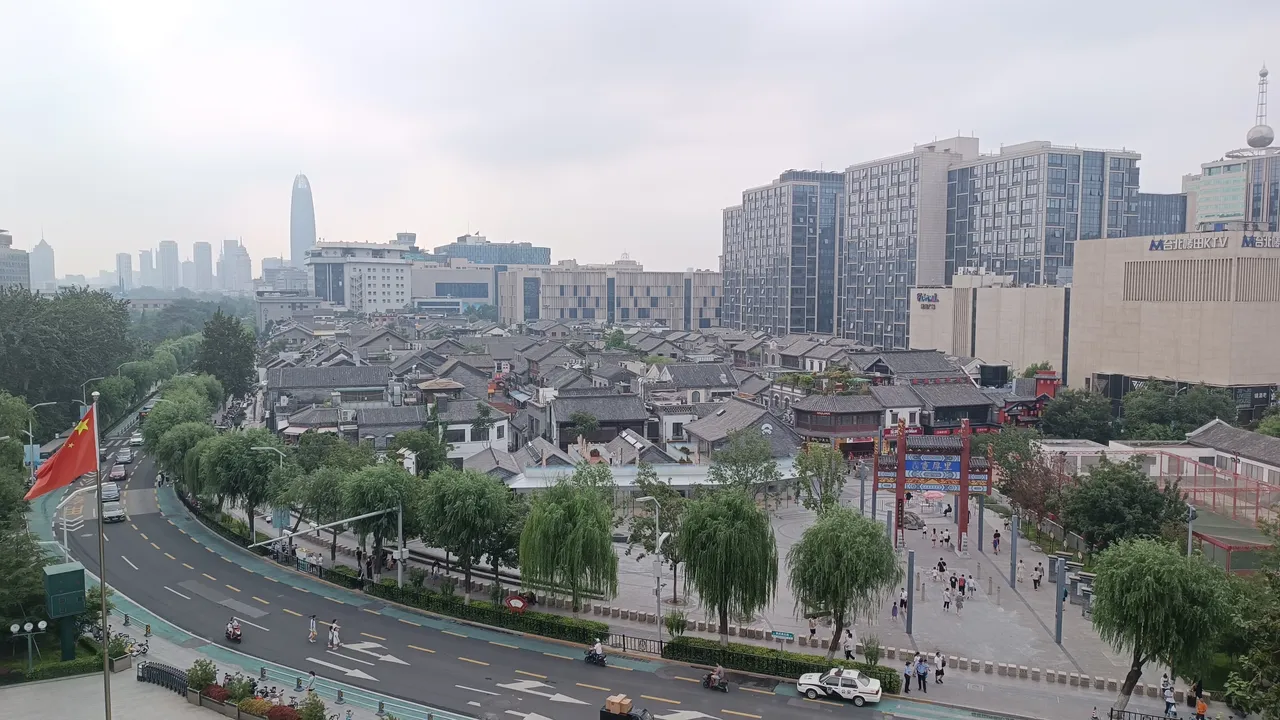
| Getting around |
|
| Budget | Essentially ticket-free; budget RMB 60-120 pp for food and tea, plus RMB 40-80 if a pot of spring-water tea tempts you. |
| Best time | Year-round, best in spring and autumn; weekday mornings keep the lanes quiet, while weekend Furong Street needs off-peak timing. |
FAQs
Does this citywalk route need any tickets?
Essentially none: Furong Street, Qushuiting Street, Wangfu Pool and Qifeng Bridge are all free, the Confucian temple is free or charges a few yuan for upkeep, and Kuanhouli is an open quarter. Your spending goes to teahouses and snacks, and fifty to sixty yuan per person eats very well.
Is this walk manageable for seniors?
At five to six kilometers with teahouse breaks between stretches, the effort is modest. The taxing part is Furong Street's crowds, easily bypassed via Xianxi Lane. The slick flagstones around Wangfu Pool call for grip-soled shoes and a steady arm; the temple and Baihuazhou both have benches.
When does the old town look its best?
Two windows shine: Furong Street before 9 am for market life, and Qushuiting Street after the lamps come on for water reflecting light. Midday sun and tour groups argue for hiding in a teahouse or the temple; step back out after three to keep walking.
Any etiquette for photographing by the spring channels?
Three rules: greet residents washing or drawing water before raising the camera, since most oblige but resent being snapped unaware; avoid low angles on the slick channel rims, falling in is both dangerous and undignified; and the swimmers at Wangfu Pool are daily life, not a show, so ask before portraits.