
The hills of Jinan live in the shadow of its springs, yet half the scenery hides south of the city and out toward Zhangqiu: Sui-dynasty carvings on Thousand Buddha Mountain, the giant Buddha head on Fohui's cliff, waterfalls and red leaves in the southern valleys, and by the Yellow River the hill of Huabuzhu, painted with Que Mountain by Zhao Mengfu eight hundred years ago in his Autumn Colors on the Que and Hua hills.
Three days run near to far: day one warms up on the two city hills, day two charters west to the Yingxi area for Red Leaf Valley and Jiuru Mountain in one push, and day three finds the painting's real scene at Huashan Lake wetland before returning downtown. Mountain buses run thin, so charter or self-drive is the right call.
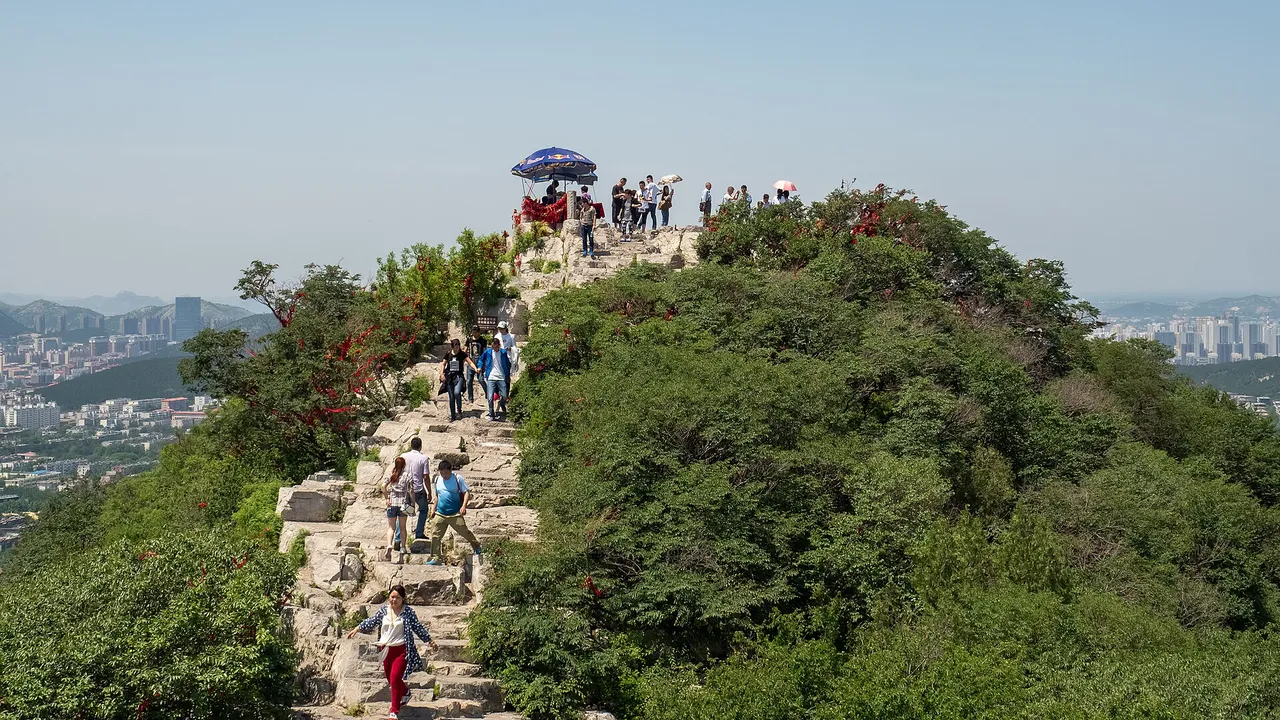
Itinerary at a glance
| 09:00 | Day 1, Thousand Buddha Mountain: Xingguo Temple and the Carved Cliff |
| 14:00 | Day 1, Fohui Hill: The Great Buddha Head and the Kaiyuan Temple Site |
| 18:00 | Day 1, Evening at Daming Lake: A Soft Landing |
| 08:00 | Day 2, Red Leaf Valley: A Valley Painted in Smoke Tree |
| 13:30 | Day 2, Jiuru Mountain: Waterfall Clusters and Cliffside Paths |
| 19:00 | Day 2, Qixingtai: Stars from the Ridge |
| 09:00 | Day 3, Huashan Lake and Mount Huabuzhu: The Painting's Own Scene |
| 14:00 | Day 3, Que Mountain: The Other Half Across the Yellow River |
| 17:30 | Day 3, Back in Town: A Farewell Walk on the Ring Park |
The route, stop by stop
Day 1, Thousand Buddha Mountain: Xingguo Temple and the Carved Cliff
Thousand Buddha Mountain concentrates its sights in one sweep around Xingguo Temple: the Sui-dynasty cliff images above the courtyard, repaired but legible, and the layered niches inside the Paradise and Dragon Spring grottoes. Morning wind runs cool and clean, and the shaded steps reach the temple in half an hour.
Beyond the temple, follow the ridge to the chrysanthemum pavilion or the lake-view pavilion: rolling hills to the south, the city spreading north. In autumn the chrysanthemum show at the foot and the red leaves above share the same day, two autumns for one climb.
Day 1, Fohui Hill: The Great Buddha Head and the Kaiyuan Temple Site
Fohui Hill stands east of Thousand Buddha Mountain, its cliff carrying a Song-dynasty Buddha head nearly eight meters tall, the largest stone carving in Jinan; locals simply call it the Big Buddha Head, visible at a glance from afar. The trail branches off the greenway at the foot, a forty-minute walk.
The Kaiyuan temple site midway keeps only its hall foundations and cliff inscriptions, and the mix of tall grass and worn steps has its own mood. Crowds run an order thinner than next door, the right place to sit quietly with the hills and the city.
Day 1, Evening at Daming Lake: A Soft Landing
After the hills, hand your legs back to flat ground: the lake path is step-free, and the water sits quieter than by day. The lighting of Chaoran Tower plays nightly, after which the south shore carries you slowly toward the west gate.
With real elevation in the legs by now, eat near the lake's southwest gate, a milky casserole of cattail restoring salt and strength together.
Day 2, Red Leaf Valley: A Valley Painted in Smoke Tree
Red Leaf Valley sits in the Yingxi area southeast of Jinan, its signature massed smoke trees turning from green to flame-red from late October, the whole valley appearing lit from within. Sections around the autumn lake, the lovers' valley and the European-style garden follow the water on boardwalks, effort optional.
Off-season has its own charm: yellow forsythia in spring, dense shade and running streams in summer. Arrive early, since tour coaches land after ten and the boardwalks jam.
Day 2, Jiuru Mountain: Waterfall Clusters and Cliffside Paths
Jiuru Mountain is the heavyweight of Jinan's hill routes: waterfall on waterfall through a gorge, fullest after the rains, with timber paths climbing the cliff walls, four to five hours for the complete circuit. Short on time, walk to the mid-mountain cascade cluster and turn back; the essence lives by the water.
Hillside lodges and a cliffside coffee spot invite a seated break, watching streams pass under the walkway overhead. Overnight guests get the hidden perk of the southern valleys: stars after dark.
Day 2, Qixingtai: Stars from the Ridge
Qixingtai sits on high ridges where Zhangqiu meets Licheng, the region's known star-watching spot: high ground, little light pollution, and a Milky Way visible to the naked eye on clear nights. Observing platforms and campsites dot the top, with a hotel for the unprepared.
Even without staying over, a look at the stars before the drive down to Yingxi or the city works, though mountain night bends demand slow speeds. The silence here and the day's roaring waterfalls make perfect bookends.
Day 3, Huashan Lake and Mount Huabuzhu: The Painting's Own Scene
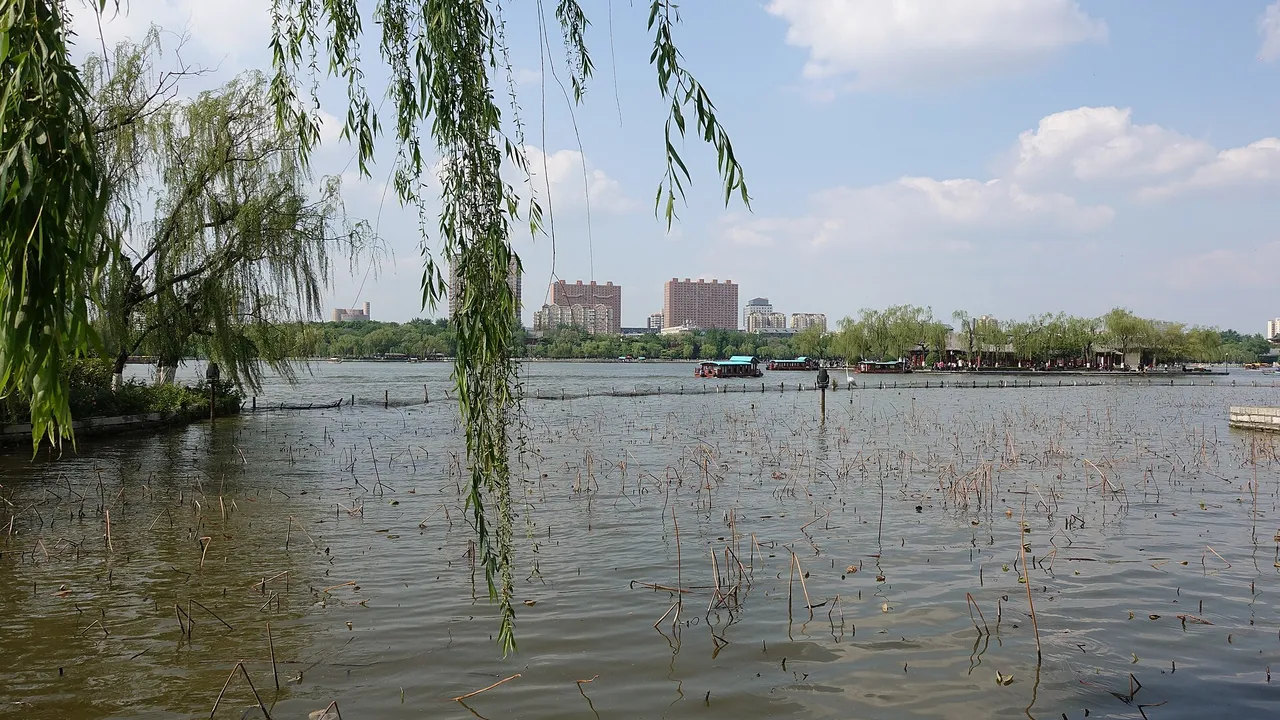
The Huashan Lake wetland lies in northeast Jinan, with Mount Huabuzhu rising from the water, one of the two protagonists of Zhao Mengfu's Yuan-dynasty Autumn Colors; with the lake restored, the view from the ring path sits startlingly close to the painting.
A lake circuit takes about an hour, and the hill itself, modest, climbs in forty minutes to a summit platform looking wider than the lakeshore over the river and city. Spring flowers and golden autumn reeds each rewrite the photograph.
Day 3, Que Mountain: The Other Half Across the Yellow River
Across the Yellow River rises Que Mountain, the painting's other half, facing Huabuzhu over the water. Lower and gentler, it scatters boulders across the top, with riverside villages and jujube groves below; from the summit the Yellow River reads as a thin band to the north.
Visitors thin out further here, mostly local cyclists and photographers. Seeing both hills completes the nature loop: morning spent looking at the painted hills from the lake, afternoon standing inside the other half of the frame.
Day 3, Back in Town: A Farewell Walk on the Ring Park
Back downtown, give the last steps to the ring park: from Liberation Pavilion along the moat to Black Tiger Spring, watching the water-drawers pack up and the last swimmers climb out of the spring pool.
Three days of hills and water converge on this path: the moat's water comes from the underground spring system, and every hill you climbed feeds it. A cup of tea at the spring's edge ends the three days properly.
| Getting around |
|
| Budget | Tickets total roughly RMB 150-200 (Thousand Buddha Mountain, Red Leaf Valley, Jiuru Mountain); shared charter over two out-of-town days averages RMB 300-400 pp before meals and lodging. |
| Best time | Late spring blossoms and the October-November red leaves are the two peaks; Jiuru's waterfalls run fullest after the rains, and winter argues for shorter hill days. |
FAQs
Can Red Leaf Valley and Jiuru Mountain fit in one day?
Yes, with subtraction: two hours around the autumn lake core suffices for Red Leaf Valley, then Jiuru to the mid-mountain cascades and back, saving the full circuit for another trip. Forty minutes' drive separates them, lunch at a farmhouse en route, and the day holds together without drama.
Do the hill routes need ticket reservations?
Thousand Buddha Mountain sells on site. Red Leaf Valley caps and books peak autumn weekends but sells walk-up otherwise and on weekdays; Jiuru Mountain is fine on weekdays and worth pre-booking on holidays; Fohui, Que and Huashan Lake are free. Verify each on the official accounts before setting out.
How do I reach the southern valleys without a car?
Buses fall short, so charter or rideshare: a day charter toward Yingxi runs two to three hundred yuan, reasonable split among two or three. Seasonal tourist through-buses operate from downtown, check schedules ahead. Taxis can drive in, but hailing back is hard; arrange a wait or keep the driver's number.
Which hill route suits families with kids?
Start with Thousand Buddha Mountain: mature steps, a cableway for tired legs, open temple grounds, a two-hour loop. Red Leaf Valley's flat boardwalks also suit children, with fallen leaves to collect in autumn. Jiuru's long climbs fit ages ten and up; Que Mountain's unguarded rocks and scree mean hand-holding throughout for little ones.