
Jinan's country routes run two directions: east, Zhangqiu keeps the spring-fed Mingshui Old Town and Baimai Springs, home waters of the poet Li Qingzhao, with the four-hundred-year village of Zhujia Valley in its hills, the on-screen home of the famous television emigrants. South, the high villages around Yingxi are the city's own summer back garden.
Three days split into old town, old village and high village: day one in Zhangqiu, day two at Zhujia Valley with stars at Qixingtai, day three from Bashuoquan village past the Jinxiuchuan reservoir, back to town by evening. Hill lodging is plain but clean; book ahead rather than arrive hunting.
Itinerary at a glance
| 09:30 | Day 1, Mingshui Old Town: A New Quarter on Living Springs |
| 13:30 | Day 1, Baimai Springs and Li Qingzhao's Residence: Where the Lyrics Began |
| 16:00 | Day 1, Zhangqiu Evening: Night in Mingshui |
| 08:30 | Day 2, Entering Zhujia Valley: Flagstone Lane and the Double-Track Bridge |
| 10:30 | Day 2, the Wenchang Pavilion and Old Village School: The Village's Upper Half |
| 14:30 | Day 2, Qixingtai: Ridge, Sea of Clouds and Stars |
| 09:00 | Day 3, Bashuoquan Village: The Highest Village Around |
| 13:30 | Day 3, Jinxiuchuan Reservoir: A Mirror in the Valley |
| 15:30 | Day 3, Jiuru Mountain: One Last Stretch of Green Before the Road Home |
The route, stop by stop
Day 1, Mingshui Old Town: A New Quarter on Living Springs
Mingshui Old Town rises on the Baimai spring system at Zhangqiu, grey brick lanes with spring water threading the quarter, larger in scale than expected. It restores the layout of the old Mingshui market town: water and streets by day, a second face after the lamps come on.
Working displays of smithing and dyeing run through the quarter, with the Zhangqiu iron-wok forge on site; watch what thirty-six thousand hammer blows do to a pan. Take a Zhangqiu-flavored lunch before moving on.
Day 1, Baimai Springs and Li Qingzhao's Residence: Where the Lyrics Began
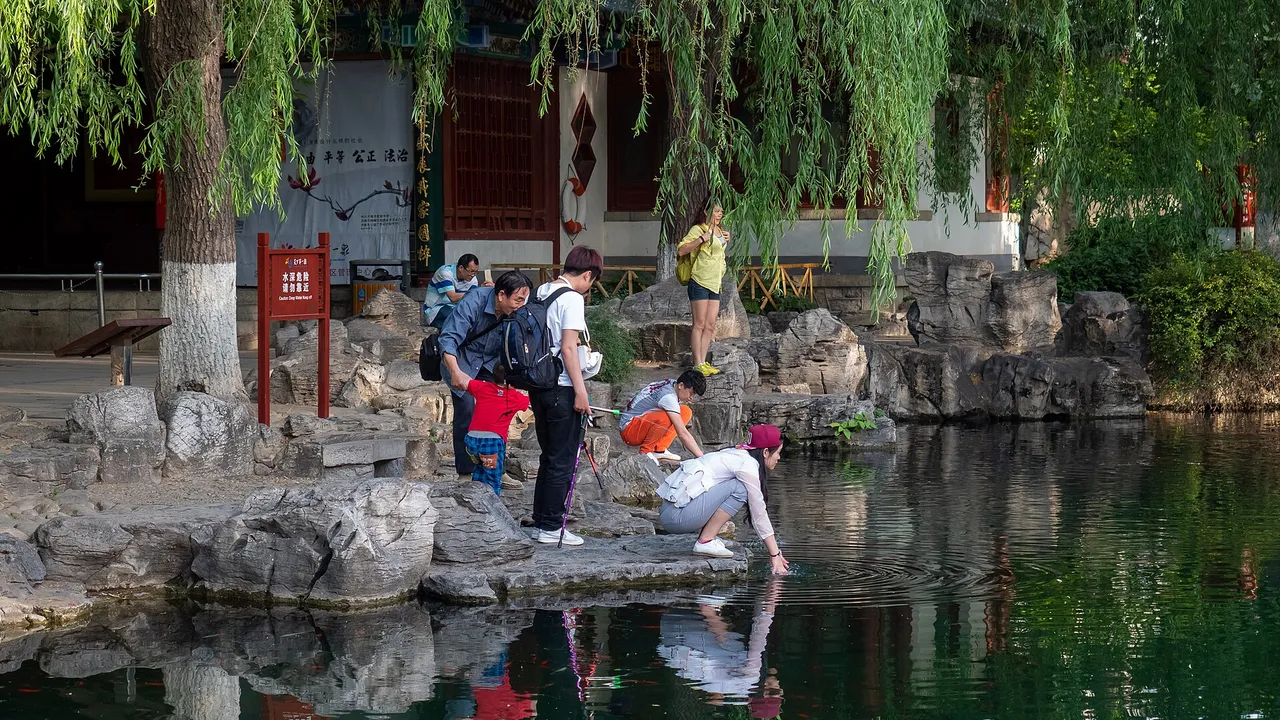
Baimai Springs park adjoins the old town: the spring wells up in dense strings of beads, while the Ink Spring boils black, said to mark where the water table met a coal seam. The Qingzhao Garden inside honors the greatest of women poets, a daughter of Zhangqiu.
Compared with Baotu Spring downtown, the crowds run an order thinner and the pools invite sitting. Read two lines of her lyrics by the water and the famous line about dusk at the riverside pavilion turns concrete.
Day 1, Zhangqiu Evening: Night in Mingshui
Stay the night in Mingshui town or by the old quarter; dinner belongs to the locals' mutton soup shops and pancake stalls, the soup salty, milky and thick, the pancake-and-scallion roll the very scene from the television epic, eaten here at its source.
The old town's night show peaks an hour after lighting, lamp reflections pairing with arches and water; walk back slowly and bank the energy for tomorrow's hills.
Day 2, Entering Zhujia Valley: Flagstone Lane and the Double-Track Bridge
Zhujia Valley folds into the hills of Guanzhuang, Zhangqiu, founded in the Ming, its stone lanes, bridges and houses climbing the slope. The television epic Journey to the Northeast filmed here; the hero's home village is exactly this flagstone lane. Start at the entrance's double-track stone bridge, its divided lanes decades ahead of their time.
Climb the main alley slowly: wall coursing shifts with the grade, and courtyard gates carry their own logic of threshold. The village is small, but four hundred years of feet have polished every flag; this is a place to set your pace to its slowest.
Day 2, the Wenchang Pavilion and Old Village School: The Village's Upper Half
The alley tops out at the Wenchang pavilion and the old village school, the settlement's two public hearts: one keeping the literary line, the other the schooling, a four-hundred-year village setting its faith in books into stone.
The schoolroom keeps its old layout, blackboard and benches all one size smaller than today's; stand at the window and hear mountain children at morning reading. The pavilion climbs, and the view back down the stone lane frames beautifully.
Day 2, Qixingtai: Ridge, Sea of Clouds and Stars
From Zhujia Valley drop south to Qixingtai, a seven-hundred-meter ridge carrying Qi Great Wall ruins, the martial gate and star platforms; when the sea of clouds rises from the valleys at dusk, the local nickname of dwellers in the sky explains itself.
Staying for stars is the point: on clear nights the Milky Way shows to the naked eye under near-zero light pollution. Camp or hotel on top, or watch the show and descend to sleep in Yingxi on a budget.
Day 3, Bashuoquan Village: The Highest Village Around
Bashuoquan sits high above Yingxi, its name from a Tang legend, the old village spring still running. High altitude keeps summers cool, and hillside lodges have made it the city's weekend retreat.
Walk half an hour: the old spring, ancient trees, stone courtyard walls, ridgelines stacking into the distance. The tempo here is stillness, the right way to let three country days ease to a close.
Day 3, Jinxiuchuan Reservoir: A Mirror in the Valley
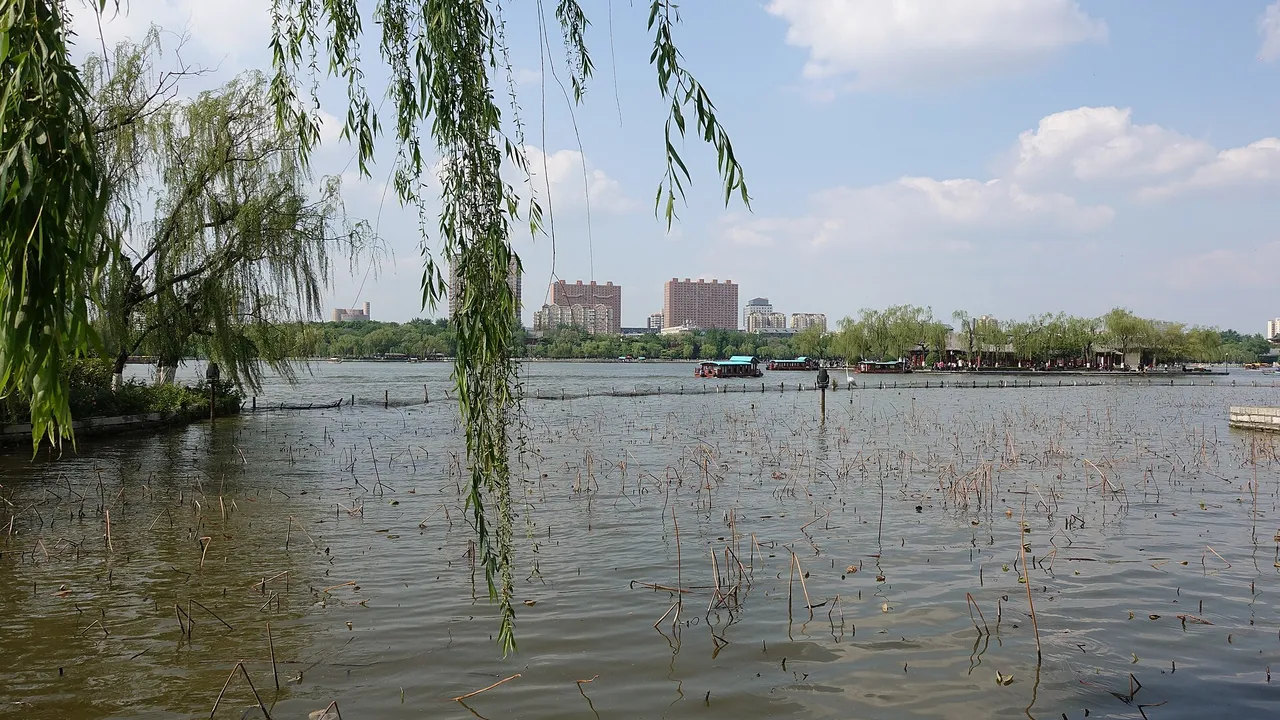
The descent passes the Jinxiuchuan reservoir, water spread wide through the valley, improbably blue on clear days. The ring road suits slow driving or cycling, and farmhouses at the bridge serve the two local classics, fried prickly-ash leaves and reservoir fish stew.
Eat at the water's edge, mountain shadows dropping into the lake, more restorative than any platform. After lunch the provincial road carries you back to town, forty minutes from hill village to spring city.
Day 3, Jiuru Mountain: One Last Stretch of Green Before the Road Home
Deeper past the reservoir lies Jiuru Mountain; with time in hand, walk a short loop: waterfall on waterfall up a gorge, timber paths climbing beside the noise, turning back at the mid-mountain cascades, an hour and change, neatly contained.
Water is the right note to end on: the old town's springs, the reservoir's stillness, and now Jiuru's motion, three waters closing the account of this greener half of Jinan. The provincial road runs you home, downtown by the fountains after dark.
| Getting around |
|
| Budget | Tickets RMB 100-150; two nights of farmhouse and hillside lodging RMB 150-400 a night; charter or self-drive transport RMB 100-150 pp. |
| Best time | May-June and September-October bring cool hills; autumn dries harvest crops in the old villages as valley leaves turn, the richest pictures. |
FAQs
Is Mingshui Old Town worth the trip, or just a rebuilt fake?
It is newly built, but on genuine springs and the old town's layout: Baimai and the Ink Spring are real monuments, and the wok forge and craft displays truly operate. Treat it as a spring-themed heritage quarter rather than a millennium site and the experience delivers; the water itself is beyond complaint.
Does Zhujia Valley suit seniors and children?
Yes, within limits: the main lane's gentle slopes and steps run two hours end to end, long for elders, so turn back at the Wenchang pavilion. Children take to the stone bridge and the old school, all safely walkable. Village food is simple, pack snacks, and after rain the slick flags call for a steadying arm.
What preparation does stargazing at Qixingtai need?
Three things: check the moon and aim for the few days around new moon; bring warm layers and hot drinks, nights often below ten degrees; and use a red torch or red-filtered phone, since white light wrecks everyone's night vision. Book campsites ahead; day-trippers park at the platform lot.
What is hill-country lodging like?
Hill lodges have upgraded fast: private baths and hot water are standard, weekend prices about fifty percent up. Benchmark against a clean mountain stay, not a city hotel. If damp or insects worry you, pick newly renovated rooms and check the window screens first, since bugs track the season.