
Jinan's heritage register carries more weight than expected: Lingyan Temple ranks with Guoqing, Qixia and Yuquan as one of the four great temples within the seas, and the forty painted arhats in its Thousand Buddha Hall were praised by Liang Sicheng as the finest sculptures in the realm. Outside town, the Four Gate Pagoda is the oldest surviving stone Buddhist pagoda in China, a Sui-dynasty object standing in open fields.
Three days spread the driving: day one inside the city for the Han slips and the old port, day two entirely for Lingyan, day three morning at the Four Gate Pagoda and afternoon back downtown for the Confucian temple and the lit tower. Neither suburban site has rail access, so charter or self-drive stays the safe call.
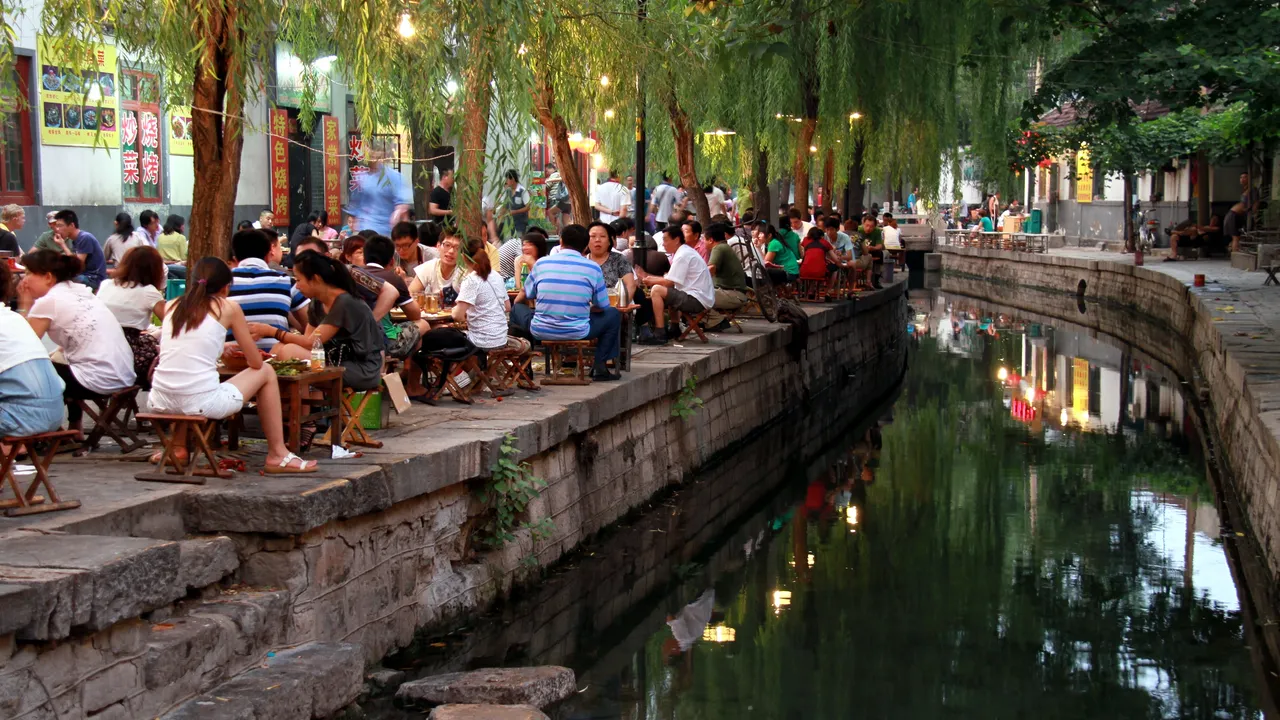
Itinerary at a glance
| 09:00 | Day 1, Shandong Museum: Starting with the Bamboo |
| 13:30 | Day 1, the Old Commercial Port: A Century of Facades |
| 17:00 | Day 1, Hongjialou Cathedral: Gothic Twins at Dusk |
| 08:30 | Day 2, Lingyan Temple: The Song Arhats of the Thousand Buddha Hall |
| 11:00 | Day 2, the Pizhi Pagoda: Song Brick and Its Reliefs |
| 13:30 | Day 2, Lingyan's Pagoda Forest and Fangshan: The Afternoon Loop |
| 08:30 | Day 3, the Four Gate Pagoda: China's Oldest Stone Pagoda |
| 10:30 | Day 3, the Dragon-Tiger Pagoda and Cliff Carvings: Tang Stonework in Situ |
| 14:00 | Day 3, the Confucian Temple: Back Among the Song and Ming |
| 17:30 | Day 3, the Lighting of Chaoran Tower: Heritage in Present Tense |
The route, stop by stop
Day 1, Shandong Museum: Starting with the Bamboo
Starting at the museum is the right first lesson: the Yinqueshan Han slips, the physical bamboo of both Art of War texts, the eggshell pottery and the pictorial reliefs lay out two thousand years of Shandong's mainstream, so the real monuments later arrive with context attached.
Work the second-floor chronological gallery in order, lingering at the slips and the relief halls. Rent the audio guide; without it, relief stones read as plain rock.
Day 1, the Old Commercial Port: A Century of Facades
After lunch walk Jinger Road through the old port: the Rui Fu Xiang facade, the Hongjitang counter, the walls of the Little Guanghan cinema, the commercial architecture of the self-opened port era better preserved than expected. The block's formula of Chinese storefronts on Western bones rewards building-by-building attention.
Three details carry the reading: the firm names cut into lintels, the Western moldings on the gables, the Chinese timber frames in the courtyards. Those threads on one street are physical proof that Jinan opened its port by choice rather than treaty, the reason this district holds a distinct place in modern Chinese urban history.
Day 1, Hongjialou Cathedral: Gothic Twins at Dusk
At dusk move to Hongjialou Cathedral, completed in 1901 and among the largest Gothic churches in north China, twin towers standing beside the old Shandong University campus, most photogenic in side light at sunset.
Circle the stonework: the rose window, flying buttresses and tapering spires are orthodox Gothic vocabulary, yet the masons were local craftsmen, and their hand shows in the coursing. During open hours you may slip inside and sit a while.
Day 2, Lingyan Temple: The Song Arhats of the Thousand Buddha Hall
Lingyan Temple hides in the foothills of Mount Tai in Changqing; through the gate, head straight to the Thousand Buddha Hall, where forty painted arhats, mostly Song originals, each hold a distinct expression, gesture and drape of robe. Liang Sicheng ranked them the finest sculptures within the seas. Stand slowly inside: the arhats look back.
The craft lives in detail: one knits his brow as if enduring pain, another folds his hands in absorption, and the robe folds fall with real weight, clay persuaded to carry cloth. One full circuit takes twenty minutes at least; every angle offers a new face.
Day 2, the Pizhi Pagoda: Song Brick and Its Reliefs
Behind the hall rises the Pizhi Pagoda, a Song brick tower, octagonal through nine stories, standing fifty-plus meters with an iron finial aimed at the ridgeline. It owns the temple's skyline; whichever way you look up inside the grounds, the gaze lands on its profile.
The relief band at the base narrates the stories of King Ashoka, Indian and Chinese figures carved into the same stone; walk one full circle before judging, the detail density is extraordinary. The tower does not open for climbing, and circling it from below is exactly how it should be seen.
Day 2, Lingyan's Pagoda Forest and Fangshan: The Afternoon Loop
Lunch at a farmhouse outside the gate, then walk the pagoda forest, where generations of abbots lie under more than a hundred memorial stupas of shifting forms, the best physical archive of brick-and-stone pagoda evolution from the Tang onward, silent enough to hear wind move through the pines.
With legs to spare, climb Fangshan to the cliff-recess shrine of Accumulated Verdure, where a great Buddha gazes down the valley from the rock face. About forty minutes up, stairs dense but the hill modest; pace yourself.
Day 3, the Four Gate Pagoda: China's Oldest Stone Pagoda
The Four Gate Pagoda stands in the Shentong temple ruins on Jinan's southern edge, a Sui single-story stone tower, the oldest surviving stone Buddhist pagoda in China, one door on each face and four Buddhas at the core. The textbook illustration is simply standing in a fold of hills, at an almost absurd ticket price.
The body is laid entirely in local bluestone, cornices cantilevered by corbelled slabs, upright for fourteen hundred years on the honesty of its structure and stone. Circle the tower for the four Buddha niches; the hill behind and the ginkgo in front keep every season ready.
Day 3, the Dragon-Tiger Pagoda and Cliff Carvings: Tang Stonework in Situ
Beside it stands the Tang-dynasty Dragon-Tiger Pagoda, its body dense with reliefs of guardians, dragons and lotus thrones, a built contrast with the Four Gate tower's plainness: one trusts structure, the other carving, two aesthetics facing each other across a courtyard.
The cliff niches behind, cut in the Tang, rank Buddhas up the rock face, robe folds and hair knots still legible at arm's length. Crowds are rare; most hours you share the place with the monuments alone, so be gentle with thousand-year stone.
Day 3, the Confucian Temple: Back Among the Song and Ming
Back downtown, visit the Confucian temple, a Song-founded academy reopened after restoration, its Great Hall timber frame and pan-pool stone bridge genuinely old. The mood here is upright rather than wild: stand in the courtyard and picture scholars entering through the pan gate in ceremony.
The temple sits inside the Ming city quarter, so Qushuiting Street follows naturally, joining the monuments of three days to the living spring lanes of today, a fitting footnote to the route.
Day 3, the Lighting of Chaoran Tower: Heritage in Present Tense
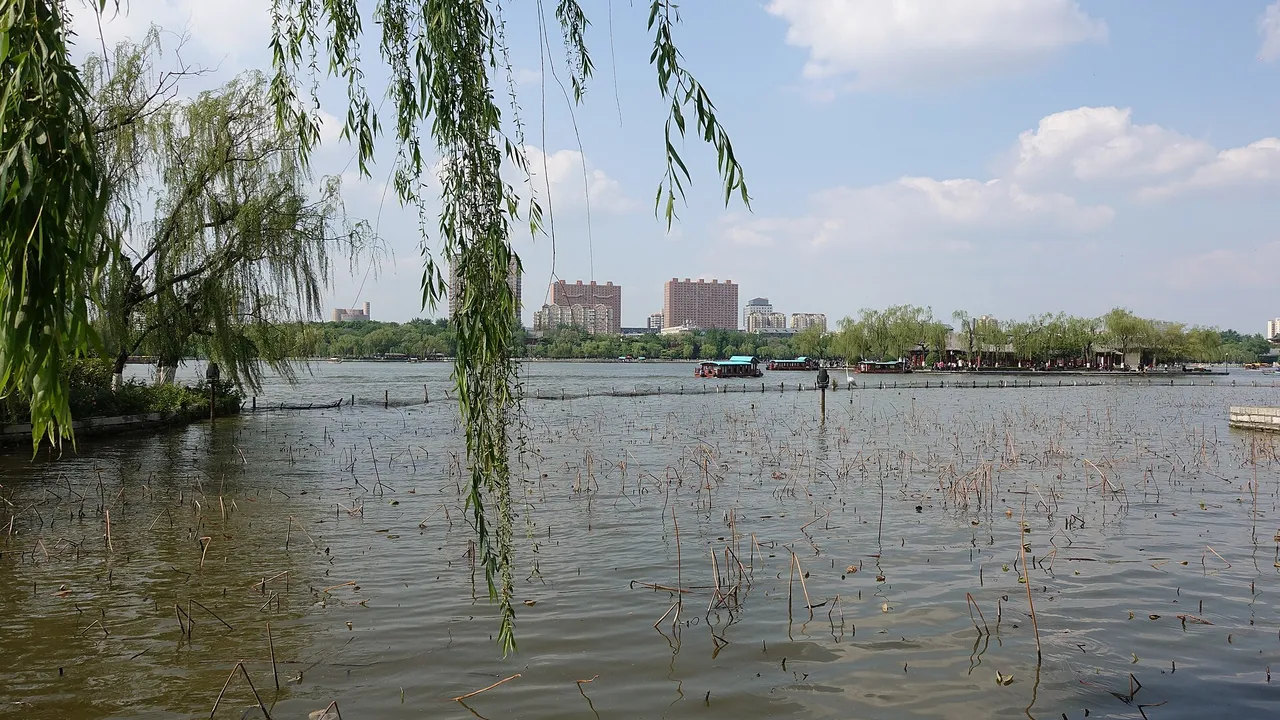
End at Daming Lake's east bank for the lighting of Chaoran Tower. Three days have covered Han slips, Song clay, a Sui pagoda and a Ming-Qing academy, and the finale is a rebuilt tower, itself a statement of how Jinan treats heritage: history need not stand untouched, but it must stay alive.
After the lights, the lake quiets; sit on the shore and thread the three days through time, Sui to Song to modern, and the city's layering becomes plain.
| Getting around |
|
| Budget | Tickets total roughly RMB 130-160, mostly Lingyan and the Four Gate Pagoda; a two-day charter averages RMB 300 pp shared, before meals and lodging. |
| Best time | April-June and September-October suit the temple hills best; late autumn turns Lingyan's ginkgoes gold, the year's visual peak. |
FAQs
Which is more worth it, Lingyan Temple or the Four Gate Pagoda?
By taste. Lingyan is the complete experience of architecture, painted sculpture and mountain forest, worth a full day; the Four Gate Pagoda is a unique volume of architectural history, two hours but a strong jolt. With only one day, choose Lingyan; with three, take both, which is exactly this route's shape.
Can I photograph the sculptures and carvings?
Flash is banned in the Thousand Buddha Hall; use high-ISO phones or cameras and no supplementary lights. At the Four Gate cliff, touching and climbing are prohibited; shoot from inside the paths and rails. Commercial shoots need prior approval from the sites; ordinary travel photos raise no objection.
Is public transport workable for the two suburban days?
Possible but taxing: Lingyan needs a bus transfer totaling about two hours on sparse schedules, and the Four Gate Pagoda runs thinner still. For groups or tight clocks, a two-to-three-hundred-yuan daily charter wins; solo with time to burn, buses make a slow-travel option, but catch the first departures.
When is best for the late-autumn ginkgoes?
Lingyan's gold usually runs from late October into early November, shifting with the cold. Aim for weekday mornings, when slanted light and thin crowds meet a carpet of fallen leaves before the great hall, the year's single best day. Follow the site's account for live photos from a week out.