
Kaifeng's shopping map has two layers: the old town commerce of Shudian and Gulou selling brushes, pastries and street flavor, and the new cultural-creative layer along Qishengjiao and the river selling contemporary design on Song themes. Walk both, buying the right thing in each.
On a shopping day, budget discipline beats routing: scholar's goods on the old street, hands-on crafts in the creative quarter, and food souvenirs at the veteran brands' own stores rather than scenic-area stalls. Bian embroidery is craftwork; without a trained eye, look first, start small, buy from studios.
Itinerary at a glance
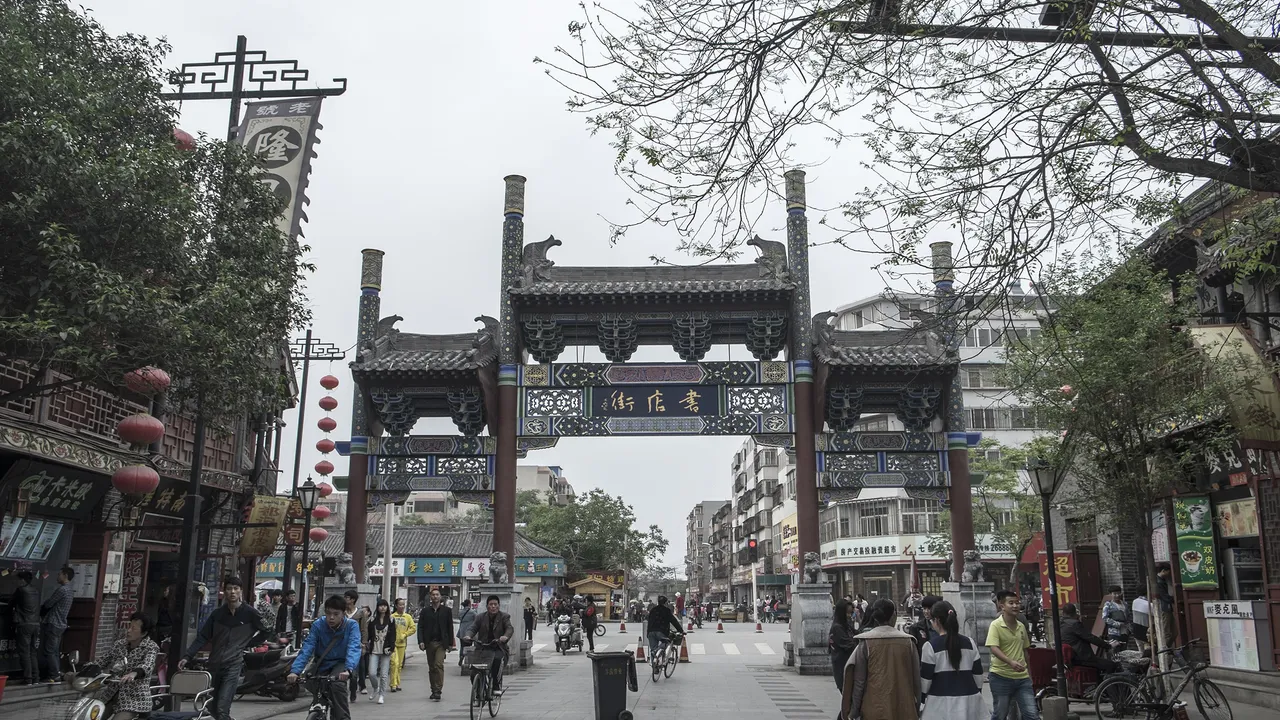
| 09:30 | Shudian and Madao Streets: The Twin Faces of Brush and Fashion |
| 11:30 | The Gulou Commercial Block: Practical Shopping in the Old Core |
| 14:00 | Qishengjiao: Riverside Craft and Design Shops |
| 16:30 | Bian Embroidery and the Veterans: Packing Kaifeng to Go |
The route, stop by stop
Shudian and Madao Streets: The Twin Faces of Brush and Fashion
On Shudian Street buy three scholar's goods: a brush (tens to hundreds of yuan, a combined-hair starter suffices), cinnabar seal paste, and handmade paper. Old-shop masters happily teach the four-virtue test, tip, alignment, roundness, resilience, before you pay; name-seal carving happens on site, ready in half an hour.
Neighboring Madao is Kaifeng's youth street: clothes, sneakers and trinkets at dense, friendly prices, a live read on local taste. One street still, one street moving; walk both in the morning and open the day's shopping account.
The Gulou Commercial Block: Practical Shopping in the Old Core
The Gulou block is where locals actually shop: malls, veteran pastry houses, pharmacies and phone chains on one grid. Make it souvenir base camp: peanut brittle, sesame slices and jujube-yam cakes from the old brands' own counters, twenty to thirty percent under scenic-stall prices, in more travel-proof packaging.
Lunch happens here, with Divilou and Huang's dumpling branches nearby, shop first, eat hot after. Compare prices at mall specialty counters, but for edibles the veterans' direct stores remain the standard.

Qishengjiao: Riverside Craft and Design Shops
Qishengjiao lines the Song Imperial River with grey-tiled fronts mixing creative shops, craft studios and teahouses. The logic here is experience first: clay figurines, sachets, round fans and woodblock prints taught on site in small forms, a few tens to a hundred-odd yuan for a keepsake you made yourself.
Coffee and tea seats all face the water; when bags get heavy, sit and watch boats pass under bridges, the pleasant half hour of a shopping day. Versus scenic stalls, the design quality earns its premium by never duplicating.
Bian Embroidery and the Veterans: Packing Kaifeng to Go
Close with two house crafts. Bian embroidery, a national intangible heritage famed for reproducing classic paintings, peaks with Riverside Scroll subjects; start small with fans, bookmarks or double-sided mini screens from a few hundred yuan, sold in studios and creative streets, authenticated by the embroiderer's signature or workshop mark.
Top up the edible souvenirs last: vacuum-packed bucket chicken gift boxes, peanut brittle and sesame slices, checking shelf life before boxing. Consolidate and pack at the Gulou block, wrapping fragile embroidery frames in clothing for the road home.
| Getting around |
|
| Budget | Souvenirs swing from RMB 30 peanut brittle to embroidery in the thousands; most travelers finish within RMB 300-800. |
| Best time | Any season; old shops fill in through the morning, craft stores restock fullest in the afternoon, and weekends pack the Gulou block hardest. |
FAQs
With a tight souvenir budget, what is the safest buy first?
In order: peanut brittle and sesame slices from the veterans, a dozen yuan and crowd-pleasing; vacuum bucket chicken at a few dozen yuan, the local taste incarnate; and a Shudian brush, useful with a story. Save embroidery for real interest, and on small budgets touch no jade or antiques.
How do I judge Bian embroidery quality? Where does cheap differ from dear?
Three tells: stitch density, the gloss and gradation of silk, and a clean reverse. Cheap machine or rough work shows flat color and shallow imagery; a few hundred yuan opens decent small pieces, and for anything past a few thousand, learn the hours and the maker first. Studios beat stalls.
What if I buy more than I can carry?
Three routes: mall desks and hotel front desks hold bags until pickup; ship large pieces same-day locally or two to three days elsewhere; and pack vacuum foods apart from breakables, weight at the bottom, embroidery frames wrapped in clothes on top.
Can I trust the cheap specialty stalls at scenic gates?
For edibles, check production info and shelf life, and whether made that day; unlabeled loose pastries in rough packaging should not travel home. For crafts, gate-stall bargain embroidery is usually machine work, fine as decor, riskier as a gift. The veterans' own stores are always the safe answer.