
Kaifeng's heritage is one word: superposition. Cities lie under cities, bridges stack under bridges, and one trench at Zhouqiao shows Song and Ming in the same frame. The three days follow that logic: first the buried strata, then the standing Song pagodas, Ming halls and lanes, finally the countryside's preserved faith and craft.
Days one and two cluster in the old city on foot and by bus; day three to Po Pagoda and Zhu Xian Town goes smoother by taxi or charter. Each day pairs one heavyweight site with two lighter ones, deep enough to satisfy, varied enough to hold interest.
Itinerary at a glance
| 08:30 | Kaifeng Fu: First Lesson in Northern Song Government |
| 10:30 | The Zhouqiao and Bianhe Excavation: A Millennium in One Bridge |
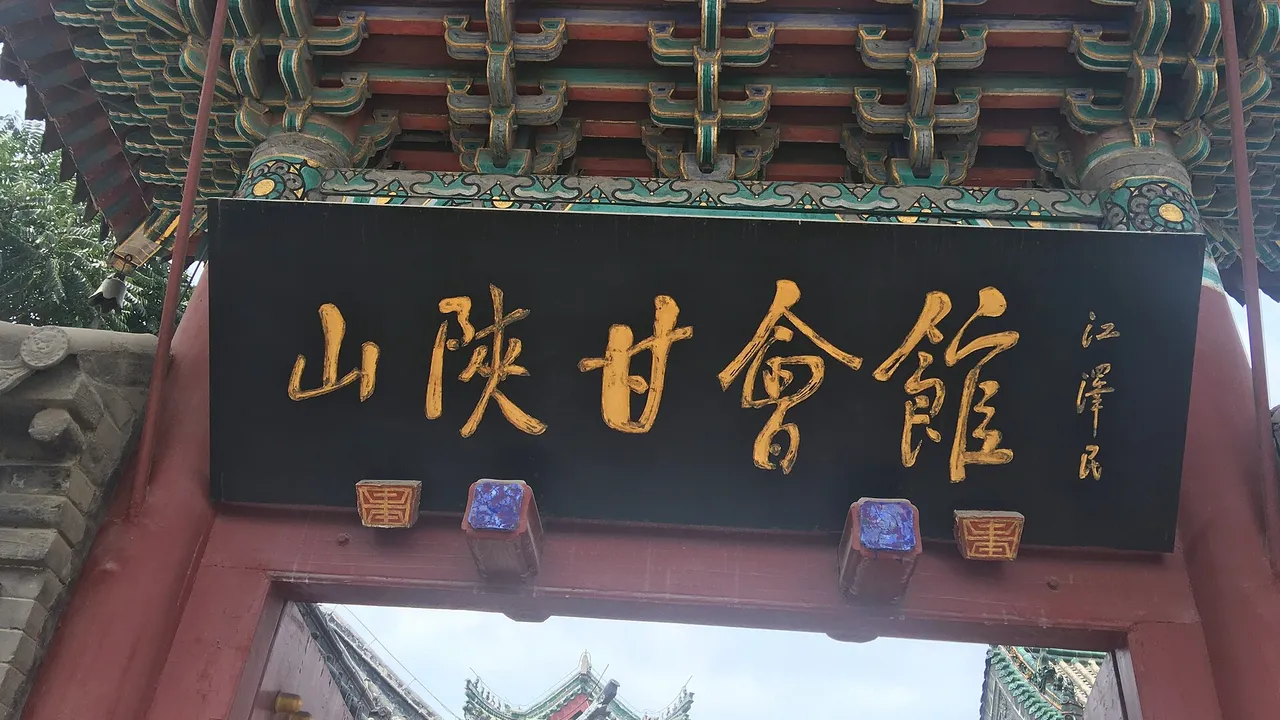
| 14:00 | The Shan-Shaan-Gansu Guild Hall: A Qing Merchant Textbook in Carving |
| 16:00 | Daxiangguo Temple: Northern Song Echoes of a Royal Monastery |
| 08:30 | Iron Pagoda Park: A Northern Song Glazed Tower in Morning Light |
| 10:30 | The Hanyuan Stele Forest: The History of Writing in Stone |
| 14:00 | Longting Scenic Area: The Terrace Above Six Dynasties of Palaces |
| 16:00 | Shuanglong Lane and Liu Qingxia's Home: Heritage as Lived-In Space |
| 09:00 | Po Pagoda and Yuwangtai Park: The Oldest Standing Relic in Kaifeng |
| 13:30 | Zhu Xian Town: The Yue Fei Temple and the Woodblock Prints |
The route, stop by stop
Kaifeng Fu: First Lesson in Northern Song Government
Heritage starts with institutions. The main court hall, the council offices and the three bronze guillotines raise the skeleton of a Song prefecture, and the admonition stone's sixteen characters on officeholders' pay and the people's toil decode every hall that follows.
The stele of successive prefects is the essential artifact, Justice Bao, Ouyang Xiu and Fan Zhongyan all listed. The nine o'clock gate ceremony drains the crowd to the outer square; turn instead into the stele's courtyard first and read it unhurried.
The Zhouqiao and Bianhe Excavation: A Millennium in One Bridge
Ten minutes on foot from Kaifeng Fu lies the Zhouqiao excavation. In the trench the Ming bridge caps the Song stone foundations, and the Bianhe's banks and silt profile layer like tree rings, the most vivid stage of the stacked-city phenomenon: one city rebuilding one bridge on one coordinate for a thousand years.
The monumental stone frieze of sea horses and cranes recovered along the bridge side ranks among recent Kaifeng archaeology's greatest finds, corroborating the bridge's form in the Song memoir Dongjing Meng Hua Lu. The strata's story only opens with a guide, so join one.
The Shan-Shaan-Gansu Guild Hall: A Qing Merchant Textbook in Carving
The afternoon opens at the guild hall, built by Shanxi, Shaanxi and Gansu merchants as a Guandi-temple compound and among Kaifeng's finest surviving architecture: a seven-layer pierced wood archway, a gilt caisson over the opera stage, and twin dragons pursuing a pearl across the screen wall's brickwork, each a ledger of merchant wealth.
The core is the three carvings: wood at the archway, brick at the screen wall, stone at column bases and lions. The courtyards reward an hour of close looking, and the signage carries the trade-route stories behind every motif, readable even solo.
Daxiangguo Temple: Northern Song Echoes of a Royal Monastery
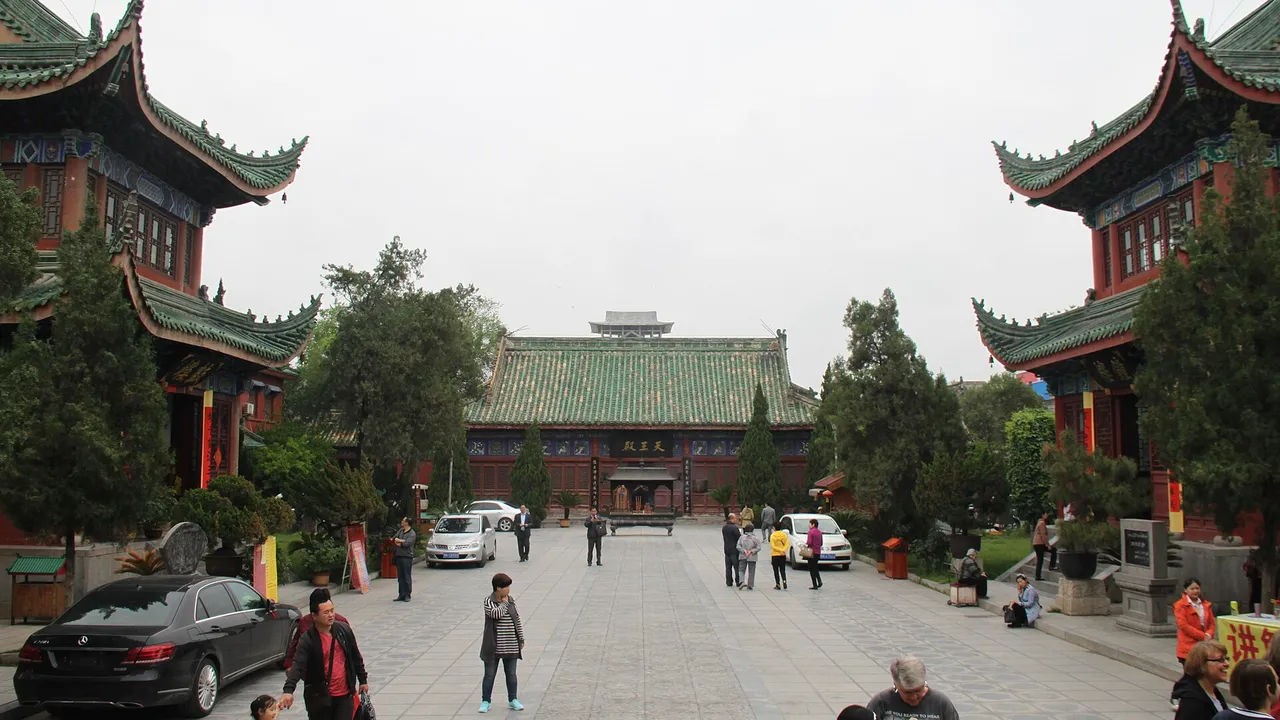
The heritage day closes at Daxiangguo Temple. Founded in the Northern Qi and at its height under the Song, the royal monastery whose monthly open markets fill the Song memoir is gone, but the ginkgo-wood thousand-hand Guanyin in the octagonal hall still peaks Qing carving, facing four ways around the pavilion.
The temple keeps its traditional Buddhist music alive, a national intangible heritage; catch a performance before the main hall, bells, chimes and pipes restoring a fraction of Song royal grandeur. An unhurried hour covers the whole compound.
Iron Pagoda Park: A Northern Song Glazed Tower in Morning Light
Day two opens with the Iron Pagoda. Raised in the Song Huangyou era from brown glazed bricks in over fifty patterns, thirteen stories tall, it has stood through quakes, floods and shellfire for nearly a millennium, its flying apsaras, qilin and Buddhas rewarding close inspection of the tilework.
Morning light from the southeast lights the tower's face while the lake below takes its full reflection. Walk both the circuit and the shore, noting the slight southeast lean of the base, a mark of millenniums of settling and proof of its endurance.
The Hanyuan Stele Forest: The History of Writing in Stone
Walkable from the pagoda park, the steles make the morning's natural second act. Thousands of carvings run in dynastic order with separate cloisters for seal, clerical, regular, running and cursive scripts; read as the evolution of writing rather than mere connoisseurship, the sequence clarifies even for those who cannot parse the characters.
Most steles are contemporary recuttings of famous works, winning on system and concentration; the rubbing workshop turns epigraphy into touch, where force and ink decide the sheet, worth a half hour's try.
Longting Scenic Area: The Terrace Above Six Dynasties of Palaces
Longting's value lies in its foundation: beneath the terrace lie the Northern Song palace ruins and beneath those the palace cities of the Five Dynasties, with the imperial axis starting due south at your feet. Climbing the seventy-two steps is itself a passage from physical strata into historical narrative.
From the hall's platform in the afternoon, look south down the axis and north over the twin lakes, folding the morning's steles and pagoda into one sightline. The wax figures inside can be skimmed; the view is the substance.
Shuanglong Lane and Liu Qingxia's Home: Heritage as Lived-In Space
Heritage is not only towers and steles but lanes and houses. Shuanglong Lane, legendary home of the Song founder's brothers, keeps its Qing and Republican courtyard fabric after restoration, with laundry lines, birdcages and chess tables proving the heritage still lives.
Inside, Liu Qingxia's former home honors the 1911-era woman who gave her fortune to the cause, its plain rooms and restrained signage carrying a civic story with force. Dusk light raking the lane flatters the grey brick most.
Po Pagoda and Yuwangtai Park: The Oldest Standing Relic in Kaifeng
Day three heads southeast, first to Po Pagoda. Older than the Iron Pagoda, raised in the Song Kaibao era, its hexagonal three-story body carries thousands of Buddha bricks, one Buddha per brick, the oldest standing structure in Kaifeng, its interior inscriptions and sutra pillars preserving Song handwork.
The same Yuwangtai Park holds the ancient terrace honoring Yu the Great and the musician Kuang. An hour covers both relics, blissfully uncrowded, gathering the heritage days together: a tower older than the Iron Pagoda, a terrace older than Longting, the city's superlatives hiding in the south.
Zhu Xian Town: The Yue Fei Temple and the Woodblock Prints
After lunch run forty kilometers southwest to Zhu Xian Town, one of China's four historic market towns. The Yue Fei temple commemorates the victory of Zhu Xian, the northern expedition's furthest thrust; the Qing rebuild is modest but dense with steles and tablets, generations of elegies layered onto one Southern Song tragedy, the old locust by the gate said to be centuries old.
The heritage finale is Zhu Xian woodblock New Year prints, among the art's Chinese origins, rising in the Northern Song with wood red, copper green and sunflower purple over bold, archaic figures. The town's museum and old workshops show the full run from block cutting to printing and mounting, most letting you pull a sheet yourself, the black line block by hand while the master runs the color passes.
The paper you leave with carries a craft's feel, not just a souvenir; temple and print together take three hours, and a taxi back to Kaifeng at dusk closes three heritage days on the block.
| Getting around |
|
| Budget | Entries total about RMB 450-550 pp including Zhu Xian Town, before meals and lodging. |
| Best time | Mar-May and Sep-Nov hold steadiest; some Zhu Xian Town venues close Mondays, so plan around it. |
FAQs
Will three days feel like nothing but rebuilt scenery?
No. Kaifeng rebuilds plenty, but the real things anchor this route: Zhouqiao is an excavation, the Iron and Po pagodas are Song originals, the guild hall is Qing original, Liu Qingxia's home is the actual house. Authentic and reconstructed alternate in clear proportion along this order.
Is Zhu Xian Town worth the dedicated trip?
Yes, with expectations set: the town is mid-development, the Yue Fei temple and the prints are the substance, the commercial street deserves little time. Anyone drawn to calligraphy, printmaking or Song history earns the drive; pure box-tickers may find the ride long, so weigh your interests.
Is this heritage route manageable with seniors and kids?
Moderate to light: the first two days run on old city flats, with climbs only at Longting and the Iron Pagoda, both skippable. Seniors can admire the pagoda from below, and children engage far more in print and rubbing workshops than galleries, so budget hands-on time generously.
What about rain? Which stops offer indoor fallbacks?
The Zhouqiao hall, the guild hall's interiors, the temple halls and the stele cloisters all offer solid indoor stretches, so fill rain days with those; skim the outdoor parts of the pagoda and Longting. The print museum also suits rain, and one printed sheet outlasts a shower.