
Kaifeng's countryside runs truer than any rebuilt street: Zhu Xian keeps real craft, Lankao keeps real history, and the river flats keep real wind. Three days walk the Henan beyond the walls on one theme, land and people: prints carrying the faith of a farming society, paulownia groves standing as one generation's answer sheet, the river bend holding nature's own hand.
Transport is the main cost: neither Zhu Xian nor Lankao rides a bus spine, so taxi or charter, with infrequent shuttles between. Sleep night one back in Kaifeng, night two in Lankao county town, and close day three in the city, trimming backtracking.
Itinerary at a glance
| 09:00 | Qifeng Garden at Zhu Xian: A Water Town's Morning |
| 11:30 | The Woodblock Print Workshops: Pulling Your Own New Year Print |
| 14:30 | The Yue Fei Temple and Zhu Xian's Old Streets |
| 08:30 | The Jiao Yulu Memorial Park in Lankao: The Story Behind a Paulownia Tree |
| 13:00 | The Yellow River Bend at Dongbatou: Where the River Turns a Right Angle |
| 16:00 | Xuchang Village, Guyang Town: The Qin and Zheng Village That Grew from Shelterbelts |
| 09:00 | The Liuyuankou Wetlands: A Bird Stop on the Road Back |
| 14:00 | Yuwangtai Park: A Soft Landing Back in the City |
| 16:30 | Iron Pagoda Park at Dusk: Where the Three Days Touch Down |
The route, stop by stop
Qifeng Garden at Zhu Xian: A Water Town's Morning
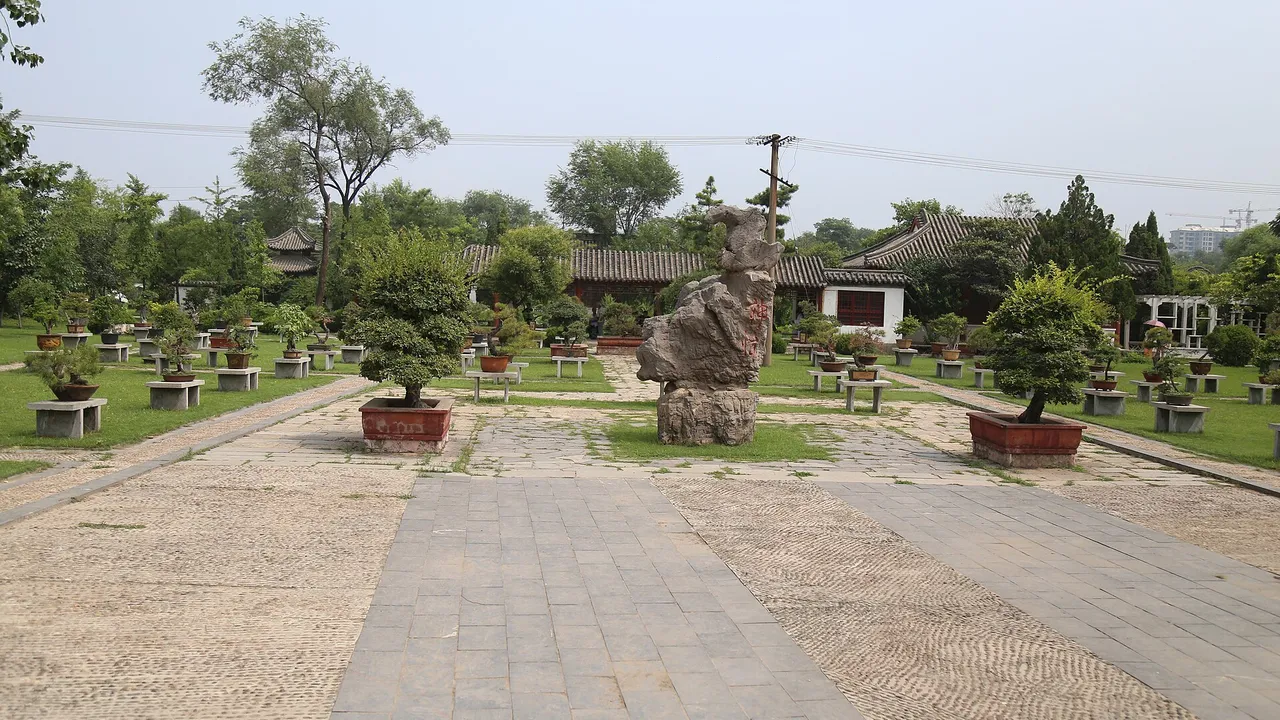
Qifeng Garden anchors Zhu Xian, rebuilt around the old town's waterways with archways, canals and antique fronts composing an unhurried morning. The name Qifeng predates Kaifeng itself, meaning to open and extend the frontier, one source of the city's very name.
Watch the water here: quays, arched bridges and riverside tea seats, with morning light raking the surface and thin crowds flattering the frames. When folk shows or markets run, the town's living energy outshines its scenery.
The Woodblock Print Workshops: Pulling Your Own New Year Print
Zhu Xian woodblock prints stand among the ancestors of Chinese New Year pictures, dense in composition, rugged in line, figures big-headed and bold in color. In the old workshops you can watch pear-wood blocks carved, the master's blade moving a millimeter at a pass, several days' work in a single color block.
The hands-on part is the heart: print your own door god or kitchen god, laying the black line block yourself while the master runs the color passes; the moment the paper lifts from the block is the millennium-old craft's most direct lesson. Sheets dry on the spot and roll home.
The Yue Fei Temple and Zhu Xian's Old Streets
The Yue Fei Temple is Zhu Xian's soul, commemorating the northern expedition's great victory here. The Qing-era rebuild is modest but dense with steles, generations of elegies layered onto one Southern Song tragedy, with a locust by the gate said to be centuries old.
Then walk the old streets: bluestone slabs and aged fronts keep their character, lightly developed, holding the true grain of a northern market town. The halal snacks and hu-la-tang stalls along it are the right place to land for lunch.
The Jiao Yulu Memorial Park in Lankao: The Story Behind a Paulownia Tree
Day two runs north to Lankao and the memorial to Jiao Yulu, the county secretary of the 1960s who fought sand and water here, leading locals to plant paulownia across the dunes, groves now both an ecological legacy and the raw stock of a folk-instrument industry.
The memorial is solemn without sentimentality, clear about the science of dune control and the human choices behind it. Stand ten minutes in the paulownia grove outside and grasp that one tree changing one county is not rhetoric but the record of afforestation.
The Yellow River Bend at Dongbatou: Where the River Turns a Right Angle
Dongbatou holds the Yellow River's last great bend, the water turning nearly a right angle northeast. When the Tongwaxiang breach rerouted the river in 1855, ending its seizure of the Huai outfall, the new northward flow began at this line, and the dike under your feet marks the event that redrew China's geography.
Afternoon light opens the river wide, opposite flats and near-shore ripples in clear layers. The viewing platform and dike walk are safe and mature; an hour on the river suffices, richer when you pair the old story of the chairman's river inspection with the great bend before you.
Xuchang Village, Guyang Town: The Qin and Zheng Village That Grew from Shelterbelts
The country line's crowning curiosity sits in Guyang town: the paulownia once planted to fix the dunes now supplies the finest soundboards for guqin and guzheng, and Xuchang village and its neighbors have become nationally known instrument villages, turning out a striking share of China's soundboards.
Workshops show the boards air-drying, planing and being tone-tested, and with luck you hear a master tuning on site. No rush to buy; listen first. Even without a purchase, tracing wood from shelterbelt to instrument is the three days' most marvelous material thread.
The Liuyuankou Wetlands: A Bird Stop on the Road Back
Day three turns back toward Kaifeng, branching into the wetlands at Liuyuankou. A staging post for migrants with geese and ducks in flocks through autumn and winter, the transition belt between flats and open water stays ecologically whole; unlike Dongbatou's grandeur, this reach of the Yellow River is quiet.
No ticketed sightseeing required: walk a stretch of dike and sweep the flats with binoculars. Birding peaks at dawn; arriving midday, take it as a quiet coda to three country days.
Yuwangtai Park: A Soft Landing Back in the City
Land the city return at Yuwangtai Park. This old park honoring Yu the Great and the musician Kuang shades its visitors under ancient trees, and both country themes find their source here: the ancient terrace is where legend sets Kuang's playing.
Country and city close their narrative loop on the terrace: Yu's flood taming answers the Yellow River, Kuang's music answers the paulownia instruments. Sit in the afternoon shade, replay the three days, then head to the Drum Tower for a proper basket of soup dumplings.
Iron Pagoda Park at Dusk: Where the Three Days Touch Down
The country line's last stop is the Iron Pagoda at dusk, chosen for the echo: having seen paulownia in the shelterbelts, reeds on the flats and the great river on the dike, returning to this millennium-old glazed tower makes the bond between land and human work legible at a glance.
In the fading light the tower's profile settles while the lake takes the last of the sky. Dine nearby or return to the hotel to sort three days of photographs, and the Henan beyond the walls is complete.
| Getting around |
|
| Budget | Entries and experiences total about RMB 250-350 pp; country lodging runs RMB 150-300 a night, transport extra. |
| Best time | Apr-May and Sep-Oct feel best; harvest season gives the river flats and paulownia groves their grandest air. |
FAQs
Is the three-day country loop feasible without a car?
Yes, on taxis or a charter: the sights scatter beyond town bus reaches. Charter through a proper platform for two and a half days, reasonable cost split among several; solo travelers can taxi segment by segment at a higher budget and still finish.
Is buying an instrument in Xuchang village safe from gouging?
Village workshops are the source with honest prices versus city shops, but listen before negotiating, since soundboard grades swing the price wide. Test, note the model, and if unsure photograph the workshop and research later; large purchases deserve a proper invoice and packing-for-shipping receipt.
Does this country route suit families with kids?
Very much so: printing a New Year picture, watching a soundboard become a guzheng, and seeing the river turn on the dike are all concrete lessons past the textbook. Three cautions: hold hands near wetlands and flats, set volume and safety rules before entering workshops, and pack jackets for autumn.
What is country lodging like on this route?
Both Kaifeng city and Lankao county town are well served with full chain-hotel options; guesthouses inside Zhu Xian are limited, so day-trip it. Stay in Lankao town for dining and supplies, and in peak season book Lankao rooms a day ahead.