
Seven days is a luxury here: most people take three, extract the highlights, and leave. This plan runs opposite, seven days at the slowest gear, one main objective a day, every afternoon left to the riverbank, the village gate and your own recovery.
Town stays the permanent base with one move only, the night inside Yaoshan. Two days walk the Zhangjiang line thoroughly, one day takes Daqikong and the raft, three days give Maolan its due, and two go to the villages. By day seven you will not be worn out; you will be pricing bayberry soup like a local.
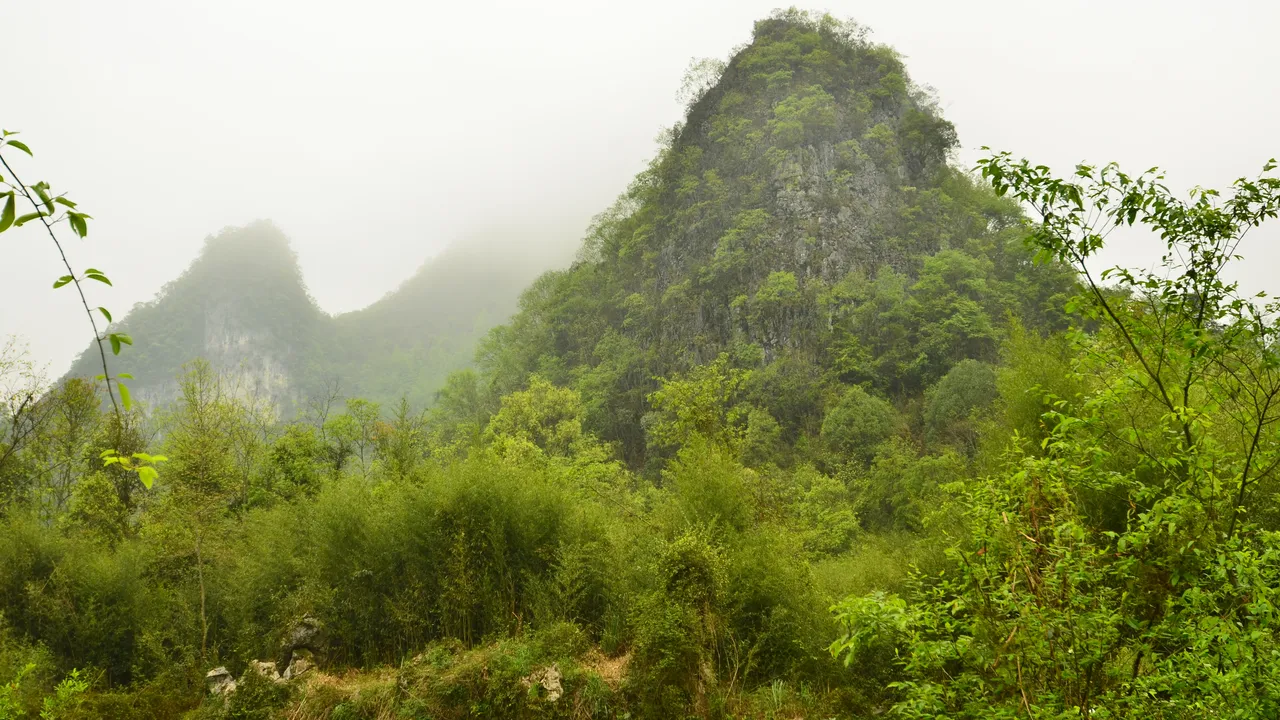
Itinerary at a glance
| D1 14:00 | Arrival Day: The Riverside and Town Recon |
| D2 08:00 | Xiaoqikong, Day One: The Full East-Gate Line |
| D2 14:30 | Xiaoqikong Scenic Area - Cuigu Falls and the Flooded Flat |
| D3 08:30 | Xiaoqikong, Day Two: Deep Time in the Water Forest and at Yuanyang Lake |
| D4 08:30 | Daqikong Scenic Area: The Natural Bridge and the Eerie Gorge |
| D4 14:00 | Shuichun River Rafting: Three Hours on the Upper Zhangjiang |
| D5 08:00 | Maolan National Nature Reserve: Wading Crab Gully |
| D5 12:30 | Five-Eye Bridge and the Farm Lunch |
| D6 08:30 | Maolan: The Funnel Forest Boardwalk |
| D6 14:00 | Golden Lion Cave: A Temperature-Steady Intermission |
| D7 08:30 | Maolan, Day Three: Yaogu Village and the Paper Workshop |
| D7 16:30 | Yaoshan Ancient Village: The Human Close |
| D7 19:00 | Back to Town: Closing on the Zhangjiang Night |
The route, stop by stop
Arrival Day: The Riverside and Town Recon
Arrive in the afternoon and schedule nothing heavy. Drop bags at the hotel, walk the riverside path to the covered bridge, and build the town's mental map: where the supermarket sits, where the bus station is, which river stretch holds the densest shade. The night market opens the account with the first bowl of bayberry soup.
Arrival day exists to cut losses: rest after long transit, and the quality of the six days after rises a notch. Sleep early tonight; Xiaoqikong waits in the morning.
Xiaoqikong, Day One: The Full East-Gate Line
Take the 8 am first entry and walk the main line from the old bridge all the way to Wolong Pond, shuttles plus foot covering the whole of Xiaoqikong. Morning light favors the bridge, Laya Falls and the 68 Cascades for photography; the afternoon belongs to getting wet.
Walking the full line first establishes coordinates for the whole route, and you can return to dig deeper later. River fish in town tonight, plus notes on where today's fatigue set in, tomorrow's adjustments follow from that.
Xiaoqikong Scenic Area - Cuigu Falls and the Flooded Flat
Day one's second half goes to Cuigu Falls, spreading from the valley mouth as a wide curtain over a shallow, slow flat, the only full-scale wading spot on the line, the right cool-down after a walking morning.
Cap the water time at two hours, then ride the shuttle westward to close the day. Keep logging the fatigue notes; a seven-day rhythm tunes itself on such data.
Xiaoqikong, Day Two: Deep Time in the Water Forest and at Yuanyang Lake
Day two runs in reverse, straight to the water forest, and soaks the whole morning there. In the thin hours this flooded woodland shows layers a rushed first pass missed: the spread of tree species, the rock patterns underfoot, the angles of light through leaves.
The afternoon rows Yuanyang Lake, then returns to Cuigu's flooded flat. A second entry is not about seeing more but about reclaiming what the first day skated past. Rest early; tomorrow moves to Daqikong and the raft.
Daqikong Scenic Area: The Natural Bridge and the Eerie Gorge
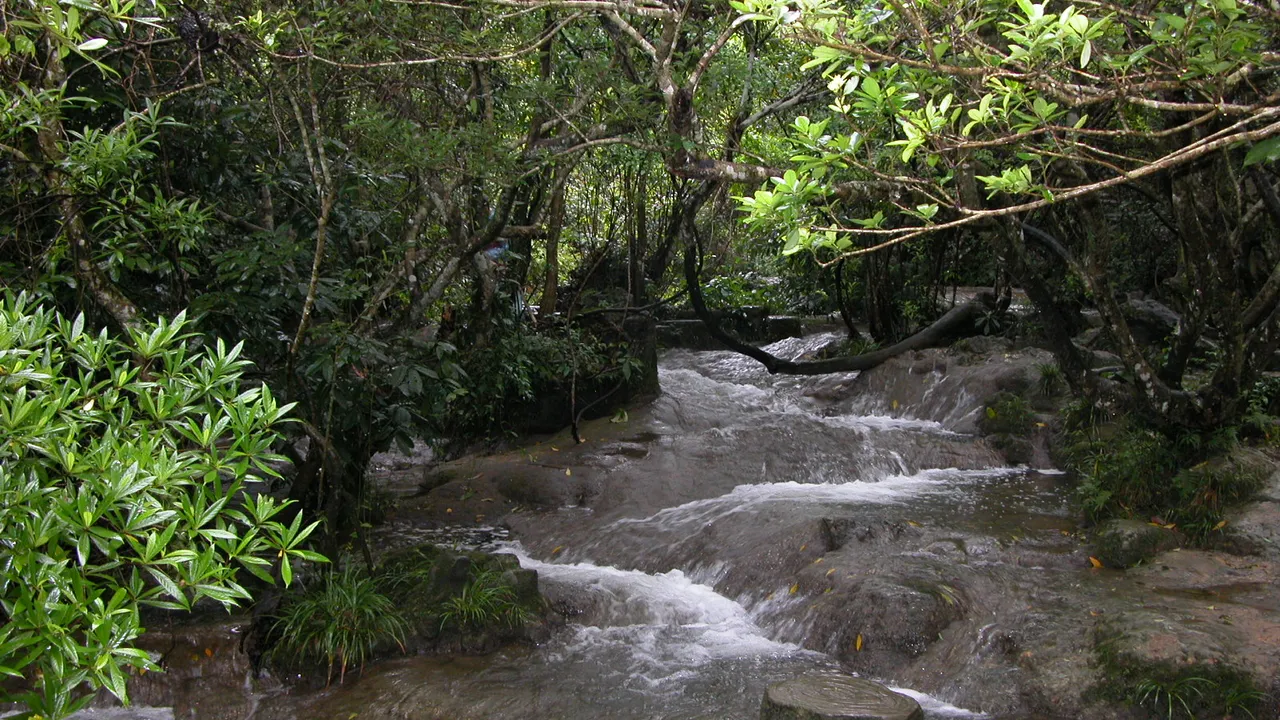
Day four's morning belongs to Daqikong, the gorge cool and quiet at dawn, the natural bridge twenty to thirty minutes along the river, one stone mass overhead, wind and water trading calls in the rock chambers. Walk in and raft out, holding both views.
The sights concentrate, so finish by 11 am, lunch at the gate, and clear the afternoon for the raft.
Shuichun River Rafting: Three Hours on the Upper Zhangjiang
The afternoon Shuichun is the gorge stretch of the upper Zhangjiang, rapids trading with calm water, the weightless slam of a wave more honest than any roller coaster. Take the afternoon session, sun on the water beating a chill morning run.
Non-swimmers manage fine with a cinched vest and the safety talk. The raft closes the Zhangjiang line entirely; hot foot soak, early bed, Maolan tomorrow.
Maolan National Nature Reserve: Wading Crab Gully
Maolan's three days open on the water-friendliest line: with a local guide, enter at Five-Eye Bridge and wade upstream through Crab Gully, two-plus hours waist-deep at the deep spots and ankle-deep elsewhere, karst cliffs pressing overhead.
Maolan's difference from the parks unfolds fully in this gully: no railings, only trees, stone and water. The guide covers route, safety and commentary in one, a fee not to skip.
Five-Eye Bridge and the Farm Lunch
Off the water, lunch at a farmhouse by Five-Eye Bridge, the Qing-era five-arch stone bridge over the stream, washing and wading below, river fish and mountain greens on the table restoring you faster than expected.
Afterward walk half an hour through the fields to settle the meal, everything in them still growing. Then an afternoon nap to bank legs for tomorrow's mountain day, Maolan rewarding a pressed-down pace.
Maolan: The Funnel Forest Boardwalk
Maolan's second day takes the mountain line. The funnel forest of the morning is the wonder of trees climbing out of karst sinkholes, green turning almost black from the platform above, the week's climbing peak, poles and knee support earning their place.
Turning back at the second platform instead of finishing the loop is a complete outcome, every platform paying its fare. Descend before noon, since mountain thunder clocks in after lunch.
Golden Lion Cave: A Temperature-Steady Intermission
The afternoon's Golden Lion Cave is the mountain line's best halftime: a lit show cave where flowstone gleams damp under the lamps, its steady temperature turning high noon into another season at the threshold.
Cave floors run slick with some steep sections, so wear grip shoes and go slow. Exit along the forest lanes toward the village, and let Maolan's night, quiet enough to hear insects turn over, close the day.
Maolan, Day Three: Yaogu Village and the Paper Workshop
Maolan's last day downshifts: the Buyi village of Yaogu in the morning, stone houses, the paper workshop, brewing households, a village quiet enough to hear pulp meeting the screen. This is Maolan's human half, where mountain and village are one body.
Sit at the village-gate tea stall until four, then leave the hills for town. Three days in Maolan leave not a sight but a wholeness: forest without fences, villages grown inside it, people living off the mountain without wounding it.
Yaoshan Ancient Village: The Human Close
Leaving Maolan, run south to Yaoshan to link the final human chapter: one loop of granaries, the drum court and the embroidery workshop, staying for the top-spinning show if the schedule allows. The White-Trousered Yao's cultural density gives the seven days a weighted close.
If time and appetite both hold, sleep in the village tonight with the long-table feast and bonfire; if town calls instead, there may still be legs for a last night-market lap. Both roads end the same way: a Libo you have actually walked.
Back to Town: Closing on the Zhangjiang Night
Whether you return from Yaoshan or Maolan, give the last night to the river: the breeze, the night market, one final serving of roast piglet. The bags unpack tomorrow morning; tonight, replay the week and pick the three stories worth telling.
A deep trip passes review not by sights counted but by whether your judgments hold confidence at the exit. If right now you could explain why Libo's water runs green and why the Yao granaries stand on stilts, the seven days paid for themselves.
| Getting around |
|
| Budget | Entries and shuttles about RMB 400-500, rafting RMB 200, Maolan car and guide share RMB 600-900 over three days; the week with food and lodging runs RMB 3500-5000 pp. |
| Best time | May to October is best, and a week's length is enough to route around the rains; for thin crowds aim at early June or September after schools reopen. |
FAQs
Is seven days too long? Can Libo fill them?
It fills, if you run at this density: two Xiaoqikong days, one Daqikong-plus-raft day, three Maolan days, two village-and-town days, already full. What cannot fill seven is sightseeing only, which overdrafts the first three days and idles the last four. Depth lives in the empty afternoons, not in packed evenings.
Is this route realistic solo?
Realistic, with car and guide the only cost frictions: ride-share groups and guesthouse front desks fill seats, and solo Maolan guides are common. Single rooms cost a little more, while village guesthouses treat solos well. Safety is mature across town and the main lines; just avoid remote river stretches alone at night.
How should energy dips across the week be handled?
This plan hides buffers at days three and five, and Maolan's first day is the water line, naturally gentler than the mountain day. In a real dip, clear the whole afternoon and sit by the river; day seven's quality outranks every other day, so never overdraft it for the checklist.
How should a budget be controlled across seven days?
Plan on a median of RMB 300-500 per head per day, with lodging first, then car and guide, then tickets. The levers, in order: off-season timing, long-stay guesthouse discounts, ride-sharing, and cooking two meals yourself. Do not economize on three things, the guide, legitimate rafting sessions, and grip gear: the first two guard safety, the last guards your feet.