
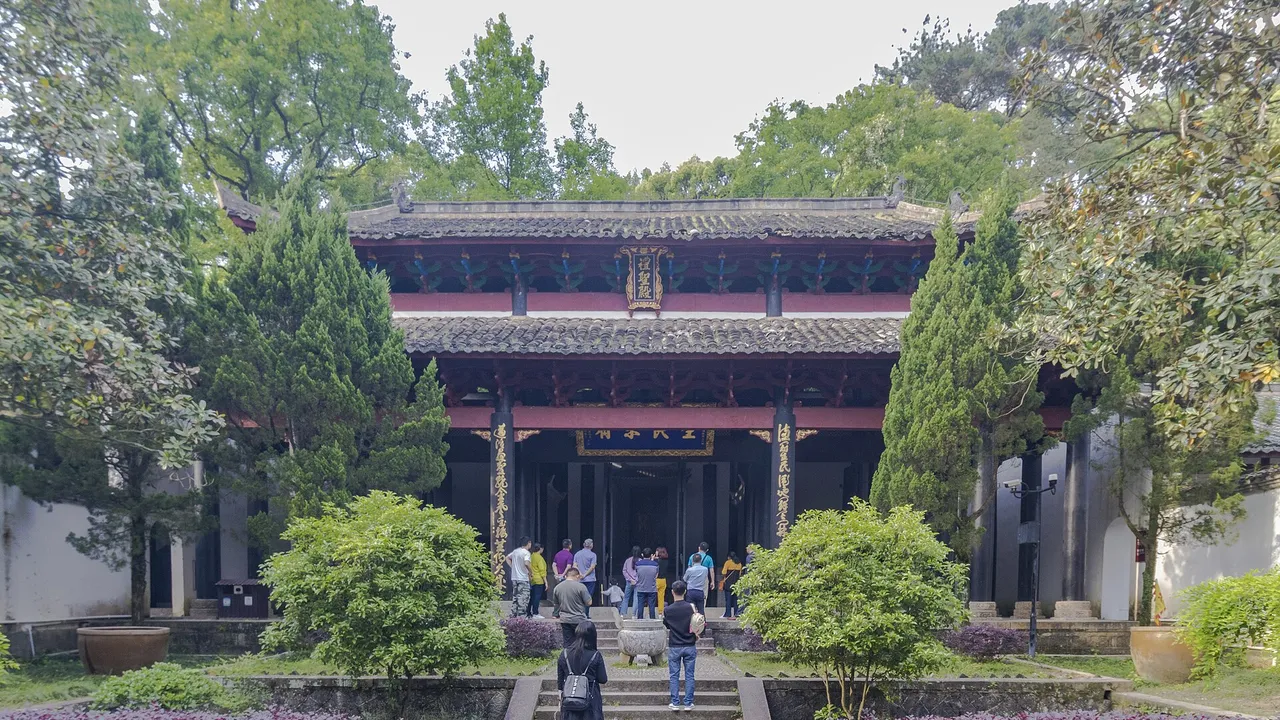
Half of Lushan's culture sits on the mountain, half at its feet. Donglin Temple is the birthplace of Pure Land Buddhism, where Huiyuan founded his society and translated sutras; a few hundred steps away at Xilin Temple, Su Shi wrote that one never knows the true face of Lushan; and at the mountain's southeastern foot, Zhu Xi set down school rules at the White Deer Grotto Academy that would govern centuries. Finish at the museum and conference hall and one day reads the mountain's whole literary and historical spine.
The single challenge is transport: the lowland sites sit on opposite sides, so a hired car chains them best, or split across two days. Put the longest drive, the academy, in the afternoon, temples in the morning, and ride up the mountain on the way home for a no-backtrack line.
Itinerary at a glance
| 08:30 | Donglin Temple: Home of Pure Land Buddhism |
| 10:30 | Xilin Temple: Where the Wall Poem Was Written |
| 14:00 | The White Deer Grotto Academy: One of the Four Great Academies |
| 16:30 | Lushan Museum and the Conference Site: Back up the Mountain |
The route, stop by stop
Donglin Temple: Home of Pure Land Buddhism
Donglin Temple stands on Lushan's northern foot as the ancestral home of Pure Land Buddhism: the Eastern Jin master Huiyuan founded his White Lotus society here and translated sutras, while the legend of three laughs at Tiger Stream has run a thousand years. Ancient trees fill the grounds, chants blending with pine wind, and the Clever Spring behind the main hall carries a Huiyuan tale.
Entry is free and the incense solemn rather than commercial. Catch the morning recitation if timed right and listen from outside the hall, the perfect opening, with the mountain's northwestern ridges receding layer by layer in morning fog beyond the gate.
Xilin Temple: Where the Wall Poem Was Written
A few hundred steps from Donglin sits Xilin Temple, immortalized by Su Shi's wall poem: one never knows the true face of Lushan, for one stands within the mountain. The poem wall and pagoda both survive, and climbing the tower proves the verse's point about ridges changing shape with every angle.
The compound runs small, half an hour at most, though the poetry holds visitors longer. Sitting among old stelae and orange trees, rereading a poem memorized in childhood on the very ground that inspired it, is the day's cheapest luxury.
The White Deer Grotto Academy: One of the Four Great Academies
Afternoon moves to the White Deer Grotto Academy below Wulaofeng's southeastern flank, ranked with Yuelu, Songyang and Yingtian among the four great academies. Zhu Xi rebuilt it and wrote its rules, the maxim of broad learning and careful questioning carved along the stele corridor, with the Lingxing gate, ritual hall and library stepping up the axis.
Behind the academy, Guandao Stream and cliff inscriptions replace human noise with water; reading or sipping tea on the stream stones is the place's oldest pleasure. Crowds stay thin, the quietest stop on Lushan's cultural line.
Lushan Museum and the Conference Site: Back up the Mountain
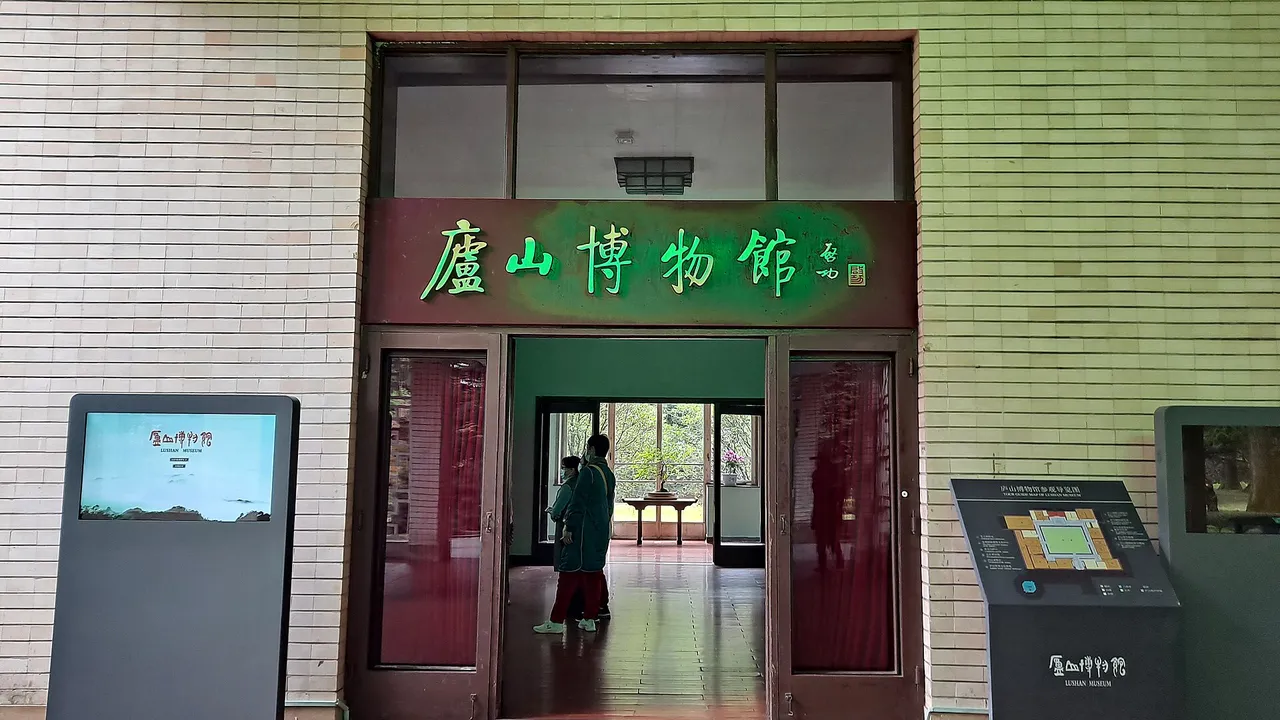
Close the day back on the mountain. The Lulin No.1 residence now holds the Lushan Museum, surveying the mountain from rock structure to inscriptions; nearby, the Lushan Conference Site keeps its hall as it stood, listed among the nation's key heritage sites alongside Meilu Villa.
With slack in the schedule, the museum works better as day one's primer; at a culture line's end it serves as review. Either way, walk back to Guling along Lulin Lake, the evening wind digesting a full day of history.
| Getting around |
|
| Budget | Entries total about RMB 50-80 pp (academy about RMB 40, temples free or donation), car hire shared separately. |
| Best time | Year-round; museum and conference-site closures follow the day's notices, so keep clear of Mondays when possible. |
FAQs
How do I link the lowland sites?
Donglin and Xilin sit a few hundred steps apart, chained on foot; the academy lies at the opposite southeastern foot, so one hired car for the day is smoothest, or split it: the two temples in the morning, museum and conference hall after riding back up. The sightseeing buses stay on-mountain, so lowland hops need a car or taxi.
Do the academy and temples need reservations?
Donglin is free with no booking, Xilin takes a donation ticket, the academy sells on site at about RMB 40, and the two mountain sites are free with closures per daily notices. The line has almost no reservation barriers; in peak season only the car hire and parking need planning.
Is one day for this line too rushed?
Tight but workable: an hour per temple, two for the academy, an hour for each mountain site, lunch in Guling or below. With seniors or children, drop the academy or split temples and academy across two days; a culture line rewards slow reading, not sprinting.
Any dress code on a culture line?
Cover knees and shoulders in temples, no photos or noise inside halls; the academy and conference site are protected heritage where flash is banned in parts, so follow on-site signs. Mountain afternoons burn, so hat and sunscreen are essential, and rainy days want both umbrella and grip shoes.