
Lushan's nature speaks three dialects: ravine fog and strange rock, ridgeline cliffs and long views, and water, with waterfalls sewing all three together. The three days split accordingly: day one the western ravines of Flower Path and Jinxiu Valley; day two an early Hanpokou sunrise, Wulaofeng in the morning, the descent to Sandiequan in the afternoon; day three slows to Lulin Lake and the Huanglong loop.
Sleeping in Guling all three nights is the sanest base, luggage settled once with the bus lines radiating from town. Pacing runs medium, hard, light: day two is the grinder with thousands of steps, so bring knee support and a pole, while days one and three hold the recovery slack.
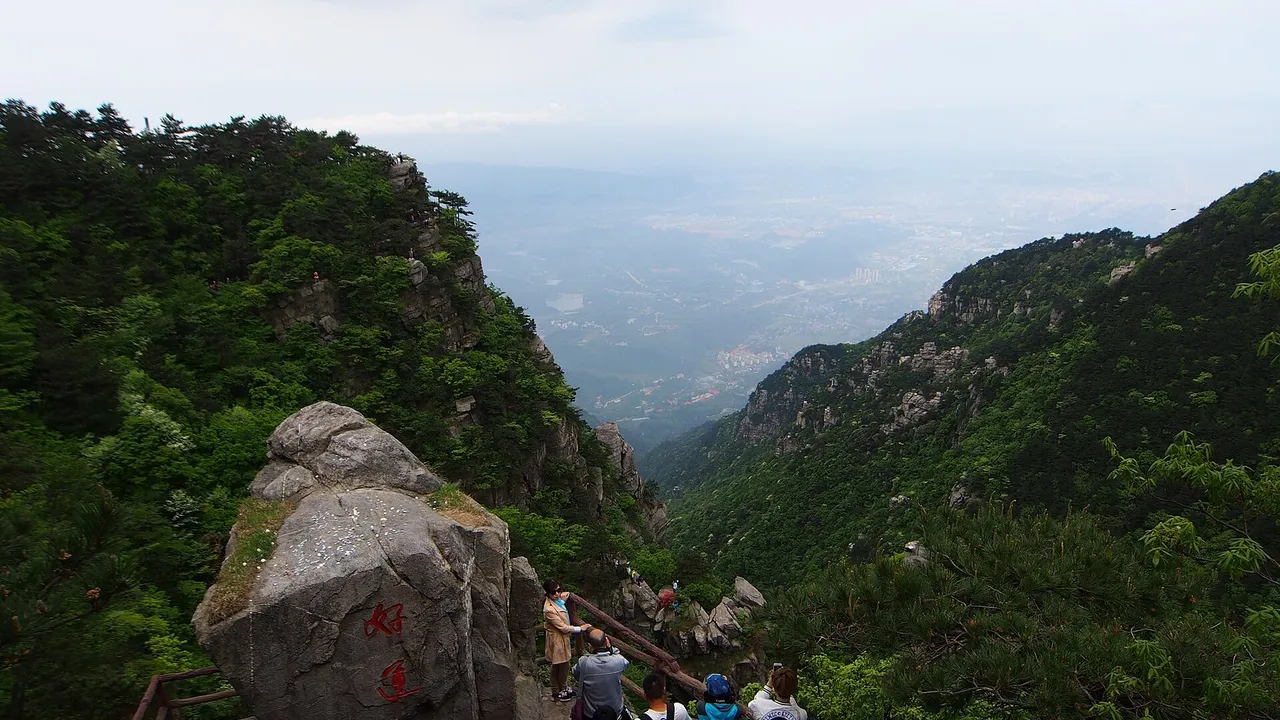
Itinerary at a glance
| 第1天 09:00 | Ruqin Lake and the Flower Path |
| 第1天 10:30 | Jinxiu Valley |
| 第1天 13:00 | Xianren Cave |
| 第1天 15:00 | Great Tianchi and Longshou Cliff |
| 第2天 06:00 | Sunrise at Hanpokou |
| 第2天 09:30 | Wulaofeng (Five Old Men Peak) |
| 第2天 14:00 | The Lushan Botanical Garden |
| 第3天 08:30 | Sandiequan Waterfall |
| 第3天 14:00 | Lulin Lake |
| 第3天 16:00 | Huanglong Pool, Wulong Pool and the Three Treasured Trees |
The route, stop by stop
Ruqin Lake and the Flower Path
The three days open on the west line at Ruqin Lake, lute-shaped and veiled when morning fog lingers; minutes on foot brings the Flower Path, where Bai Juyi wrote his famous April line, the thatched hall displaying the poet's mountain traces.
Spring blossom and autumn leaf are the two glory seasons, the lakeside arch bridge and broken-bridge rock the classic frames. Day one sets no speed records, so walk the shore thoroughly and bank strength for the ravine.
Jinxiu Valley
Enter Jinxiu Valley from the Flower Path, the sub-four-kilometer ravine carrying Lushan's densest scenery: cliffs, bizarre rocks and cloud seas trading places on a gently descending stone stair that never tires.
The Guanmiao and Fangxian pavilions earn pauses and looks back, and when fog rolls in the whole valley turns into an ink-scroll. About an hour end to end, walked slowly, the three days' most enjoyable stretch.
Xianren Cave
The valley exits at Xianren Cave, where the line about boundless views on perilous peaks was penned, temple incense inside framed against cloud banks outside. The natural grotto honors Lü Dongbin with a lasting incense trade, the Laojun hall and imperial stele pavilion beside it each with their tales.
Beyond the cave, the Wenzhang and Youxian rocks open broad natural decks. Linger ten minutes and watch the west line's clouds to the full; the afternoon transfer then feels effortless.
Great Tianchi and Longshou Cliff
The west line's last call is Great Tianchi and Longshou Cliff: two ancient wells on the ridgeline with a legend of Manjusri sighting an iron ship, and the cliff's jutting boulder shaped like a dragon's head, with Iron Ship Peak appearing and vanishing in the clouds below.
Forty minutes on foot, wind-scoured but wide open, the west line's grandest close. Pre-sunset light warms the cliff face, and photographers often stay until dark.
Sunrise at Hanpokou
Day two's alarm rings at five. Hanpokou opens straight toward Poyang Lake, the water catching first light as cloud decks burn orange-gold into daylight and the ridgeline silhouettes surface, one of Lushan's most storied moments.
After sunrise, walk on to the Wangpo Pavilion a tier higher. Mountain mornings run cold, so down or fleece is essential; breakfast back in town slots perfectly before the morning climb.
Wulaofeng (Five Old Men Peak)
The morning belongs to Wulaofeng, five summits seated like five elders, the fourth peak holding the best frame where Poyang's mist and the ridgeline share one shot. The stone stair takes about three hours total, steepening steadily, the mountain's premium climb.
Average legs can turn at the fourth peak with views already worth the ticket. Summit wind is fierce, and fog arrives and departs fast, so waiting often outearns climbing.
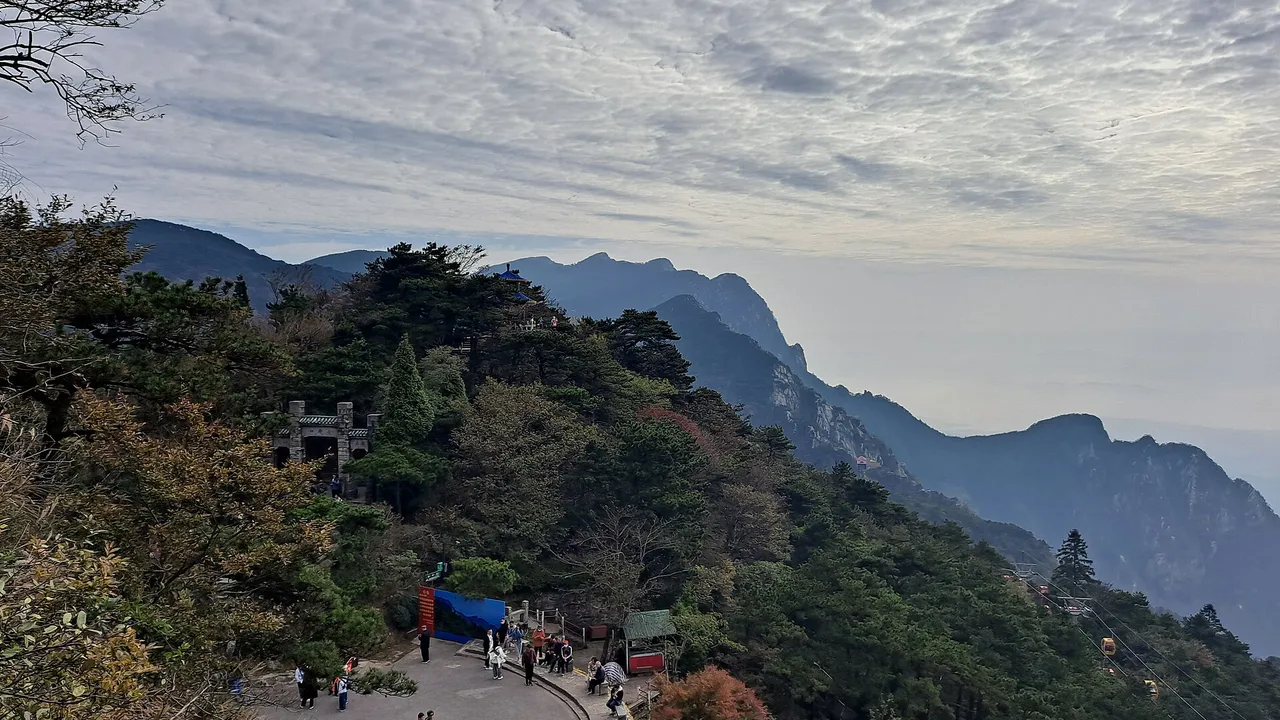
The Lushan Botanical Garden
The afternoon's buffer is the Lushan Botanical Garden, China's first proper botanical garden, laid in the valley between Hanpokou and Wulaofeng. Conifer and azalea sections plus greenhouses each read a chapter, and April-May azaleas turn the valley into a flower sea.
Flat paths and dense benches make this the second day's loosest hour, and complete plant labels turn a walk into a natural-history class for families.
Sandiequan Waterfall
Day three stars Sandiequan, one footnote to the verse about falling three thousand feet: water drops three tiers over more than 150 meters, fullest in the wet season. The viewing deck sits at the ravine floor, a descent of over a thousand steps worth every one of the knees.
Allow about three hours round trip with stairs, the cable car shaving the upper section. Mist hits the face at the bottom, natural air conditioning in summer, while the return climb punishes knees, so judge the full route honestly.
Lulin Lake
Back from Sandiequan, unwind at Lulin Lake, mirror-green with peaks reflected and the islet pavilion the classic frame. The forty-minute loop under dense shade is the kindest reward after a day of stairs.
On the shore, the Lulin No.1 residence houses the Lushan Museum; an optional hour there adds one cultural footnote to three natural days.
Huanglong Pool, Wulong Pool and the Three Treasured Trees
The three days close on the Huanglong trails: Huanglong Pool clear, Wulong Pool graceful, and the Three Treasured Trees, ancient ginkgo and cryptomeria several arm-spans around, sealing out the sky, the final stretch that lowers the pulse.
The nearly flat loop takes about two hours and exits at Huanglong Temple, where three days of cloud, crag and water settle into forest quiet before the ride down or the walk back to town.
| Getting around |
|
| Budget | Entry RMB 160, bus RMB 80, Sandiequan about RMB 64 plus cable car extra, roughly RMB 350-450 pp total. |
| Best time | Apr-Jun and Sep-Oct run steadiest; within two or three days of rain, waterfalls and cloud seas peak together. |
FAQs
How do lodging and luggage work across three days?
Three nights in Guling solve everything: store luggage at the hotel, travel light daily, and use town as the bus hub for both lines. Lodging spans hostels to villa hotels, booked early in season. Return to town for proper meals so mountain hours never cost you dinner.
How do I get the most from the sightseeing bus?
The bus ticket runs about RMB 80 valid seven days, breaking even at three rides. Lines interchange at Guling, so leave early and return before the last bus; vehicles loop continuously with hop-on hop-off freedom, no timetable stress. The Sandiequan shuttle bills separately, so ask before boarding.
Can Wulaofeng and Sandiequan fit one day?
Possible but punishing: three hours up and down Wulaofeng plus three-plus for Sandiequan over thousands of steps. Average legs should pick one, or stop Wulaofeng at the fourth peak and take Sandiequan only to the deck. Knee support and a pole earn their carry, and schedule an easy next day to recover.
How do I plan for sunrise?
Hanpokou is the pick, sunrise near five-thirty in summer and after six in autumn. Early buses shift by season, so arrange a car with your lodging or confirm times the night before. Pre-dawn cold swings near ten degrees, so bring a warm layer and a torch or phone light.