
Lushan's heritage line out-depths its scenery line: one mountain holding six centuries of villa history, an academy that shaped East Asia, two temples that redrew Chinese Buddhism, and a single film screened for over forty years. Read them across three days and the mountain stops being only a mountain.
Days one and two base in Guling, sightseeing bus plus walking covering every heritage point on-mountain; the second afternoon and third day descend, where Donglin, Xilin, the academy and Xiufeng sit on opposite sides and a hired car is the only efficient answer. Lowland legs run about an hour each, splitting neatly across two days.
Itinerary at a glance
| 第1天 09:00 | Guling Town and the Old Villa Quarter |
| 第1天 11:00 | The Lushan Cinema and Romance on Lushan Mountain |
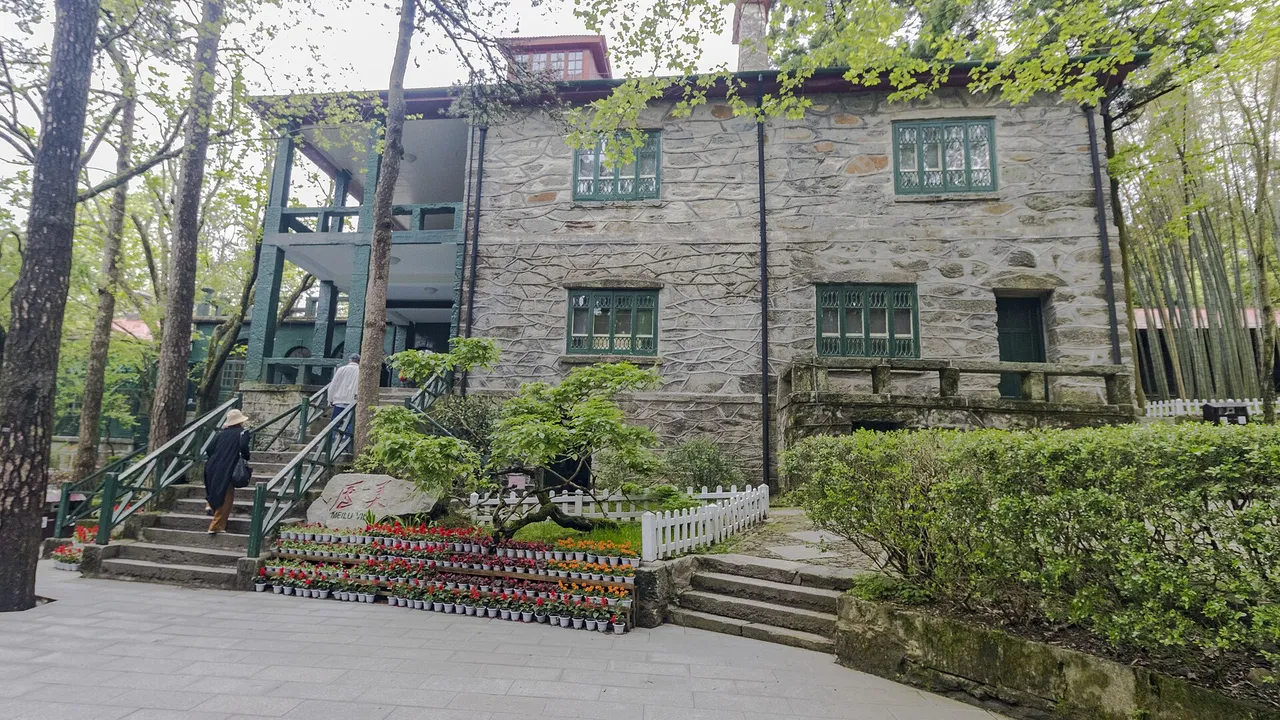
| 第1天 14:30 | Meilu Villa |
| 第1天 16:30 | The Lushan Conference Site |
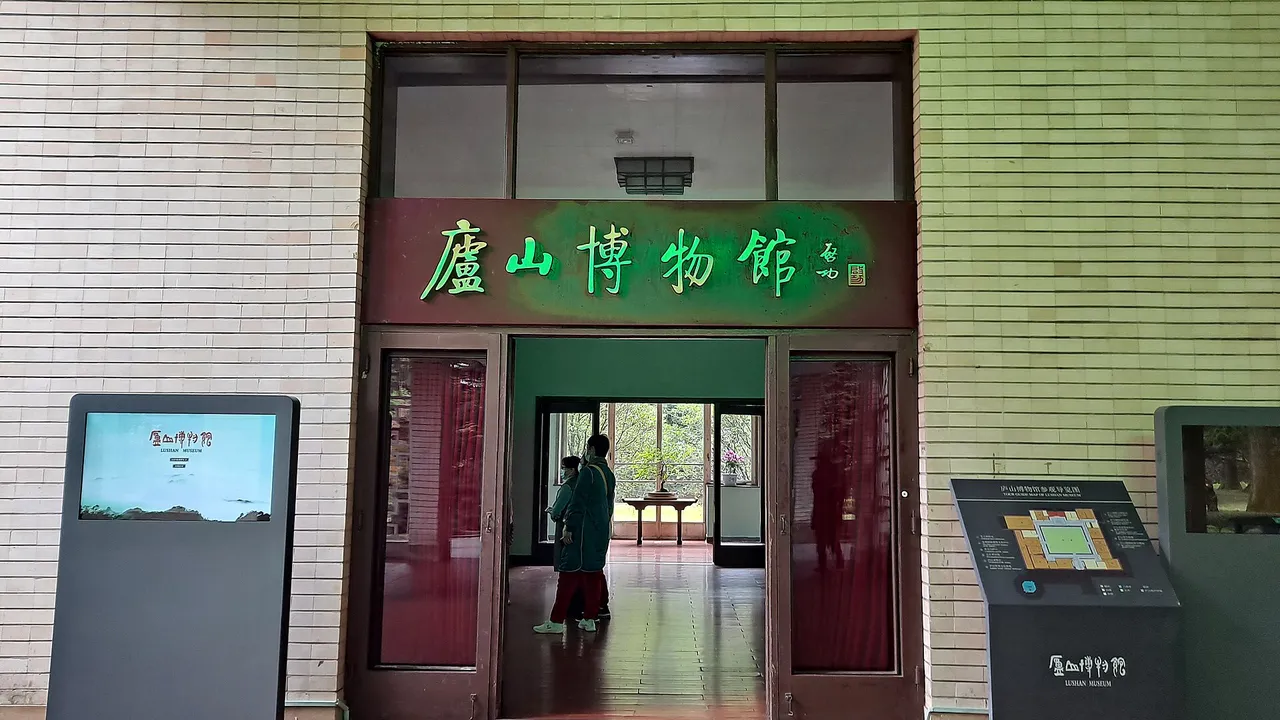
| 第2天 09:00 | The Lushan Museum |
| 第2天 11:30 | Huanglong Temple and the Three Treasured Trees |
| 第2天 15:00 | Donglin Temple |
| 第3天 08:30 | Xilin Temple |
| 第3天 11:00 | The White Deer Grotto Academy |
| 第3天 14:30 | Xiufeng |
The route, stop by stop
Guling Town and the Old Villa Quarter
The heritage line starts with the town itself: Guling's six hundred-plus villas in British, American, German and Russian styles form an exposition of world architecture, stone walls, porches and red roofs rising and falling in the fog, every side street hiding a house with a story.
The visitor center hands out villa maps and opening lists; two hours of map-guided wandering reads the town's century of texture, with detailed interpretive signs making solo walking fully legible.
The Lushan Cinema and Romance on Lushan Mountain
The Lushan Cinema screens one film only, Romance on Lushan Mountain, holding the world record for performances of a single picture. The 1980s acting, locations and score are themselves part of how this mountain tells its story.
A few dozen yuan at fixed showtimes, ending right at lunch. Travelers indifferent to old cinema can treat it as a landmark; the poster and stills corridor alone repays ten minutes.
Meilu Villa
This stone-built English-style house hosted first Chiang Kai-shek and his wife, later Mao Zedong, the sitting room of Lushan's modern history. Trumpet vines still climb the veranda, interiors preserved nearly intact, Song Meiling's piano and dressing table in place.
An hour covers it, signs telling the villa's changes of ownership clearly. Peak-season queues run long, so early morning or dusk is the comfortable slot.
The Lushan Conference Site
The hall keeps its furniture as it stood, rostrum, delegate seats and PA equipment all in place, while the attached exhibition sorts the mid-twentieth-century meetings with clarity, the key to reading Lushan's political weight.
An hour suffices; listed among the nation's key heritage sites alongside Meilu Villa. The atmosphere runs solemn, so keep voices low, the perfect footnote to the day's villa chapter.
The Lushan Museum
Day two opens lakeside at Lulin No.1, now the Lushan Museum, surveying the mountain from a billion years of geology to centuries of inscriptions and villa archives, the single best lesson on this mountain.
Free with about an hour needed. Seen here first, the temples and academy that follow fall into causal order.
Huanglong Temple and the Three Treasured Trees
Walk into the forest from the museum side and meet the Three Treasured Trees first: centuries-old ginkgo and cryptomeria several arm-spans around, sealing out the sky. Huanglong Temple stands behind, modest in size with an unbroken incense line.
An hour covers temple and trees, the coolest stretch of the heritage line. Evening chanting, when scheduled, rewards a silent pause; the forest's quiet comes closer to old Lushan than any display.
Donglin Temple
Day two descends to the northern foot and Donglin Temple, ancestral home of Pure Land Buddhism: the Eastern Jin master Huiyuan founded his White Lotus society here and translated sutras, the three-laughs-at-Tiger-Stream legend a thousand years old, ancient trees and chants blending with pine wind.
Free entry with about ninety minutes needed. Beyond the gate, the mountain's northwestern ridges recede layer by layer in afternoon light, the finest mountain-and-temple frame there is.
Xilin Temple
Day three's opener sits a few hundred steps from Donglin: Xilin Temple, immortalized by Su Shi's wall poem, its poem wall and pagoda both surviving, and the tower view proving the verse's point about ridges changing with every angle.
The compound runs small, half an hour at most, though the poetry holds longer. Morning tower shadows stretch longest, the right hour for this stop.
The White Deer Grotto Academy
Move to the White Deer Grotto Academy below Wulaofeng's southeastern flank, ranked with Yuelu, Songyang and Yingtian among the four great academies. Zhu Xi rebuilt it and wrote its rules, the maxim of broad learning and careful questioning carved along the stele corridor as halls step up the axis.
Behind the academy, Guandao Stream and cliff inscriptions replace human noise with water. Crowds stay thin, the quietest stop on the line, worth two full hours.
Xiufeng
The three days close at Xiufeng on the southern side, the Kaixian waterfall behind the verse about a stream of three thousand feet, falls, cliff inscriptions and peaks sharing one frame, fullest in the wet season.
Walking plus one cableway section reaches the falls' base, about three hours total. Li Bai and Su Shi both left lines here, and ending a literature-and-history trip inside that sound could not be more fitting.
| Getting around |
|
| Budget | Entries total about RMB 150-200 pp (academy about RMB 40, Xiufeng about RMB 60, most else free), plus two days of car hire. |
| Best time | Year-round; mountain-site closures follow daily notices, and weekend car hire prices run higher. |
FAQs
What is the transport core of this line?
On-mountain, sightseeing bus plus walking covers Guling on foot; below, Donglin, Xilin, the academy and Xiufeng scatter too far for anything but a hired car, a few hundred yuan across two days. Give the trip two car days and one bus-and-walking day and it flows.
Do Meilu Villa and the conference site need reservations?
Both open free with entrance registration or online booking in peak, closures per daily notices and routine maintenance many Mondays, so never stack both against the same closure. The Lushan Museum is likewise free and deserves an hour.
Is Romance on Lushan Mountain worth a dedicated seat?
It holds the world record for performances of a single film, and what you watch is nostalgia plus period feel: 1980s acting, locations and score are part of how Lushan tells itself. A few dozen yuan at fixed times, worth a seat when the schedule fits; skip freely if old cinema leaves you cold.
How do I lighten the line for seniors?
Close spacing is the advantage: cap daily walking near five to six kilometers, let hop-on hop-off buses replace long treks, and drop the heavy legs of Sandiequan and Wulaofeng without regret. Town dining runs plentiful, so lunch, a hotel nap, then out again beats one continuous push.