
Lushan is not only a mountain; it is also Poyang Lake's shore. This line makes water the spine: day one reads the lake from above, Hanpokou staring straight at the water and Wulaofeng's fourth peak over the mist; day two descends to the lake country, Shizhong Mountain at Hukou commanding where the lake meets the Yangtze, and Luoxingdun at Xingzi turning from lake islet to walkable rock in the dry season; day three closes along the shore with the Gutang Customs site and Bilongtan.
Transport runs one mountain day plus two lake days on a hired car through Hukou and Xingzi. Season sets the scene: the dry months of October to March bare the flats and carpet them with migrants, while high water merges lake and sky but pushes Luoxingdun to a distant view. The plan assumes low water; in flood season, shift Shoe Island and Luoxingdun to viewpoints.
Itinerary at a glance
| 第1天 06:00 | Sunrise and the Lake View at Hanpokou |
| 第1天 09:30 | Wulaofeng (Five Old Men Peak) |
| 第1天 14:00 | The White Deer Grotto Academy |
| 第2天 09:00 | Shizhong Mountain |
| 第2天 13:30 | Xieshan (Shoe Island) |
| 第2天 16:00 | Luoxingdun (Falling Star Islet) |
| 第3天 08:30 | Xiufeng |
| 第3天 13:30 | The Gutang Customs Site |
| 第3天 16:00 | Bilongtan |
The route, stop by stop
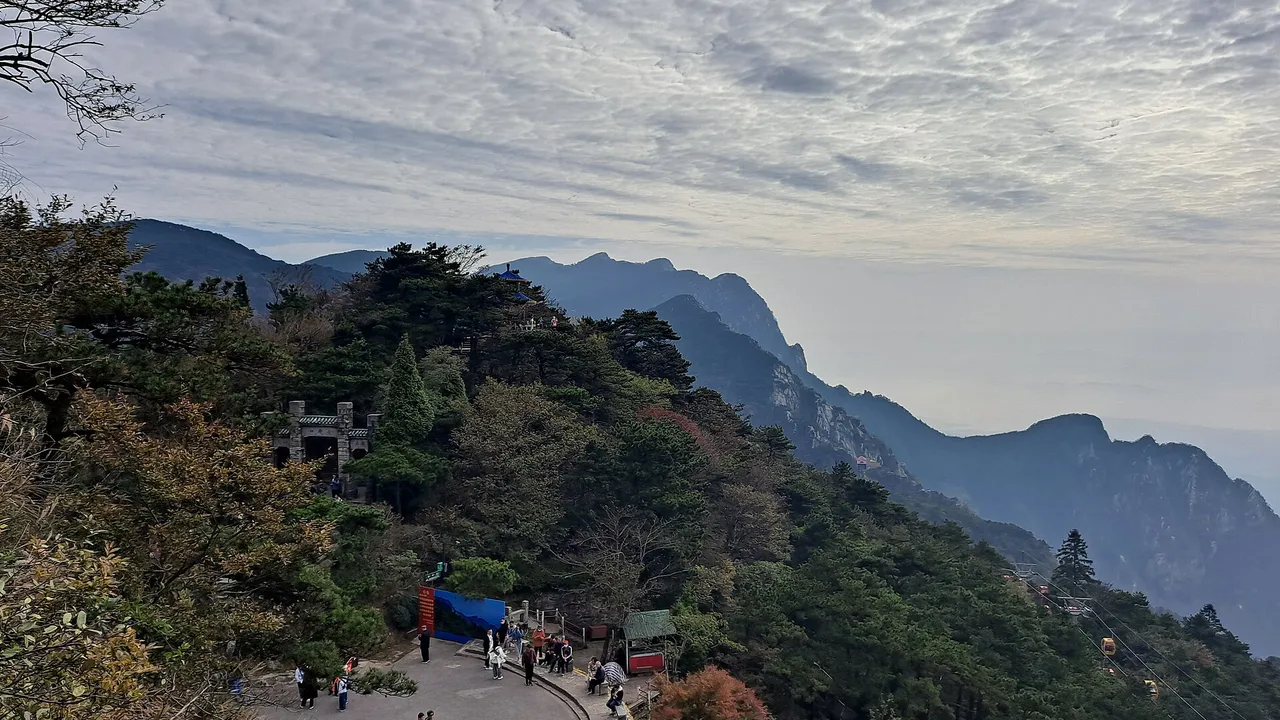
Sunrise and the Lake View at Hanpokou
The water line opens at Hanpokou, the gorge staring straight at Poyang Lake: sunrise lights the water first as cloud decks burn orange-gold into day, the very source of the name meaning lake-holding mouth. Clear days merge lake and sky, grey days churn fog, both worth the alarm.
After sunrise walk on to the Wangpo Pavilion one tier higher. Pre-dawn cold demands a warm layer, and breakfast back in town slots before the morning climb.
Wulaofeng (Five Old Men Peak)
The morning belongs to Wulaofeng, this line's lake-viewing deck: the fourth peak frames Poyang's mist against the ridgeline, mirror-calm in sun and fused with the mountain in fog, over a three-hour stone stair total.
Average legs may turn at the fourth peak. Linger up top and fix the lake's compass in memory; reaching the shore tomorrow will feel like a reunion.
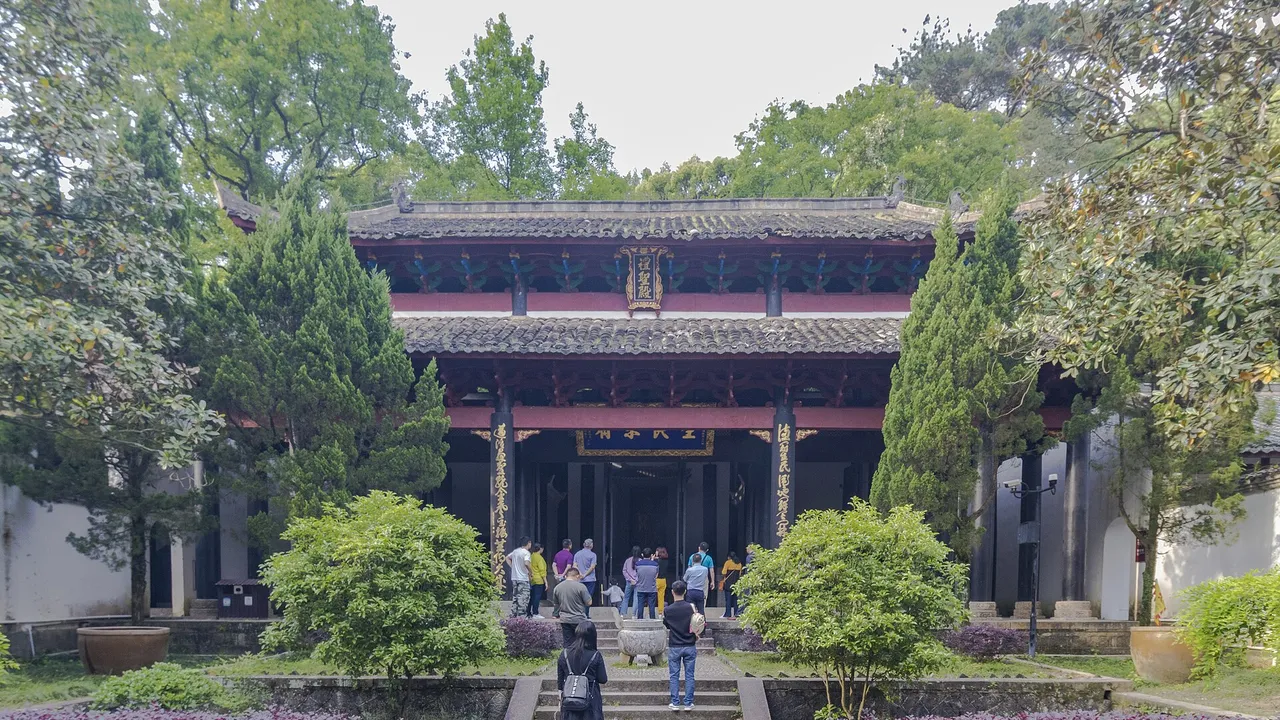
The White Deer Grotto Academy
Afternoon descends to the White Deer Grotto Academy at Wulaofeng's southeastern foot, one of the four great academies, rebuilt under Zhu Xi with his rules carved along the stele corridor and halls stepping up the axis, Guandao Stream's inscriptions carrying the lake country's literary air downhill.
Facing the lake country, the academy is the interchange between viewing water from above and reading beside it. Give it two hours; crowds are thin enough to hear the stream.
Shizhong Mountain
Day two enters the lake country at Shizhong Mountain in Hukou, commanding the mouth where Poyang meets the Yangtze. Su Shi moored beneath it at night and wrote his famous essay, and the water-on-stone sound he described still carries. Pavilions and steles pack the summit, an hour end to end.
From the top, the two-toned line where river and lake meet shows sharpest at high water. This is the place to read the two characters, lake and river, distinctly.
Xieshan (Shoe Island)
In the afternoon, look at Shoe Island mid-lake, an islet shaped like an embroidered slipper, legend says dropped by a fairy. High water rings it on all sides and needs a boat; low water bares the flats for close viewing. Pavilions and old trees cover it.
Viewing from shore usually suffices, saving the boat for when it truly suits. The open lake rewards long lenses with compression, and in migration season goose skeins sweep past the islet.
Luoxingdun (Falling Star Islet)
By late afternoon reach Luoxingdun at Xingzi, a falling star said to have become this rock in Poyang. In the dry season the water withdraws, grass flats bare, and the islet turns from lake rock to walkable stone on the shore, the lake's most photogenic corner.
At high water it returns to the lake, a boat view or distant one. Check water levels before setting out; Luoxingdun at low water under sunset is the three days' best photograph.
Xiufeng
Day three's morning goes to Xiufeng on the southern side, the Kaixian waterfall behind the three-thousand-feet verse, falls, cliff inscriptions and peaks in one frame. Seen back from the Poyang side, this is the mountain's most graceful profile.
Walking plus one cableway section reaches the falls' base, about three hours. Wet-season volume peaks, and on clear days waterfall plus lake view close the mountain-and-water story in style.
The Gutang Customs Site
Afternoon reaches the Gutang Customs site on the Poyang shore, witness to modern Jiangxi's foreign trade: the old customs building standing at the waterline, weathered brick against cargo-boat silhouettes, spelling out the words lake trade in concrete terms.
Visitors are rare and the shore audible. Forty minutes here anchors three water days to one proper place-name, and memory holds better for it.
Bilongtan
Finish at Bilongtan on the northern foot, where the Wangpo twin falls drop into a jade pool clear to the bottom, the gentlest forest walk of the three days and the chapter that completes mountain springs.
The loop takes about ninety minutes with rare crowds. River, lake, islet, flats and waterfall all seen, a last pool of still water closes the rhythm just right.
| Getting around |
|
| Budget | Entries total about RMB 200-250 pp (Shizhong about RMB 50, Xiufeng about RMB 60, academy about RMB 40, most else free), plus two days of car hire. |
| Best time | The dry season, October to March, shows Luoxingdun at its best; winter migrants and lake light are this line's hidden main course. |
FAQs
How do I schedule the two Poyang days?
Shizhong Mountain and Shoe Island form one Hukou line, Luoxingdun and Xiufeng one Xingzi line, each a full hired-car day; the Gutang Customs site sits on the Jiujiang side and chains on the return. Mountain buses never leave the park, so lowland runs are car-only, cheapest split four ways.
When does Luoxingdun look its best?
In the dry season, usually October to March: the water withdraws, grass flats bare, and the islet becomes walkable shore rock; at high water it returns to the lake for boat or distant views. Check levels and local notices before setting out, and low-water Luoxingdun under sunset is the trip's best frame.
Between Shizhong Mountain and Shoe Island, which one?
Shizhong wins on access and depth: Su Shi's essay site, a few dozen yuan, done in an hour. Shoe Island is a lake islet needing a boat subject to levels and operations, usually best admired from shore. On a tight clock pick Shizhong and let Shoe Island be the passing view.
What should winter birding carry?
Open flats run windy, so a windproof shell and hat are the floor; binoculars make a tenfold difference and scopes more, rentable at farms and birding points. Keep distance, never flush or feed birds, and wear muted colors. Migrants stay November to March, so check the week's bird reports before leaving.