
Five days is the length at which Lushan settles: day one town and west line, day two east-line heritage, day three sunrise plus Wulaofeng and Sandiequan, day four the Huanglong loop and lakeside flats, day five downhill for Donglin and Xilin. Scenery, heritage, climbing and water each get their texture.
Sleep in Guling throughout, luggage settled once, with day five leaving the mountain for good, a clean line. Pacing runs medium, light, hard, light, medium, day three the grinder with slack on either side. Fog is Lushan's houseguest, so keep one indoor fallback daily, museum or cinema, and no weather wastes a day.
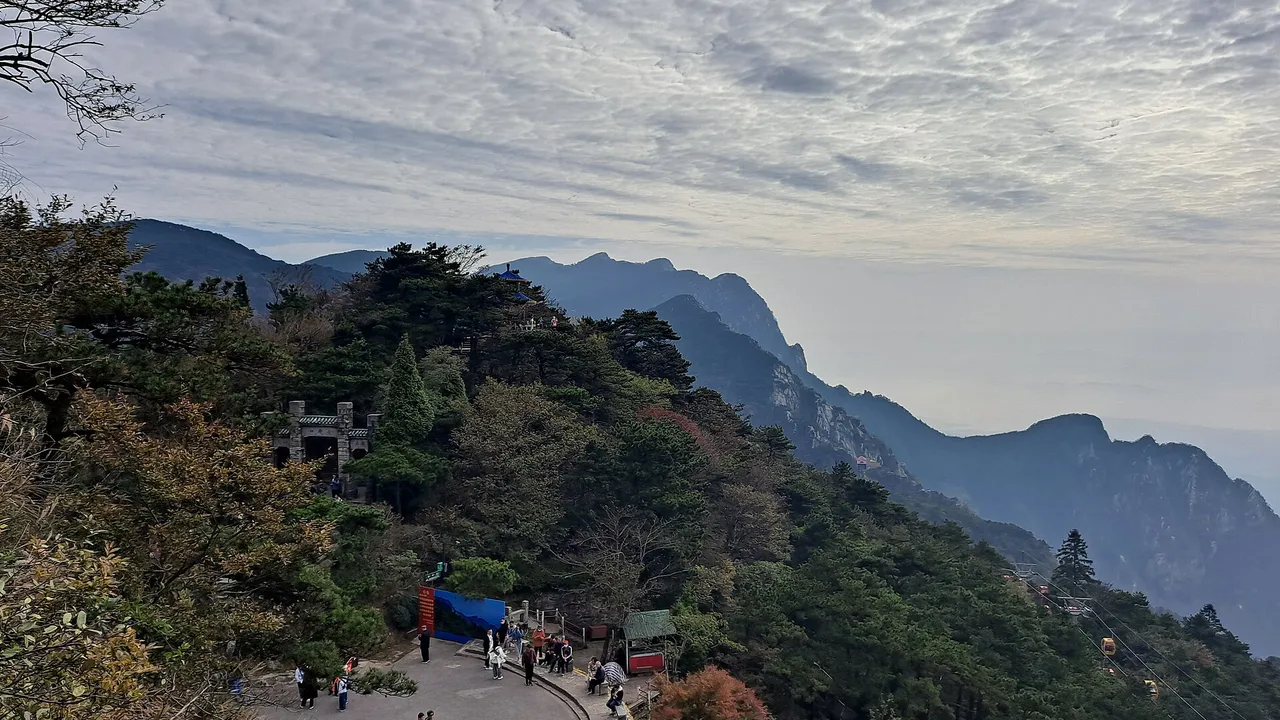
Itinerary at a glance
| 第1天 09:30 | Guling Town and the Town-Center Park |
| 第1天 11:00 | Ruqin Lake and the Flower Path |
| 第1天 14:00 | Jinxiu Valley and Xianren Cave |
| 第2天 09:00 | Great Tianchi and Longshou Cliff |
| 第2天 14:00 | Meilu Villa and the Conference Site |
| 第3天 06:00 | Sunrise at Hanpokou |
| 第3天 09:30 | Wulaofeng (Five Old Men Peak) |
| 第3天 14:00 | Sandiequan Waterfall |
| 第4天 09:00 | Huanglong Pool, Wulong Pool and the Three Treasured Trees |
| 第4天 13:30 | Lulin Lake and the Lushan Museum |
| 第5天 09:00 | Donglin Temple and Xilin Temple |
The route, stop by stop
Guling Town and the Town-Center Park
Five days start with the town. Guling sits at about 1,100 meters, the town-center park its geometric middle, terrace staring down the valley, most spectacular when a cloud sea rolls underfoot. Walk the main street once and learn the map.
Collect a sightseeing-bus map and closure schedule at the visitor center and the five-day skeleton is set. The town runs steep, so keep today short and save the legs.
Ruqin Lake and the Flower Path
Day one's afternoon starts west at Ruqin Lake, lute-shaped, with the Flower Path minutes away where Bai Juyi wrote his famous April line, the thatched hall showing the poet's mountain traces.
Spring blossom and autumn leaf are the two glory seasons, the arch bridge and broken-bridge rock the classic frames. Keep day one's effort to half a day.
Jinxiu Valley and Xianren Cave
Enter Jinxiu Valley from the Flower Path, the sub-four-kilometer ravine packing Lushan's densest scenery with cliffs, rocks and cloud seas trading places, exiting at Xianren Cave where the perilous-peaks line was penned.
About ninety minutes total, day one's highlight stretch. The viewing rocks beyond the cave bank the west line's clouds before dinner back in town.
Great Tianchi and Longshou Cliff
Day two's morning goes deep on the west line: Great Tianchi's two ridge-top wells and Longshou Cliff's dragon-headed boulder jutting over Iron Ship Peak ghosting in the clouds, the west line's grandest viewpoint.
Forty minutes on foot, wind-scoured but wide open. Morning light models the cliff face, and photographers often stake out the whole forenoon.
Meilu Villa and the Conference Site
Day two's afternoon returns to town for modern history: Meilu Villa, home in turn to Chiang Kai-shek's household and Mao Zedong, vines on the veranda and interiors intact, and the conference hall's furniture standing as it did.
About two hours for both, free to enter. Placing modern history in the lowest-effort slot is the line's quiet trick.
Sunrise at Hanpokou
Day three's alarm rings at five. Hanpokou opens straight at Poyang Lake, the water lighting first as cloud decks burn orange-gold into day, Lushan's most storied moment. Breakfast back in town slots before the climb.
Pre-dawn cold demands down or fleece. In rain, trade Hanpokou for the indoor fallback, the museum, and keep sunrise for a clearer night.
Wulaofeng (Five Old Men Peak)
The morning climbs Wulaofeng, five summits seated like five elders, the fourth peak framing Poyang's mist against the ridgeline over a three-hour stone stair, the mountain's premium climb.
Average legs may turn at the fourth peak. Fog arrives and departs fast, so waiting often outearns climbing.
Sandiequan Waterfall
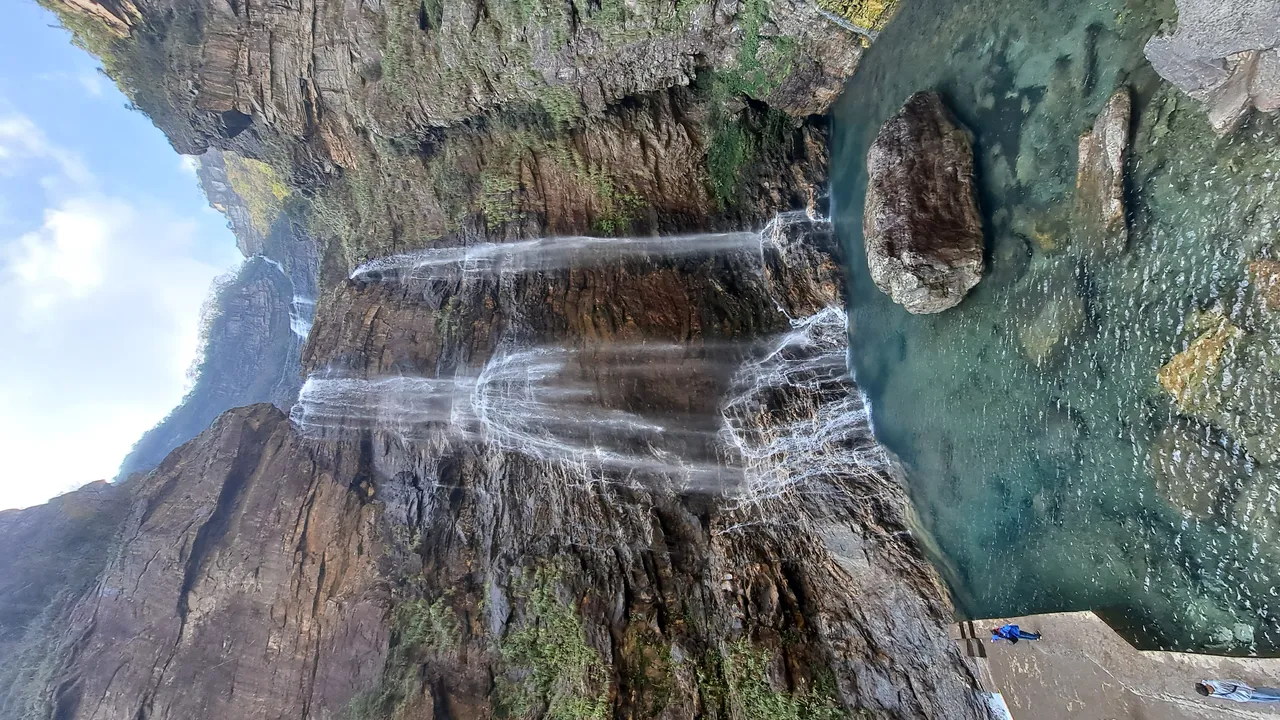
The afternoon descends to Sandiequan, water dropping three tiers over more than 150 meters, fullest in the wet season. The deck sits at the ravine floor, a thousand-step descent worth every one.
About three hours round trip with the cable car shaving the upper section; the return climb punishes knees, so judge honestly, and sleep early after back in town.
Huanglong Pool, Wulong Pool and the Three Treasured Trees
Day four eases off. Morning on the Huanglong trails, one pool clear and one graceful, the Three Treasured Trees several arm-spans around under sealing shade, paying back yesterday's stairs.
The nearly flat loop takes about two hours with the free temple at its exit; forest quiet is the recovery day's whole point.
Lulin Lake and the Lushan Museum
The afternoon unwinds at Lulin Lake, mirror-green with reflected peaks and the islet pavilion the classic frame, a forty-minute loop, with the Lulin No.1 residence beside it housing the Lushan Museum, the mountain whole in one hall.
Free with an hour inside; a heritage footnote on a recovery afternoon keeps the balance right.
Donglin Temple and Xilin Temple
The last day descends to the northern foot: Donglin Temple, home of Pure Land Buddhism where Huiyuan founded his society and translated sutras, its tiger-stream legend a millennium old, and Xilin Temple a few hundred steps on, where Su Shi wrote that no one inside the mountain knows its true face.
Two hours covers both, one solemn and one poetic, a literate close to five days. Departing trains connect most cleanly from the Jiujiang side, and the trip lands.
| Getting around |
|
| Budget | Entry RMB 160, bus RMB 80, Sandiequan about RMB 64, cableways extra; the whole trip's tickets run roughly RMB 400-550 pp. |
| Best time | Apr-Jun and Sep-Oct run steadiest; book lodging two weeks ahead in season, and post-rain days double waterfall and cloud-sea odds. |
FAQs
How should five nights be arranged?
Guling all five nights is the sane play: luggage settled once, buses radiating from town, with lowland days run as early-out-late-back. Peak-season rooms tighten and price up, so book two weeks ahead; budget travelers can mix hostel and guesthouse, saving a villa-conversion hotel for the final nights as reward.
What is the total ticket budget?
Entry about RMB 160, bus about 80, Sandiequan about 64, cableways tens per ride, the two temples free or donation, plus odd shuttles: tickets cap near five to six hundred per head for the trip, far more transparent than most famous mountains' hidden fees.
Which day is hardest, and how do I adjust?
Wulaofeng plus Sandiequan is the grinder, thousands of steps. Two fixes: hold the botanical garden's afternoon as buffer, or give Sandiequan its own single-stop day. In rain, drop the pair for museum and conference site; post-rain volume grows, so next-day viewing often improves on the original plan.
How do I handle the mountain's changeable weather?
Lushan logs nearly two hundred foggy days a year, so treat forecasts as hints. Gear-wise, rain shell, grip shoes and warm layer never leave the pack; schedule-wise, keep one indoor fallback daily, museum, cinema or conference site. Do not sulk at fog: cloud sea is fog's gift, and patience with clouds is the mountain's real admission ticket.