
Old Qingdao is a slope city built against the hill, red roofs stacking from the shore up to Signal Hill's foot. This one-day route enters no major scenic area and reads the German-era urban fabric on foot: the old station, courtyard blocks, bank buildings, a governor's residence on the hillside, closing at the Daxue Road corner wall.
Two keys: gradient, since every lane runs either up or down and your legs belong to the second half; and light, red tile and yellow wall saturating before ten and after four, with noon given to interiors and shaded blocks. About six kilometers in all.
Itinerary at a glance
| 08:30 | The Old Railway Station and Morning at Zhanqiao Pier |
| 10:00 | Zhongshan Road and Silverfish Lane: Courtyard Blocks and a Revived Lane |
| 13:00 | Signal Hill and the Governor's Mansion: The Red-Roof Panorama and a Residence Interior |
| 16:00 | Daxue Road and Lao She's Residence: The Yellow-Wall Corner in the Afternoon |
The route, stop by stop
The Old Railway Station and Morning at Zhanqiao Pier
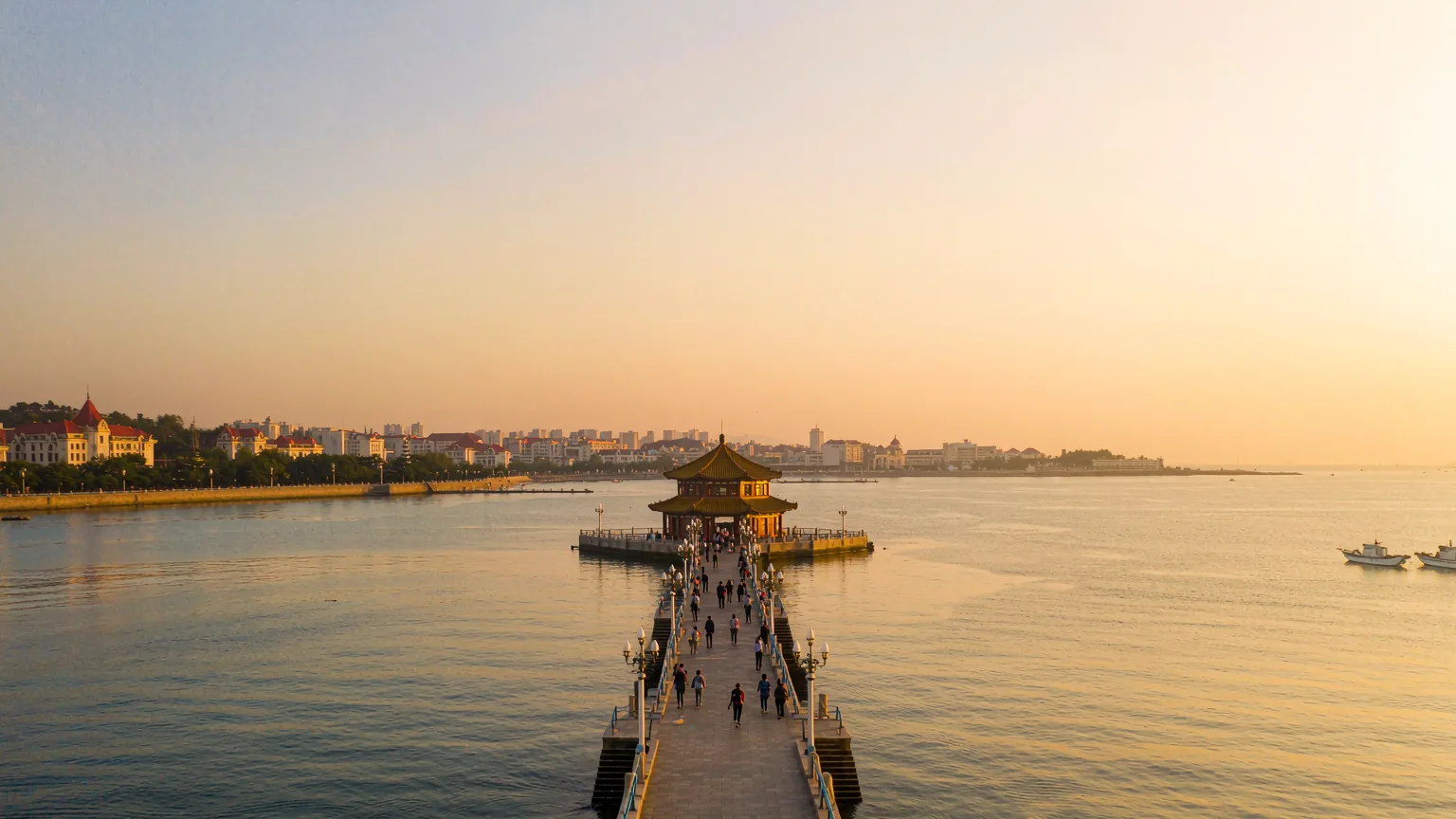
Begin at the German-era station, its clock tower the city's gatehouse memory, then walk five minutes east to Zhanqiao Pier. Mornings belong to exercising locals and shellfish diggers on the low-tide flats, the light cutting the old-town skyline into silhouette.
Follow the shore northwest past the quiet morning light of the Number Six Bathing Beach, the old town rising behind tier by tier. This is the day's only flat stretch; the climbing starts after.
Zhongshan Road and Silverfish Lane: Courtyard Blocks and a Revived Lane
Zhongshan Road is the old town's spine, German-era banks and shopfronts intact, running north through working-street life. Turn into Silverfish Lane, a century-old alley restored with restraint, red brick and old timber doors now housing coffee and boutique shops, the old town's most tasteful renewal.
The web of small lanes between alley and spine rewards aimless walking: courtyard wells, stone steps of old doorways, carved names of vanished trades. Shops have just opened at ten, thin crowds, good light.
Signal Hill and the Governor's Mansion: The Red-Roof Panorama and a Residence Interior
After lunch climb Signal Hill, its three red mushroom towers the old town's high point; the revolving deck turns a full circle in about twenty minutes, red roofs, twin spires and the bay in one frame. Entry about RMB 5, the city's best-value lookout.
A dozen minutes downhill sits the Governor's Mansion museum, a German residence keeping its original furniture and layout, granite facade photogenic in tree shade, entry about RMB 20.
Daxue Road and Lao She's Residence: The Yellow-Wall Corner in the Afternoon
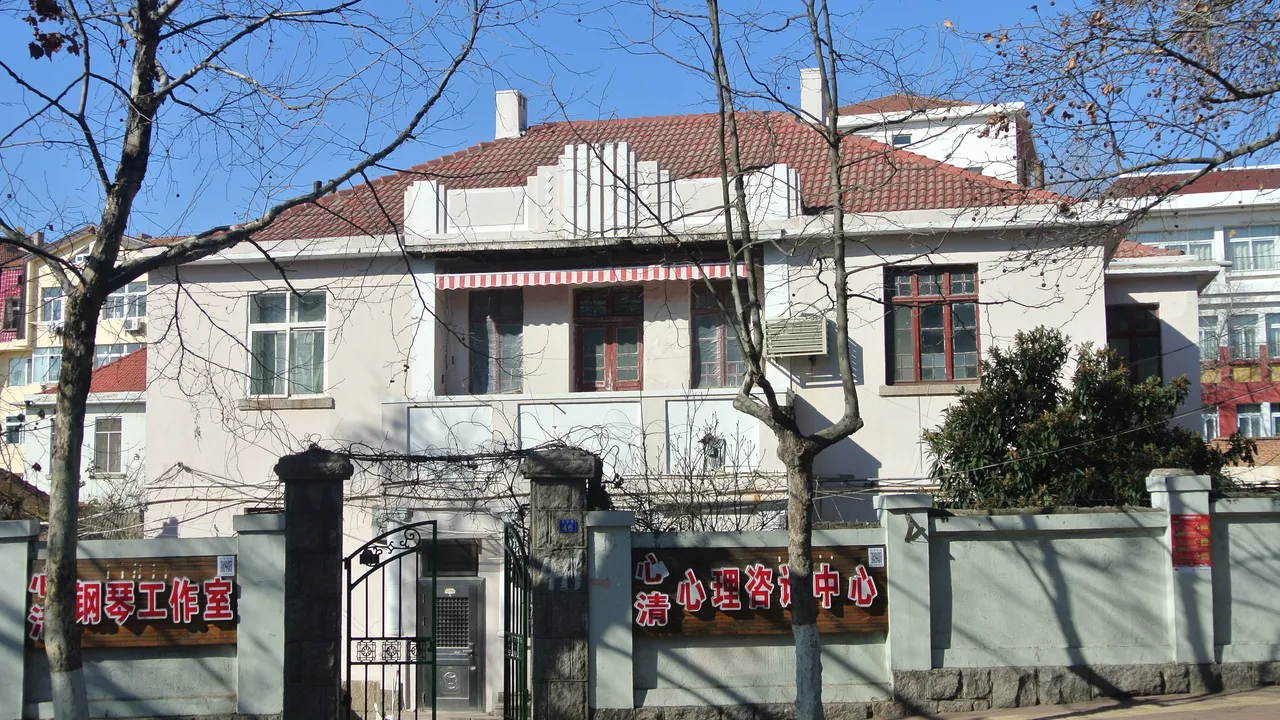
The afternoon ends at the corner of Daxue and Yushan Roads, red tile and yellow wall under plane trees, one of Qingdao's most photographed frames with a steady photo queue, thinner on weekday afternoons. Inside the corner runs Huangxian Road, where Lao She's former residence, the Camel Xiangzi museum, sits free on a quiet street.
The residence displays manuscripts of Camel Xiangzi and the study where Lao She worked; afterward take a cafe seat on Daxue Road and watch students and visitors pour past the corner, an artistic full stop.
| Getting around |
|
| Budget | Signal Hill about RMB 5, the Governor's Mansion about RMB 20, residence free; the day runs RMB 80-160 pp with coffee and a light meal. |
| Best time | Year-round, kindest in spring and autumn; the old town climbs steep slopes and stone lanes slicken after rain, so wear grip soles. |
FAQs
The old town climbs a lot, can average fitness finish it?
Yes. Of six kilometers, the truly steep part clusters at Signal Hill, the rest gentle slopes. Do pier-to-Zhongshan in the strong morning hours, taxi over one midday leg, and climb only one of the two lookouts; intensity halves at once.
Is Silverfish Lane worth a detour or just a passing look?
Passing look is the right calibration: the lane is short, half an hour covers it, and the value is coffee framed by old buildings. Going for shopping alone disappoints; take it as the rest stop between Zhongshan Road and Signal Hill.
Between Signal Hill and Xiaoyushan, which lookout?
Signal Hill for the panorama, the revolving view sweeping roofs and bay together; Xiaoyushan for layering, close over the twin spires and stacked ridgelines. First-timers pick Signal Hill, photographers do both, entries are cheap.
Does this route survive rain?
Light rain works, arcades and lanes give cover, and the mansion is the natural wet-day backup. In heavy rain skip the hill and raise the museum-and-cafe ratio. Slick cobbles after rain are the real hazard, so grip soles matter more than umbrellas.