
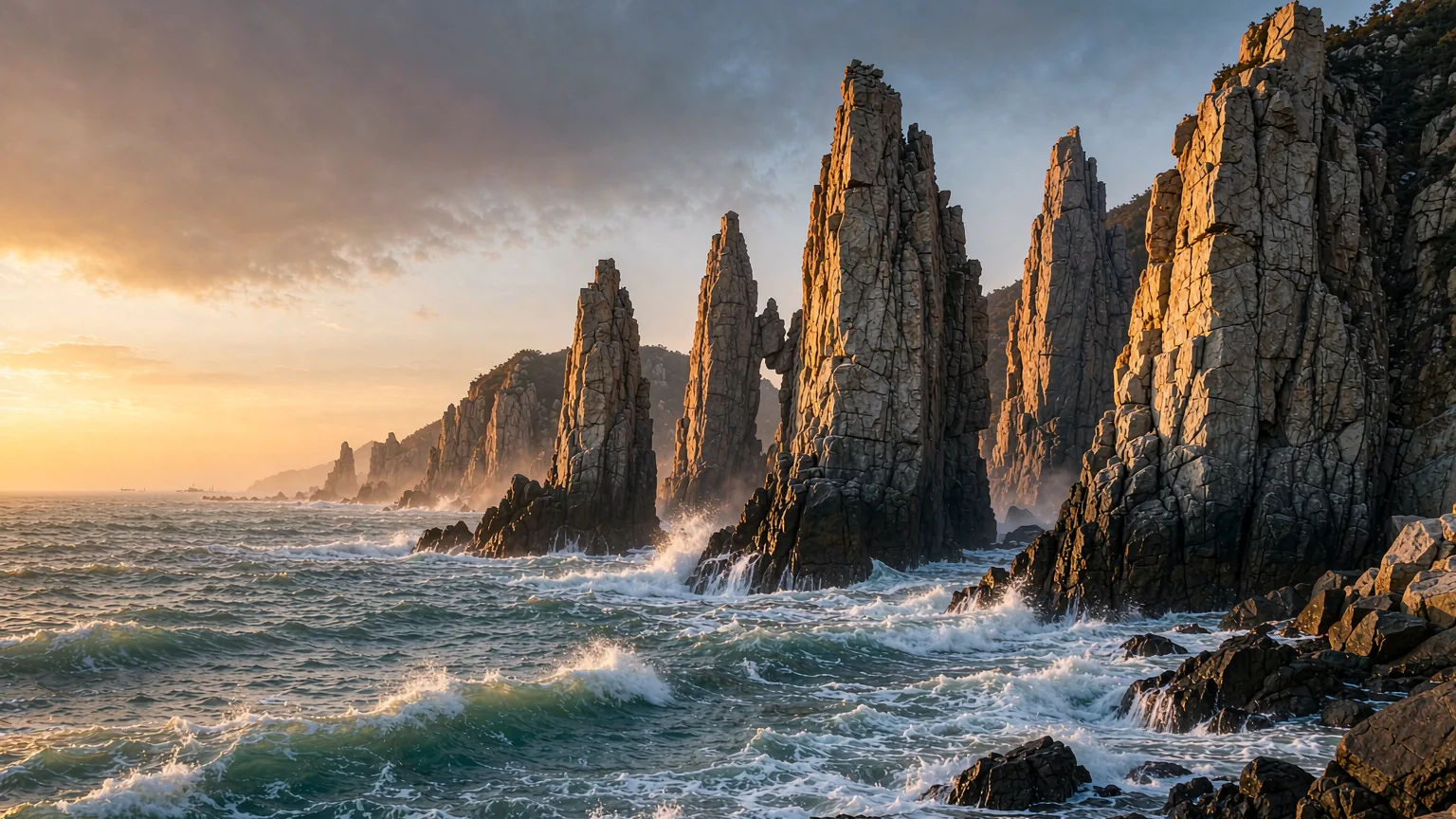
Laoshan is the famous mountain rising straight from the sea, mountain line and sea line meeting around Taiqing Palace. Three days walk its three great zones: the Taiqing line for temples and coast, North Jiushui for creeks and falls, Yangkou for granite peaks and caves, each day closing with a tea stop after descent.
All routes switch to shuttle buses at the visitor centers, with peak-season entry and shuttle tickets sold apart. Mountain weather differs from town, so check the scenic-area notices before setting out, some trails closing in rain. Three days outdoors make grip soles, water and sun protection the basic kit.
Itinerary at a glance
| Day1 08:30 | The Taiqing Zone: A First Morning into the Mountain |
| Day1 10:00 | Taiqing Palace: The Ancestral Court of Laoshan Taoism |
| Day1 13:00 | Qingshan Fishing Village: Tea Terraces and Stone Houses Between Mountain and Sea |
| Day1 16:00 | The Pass Coastal Boardwalk: Dusk on the Sea Line |
| Day2 08:30 | North Jiushui: A Day of Eighteen Pools and Creeks |
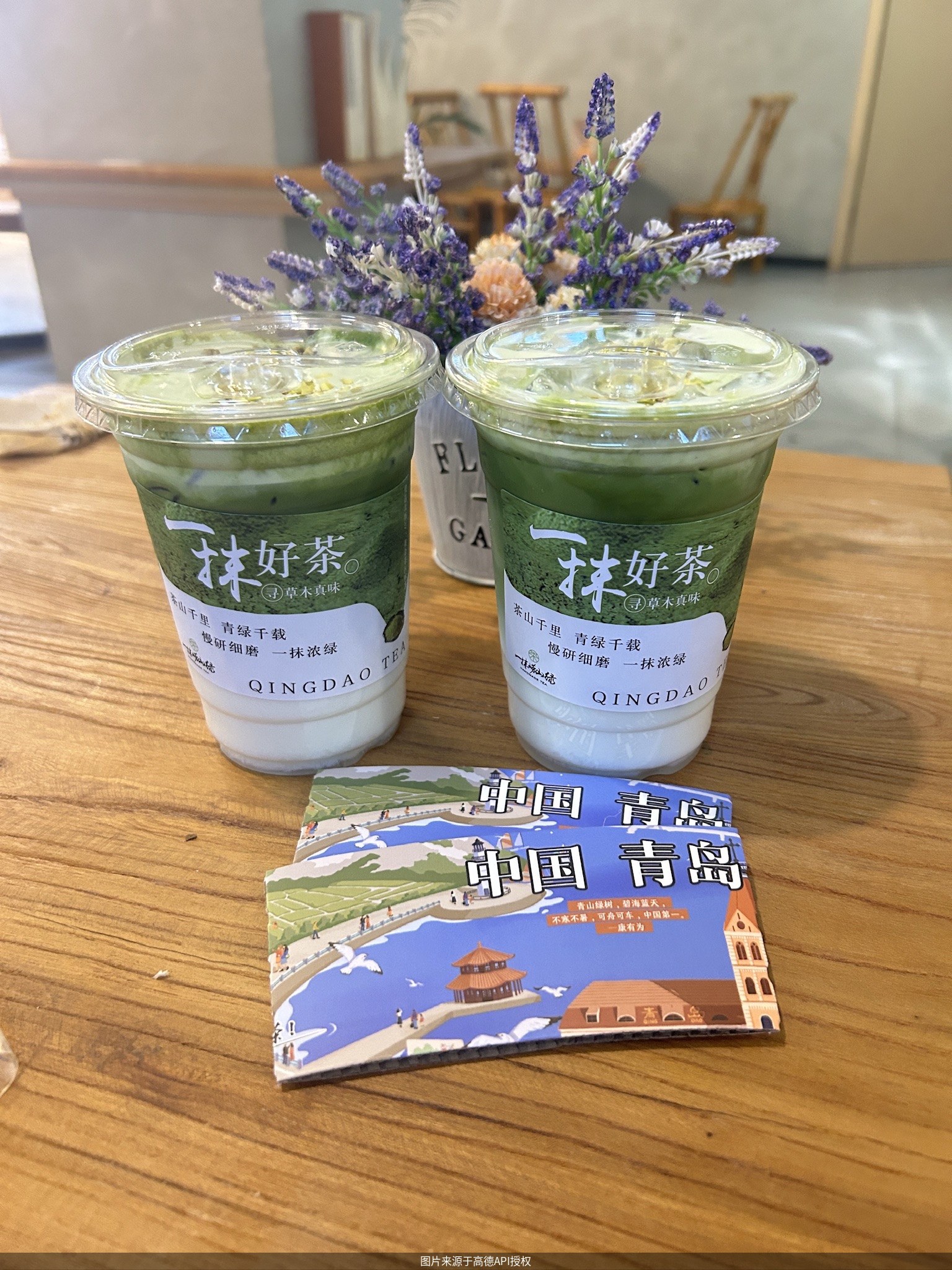
| Day2 14:00 | Yimo Laoshan Green: Afternoon Tea Among the Tea Hills |
| Day3 08:30 | The Yangkou Zone: The Climb to Seek-Heaven Cave |
| Day3 13:30 | Erlongshan and Xiaowang Reservoir: Water Color in the Mountain Fold |
| Day3 16:00 | Diaolongzui Village: A Last Look at the Laoshan Sea |
The route, stop by stop
The Taiqing Zone: A First Morning into the Mountain
Day one enters via the Taiqing line. At the Dadonghe visitor center, switch to the shuttle and wind along the coast road, sea spread to the left, the twenty-minute ride itself a sight. The Taiqing zone rests back-to-hill, facing-sea, its climate milder than town, ancient trees and bamboo greeting at the gate.
Off the bus, warm up on the shore boardwalk where reefs and coves alternate, the temple's yellow wall peeking through the trees.
Taiqing Palace: The Ancestral Court of Laoshan Taoism
Taiqing Palace anchors Laoshan Taoism, founded in the Western Han with incense unbroken for two millennia. The halls of the Three Officials, Three Pure Ones and Three Sovereigns line the axis, courtyard cypresses and the dragon-head elm centuries old, and the quarters where Pu Songling stayed while writing Strange Tales, home of the wall-passing tale.
The temple rewards an unhurried hour; the path behind connects to hill views, a glance at fishing boats on the sea, then back.
Qingshan Fishing Village: Tea Terraces and Stone Houses Between Mountain and Sea
The afternoon shuttle reaches Qingshan fishing village, tucked below the pass and among Laoshan's finest views: stone houses climbing the slope, tea terraces stepping down to the sea, blue boats in the little harbor. The viewing platform at the village mouth frames bay and village in one shot.
Lunch at a farmhouse on seawater tofu and Laoshan mushrooms, then walk the village lane to the pier and watch nets being mended.
The Pass Coastal Boardwalk: Dusk on the Sea Line
Dusk walks the coastal boardwalk around the pass, the sea line condensed into half an hour: granite on the left, the Yellow Sea on the right, mountain shadows and fishing boats turning silhouette as the sun sinks.
Ride the shuttle back to the visitor center, day one's mountain and sea each closed out. Dinner in town or a guesthouse at the mountain's foot, both easy.
North Jiushui: A Day of Eighteen Pools and Creeks
Day two switches to the North Jiushui line, a creek route with nothing to do with the sea and everything with water: springs dropping along granite channels, pools stacked in inner and outer nines, Chaoyin Falls closing the line. The trail climbs the creek over steps and wooden bridges under closed canopy, Laoshan's coolest route.
Ninety minutes one way to the falls, returning the same path or looping. Summer draws the town's heat-escapers, weekday mornings quietest.
Yimo Laoshan Green: Afternoon Tea Among the Tea Hills
The afternoon descends to a teahouse among the hills, Yimo Laoshan Green a local favorite: green and black Laoshan teas by cup or pot, tea fields and sea horizon outside the window. Sea fog and granite soil give the green its peculiar fresh pea aroma, the taste people miss long after.
Two hours over tea, reviewing the morning's creek photos; in picking season watch the farmers firing leaves, spring's first pan the strongest pea fragrance.
The Yangkou Zone: The Climb to Seek-Heaven Cave
Day three walks the Yangkou line, Laoshan's most precipitate granite. The Seek-Heaven Cave is the rite: a hollow stacked of boulders with near-vertical steps inside, daylight leaking through cracks, and the moment you emerge the view flings open, the sea angle utterly unlike Taiqing's.
Skip the cave via the cableway both ways, with the Taiping Palace temple below worth a look; Yangkou's beach sits at the mountain's foot for a barefoot touch of the sea after descent.
Erlongshan and Xiaowang Reservoir: Water Color in the Mountain Fold
The afternoon reaches Erlongshan, a lower-key zone centered on Xiaowang Reservoir: emerald water embraced by granite, the circular trail about an hour in complete shade. Against the crowds of Taiqing and North Jiushui, the quiet here borders on extravagance.
Farmhouse tables and tea stalls line the reservoir; order a pot, watch the mountain reflections across the water, and let three days of Laoshan settle.
Diaolongzui Village: A Last Look at the Laoshan Sea
Before returning, turn into Diaolongzui village, built on a sea cliff and named for a dragon-mouth landform, the photographers' hidden sunset seat: cove, reef and facing mountain stacked in three layers, evening boats running home to animate the frame.
After sunset take the last fisherman's dinner in the village, then back to town. Three days opened at a temple, unspooled through creeks, and closed at a fishing village, the mountain-and-sea story told whole.
| Getting around |
|
| Budget | Peak-season Laoshan entry about RMB 90, shuttle about RMB 40, Taiqing Palace about RMB 27, tea stops and farmhouse meals extra; three days run about RMB 400-700 pp. |
| Best time | Apr-Jun and Sep-Oct hold steadiest; summer entries start at dawn for the cool, while frozen North Jiushui in winter argues against forcing the climb. |
FAQs
Do three days in Laoshan repeat themselves?
No, the three lines have distinct characters: Taiqing for sea and temples, North Jiushui for creeks and falls, Yangkou for granite and caves. On two days, cut Erlongshan and Diaolongzui and keep the three great zones; a one-day ceiling is Taiqing plus Yangkou.
How do I arrange shuttles and cableways with least effort?
Shuttles are mandatory, moving within every zone; the cableway earns its keep only at Yangkou, riding up and walking down or the reverse, saving legs for the cave. North Jiushui is all on foot with no cableway, so budget the effort honestly.
How do I downscale Laoshan for kids and seniors?
The Taiqing line is kindest: shuttle to the door, flat temple grounds, gentle shore boardwalk, all inside two hours. Swap the cave for the cableway viewpoint, and turn back at the third pool in North Jiushui. Leave summits and caves to cableways and decks, never steep steps.
How do I judge Laoshan tea, and is buying worth it?
Judge three things: tight even dry leaf, bright yellow-green liquor, clear pea aroma with sea-fog freshness. Spring tea peaks, pre-Qingming the priciest. Buying is worthwhile with a tasting first, at farms or proper shops, grades differing several fold, so set a budget before striking.