 TripMyChinaJOURNEYS THROUGH REAL CHINA✦ AI Trip✦ Plan My Trip
English
简体中文
繁體中文
日本語
한국어
ไทย
Tiếng Việt
Bahasa Indonesia
Italiano
Español
العربية
Русский
Deutsch
Français
Bahasa Malaysia
TripMyChinaJOURNEYS THROUGH REAL CHINA✦ AI Trip✦ Plan My TripMonasteries and mountain paths — a Buddhist retreat where temples and peaks meet cloud.
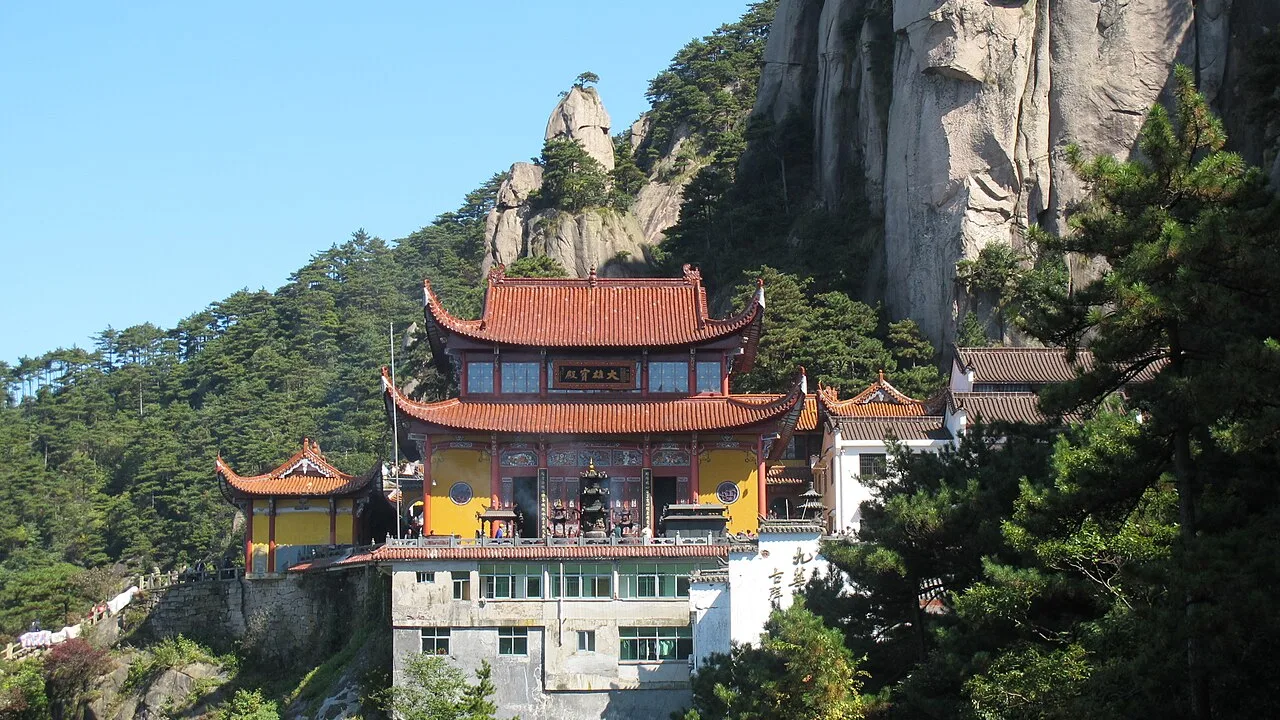
Jiuhuashan is a mountain and Buddhist site in Qingyang County, Chizhou, Anhui, in the hills of eastern China south of the Yangtze. It is one of the four great Buddhist mountains of China, and the surrounding town at the foot of the slopes serves as the gateway for visitors arriving by road.
The mountain has been a Buddhist center for centuries, associated in particular with Dizang, the bodhisattva of the underworld, and with the monks whose preserved bodies are venerated here. The mood is quieter than at many Chinese scenic sites: stone paths, temple courtyards, and pine forest rather than spectacle.
Most visits center on the temple cluster around Huacheng Temple, the oldest on the mountain, and on Baishui Gong and the Roushen Baodian, where the body relics are kept. Trails and a cableway lead up toward Tiantai Peak, the high point of the ridge, with views over the surrounding ranges.
World-class, national and global recognition earned over the decades.
Jiuhuashan is recognized as one of the four principal Buddhist mountains in China.
The mountain is the principal pilgrimage site dedicated to Ksitigarbha Bodhisattva in China.
Huacheng Temple is regarded as the founding monastery of Jiuhuashan.
The Body Hall houses the relic of the golden Ksitigarbha, a central object of veneration.
Baisui Palace is known for the preserved body of the monk Wuxia.

The moments that shaped the city — and the stories its people still tell.
Huacheng Temple, the founding monastery of Jiuhuashan, was established.
The monk known as the golden Ksitigarbha came to Jiuhuashan and became its central figure of veneration.
The Body Hall was constructed to enshrine the relic of the golden Ksitigarbha.
Baisui Palace was founded and later became known for the preserved body of the monk Wuxia.
Jiuhuashan developed into a major center of Buddhist practice with numerous monasteries.
Jiuhuashan continues as a pilgrimage destination and is recognized as one of China's Four Great Buddhist Mountains.
The monk venerated as the golden Ksitigarbha is central to Jiuhuashan's identity as his sacred site.
The monk Wuxia is remembered for his preserved body at Baisui Palace.
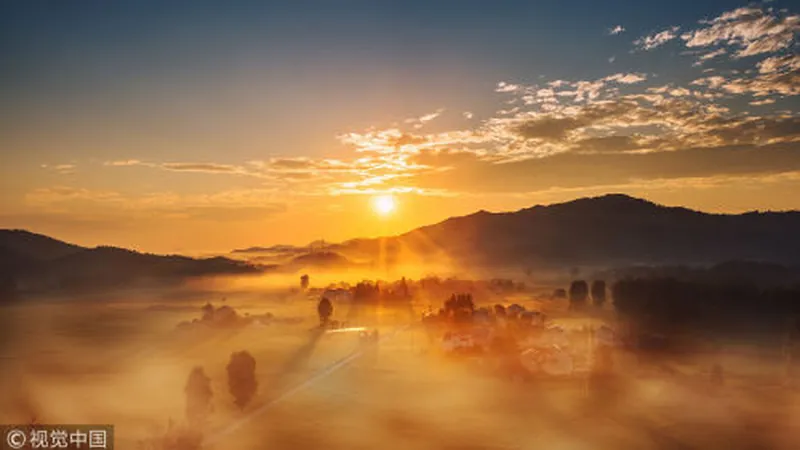
Tiantai Peak, the highest summit, is known for its sunrise views and sea of clouds.
Three paces, one city — every route built from places we actually operate.
Weather, crowds and the best months for what you want to see.
Mild weather and fresh greenery on the mountain.
Warmer temperatures; a common season for pilgrimage and hiking.
Clear skies and comfortable temperatures for visiting temples and trails.
Cold and quiet; some facilities may be limited.
Clearer skies in spring and autumn improve chances of seeing sunrise and the sea of clouds at Tiantai Peak.
What this city is known for — the things worth planning your day around.
The places worth building a day around.
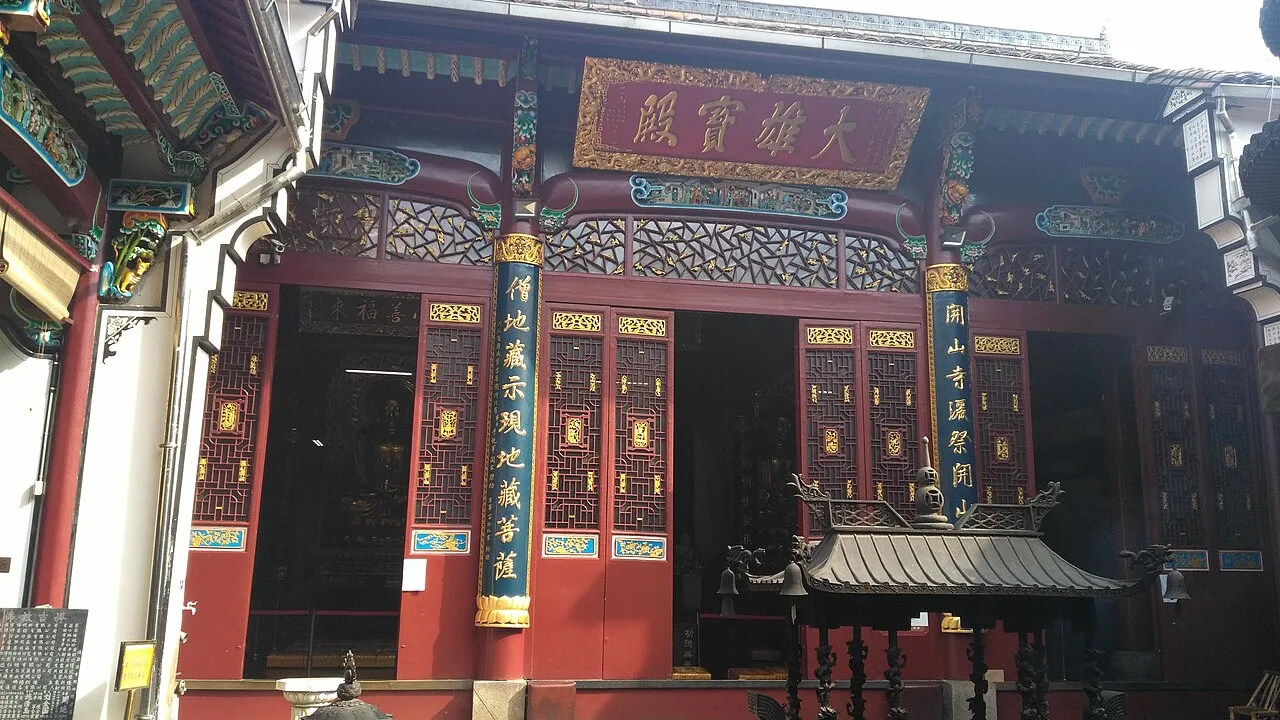
Huacheng Temple is Jiuhuashan's founding monastery, regarded as the historical starting point of the mountain's temple community.
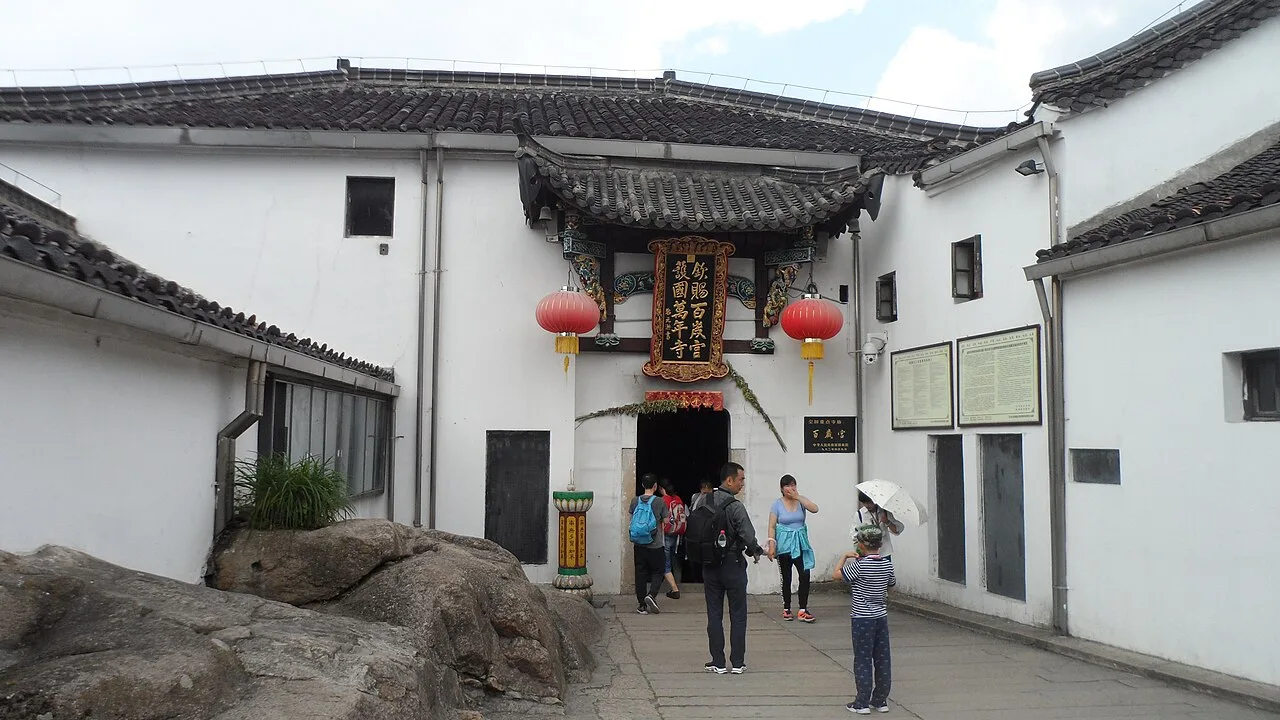
Baisui Palace is known for enshrining the preserved body of the monk Wuxia, one of the mountain's significant relic sites.
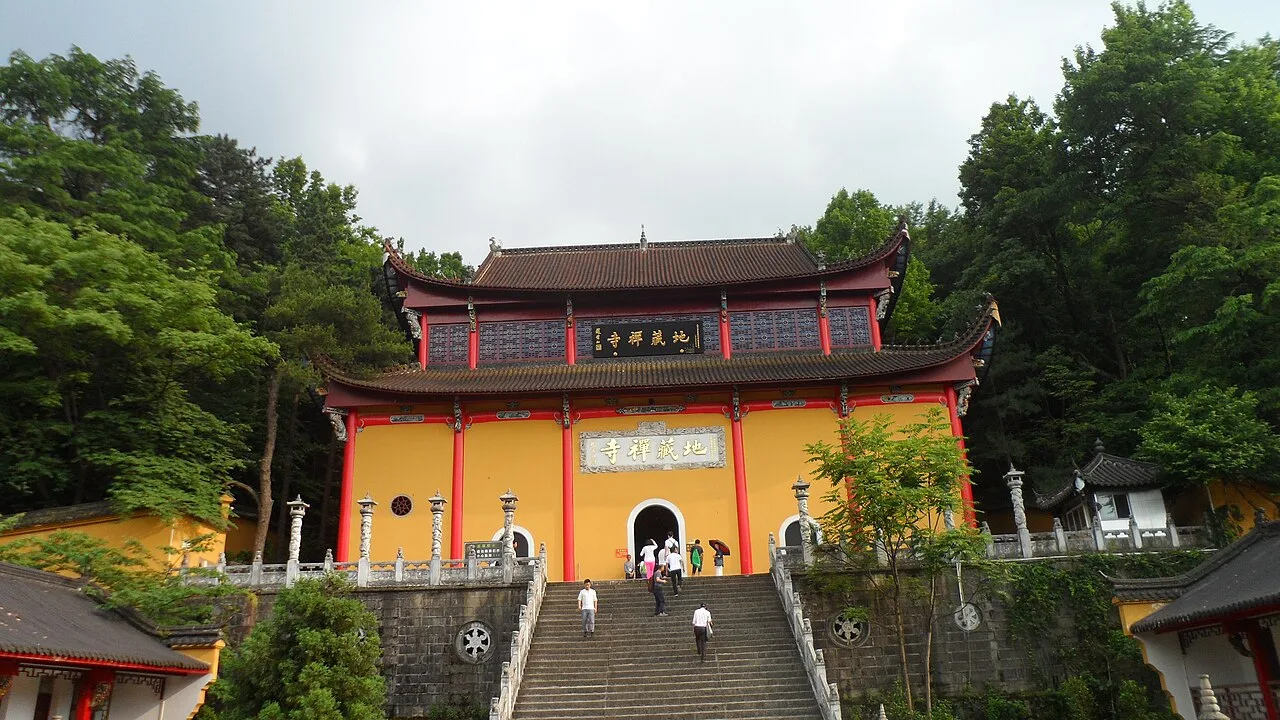
The Hall of the Flesh Body houses the relic stupa of the Venerable Kim Ksitigarbha and is the devotional heart of Jiuhuashan.
A little further out, for a spare half-day.
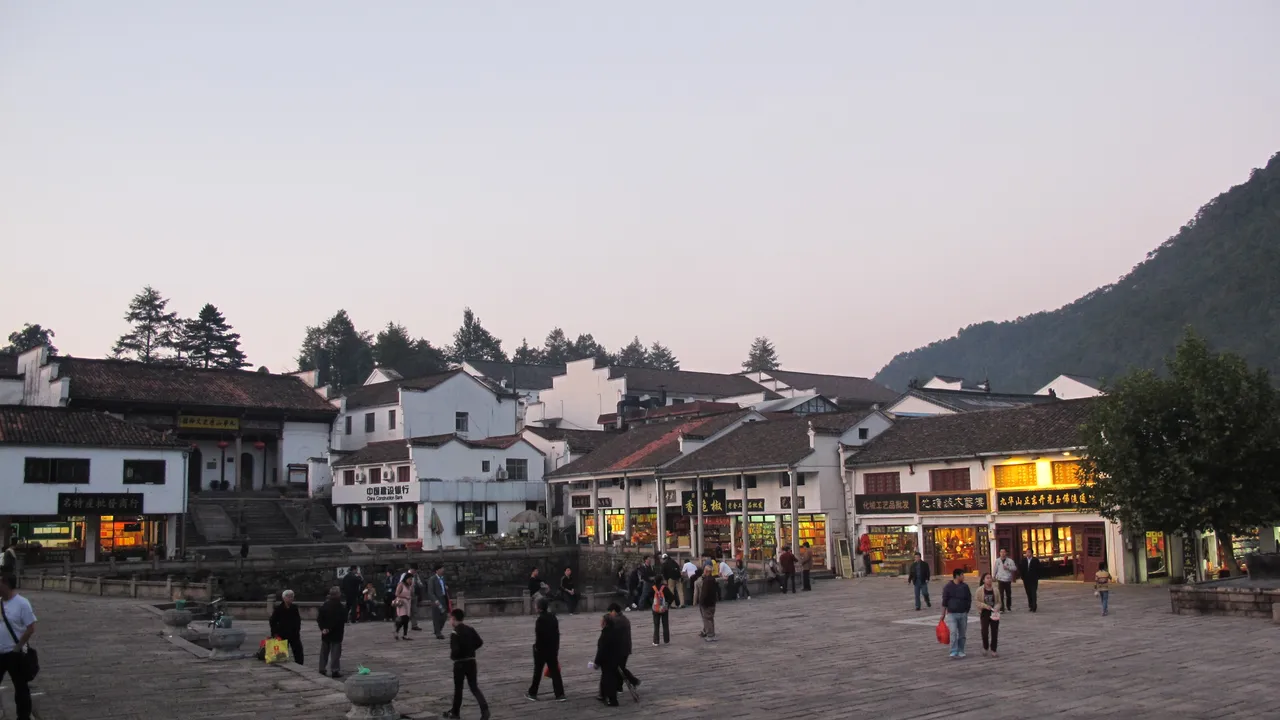
The temple-cluster heart of Jiuhua Mountain: incense smoke, Ming-Qing courtyards and Huacheng Square.

A Ming-dynasty hillside temple on Mount Jiuhua, enshrining the preserved body of Master Wuxia.
Vegetarian cuisine is the signature food of Jiuhuashan, closely tied to the daily life of the mountain's…
A short evening walk past the founding monastery's outer walls; keep noise low as halls close early.
Monastery dining halls serve simple vegetarian food; hours are limited, so ask on arrival.
On clear nights the mountain air gives good visibility away from the lamp-lit lanes.
Tiantai Peak sunrise requires a very early start; most visitors sleep early.
Jiuhuashan quiets down after the last day visitors leave. Monastery courtyards close early, and the practical evening options are a vegetarian meal, a walk along the lanes near Huacheng Temple, and an early start for sunrise at Tiantai Peak.
Listed sites and the crafts that made this city famous.
The founding monastery of Jiuhuashan and the historical centre of the mountain's monastic community.
Houses the stupa of the venerated monk Jindizang, the site most closely associated with the mountain's standing as a Buddhist pilgrimage destination.
A mountain monastery known for the preserved body of the monk Wuxia.
The highest peak on Jiuhuashan, visited for sunrise and cloud sea views.
One of China's four great Buddhist mountains, associated with Dizang Bodhisattva and long-standing pilgrimage practice.
The mountain is known for preserved bodies of venerated monks, including those at the Body Hall and Baishui Palace.
Simple vegetarian meals served in monastery dining halls, part of the daily rhythm of a pilgrimage stay.
Hall layouts, courtyards, and mountain-adapted construction across the temple quarter.
Stone paths and stairways linking the temples, used by pilgrims and visitors alike.
An early-morning practice at Tiantai Peak tied to the mountain's weather and elevation.
Senior licensed guides with 10+ years in the field and fluent English — deep on history, culture and local life.
Experienced licensed guides with clear English — solid on city highlights, food and day-to-day logistics.

Licensed guides with workable English — a good-value choice for city days, transfers and standard commentary.

Chauffeur-driven by the day, plus airport and intercity transfers.



Private chauffeur-driven vehicles, priced per vehicle not per person. Airport transfer from $45; intercity transfer from $180.
10 guides split by trip length: one-day city routes, three-day escapes and longer journeys, with stops, costs and transport in each.
Northern Wei Buddhas in the morning, Longdong history in the afternoon
Three DaysClassic Qingyang in Three Days: Qingcheng, the North Grottoes and XifengThe Zhou homeland, Northern Wei caves and city culture: three days along Qingyang's main
Multi-DayFive Days in Qingyang: All of Longdong Plus Kongtong MountainFive days across Qingyang's heartland, closing with a cross-city link to Kongtong Mounta
Real routes, real travellers — a sense of what a trip looks like.
"Three days was right. We did the temples first, then Tiantai Peak on the last morning."
"The vegetarian meals at the monastery halls were simple and filling. Ask about serving times when you arrive."
「一天走了化城寺和肉身宝殿,节奏刚好。开放时间提前在官方渠道查过。」
Most travellers spend 3 days here. Add a day for a side trip if you want a slower pace.
Spring and autumn are usually the most comfortable. Check the seasonal notes above before booking.
We arrange airport/rail transfers and private drivers. Tell us your arrival point and we plan the connection.
Send an enquiry and a human expert replies within 12 hours with a draft plan and real prices. Flexible rescheduling; clear cancellation terms in your quote.
2-day private itineraries in Mount Jiuhua start from $540 per person, two travelling together. Your proposal itemises hotels, tickets, guide and car — no hidden fees.
Jiuhuashan is one of China's four great Buddhist mountains and is associated with Dizang Bodhisattva. Its core sites are Huacheng Temple, the Body Hall, Baishui Palace, and Tiantai Peak.
One day covers Huacheng Temple, the Body Hall, and Baishui Palace. Three days add Tiantai Peak and Minyuan Bamboo Sea at a slower pace. Five days allow rest days and repeat visits.
This guide does not list hours or prices. Check official channels for current opening times, ticket prices, and any reservation rules before travelling.
Reservation rules are not fixed in this guide. Check official channels before your trip, especially for peak pilgrimage dates.
Sunrise at Tiantai Peak requires a very early start. Confirm transport arrangements and timing locally, as mountain weather changes quickly.
Monastery dining halls serve simple vegetarian meals (su zhai). Serving hours are limited, so ask on arrival.
Yes. A single day is enough for the three central sites, though three days give a more comfortable pace.
This is an active religious site. Keep noise low, dress modestly, and respect closed halls and monastery schedules.
Recent listed prices: Huacheng Temple 含在九华山门票内(旺季¥160/淡季¥140); Roushen Baodian (Hall of the Flesh Body) 含在九华山门票内(旺季¥160/淡季¥140); Baisui Palace 含在九华山门票内(旺季¥160/淡季¥140); Tiantai Peak 含在九华山门票内(旺季¥160/淡季¥140). Ticket prices change seasonally — we confirm them in your quote.