
Five days thread Longdong into one continuous line: day one in Qingcheng at the Zhou origin, day two the North Grottoes and city museum, day three north to Huanxian for puppets and lamb, day four an easy Ziwu forest hike, day five southwest across the city border to Kongtong Mountain in Pingliang, closing on a Taoist mountain's seas of cloud and ancient building complexes.
Kongtong belongs to Pingliang but borders Qingyang at about two hours' drive, a natural finale link. Lodging keeps the downtown-base system, with single nights toward Huanxian or the woods. Density runs high but the pace is tunable; spend energy on two hard days, two soft, one gentle close. The tableland roads curve constantly, so add roughly twenty percent to navigation estimates for true daily drive time.
Itinerary at a glance
| DAY1 09:00 | Qingcheng Day: Mausoleum, Hot Pot and Cave Lanes |
| DAY2 08:30 | Grottoes and Museum: Qingyang's Historical Depth |
| DAY3 09:00 | Huanxian Day: Puppets, Old Town and Lamb |
| DAY4 09:00 | Ziwu Day: A Forest-Edge Hike and the Turn Back |
| DAY5 08:00 | Kongtong Mountain: The Cross-City Taoist Finale |
The route, stop by stop
Qingcheng Day: Mausoleum, Hot Pot and Cave Lanes
Day one goes to Qingcheng: climb Zhouzu Mausoleum for full plateau views in the morning, an old-town earthen hot pot at noon, Yaowang wellness town and the old Qingzhou quarter in the afternoon, a riverside dusk walk, then back to the city base.
The day builds the base layer of where Qingyang began, and the next four days keep answering that origin.
Legend places the ancestors of the Zhou people teaching farming here, making Qingcheng the wellspring of Qingyang's agricultural story; the mausoleum, tableland and cave dwellings you see by day are all footnotes to that origin.
Grottoes and Museum: Qingyang's Historical Depth
Day two morning sees North Grotto Temple, centered on Cave 165's Northern Wei seven Buddhas, tickets 40 to 50 CNY with a guide worth hiring; the afternoon returns downtown for the museum's Zhou farming and stone sculpture halls. Evening means clear-broth lamb or yellow rice wine.
Grottoes plus museum is the highest concentration of Qingyang's humanities, so slow down and do not compress viewing time.
North Grottoes Temple was begun in the second year of the Yongping era of Northern Wei under the governor Xi Kangsheng, with later dynasties adding caves until a full grotto complex formed; the seven-Buddha ensemble of Cave 165, at this scale, is seldom matched in China.
Huanxian Day: Puppets, Old Town and Lamb
Day three heads north to Huanxian, fifty minutes by rail. Tour Huanzhou old town and the puppet museum in the afternoon, catch an evening Daoqing show, and bookend with Huanxian lamb that night and next morning.
Overnight in Huanxian county town, tour the morning market, and return to Xifeng. This night is the folk-culture anchor of the five days.
Huan County, anciently Huanzhou, was a contested frontier between farmers and herders; with daoqing shadow puppetry on the national heritage list, this northern leg heads straight for the summit of Qingyang folk culture.
Huanxian shadow puppetry is often called a living fossil of folk music. The Daoqing singing style preserves a large stock of ancient melodic patterns and has grown side by side with the puppet shows for centuries. Researchers note that it is still performed at temple fairs and family occasions, so one evening in the audience is a chance to hear a history of sound that is still breathing.
Ziwu Day: A Forest-Edge Hike and the Turn Back
Day four enters the Ziwu edge eastward, an easy two-to-three-hour hike in the Heshui forestry area among pines meeting loess gullies. Lunch in the forestry town, return by rural roads with photo stops at cave hamlets.
Back downtown by evening for a light dinner and early night, banking energy for Kongtong on day five.
Ziwu Ridge takes its name from a crest aligned with the meridian, and this well-preserved natural vegetation belt in the central loess plateau owes today's green to decades of closed-hills restoration.
Kongtong Mountain: The Cross-City Taoist Finale
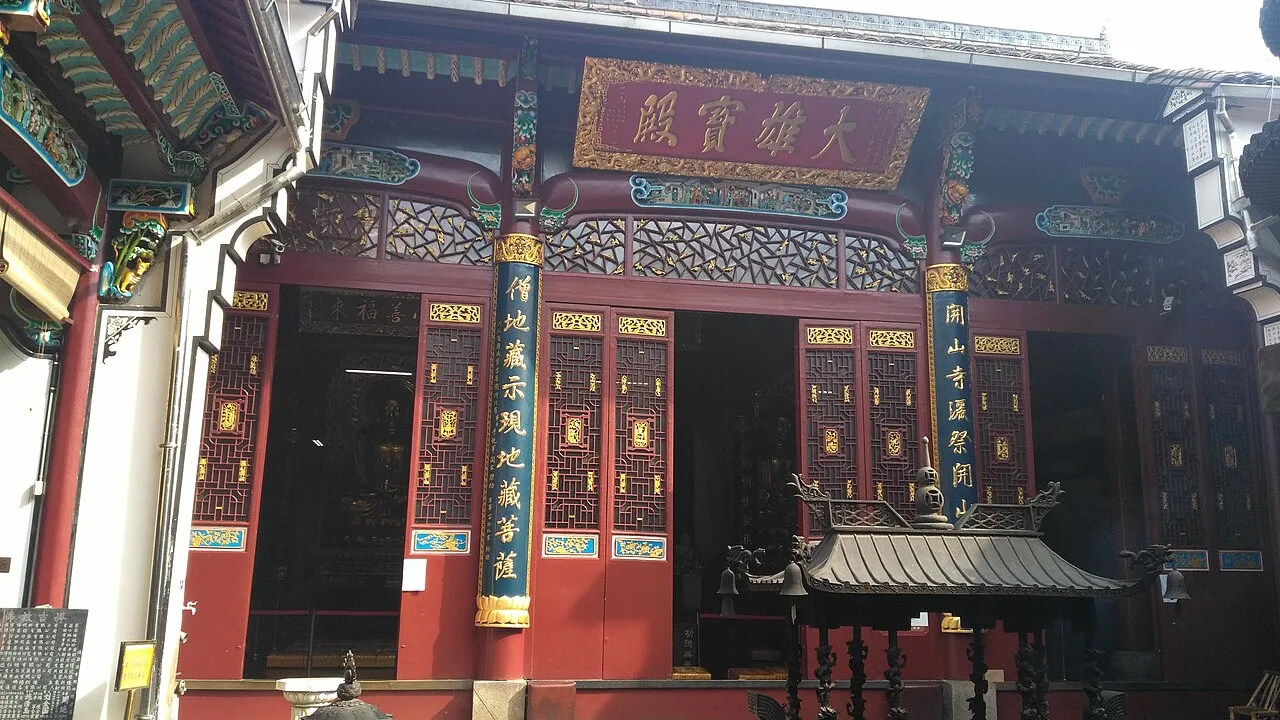
Day five departs early for Kongtong Mountain in Pingliang, about two hours. Billed as the first mountain of Chinese Taoism, its highlights are the Imperial City building complex and the precipitous stone steps of Leisheng Peak, tickets 100 to 120 CNY with cableway and shuttle extra.
Descend before four and depart directly from Pingliang or transfer via Xifeng. Five days now close the ring: Zhou fields, Northern Wei Buddhas, Huanxian shadows, Ziwu woods and Kongtong clouds, the complete Longdong puzzle in hand.
Kongtong Mountain is said to be where the Yellow Emperor sought the Tao, its Taoist complexes stacked up sheer peaks, mirroring Qingyang's farming history and closing the cultural loop of an eastern Gansu journey.
| Getting around |
|
| Budget | About 1,000 to 1,800 CNY per person excluding hotels: Kongtong Mountain 100 to 120 CNY, four charter days around 1,200 shared |
| Best time | May to October is best, with October stacking Ziwu autumn color against Kongtong's red leaves |
FAQs
Are five days too packed?
The pace is tunable: swap the Ziwu day for a downtown rest day to decompress; keep the core four of Qingcheng, grottoes, Huanxian and Kongtong.
Is the cross-city Kongtong link worthwhile?
Yes, it complements the grottoes as mountain-to-cave pairing at only two hours' cost; those indifferent to Taoism can extend Huanxian instead.
Is the five-day plan feasible with elderly parents?
Feasible with cuts: half-climb at the mausoleum, cableway both ways at Kongtong, sightseeing only at Ziwu, everything else unchanged.
October or May, which is better?
October edges ahead on color and temperature with double foliage at Ziwu and Kongtong; May brings blossoms and sachet season. Both beat midsummer and deep winter.