
Quanzhou is more than an old town; hill and sea are the other half: Qingyuan carrying the Laozi statue in the north, egrets working the Luo River mangroves, and the Hui'an coast eastward holding a stone city and its folklore together. Three days run hill, then river, then sea, effort rising as the view widens.
The rhythm: half hill half temple on day one, a flat bridge-and-tideline day two, the coast on day three. Quanzhou's hills stay low and the sea stays close, three unhurried days with grippy shoes.
Itinerary at a glance
| 08:30 | Qingyuan Mountain: Laojun Rock and Nantai Rock |
| 14:00 | Quanzhou Shaolin Temple: The Southern Shaolin Afternoon |
| 17:00 | West Lake Park and Citong Pavilion: A Lakeside Close |
| 09:00 | Zheng Chenggong Park: The Rider Over the City |
| 11:00 | Luoyang Bridge and the River Mangroves: An Ecology Lesson Under the Bridge |
| 15:00 | Zimao Mountain: The City's Southern Hill |
| 09:30 | Chongwu Ancient City: Day Three's Stone Fortress |
| 13:30 | Banyue Bay: Chongwu's Beach |
| 16:00 | The Hui'an Women Folklore Park: An Afternoon with the Hui'an Women |
The route, stop by stop
Qingyuan Mountain: Laojun Rock and Nantai Rock
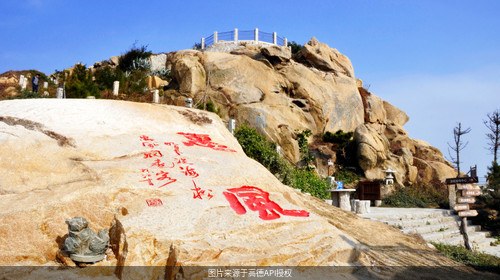
Day one's main event is Qingyuan: Laojun Rock at the foot, a Song-era Laozi carved from a natural boulder and the largest Daoist stone statue in China; strong legs continue up past Mituo Rock and the sky lake to Nantai Rock overlooking city and bay, about three hours return.
The trail alternates stone steps and dirt paths under dense canopy, kind in the morning sun, cliff inscriptions offering excuses to pause.
Quanzhou Shaolin Temple: The Southern Shaolin Afternoon
The afternoon goes to Quanzhou's Shaolin Temple on Qingyuan's eastern foot, one cradle of Southern Shaolin martial arts. Regular performances run in the grounds, Five Ancestors fist and weapon sets in turns, a half-hour show more vivid than any display board.
The temple itself stays unadorned, with hill paths linking back to Qingyuan for those with spare legs. Show times are fixed, so read the day's notice on entering.
West Lake Park and Citong Pavilion: A Lakeside Close
Descend at dusk to West Lake Park, Quanzhou's own lake smaller and neater, the Citong Pavilion crowning the mid-lake island in Minnan revival style, an island loop of about forty minutes. The city flower, the citong tree, is written right into the pavilion's name.
The evening loop belongs to the local power-walking corps, their pace the easiest to join. Sunset over the water digests the day's hill.
Zheng Chenggong Park: The Rider Over the City
Day two opens on Daping Mountain: the bronze equestrian statue of Zheng Chenggong crowning the hill, one of Quanzhou's landmarks, about thirty minutes up a gentle, well-shaded boardwalk from the trailhead. The summit frames the city skyline with Qingyuan behind, a free grandstand.
The park is free and busy with morning exercisers, the paths in fine shape. Descend and bus or taxi toward Luoyang Bridge.
Luoyang Bridge and the River Mangroves: An Ecology Lesson Under the Bridge
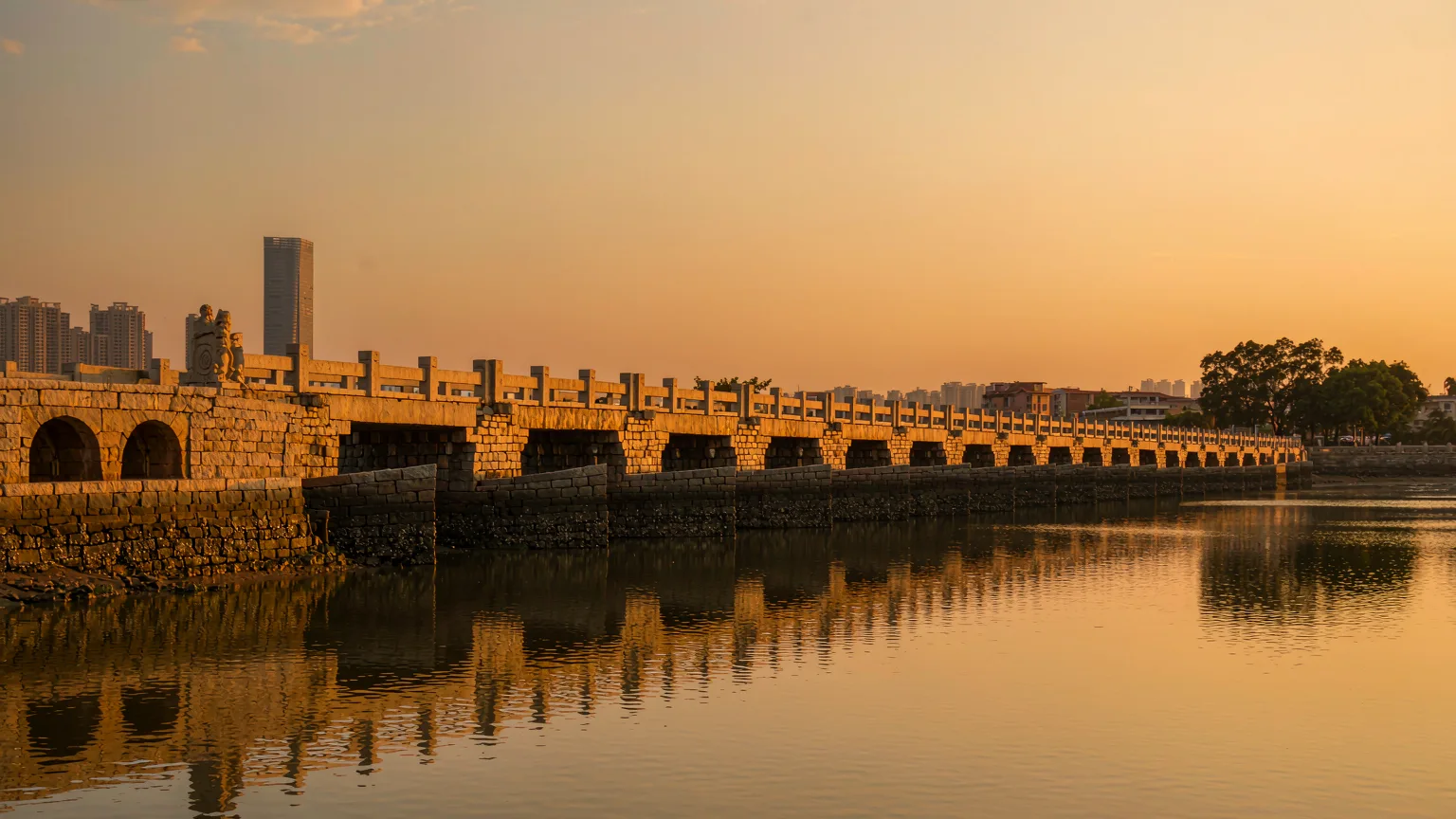
Midday shows Luoyang Bridge's second face: beyond the Song stonework, the Luo River mangroves flanking the flats belong to migrant birds and fiddler crabs. At low tide, watch from mid-span as green forest, mudflat and egrets share one frame, Quanzhou's most overlooked ecology.
Cai Xiang's shrine at the bridgehead adds its stele; lunch works either at the north end or back in town. A small pair of binoculars doubles the birding.
Zimao Mountain: The City's Southern Hill
The afternoon's Zimao Mountain sits in the city's south, facing Qingyuan north of town. A modest climb, about an hour to the Lingxiao pagoda on top, with hundreds of heart-character stone carvings scattered along the slopes, a built-in treasure hunt for the ascent.
The summit looks toward Jinjiang and the bay, windy and wide. Halfway up, tea farmers' courtyards offer a sit and a cup.
Chongwu Ancient City: Day Three's Stone Fortress
Day three heads to Chongwu in Hui'an: a stone fortress raised against pirates in the Ming Hongwu era, walls, watch posts and gates intact, China's best-preserved T-shaped stone city. Families still live in the lanes inside the walls, Hui'an women passing with flowered headscarves and carrying poles, scenes everywhere.
Walkable wall sections face the sea, while the seaside sculpture garden runs lively; for quiet, keep to the wall's foot. Two hours covers it.
Banyue Bay: Chongwu's Beach
Banyue Bay outside the walls is Chongwu's beach act: a crescent of fine sand, reef zones exposing locals gathering shellfish at low tide. Lifeguarded hours run in summer, other seasons suit barefoot strolls.
Lunch in Chongwu town, seafood stalls pricing openly, ask the day's rates before ordering. The beach is free, rinses and lockers a few yuan.
The Hui'an Women Folklore Park: An Afternoon with the Hui'an Women
The afternoon folklore park in Dazuo village presents Hui'an women's dress and fishing life: the yellow bamboo hats, flowered headscarves and silver waist chains found nowhere else, explained properly in the folklore hall. Dress-up experiences lend the full costume, the owner tying the authentic knots.
Boats return to the fishing port at dusk, the working scenes of Hui'an women selling the catch clustering then. Ride a bus or taxi back to Quanzhou and close the three days.
| Getting around |
|
| Budget | Qingyuan RMB 70 plus Chongwu's scenic area around RMB 45, most else free, about RMB 150-250 pp across three days. |
| Best time | Kindest Oct-Dec and Mar-Apr; climb early in summer, and respect sun and tides on the coast. |
FAQs
Must I climb Qingyuan to the top?
No. Laojun Rock sits at the foot and the heritage essence clusters near the entrance, fully visible without climbing; Nantai's reward is the city-and-bay panorama, worth it only with legs and clear skies. The compromise is walking to the sky lake and back, about ninety minutes at half the effort.
What is the smoothest transit plan for Chongwu?
Take the direct bus from the Quanzhou terminal, about an hour to Chongwu town; taxis run ten to fifteen minutes per hop to the walls, the bay and the folklore park. Return buses mostly end early evening, often before the harbor scenes, so the safe play is having your guesthouse or a shop call a car back to the city.
If the hills will not all fit, which one first?
Qingyuan first: Laojun Rock is a must-see heritage point and the hill itself the best walk of the three; Zimao second for its heart-carving game; Daping is really a city park, climb it if convenient. With one hill only, there is no debate.
What should I watch along the coast?
Three things: tides, walk the flats at ebb and retreat before the flood; sun, coastal UV demands hat, glasses and cream in full; and swimming, lifeguarded hours and zones only, no bare feet on reefs. Summer afternoons turn fast offshore, so leave the water the moment the sky darkens.