
Hebei's cultural stockpile runs unnaturally deep: the gold-threaded jade suit and Changxin lamp from the Mancheng tombs live in textbooks, and Longxing Temple's Song Guanyin and Manichaean Hall were objects Liang Sicheng studied again and again. This line pairs the two aces in one day, the museum building the chronological frame in the morning, Zhengding supplying the standing fabric after lunch.
Order matters: museum first, temples after, reading Song timber and paint through Han aesthetic standards, the comparison is the point. Kaiyuan's Tang bell tower against Longxing's Northern Song halls makes a corridor from Tang to Song; culture outweighs exertion, so walk it slow.
Itinerary at a glance
| 09:00 | Hebei Museum: Mancheng and the Zhongshan Kingdom |
| 12:30 | The Transfer and Lunch: Heading to Zhengding |
| 14:00 | Longxing Temple: Northern Song Timber and Paint |
| 16:30 | Kaiyuan Temple and the Walls: Tang to Twilight |
The route, stop by stop
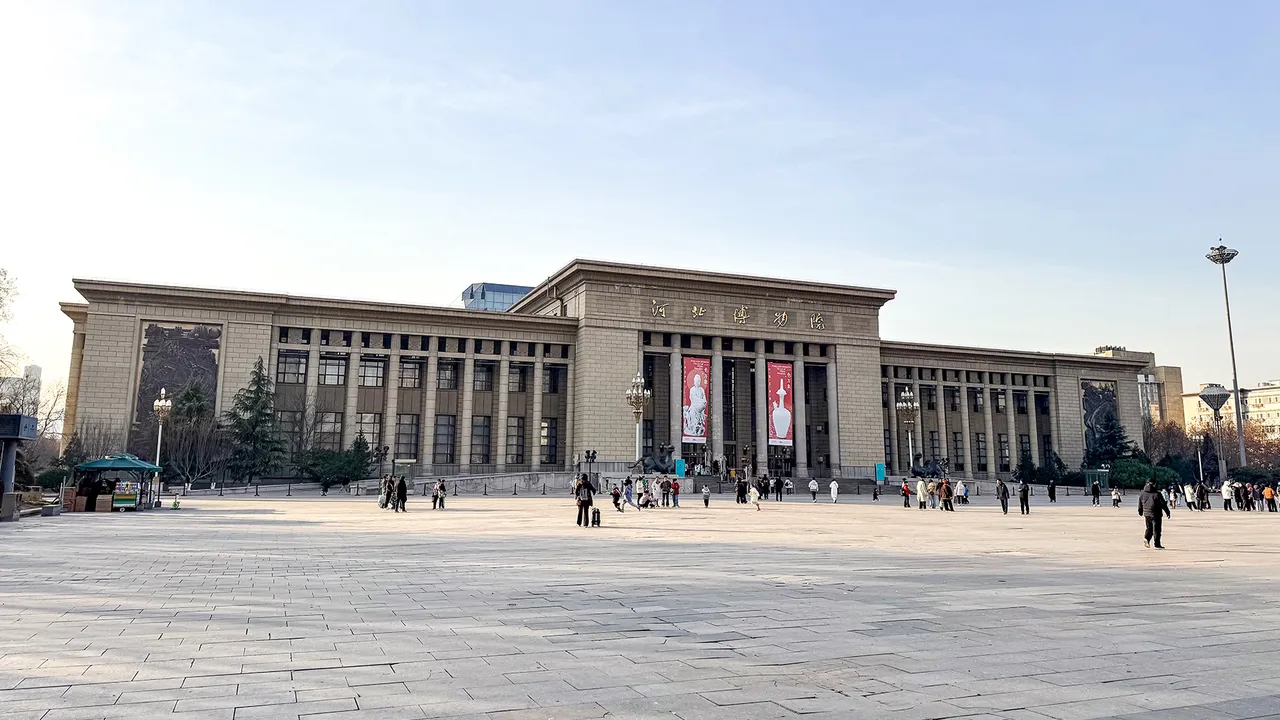
Hebei Museum: Mancheng and the Zhongshan Kingdom
Enter at opening straight to the aces on the second and third floors. The Mancheng tombs, found by accident in 1968, held Prince Liu Sheng of Western Han Zhongshan and his wife, unlooted, ten thousand artifacts: the gold-threaded jade suit, the first complete one ever found, the Changxin lamp's sleeve venting smoke two millennia ahead of code, the inlaid Boshan burner casting immortal mountains on its lid.
The Pingshan Zhongshan kingdom gallery is the second card: a nomad-founded state leaving the four-dragon-four-phoenix inlaid bronze stand and mountain-shaped ritual vessels, steppe and Central Plains styles visibly intermarried. The Northern Dynasties murals keep their thousand-year color. Two to three hours, slow through the signature halls.
The Transfer and Lunch: Heading to Zhengding
Eat fast near the museum, noodle shops and quick kitchens in the adjacent blocks at twenty to thirty a head, then thirty-odd taxi minutes to Zhengding, the ride digesting the morning's information. Watch for the Hutuo River crossing, once the shared moat between the two towns.
Enter no temple yet; settle a bowl of soup noodles near the south gate, since the afternoon's Longxing and Kaiyuan demand two focused hours, ruined either hungry or stuffed.
Longxing Temple: Northern Song Timber and Paint
The afternoon's main event. Work Longxing south to north: Heavenly Kings hall, Manichaean hall, ordination platform, Great Compassion pavilion. The Manichaean's crossed double eaves with four attached porches survive in almost no other Song building; inside, the north wall's reverse-seated Guanyin lounges ankle over knee, Lu Xun's Oriental Beauty.
The Great Compassion pavilion's bronze Guanyin tops twenty-one meters, three minutes to read every arm. Do not skip the flanking Revolving Closet and Cishi halls: the Song revolving sutra case is standing machinery of astonishing joinery. Two hours, with Liang Sicheng's survey drawings exhibited in the temple.
Kaiyuan Temple and the Walls: Tang to Twilight
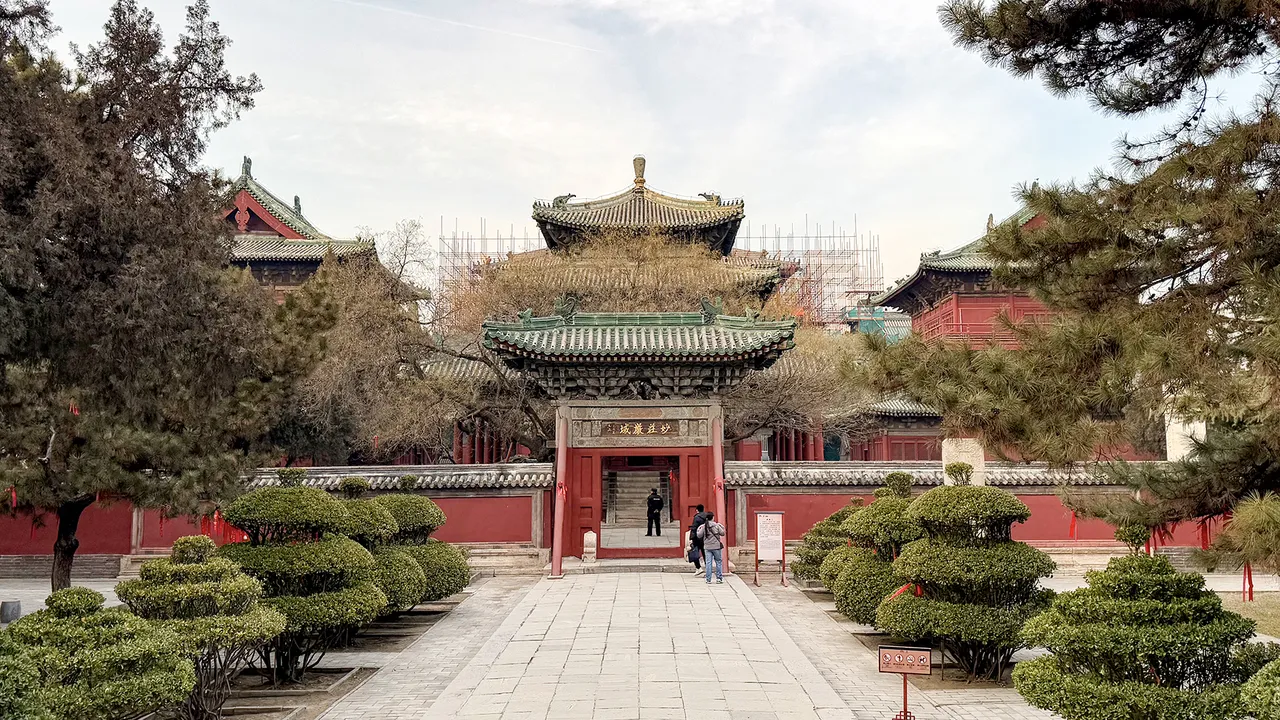
The day's last hour goes to Kaiyuan and the walls. Kaiyuan's Xumi Pagoda is a textbook Tang square tower, its bell tower's lower floor keeping Tang timber, the tower-bell proportion a living specimen of architectural history. The giant tortoise-borne stele base found locally, a Five Dynasties piece of near-unique size, stands in the grounds.
At dusk climb the free south wall, the four towers silhouetting in a row; from Han objects through Tang pagoda, Song halls and the Jin Hua Pagoda, the day's whole timeline reads best from the ramparts. Descend to Nanguan for dinner, one culture day, closed.
| Getting around |
|
| Budget | Museum free with booking, Longxing about RMB 50 plus some RMB 30 for other temples, the day about RMB 100-160 pp. |
| Best time | Year-round, climate-steady in halls; the museum closes Mondays, so flip the order if the day falls on one. |
FAQs
Can the museum and Zhengding really share one day?
Yes, with cuts on both ends: lock the museum to the Mancheng and Zhongshan galleries within three hours, and in Zhengding enter only Longxing and Kaiyuan, taking the wall for sunset. True museum devotees should split it into two days with half a day each.
Why does Longxing Temple deserve a dedicated visit?
Three things: the twenty-one-meter Song bronze Guanyin among China's largest ancient casts; the Manichaean Hall's cruciform plan with porches at near-unique survival; and a reverse-seat painted Guanyin judged the most relaxed expression in ancient Chinese sculpture. Liang Sicheng surveyed Zhengding four times, half his pages belong here.
Are the temples worth it without architectural knowledge?
Yes, two moves: rent or share a guide and outsource the what-to-look-at; and lower the bar, forget brackets, ask only why this statue feels beautiful. Paint and bronze carry no entry test, and a guide lifts the architecture seventy percent.
Does one culture day suit a middle-schooler?
Ideally: the artifacts sit inside schoolbooks, the jade suit in history class, the reverse-seat Guanyin in an old photo teachers know. Assign a task, the jade suit's plate count or the bronze's arms, and attention holds across museum and temple.