
Shijiazhuang is the junction to three inheritances: fifteen kilometers north lies Zhengding, fourteen centuries old; forty south sits Zhaoxian, where a Sui stone bridge has been starring physics textbooks for fourteen hundred years; ninety northwest waits Xibaipo, the last rural command post from which New China marched. Three days, one per day, no compromises.
The rhythm: a full day one in Zhengding going deep on Longxing and the pagodas; day two opens with the museum's historical frame, then south to Zhaoxian where bridge and Bailin Temple chain closely; day three is an early-out, late-back Xibaipo, red sites plus the hills of the Gangnan reservoir. Even effort every day, no forced marches.
Itinerary at a glance
| Day1 · 09:00 | Zhengding City Wall: The Free Lesson in Urban Form |
| Day1 · 10:00 | Longxing Temple: First Among Temples Beyond the Capital |
| Day1 · 14:00 | Kaiyuan, Linji and the Hua Pagoda: The Pagoda Afternoon |
| Day1 · 19:00 | Nanguan Old Town and the Wall at Night: The Day in Lanterns |
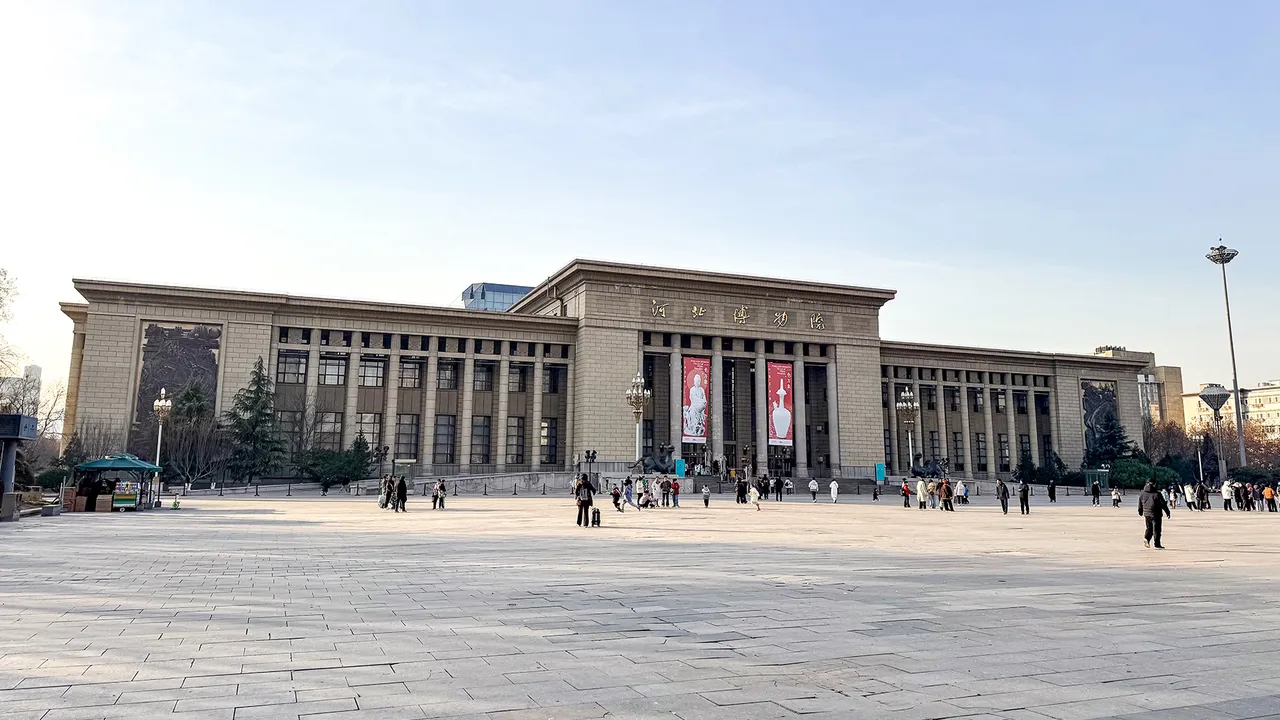
| Day2 · 09:00 | Hebei Museum: The Historical Framework |
| Day2 · 14:00 | Zhaozhou Bridge: Fourteen Hundred Years of One Span |
| Day2 · 16:00 | Bailin Temple: The Aftertaste of Zhaozhou Tea |
| Day3 · 08:00 | Xibaipo: Start Early |
| Day3 · 14:00 | The Gangnan Reservoir and Home: A Landscape Close |
The route, stop by stop
Zhengding City Wall: The Free Lesson in Urban Form
Three days start on the free south wall, Ming brick facing that is Zhengding's handshake to travelers. From the parapet read the four towers and the town's plan: the Hutuo River south, Longxing's roof-cluster northeast, four ancient pagodas in one line. Ten minutes of urban reading, and every street across two days carries coordinates.
Below stretches the restored Nanguan block, shops opening through the morning. Walk the southern best kilometer or two rather than the whole circuit, the town's spine of ridgelines and pagoda tips laid clear on the way back.
Longxing Temple: First Among Temples Beyond the Capital
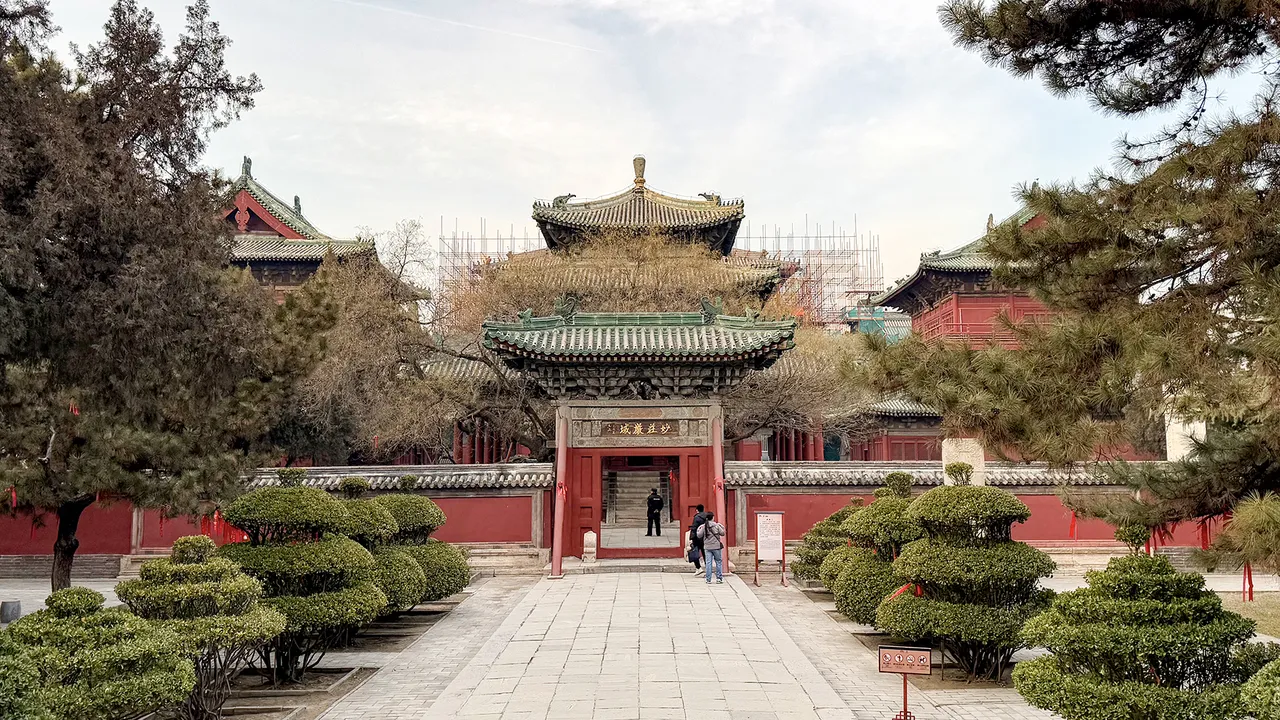
Drop off the wall straight to Longxing. Founded in Sui, arranged largely in Northern Song, it carries Liang Sicheng's first-beyond-the-capital verdict: the Manichaean Hall's crossed double eaves with four porches survive almost nowhere else, and the north wall's reverse-seated Guanyin lounges ankle over knee, Lu Xun's Oriental Beauty. The Great Compassion pavilion's bronze Guanyin tops twenty-one meters, three minutes to read every arm.
Do not skip the Revolving Closet Hall, the Song's rotating sutra case still spinning on its timber mechanics. Two slow hours, each courtyard paging another century back.
Kaiyuan, Linji and the Hua Pagoda: The Pagoda Afternoon
Finish all four towers in the afternoon. Kaiyuan pairs its Tang Xumi Pagoda with the Tang-timbered bell tower, the bell-and-tower acoustic union a shrinking species; Linji is the Linji school's founding seat, its Chengling stupa the four's most elegant taper; Guanghui's Hua Pagoda crowns a national-unique drum of lions, elephants and bodhisattvas, and Tianning's Lingxiao Pagoda adds its central-column structure in passing.
Ten-odd minutes walk between towers, and westering afternoon light profiles them best. Close on the south wall at sunset, echoing the morning's Longxing to complete day one.
Nanguan Old Town and the Wall at Night: The Day in Lanterns
Dinner returns to Nanguan, Zhengding eight bowls and benggan headlining the table, four meat four vegetable scaled to heads. Afterward the old town lights up, the wall's outline lamps and the south gate's glow the cover shot of Zhengding's night, the four towers each traced in light after a day on foot.
The nighted town goes quiet as shops shutter; walk a stretch along the wall's base before turning in. Day one began on the wall and ends beneath it, a Zhengding-style close.
Hebei Museum: The Historical Framework
Day two's morning returns downtown for the frame. The Mancheng jade suit and Changxin lamp are mandatory, the Zhongshan kingdom's inlaid bronzes second priority; after Zhengding's Song timber, Han metalwork and jade read as contrast, the two days explaining each other across eras and materials.
Three hours suffices, two or three galleries beating a rushed circuit of all. Fast lunch near the museum, then south to Zhaoxian.
Zhaozhou Bridge: Fourteen Hundred Years of One Span
Zhaozhou Bridge is Li Chun's Sui-dynasty single-arch flat-spandrel stone bridge, two small arches punched into each spandrel to shed flood and weight, the design beating Europe's equivalents by seven centuries. Fifty-odd meters long, it has stood on this spot through earthquakes, floods and wars; the textbook illustration lies underfoot.
The park is small, an hour: rutted grooves on the deck stones are original, the Sui dragon carvings on balustrads a mix of originals and copies, clearly labeled. Buy Zhaoxian snow pears at the bridgehead, in season through autumn.
Bailin Temple: The Aftertaste of Zhaozhou Tea
Ten minutes from the bridge sits Bailin Temple, where the Tang master Zhaozhou taught and the go-drink-tea koan was born, a major founding seat beyond even the Linji line. The rebuild is young but the halls are proper, the Ten Thousand Buddha Tower ranking high among northern temples.
The temple quiets at dusk, the stupa's outline in the last light. Return downtown for a proper Hebei dinner, banking strength for the western day.
Xibaipo: Start Early
Day three starts early, ninety minutes to Xibaipo in Pingshan county. The Party center sat here from 1948 to 1949, the three great campaigns' wires ran from this village, and the second plenum closed in a bare-walled meeting room; the mud-brick houses and plank benches keep their original faces, the departure point of the journey to sit the examination in Beijing.
The free memorial narrates the era systematically; see the museum before the site, reversed you read the houses but miss the decisions inside them.
The Gangnan Reservoir and Home: A Landscape Close
Xibaipo sits on the Gangnan reservoir's shore; walk a stretch lakeside in the afternoon, open water, autumn hills doubled in the surface. The viewing decks hold the best sightlines, water color dissolving the weight of the visit.
Return to Shijiazhuang by evening, three heritage days closed: old architecture north, a stone bridge south, red years west, the surroundings ran deeper than anyone says. A good downtown dinner files the trip.
| Getting around |
|
| Budget | Tickets total about RMB 250-350 pp (Longxing, temples, Zhaozhou and so on), transport and lodging extra; the trip runs RMB 900-1400. |
| Best time | Apr-May and Sep-Oct fit best; Zhengding's walls stay free all day, and Zhaozhou and Xibaipo calm down off weekend tour peaks. |
FAQs
Which day is least expendable across the three?
By interest: Zhengding for architecture and Buddhist art, Zhaozhou for engineering and history, Xibaipo for the modern era. Forced to rank, Zhengding first, the densest and richest in free sights; Xibaipo's pull for international travelers depends on appetite for modern Chinese history.
Is Zhaozhou Bridge worth a dedicated trip?
For structure and engineering fans, absolutely: the founding spandrel-arch bridge, more powerful in person, the deck ruts genuinely fourteen hundred years old. Chain Bailin Temple and snow pears into the same half day and Zhaoxian completes itself; a solo three-hour round trip works, though pairing with the museum flows better.
Does Xibaipo need booking or tickets?
The memorial and site are free, with booking via official channels possible during peak team seasons, check notices before travel. Shuttles and guides charge separately, the menu short, budget pressure low.
Is three days hard on seniors?
Manageable: Zhengding has few ramps and shuttle carts, Zhaozhou's park is small and flat, Xibaipo walks far but offers shuttles and rest points. Slotting the museum as the middle-day buffer holds a senior's energy curve, and every leg stays under two hours of driving.