
Three days in Shijiazhuang reward layering, not speed: day one sets coordinates with the museum and old blocks, Han artifacts through railway memory to the modern circuit; day two goes west to Pilu Temple's Ming murals, then evening on the Hutuo reading city and river; day three belongs wholly to Zhengding, free walls to the Longxing Buddha to towers and nightfall.
The hidden theme is what the railway-borne city actually presses on: two-thousand-year Zhongshan and the Han, five-hundred-year Zhengding, a century of rail, forty years of new town, stacked along both banks of the Hutuo. Three days and Shijiazhuang stops being a junction.
Itinerary at a glance
| Day1 · 09:00 | Hebei Museum: A Mancheng Morning |
| Day1 · 13:30 | Minsheng Road, the Big Bridge and Wanlimiao: The Old Core's Afternoon |
| Day2 · 09:30 | Pilu Temple: A Heavy Lesson in Ming Murals |
| Day2 · 14:00 | The Hutuo Riverfront: City and River Reconciled |
| Day2 · 18:00 | Letai Center and the Zhongshan Night: Shijiazhuang Now |
| Day3 · 09:00 | Zhengding City Wall: The Free Lesson in Urban Form |
| Day3 · 10:00 | Longxing Temple: The Morning's Two Hours |
| Day3 · 14:00 | Kaiyuan, Linji and the Hua Pagoda: The Tower Pilgrimage |
| Day3 · 19:00 | Zhengding at Night and the Return: A Full Stop in Lamplight |
The route, stop by stop
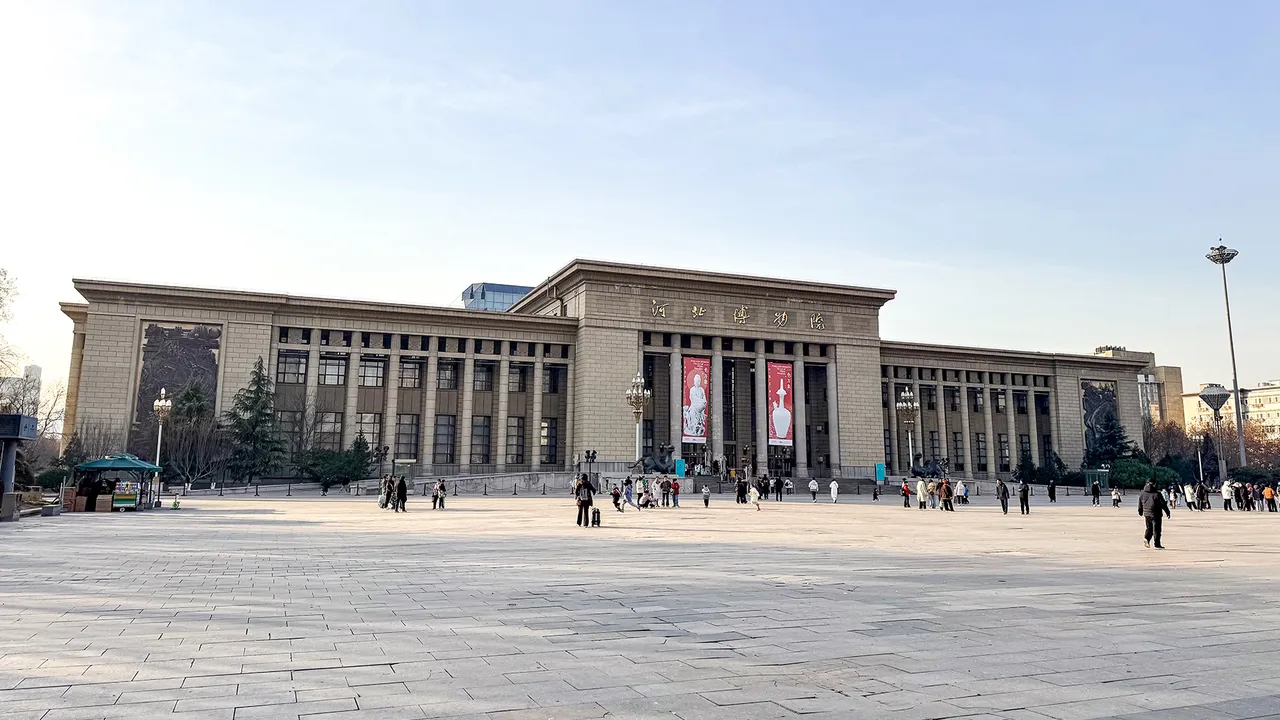
Hebei Museum: A Mancheng Morning
Enter at opening straight to the Mancheng tombs. The jade suit, the Changxin lamp, the inlaid Boshan burner, two halls of core objects from Prince Liu Sheng's undisturbed Western Han tombs, and two millennia of craft reset your baseline for the whole trip.
Second priority, the Zhongshan kingdom's inlaid bronzes, with the Northern Dynasties murals en route. Three hours out, audio guide in hand; the museum is this three-day line's historical foundation.
Minsheng Road, the Big Bridge and Wanlimiao: The Old Core's Afternoon
The afternoon walks the old core in three layers: Minsheng Road's Republican lanes, the railway memory of the Big Bridge and Liberation memorial, Wanlimiao's street food. An hour each, moving from the phrase railway-borne city to its standing evidence.
Graze dinner at Wanlimiao, small portions of beef banmian, kiln bread and sugar chestnuts; Zhongshan Road lights fully by evening, day one closing on its axis.
Pilu Temple: A Heavy Lesson in Ming Murals
Day two's morning hides in Shangjing village northwest of town. Pilu Temple's Ming water-land ritual murals cover three walls, two hundred-plus square meters holding five hundred figures, emperors, bodhisattvas and townsfolk ranked together, its line and color ranking it beside Beijing's Fahai Temple as the north's twin peaks.
The temple is small, an hour, guides pointing out restoration layers and the finest passages. After Zhengding's timber and the museum's bronze, mural is Hebei's third material.
The Hutuo Riverfront: City and River Reconciled
The afternoon downshifts to the Hutuo riverfront. Mother river to both Shijiazhuang and Zhengding, it has been reworked into green banks with cycle paths, viewing decks and wide wetlands, evening water doubling sunset and the new skyline.
Rent a shared bike for a riverside stretch or claim a patch of lawn for sunset; the best rest note of a city day often lives in river wind, not malls.
Letai Center and the Zhongshan Night: Shijiazhuang Now
Back downtown by evening, closing at Letai Center, mall, offices and sky street stacked in one complex; the top terrace reads Zhongshan Road's night best, traffic, station crowds and old-core lights braiding.
Dinner on Letai's dining floors or along Zhongshan; one day from Ming murals through river wind to this glass face, the city's three tenses all walked.
Zhengding City Wall: The Free Lesson in Urban Form
Day three goes whole to Zhengding, opening on the free south wall. From the parapet read the four towers and the plan: the Hutuo south, Longxing's roofs northeast, four pagodas in one line. Ten minutes of reading give the whole day coordinates.
Walk the southern best kilometer or two, ridgelines and pagoda tips behind you. The museum and old core of days one and two now form the backdrop, Zhengding's millennium the main chapter.
Longxing Temple: The Morning's Two Hours
Drop off the wall straight to Longxing. The Manichaean Hall's crossed double eaves with four porches stand at unique-grade Song survival, the north wall's reverse-seat Guanyin lounges ankle over knee as Lu Xun's Oriental Beauty, and the Great Compassion pavilion's bronze Guanyin tops twenty-one meters of Northern Song casting.
The Revolving Closet Hall's Song rotating sutra case is living timber machinery. Two hours, with an audio or live guide worth taking; Liang Sicheng's survey stories hide in every corner.
Kaiyuan, Linji and the Hua Pagoda: The Tower Pilgrimage
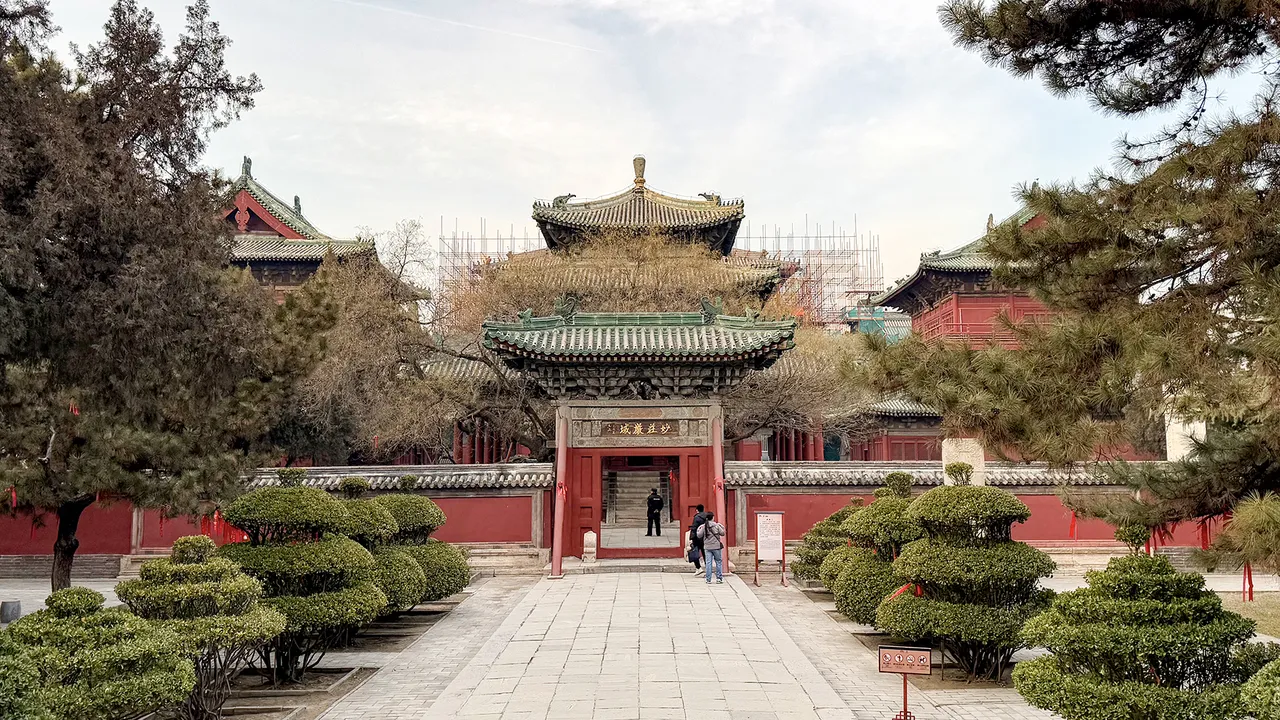
Finish the four towers in the afternoon. Kaiyuan pairs a Tang square pagoda with Tang-timbered bell tower, Linji's Chengling stupa fronts the Linji school's founding seat, Guanghui's Hua Pagoda crowns a national-unique drum of lions and elephants, and Tianning's Lingxiao adds its central column in passing. Ten-odd minutes between each, westering light profiling them best.
Three hours completes the set, sunset back on the south wall; day three closes the contrast with days one and two, the museum's two millennia, the old core's century, Zhengding's thousand years.
Zhengding at Night and the Return: A Full Stop in Lamplight
Linger after dinner, for Zhengding's night is the route's easter egg: outline lamps on wall and south gate, floodlit towers, lantern streets in Nanguan. Walk the wall's base and every daylight scene of three days switches to its night cut.
Then taxi back downtown, three city days closing in tower shadows and lamplight. Shijiazhuang's story from the Han to tonight stands complete.
| Getting around |
|
| Budget | Tickets about RMB 150-250 pp with the museum and most blocks free, lodging and meals extra; the trip runs RMB 800-1200. |
| Best time | Year-round, best in late spring and summer; the museum closes Mondays, give the old core that day; Zhengding's walls stay free all day. |
FAQs
Are three days all downtown and Zhengding worth it?
Yes, if the goal is reading the city: the museum's two millennia, the old core's century, Zhengding's thousand years are three chapters of one story. For landscape and stone villages, swap day three toward Jingxing; compressing Zhengding to one day also works.
Pilu Temple is little known, worth the trip?
Very: it ranks beside Beijing's Fahai Temple among Ming mural strongholds, and water-land paintings of five hundred figures barely survive in the north. Small temple, thin crowds, the trip's best return per hour; for art and religious-art fans it is Shijiazhuang's hidden ace.
Can the museum and Zhengding swap order?
They can, though museum first pays: build the Han-to-Jin frame of eras and taste, and every Song hall and painted statue in Zhengding finds its echo; reversed works too, only Longxing's details lose a layer of context.
What are the evening options?
Downtown evenings go to Wanlimiao and Letai, food and browsing clustered; the riverside suits quieter moods. Zhengding's night earns its own evening, wall lights and markets stretching day three long, a late return well spent.