
Seven days reward a badly underrated destination: downtown's Hebei Museum presses the Mancheng tombs and the Zhongshan kingdom, Pilu Temple west of town holds murals ranked beside Fahai, Zhengding's Longxing and four towers carry half a history of Chinese timber architecture, Zhaoxian owns the bridge from physics textbooks, Pingshan keeps the village that changed China, and the Taihang hides whole villages of stone houses. Seven days unfold these layer by layer.
The rhythm runs near to far, dense to loose: days one and two build the historical and urban frame downtown; days three and four belong to Zhengding, a millennium worth two; day five south to Zhaoxian, day six into the Taihang, day seven closing at Xibaipo and the Gangnan reservoir. Gentle daily effort, the only disciplines being early room bookings and respect for Monday closures.
Itinerary at a glance
| Day1 · 09:00 | Hebei Museum: The Week's Historical Foundation |
| Day1 · 14:00 | Minsheng Road, the Big Bridge and the Liberation Memorial: Railway Growth Rings |
| Day1 · 18:30 | Wanlimiao and Letai: Steam and Light for Night One |
| Day2 · 09:30 | Pilu Temple: A Heavy Lesson in Ming Murals |
| Day2 · 14:00 | The Hutuo Riverfront: Tomorrow's Teaser |
| Day3 · 09:00 | Zhengding Walls and Longxing Temple: The Old Town's Morning |
| Day3 · 14:00 | The Rongguo Mansion and Towers at Dusk |
| Day4 · 09:00 | Zhengding's Second Morning: The Hua and Lingxiao Pagodas |
| Day4 · 14:00 | Zhaozhou Bridge: Standing on the Textbook |
| Day5 · 09:30 | Bailin Temple and the Turn West |
| Day6 · 08:30 | Xibaipo and the Gangnan Reservoir: A Solemn Day |
| Day7 · 09:00 | Qiaolou Hall at Cangyan: The Cliff-Hung Finale |
| Day7 · 16:00 | Inventory Before Departure: Hebei in a Bag |
The route, stop by stop
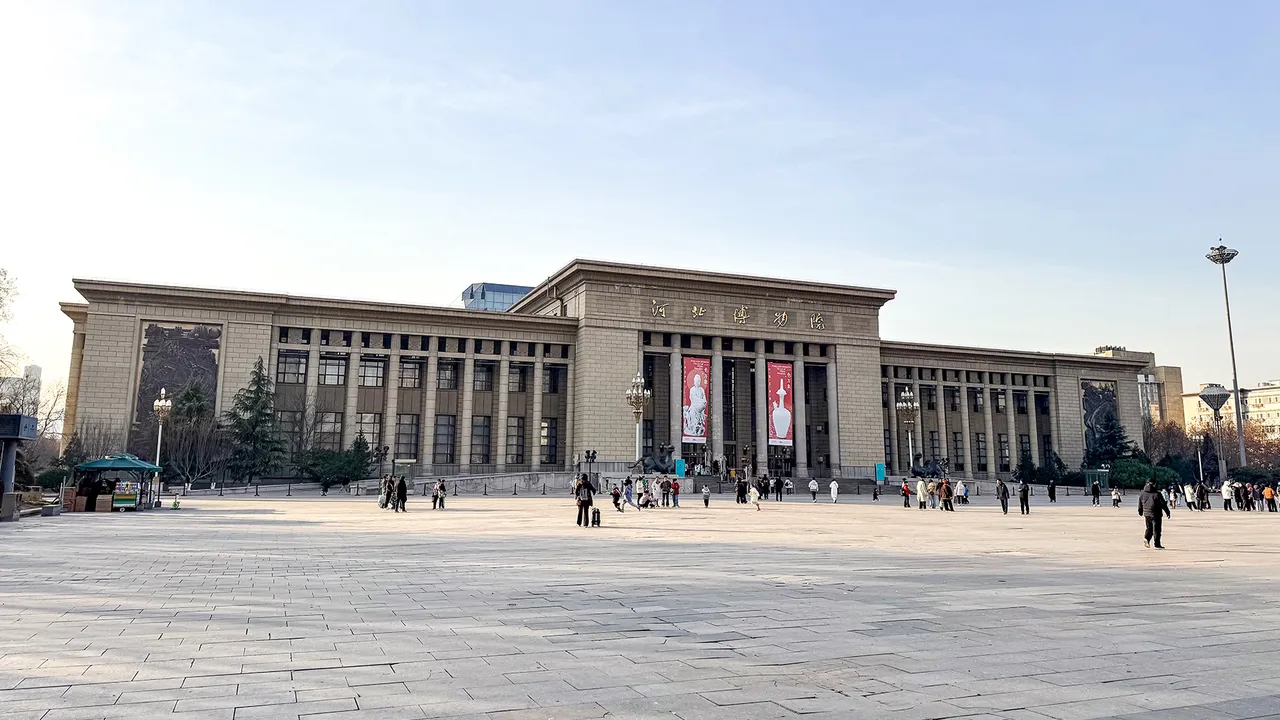
Hebei Museum: The Week's Historical Foundation
Enter at opening straight to the Mancheng tombs. The gold-threaded jade suit, the Changxin lamp, the inlaid Boshan burner, two thousand core objects from Prince Liu Sheng's undisturbed tombs, two millennia of craft resetting the week's aesthetic baseline. Second priority, the Zhongshan kingdom's inlaid bronzes, steppe and Central Plains visibly intermarried.
Three hours out, audio guide in hand. Carry the morning's chronological frame forward, and Zhengding's Song, Zhaoxian's Sui and Pilu's Ming each find their slot.
Minsheng Road, the Big Bridge and the Liberation Memorial: Railway Growth Rings
The afternoon reads the city's birth certificate. Minsheng Road's heritage block keeps some of the last old lanes downtown, Republican and nineteen-fifties facades in narrow alleys; the Big Bridge, crowdfunded by railway workers in 1907, is the urban origin point; the adjacent Liberation memorial turns railway-borne city into an exhibition.
All three chain on foot in two hours. Afterward every glass tower has a lineage; the city is not without history, only without it where you expected.
Wanlimiao and Letai: Steam and Light for Night One
Night one goes street-level. Graze Wanlimiao in small portions, beef banmian, kiln bread, sugar chestnuts, one street equaling half a dinner; then the top terrace at Letai Center for Zhongshan Road's night, traffic and old-core lights braiding.
Keep night one light, a jet-lag pace for reading the city's rhythm; west side tomorrow, Zhengding after, so bank the legs.
Pilu Temple: A Heavy Lesson in Ming Murals
Day two's morning goes to Shangjing village northwest of town. Pilu's Ming water-land murals cover three walls, two hundred-plus square meters of five hundred figures, emperors, bodhisattvas and townsfolk ranked together, line and color ranking it beside Beijing's Fahai as the north's twin peaks. Small temple, thin crowds, the best return per hour on the whole trip.
Guides point out restoration layers and the finest passages. After the museum's bronze and before the coming timber, mural is Hebei's third material; two media in one day sits just right.
The Hutuo Riverfront: Tomorrow's Teaser
The afternoon downshifts to the Hutuo riverfront, mother river of both towns now flanked by continuous green banks; rent a shared bike for a stretch, evening water doubling sunset and the new skyline.
Look north from the bank and Zhengding's pagoda tips already show, tomorrow's trailer. Sleep early downtown, day three's old town wants a full day of legs.
Zhengding Walls and Longxing Temple: The Old Town's Morning
Day three moves in, sleeping where the old town is home ground. Climb the free south wall to read the four towers and the plan, then two hours in Longxing: the Manichaean's Song fabric and reverse-seat Guanyin, the Revolving Closet's spinning case, the Great Compassion pavilion's twenty-one-meter Northern Song bronze.
Lunch on eight bowls at Nanguan, scaled to heads, benggan as the cold dish; keep afternoon legs for the Rongguo mansion, eating to seventy percent.
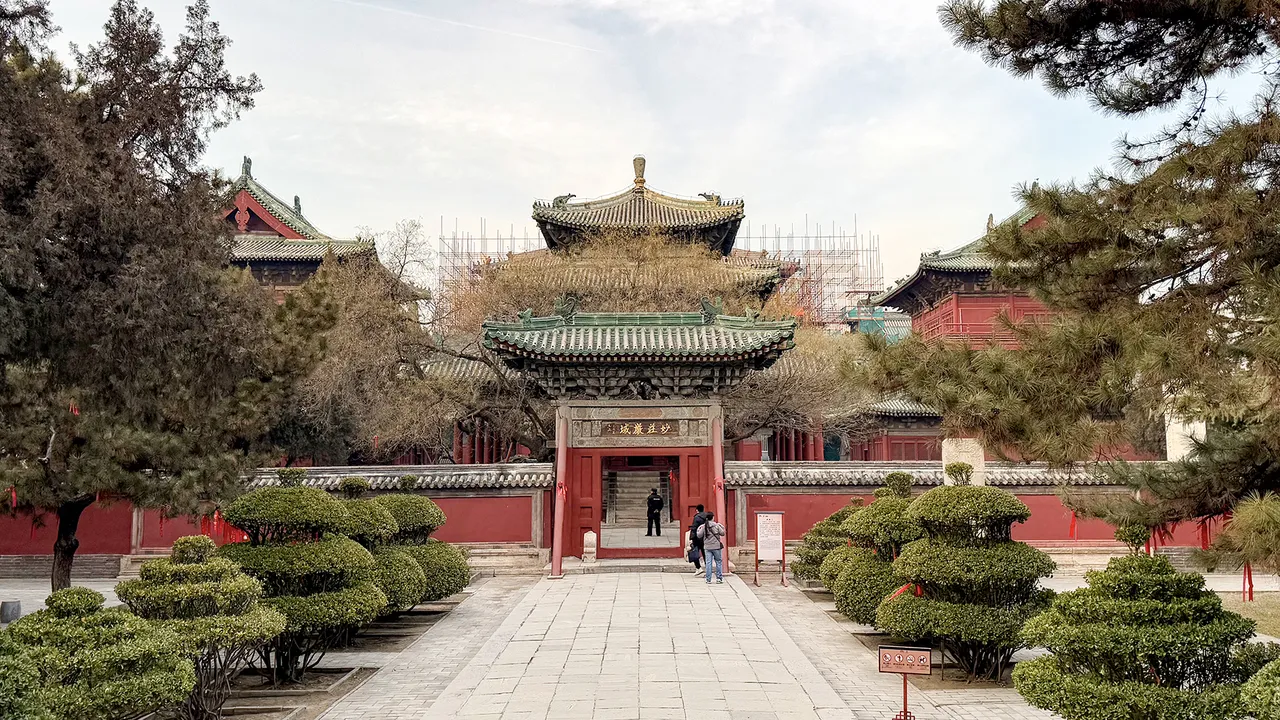
The Rongguo Mansion and Towers at Dusk
The afternoon opens at the Rongguo mansion, the period residence built for the television Dream of the Red Chamber, courtyards running long, readers and viewers each served. Then thread Kaiyuan and Linji: a Tang pagoda with Tang-timbered bell tower, the Linji school's founding seat and its Chengling stupa.
Return to the south wall at sunset, four towers silhouetting in a row, the Hua and Lingxiao pagodas viewed in passing. Nanguan's lanterns rise for night one, closing in lamplight.
Zhengding's Second Morning: The Hua and Lingxiao Pagodas
Zhengding earns a second morning. Guanghui's Hua Pagoda carves lions, elephants, bodhisattvas and lotus into its upper drum, the tower a giant stone bouquet unique in China; Tianning's Lingxiao keeps a rare through-the-tower central timber column, two towers answering two structural questions.
After the pair, re-enter Longxing for details the first pass blurred, a second reading wholly different. Buy Zhengding's souvenirs before checkout, palace noodles and benggan both travel.
Zhaozhou Bridge: Standing on the Textbook
Day four's afternoon runs south to Zhaoxian, an hour-plus drive. Li Chun's spandrel-arch bridge reads even greater on the flat plain: no gorge to lean on, it has stood on structure and stone for fourteen hundred years. Deck ruts are true growth rings, Sui dragon balustrads a labeled mix of original and copy.
An hour covers the park, snow pears at the bridgehead; dinner in the county town on candied pear, sleeping in Zhaoxian or back downtown, either works.
Bailin Temple and the Turn West
Day five opens with Bailin Temple, the Tang master Zhaozhou's seat and the ground of the go-drink-tea koan. The rebuild stands proper, the Ten Thousand Buddha Tower ranking among northern temples, the stupa quiet; half an hour in the tea room slows four days to tempo.
After midday turn north to Pingshan, two-plus hours, sleeping in the county town or Xibaipo town to stage day six's red itinerary.
Xibaipo and the Gangnan Reservoir: A Solemn Day
Day six enters Xibaipo early. Museum before site keeps the history straight: the three campaigns' wires ran from mud-brick houses, the examination journey to Beijing departed here; then walk the Gangnan reservoir, hills and water folding the solemn into scenery.
Tea and stillness through the afternoon in lakeside Lijiazhuang, a red-history village now a rural-revival showpiece with guesthouses along the shore. Return downtown for the night, the Taihang saved for last.
Qiaolou Hall at Cangyan: The Cliff-Hung Finale
The last day climbs into the Taihang, morning at Cangyan. Qiaolou Hall bridges between cliff faces over a gorge dozens of meters deep, the Crouching Tiger leap filmed at your feet; the ascent threads crevices and cypress, three hours round trip.
Lunch at a foothill farmhouse, then two hours in Yujia stone village, the Ming settlement of Yu Qian's descendants built wholly of stone. Return downtown, seven days running from a Han jade suit to Taihang stone, every layer handled.
Inventory Before Departure: Hebei in a Bag
Spend the final hour downtown taking inventory: Jinfeng vacuum chicken, Gaocheng palace noodles, museum design goods, Zhengding's benggan and snow pears. Check food dates and seals, pad the breakables, confirm train and flight times.
Seven days ran from the museum's two millennia to a five-hundred-year stone village in the Taihang, a city deeper than the word junction. By the time the next train pulls out, you know it.
| Getting around |
|
| Budget | Tickets total about RMB 450-550 pp, a three-to-four-day charter RMB 700-1100, seven nights of food and lodging RMB 1500-2200; the week runs roughly RMB 2800-3800 per person. |
| Best time | Apr-May and Sep-Oct fit best; schedule around the museum's Monday closure, Zhengding's walls stay free all day, and Taihang roads go cautious after rain. |
FAQs
Does seven days carry repetition or slack?
The slack is deliberate: Zhengding's second morning compresses freely, and shopping holds elastic windows. To tighten further, fold Zhaoxian into a half day on the Zhengding-return day and give the saved day to deeper Jingxing villages.
Which days demand early rises?
Days six and seven pay for early starts, Xibaipo ahead of tour waves and Cangyan for mountain cool and light; Longxing also rewards opening time. The rest run on a normal clock, the week built with breathing room.
Are two nights in Zhengding worth it?
Yes. The lit walls at night and an empty Longxing at dawn cannot be had on day trips, and you erase two daily transfers. If the lodging disappoints, one night still works, using the second morning fully before returning.
Is seven days feasible with seniors?
Feasible with adjustments: cableway or bridge-base viewing at Cangyan, shuttles at Xibaipo, south section only on the walls. The week's virtue is an adjustable rhythm, one or two hard points per day, so seniors join at capacity and still finish.