
Taipei's past hides in three kinds of places: collections, streets and stages. Day one goes to the National Palace Museum and the official residence gardens in Shilin, home to an imperial collection carried across the sea; day two walks from the memorial halls downtown to the creative park in Songshan, reading the city's modern era and renewal; day three dives into Wanhua's old quarters and a riverside settlement, the city's earliest layers.
The rhythm alternates hard and soft: the museum and residence demand booking and queue discipline, most downtown halls are free and walk-in, and Wanhua's temples and lanes chain on foot, with Treasure Hill at dusk and a night show closing the arc. Only two things need locking before travel: museum tickets and one performance.
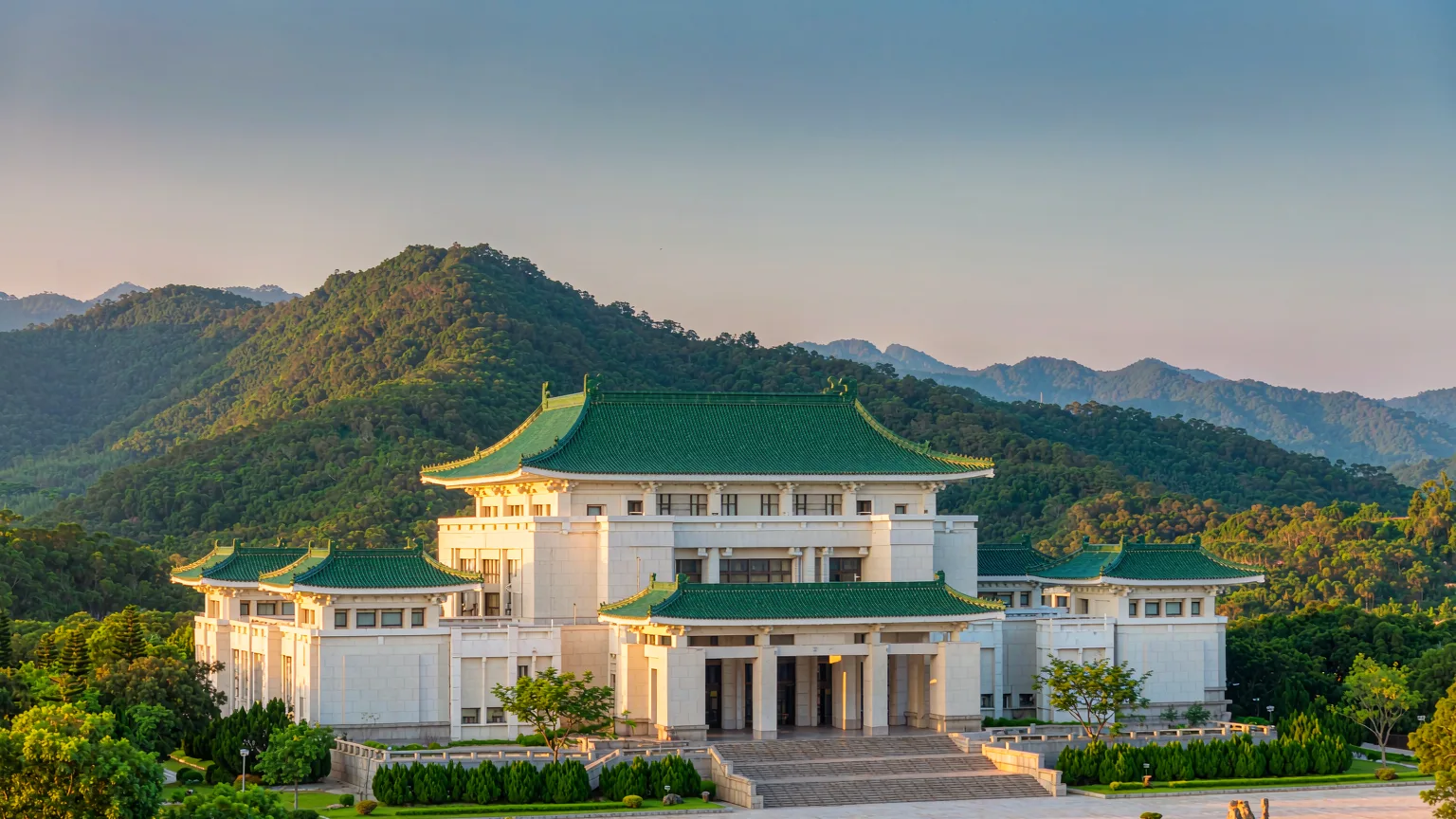
Itinerary at a glance
| 08:30 | National Palace Museum: Three Reigns of Collecting to Open the Trip |
| 11:00 | Shilin Official Residence: Modern History in a Garden |
| 14:00 | Dadaocheng's Dihua Street and Xiahai City God Temple: The Old Commercial Heart |
| 09:00 | Chiang Kai-shek Memorial Hall: Rituals and the Plaza in the Morning |
| 11:30 | Sun Yat-sen Memorial Hall: Zhongshan Park and the Jade Lake Angle |
| 14:00 | Songshan Cultural and Creative Park: Old Tobacco Warehouses Reborn |
| 19:00 | TaipeiEYE: A Night at the Traditional Theater |
| 09:00 | Longshan Temple and Bopiliao: Wanhua's Twin Narratives |
| 11:30 | Treasure Hill Artist Village: A Hillside Settlement as Living Museum |
| 14:30 | City Stage Theatre: Closing on a Contemporary Production |
The route, stop by stop
National Palace Museum: Three Reigns of Collecting to Open the Trip
Enter at opening for the celebrity trio, the Jadeite Cabbage, the Meat-shaped Stone and the Mao Gong Ding, then work the painting and ceramics galleries along the dynastic line. Nearly 700,000 objects with barely one percent on view at a time, rotating quarterly, so repeat visits always find something new.
The collection grew from the Qing palace holdings, transferred in stages in the mid-twentieth century; the restrained labels reward careful reading for the shared roots of the two palace museums. Watch for special exhibitions beyond the permanent display, since international loan shows sell out fast.
Shilin Official Residence: Modern History in a Garden
The residence gardens open free, with the rose garden and the Kai Song chapel the gems; the main house charges entry and preserves mid-twentieth-century interiors as lived in. The couple resided here over two decades, so horticulture and orchids lead the displays, detailed in guided batches.
Sharing Shilin with the museum makes the routing natural, and the garden cafe, converted from an old building, beats returning downtown for lunch. The main house admits visitors only with guide batches, so follow staff arrangements.
Dadaocheng's Dihua Street and Xiahai City God Temple: The Old Commercial Heart
Dihua Street keeps its late-Qing Minnan shophouses and Japanese-era baroque facades in fine order, the pharmacies, dried goods, fabric and tea merchants still trading, a living heritage street rather than a set. Xiahai City God Temple hosts the island's busiest matchmaker altar, with bilingual guides to the rites.
Cafes in converted old houses and design shops mark the decade's renewal, their second-floor windows over the arcade the best seats. Come evening, the Dadaocheng pier draws locals to their own sunset spot on the levee.
Chiang Kai-shek Memorial Hall: Rituals and the Plaza in the Morning
The hourly guard change is the show, ten immaculate minutes of rifle drill, and the hall's terrace opens a full panorama afterward. The Liberty Square archway paired with the two theaters forms Taipei's most ceremonial ensemble.
The ground-floor exhibit traces the site's history with solid air-conditioning, the ideal pre-noon transition. Dance troupes and sword clubs fill the plaza, and mornings feel looser than evenings.
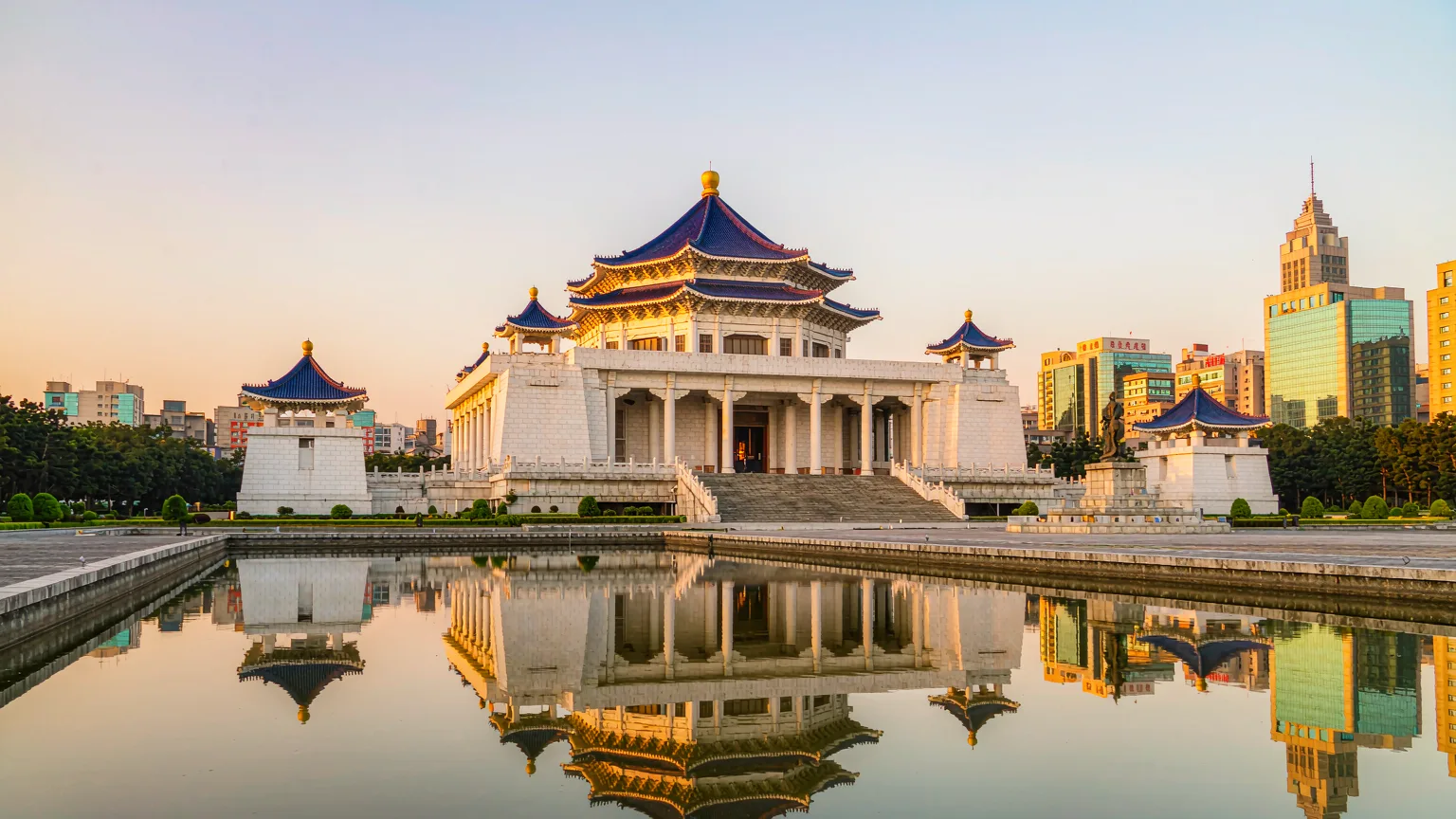
Sun Yat-sen Memorial Hall: Zhongshan Park and the Jade Lake Angle
The hall faces Taipei 101 head-on, and the angle from Jade Lake is the classic postcard frame; the hourly guard change and ceremony run here too. Inside, the permanent exhibit leans on modern-history documents, small enough for forty minutes.
The park's lake loop suits an afternoon stroll with family crowds on weekends. Ten minutes east on foot reaches the City Government district, dovetailing with the afternoon's creative park.
Songshan Cultural and Creative Park: Old Tobacco Warehouses Reborn
The old tobacco plant keeps its baroque garden and boiler room intact, warehouse galleries rotate design and art shows, and an Eslite flagship anchors one corner. Quieter and denser with exhibitions than the Huashan 1914 park across town.
The Taipei Dome next door doubles foot traffic on event days and stays calm otherwise. The heritage zone is free, special shows ticket separately, and daily guided tours earn their time.
TaipeiEYE: A Night at the Traditional Theater
The repertory changes nightly, cycling Beijing opera, Taiwanese opera, nanguan and beiguan music and acrobatics, with Chinese and English subtitles giving non-Chinese speakers a zero-barrier entry. Ninety minutes suits newcomers, martial scenes and face paint making the memories.
After the show, hotels along Zhongshan North Road sit on the easiest ride home. Palace museum day one, downtown day two, a stage tonight: tradition and contemporary Taipei each get their due.
Longshan Temple and Bopiliao: Wanhua's Twin Narratives
Longshan Temple's caisson ceiling, bronze dragon columns and hourly chanting form the trio of highlights, incense unbroken for over two centuries. One lane away, the Bopiliao historic block keeps Qing-era street lines and red-brick houses, its old schoolhouse and exhibits telling the Bangka port story.
The pair takes about two hours; temple oracle sticks come with pictorial guides. The block's old film studio and exhibits are free, and Herb Lane on Xichang Street earns a cooling cup of grass tea en route.
Treasure Hill Artist Village: A Hillside Settlement as Living Museum
A veterans' settlement by the Xindian River, reworked through artist residencies into a living museum, narrow lanes, vegetable plots and galleries packed onto one slope. Settlement history and contemporary art annotate each other, the map unfolding by house numbers.
Some houses still shelter longtime residents, so walk softly. The high viewing platform faces Yongfu Bridge and the river, and by dusk the snack stalls along Tingzhou Road open, with Gongguan district ten minutes on foot.
City Stage Theatre: Closing on a Contemporary Production
Ending three days with a show gives the trip its rite of passage; City Stage programs drama and musicals at friendly prices in a mid-size house with no truly bad seat, and the metro sits beneath the exit.
Online platforms handle tickets, and hot productions sell out a week ahead. Without a fitting date, a new Mandarin film at a cinema makes a kindred closer, Taipei's moviegoing culture being its own reward.
| Getting around |
|
| Budget | Entries (palace museum, residence halls, special shows) total RMB 120-200 pp, plus theater tickets from about RMB 150 (from around NTD 600). |
| Best time | Works year-round in climate-controlled halls; the museum rotates every three months, so time the trip to any special exhibition. |
FAQs
Airport to hotel to first stop: how should day one begin?
The airport express needs 35 minutes to Taipei Main, Songshan Airport's metro even less. Keep day one to the museum and residence only, about an hour out from Taipei Main, with bags stored at the station or hotel before heading out light.
How do I book the residence house and theater tickets?
Palace museum tickets and both theaters' shows sell online, performances often out a week early, so lock seats when you lock the itinerary; the residence main house needs no reservation, walk-up tickets in guided batches, and the gardens cost nothing.
If only one of museum or residence survives, which?
Keep the museum; the residence gardens make a free half-hour consolation and the house can go, unless modern history pulls hard, then reverse. The downtown stops are free with flexible timing, so the real trade-off lives only in Shilin's half day.
Payment and etiquette for galleries and theaters?
Temples and old streets run on cash, museum shops and box offices take mobile payment and international cards, and the transit card covers every metro and bus. Dress modestly at temples with no flash inside, recording is banned in theaters, and a silenced phone is the baseline of respect.