
Taipei sits wrapped in hills and water: to the north the Datun volcanoes still steam, their hot springs seeping through rock into Beitou's streets; to the south tea hills rise, and a gondola climbs straight from the zoo station to Maokong. Three days split by terrain, one direction per day, no rushing and no backtracking.
The rhythm staggers effort: day one is mostly soaking, the gentlest; day two, full-day hiking on Yangmingshan, the hardest; day three returns to the city's edge with tea hills by day, a dusk climb and a night view to close. Mountain weather flips fast, check clouds before setting out, and on trails a rain shell always beats an umbrella.
Itinerary at a glance
| 09:00 | Xinbeitou Hot Springs: Starting at the Hot Spring Museum |
| 11:00 | Thermal Valley: The Steaming Source of the Jade-Green Spring |
| 14:30 | Beitou Litzu Hot Spring Resort: A Slow Afternoon in a Private Bath |
| 09:00 | Zhuzihu: White Flower Fields in a Volcanic Valley |
| 11:30 | Xiaoyoukeng: A Fumarole Field Still Breathing |
| 14:00 | Qingtiangang: Cattle, Grassland and the Skyline |
| 18:30 | Shilin Night Market: Street-Fire Refuel After the Hills |
| 09:30 | Maokong Gondola and Teahouses: Riding Up to the Tea Hills |
| 14:00 | Xiangshan Trail: Taipei 101 from the Six Boulders |
| 19:00 | Bishanyan Observatory: A Night-View Full Stop over Neihu |
The route, stop by stop
Xinbeitou Hot Springs: Starting at the Hot Spring Museum
One stop on the Xinbeitou branch line gets you there; a century-old public bathhouse now serves as the hot spring museum, its Romanesque arches and tatami soaking hall preserving the era's bathing culture. The museum is free, so read first and soak after, knowing the springs' full story.
Beitou's water runs acid and sulfuric, hot and pungent, as bracing as it is intense. The park follows the stream, whose bed steams year-round through the rocks; walking the bank in winter feels like standing inside a giant humidifier, thickest around the spring-source park.
Thermal Valley: The Steaming Source of the Jade-Green Spring
One of Beitou's spring sources, the valley vents white steam off sixty-to-ninety-degree jade-green water that glows blue-green in sunlight; bathers of old called it Hell Valley. A boardwalk loops the gorge in ten minutes, and the stronger the sulfur smell, the better the photo.
Touching the water is strictly off-limits, the acid harsh on skin and clothing alike, and wet boardwalks demand slower steps. Descend the hill road from the valley and the guesthouse district begins, dovetailing with an afternoon soak.
Beitou Litzu Hot Spring Resort: A Slow Afternoon in a Private Bath
After the public baths, a private bath room earns the closing slot. The resort faces the hillside, its wooden-lined tubs adjustable in temperature, and a two-hour booking fits three rounds of soaking with tea breaks on the viewing deck between.
Beitou's bathing culture pairs each soak with a rest: ten to fifteen minutes in the water, then rise and cool, keeping the day's total near an hour. Finish with lunch or afternoon tea at the resort, softening the pace before the descent.
Zhuzihu: White Flower Fields in a Volcanic Valley
A former volcanic landslide lake in Yangmingshan's belly, now the heartland of calla lily fields, the whole valley turning white from March to April. Several farms open cut-your-own experiences priced by the bunch, and the flowers you cut are the season's most honest souvenir.
Farm restaurants crowd the valley and queue in flower season; boiled calla lily and stir-fried fern shoots are the signatures. Off-season still rewards a visit: hydrangeas take over in May and June, with rice waves and cloud seas carrying summer and autumn.
Xiaoyoukeng: A Fumarole Field Still Breathing
Yangmingshan's signature volcanic terrain: fumaroles hiss year-round, white vapor pours from the vents, and sulfur stains the cliffs gold. The trail skirts the crater rim, the main loop takes twenty minutes, and on windy days you can hear the whole valley breathing.
Sulfur here has been mined since the Qing era, recorded in old travel journals. The viewing deck faces Seven Star Mountain's main peak; with strong legs, the trailhead sits nearby, a three-hour round trip to a summit view reaching the coastline.
Qingtiangang: Cattle, Grassland and the Skyline
A grassland pasture on an old lava platform, free-roaming water buffalo included, with unbroken views that catch both the ridgeline and, on clear days, the distant coast. The loop trail runs flat, making this the finest lawn for lying down in all Taipei.
The grassland offers zero shade: midsummer noon scorches, and autumn-winter fog often claims the field entirely, so respect both extremes. At dusk the cattle head home and slant light crosses the grass waves, the photographer's favorite twenty minutes.
Shilin Night Market: Street-Fire Refuel After the Hills
The ride down to Shilin takes just over an hour, and the market's street fire flips the day's volcanic grassland on its head. A hiking day burns serious fuel, and oyster omelet, fried chicken and medicinal pork rib stew restore it in exactly that order.
The rib stew stalls cluster in the market's back half, the broth laced with herbs and rice wine, one winter bowl warming you through, a classic post-hike comfort for Taipeiners. Fed and watered, Jiantan station runs you straight back into town.
Maokong Gondola and Teahouses: Riding Up to the Tea Hills
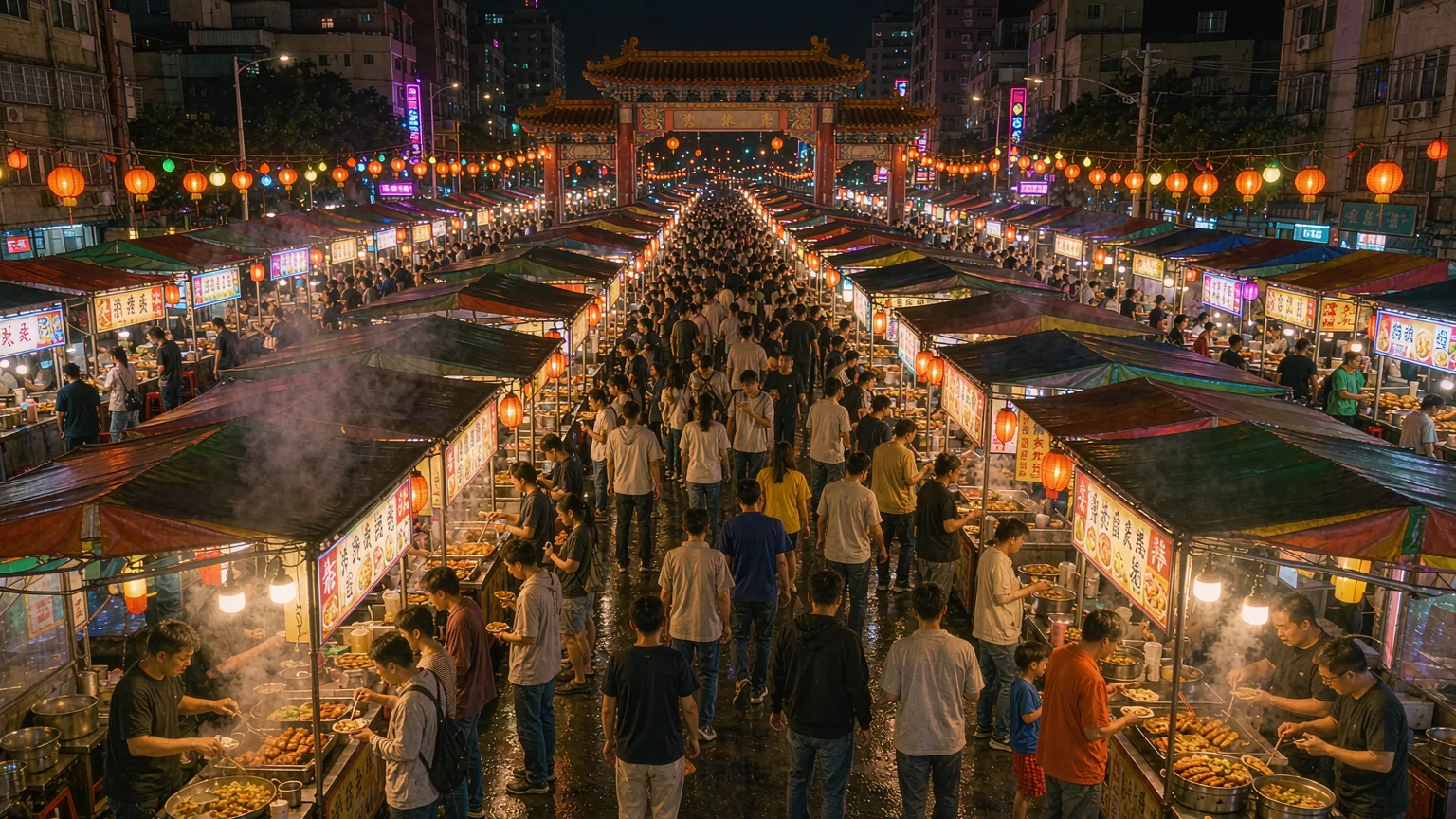
The crystal cabin's floor is glass, and as the gondola crosses the ridge the whole Taipei basin spreads beneath, with Taipei 101 unmistakable in the green. The hills above are tieguanyin country, teahouses strung along the trails, and one pot with a mountain view can absorb an entire morning.
The tea promotion center's exhibit hall is free and sorts out tieguanyin from baozhong; the old tea master's memorial beside the camphor trail records a century of local tea, and one loop doubles as a proper tea lesson.
Xiangshan Trail: Taipei 101 from the Six Boulders
The trailhead starts at Xiangshan metro station's exit; about twenty minutes of stone steps reach the Six Boulders lookout, with Taipei 101 looming close, the city's most classic frame. The full trail takes about an hour, and the evening ascent rides the right light for the tower's silhouette.
Sunset-and-night shooters pack the boulders, tripod spots first come first served. Mid-hill pavilions trade a little view for far fewer people, and the descent lands you in Xinyi with unlimited dinner choices.
Bishanyan Observatory: A Night-View Full Stop over Neihu
A hillside platform in Neihu with views across the whole basin: the Tamsui and Keelung rivers reflect at night and Songshan Airport's landing lights pass close by. It is local photographers' semi-secret night spot, far thinner crowds than Xiangshan.
The Bishanyan temple beside it draws steady worshippers, and by day the temple courtyard and Baishihu suspension bridge extend the visit. The night view complements Xiangshan's: there you frame the tower close, here you take the whole city, a fitting full stop for three days.
| Getting around |
|
| Budget | Soaking runs RMB 200-400 pp, gondola and buses about RMB 80, so three days total roughly RMB 400-600 pp (about NTD 1800-2700). |
| Best time | Mar-Apr calla lilies at Zhuzihu and Oct-Dec silvergrass plus hot-spring season are prime; summer afternoons bring mountain thunderstorms, so hike early. |
FAQs
Is soaking with luggage realistic, and how do I get here from the airport?
The airport express reaches Taipei Main in about 35 minutes and the Tamsui line carries on to Beitou, roughly an hour total. Store bags in Taipei Main's lockers or small ones at Beitou station and soak light; the district slopes a lot, so storing before playing is the only sane order.
Do the hot spring resort and gondola need reservations?
Private baths fill on weekends and in peak season, so book a slot a day ahead online or by phone. Gondola crystal cabins queue on site, under ten minutes on weekdays but over an hour on holidays. All hiking trails are free, no booking, just walk up.
Which of the three days should never be cut?
Yangmingshan is untouchable: the volcanic terrain is unique around Taipei and the Zhuzihu-plus-Xiaoyoukeng pairing has no substitute. Beitou can merge into that day, and if the gondola is down, swap Maokong for a Xiangshan-plus-Bishanyan night-view line.
What about spending and safety in the hills?
Hill farms and minibuses mostly take cash, the transit card covers buses and the gondola, and convenience stores in town handle cash exchange. Signal drops occasionally, so hike in pairs with a power bank, hydrate around soaking, and avoid long hot soaks after drinking or with high blood pressure.