
Five days is Taipei's most comfortable key: two days finish the icons and museums, one gives the old quarters their street-level life, day four heads north for springs and the river mouth, and day five goes east to the mining hill town, closing on tea hills and a night market. One direction per day, alternating exertion and ease, nothing rushed, nothing missed.
Transport rides the metro, rail and buses throughout, with taxis only for the Neihu viewpoint and the odd late road. Food and soaking take the budget while entries stay cheap; lock three things before departure, museum tickets, the Taipei 101 sunset slot and a private bath, and the five days will flow.
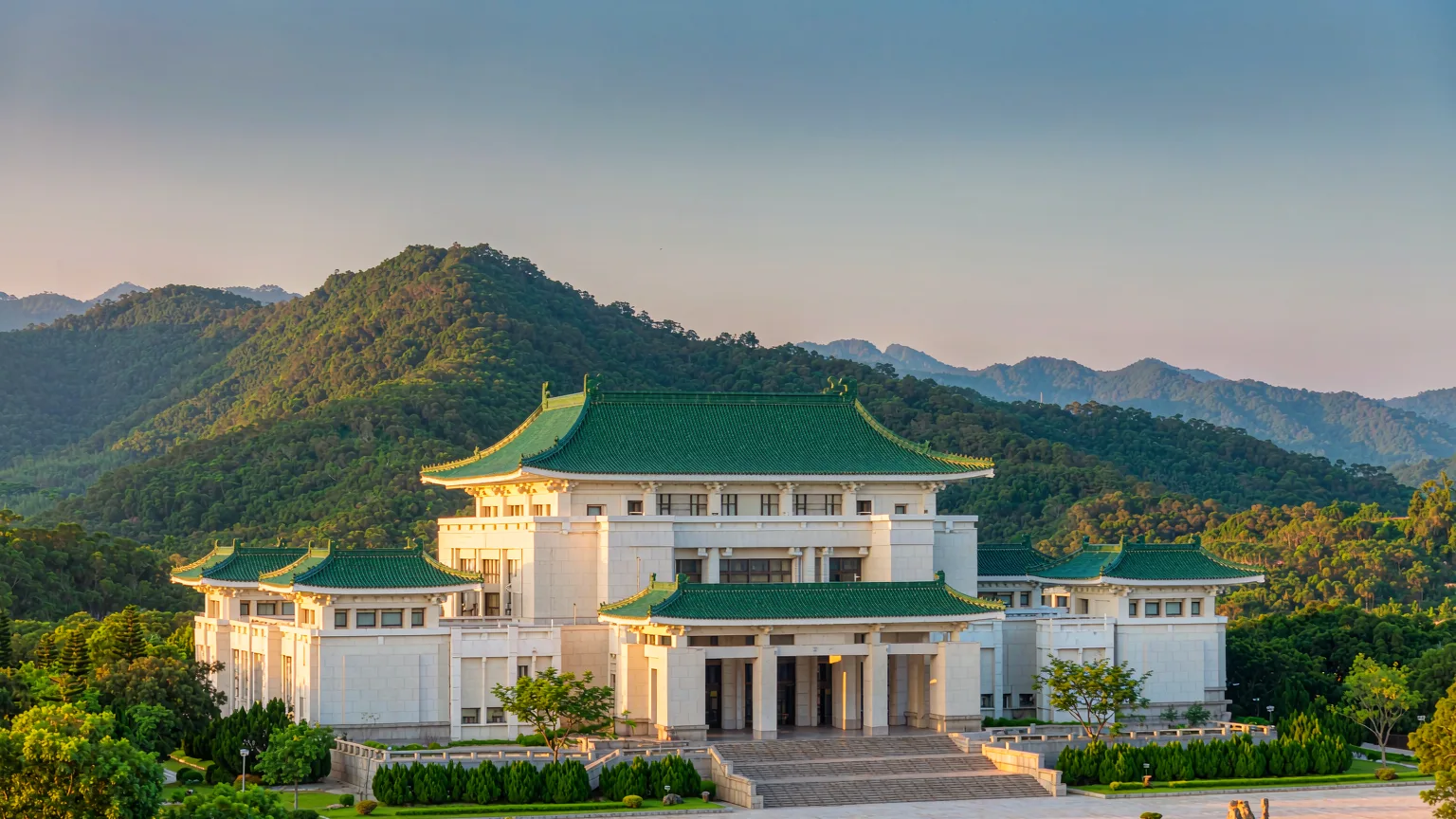
Itinerary at a glance
| 08:30 | National Palace Museum: Lesson One of Five Days |
| 18:00 | Shilin Night Market: Day One's Street Fire |
| 09:00 | Chiang Kai-shek Memorial Hall: The Hourly Rite and a Morning Plaza |
| 11:30 | Taipei 101 and Four Four South Village: The Old Village under the Tower |
| 16:30 | Xiangshan Trail: Sunset Reserved for the Six Boulders |
| 09:00 | Longshan Temple and Bopiliao: Old Wanhua on Day Three |
| 14:00 | Dadaocheng and Dihua Street: Dried Goods and Old Facades |
| 18:30 | Ningxia Night Market: Small Plates, Many Stops |
| 10:00 | Beitou Hot Springs: Half a Day of Steam and Soaking |
| 16:30 | Tamsui and Fisherman's Wharf: A River-Mouth Sunset After the Soak |
| 10:00 | Jiufen and Jinguashi: Mining-Town Hills on Day Five |
| 16:30 | Maokong and Raohe Street Market: Mountain Tea and Pepper Buns to Close |
The route, stop by stop
National Palace Museum: Lesson One of Five Days
Enter at opening for the trio of the Jadeite Cabbage, Meat-shaped Stone and Mao Gong Ding, then follow the dynastic line through painting and ceramics. Nearly 700,000 pieces rotate quarterly, and special exhibitions often shine, so check the website before travel.
The museum is the only stop in five days demanding time discipline, and the first two morning hours are the quietest. Rest a while in the Zhishan Garden on the grounds, or ride the bus downhill into an afternoon in Shilin.
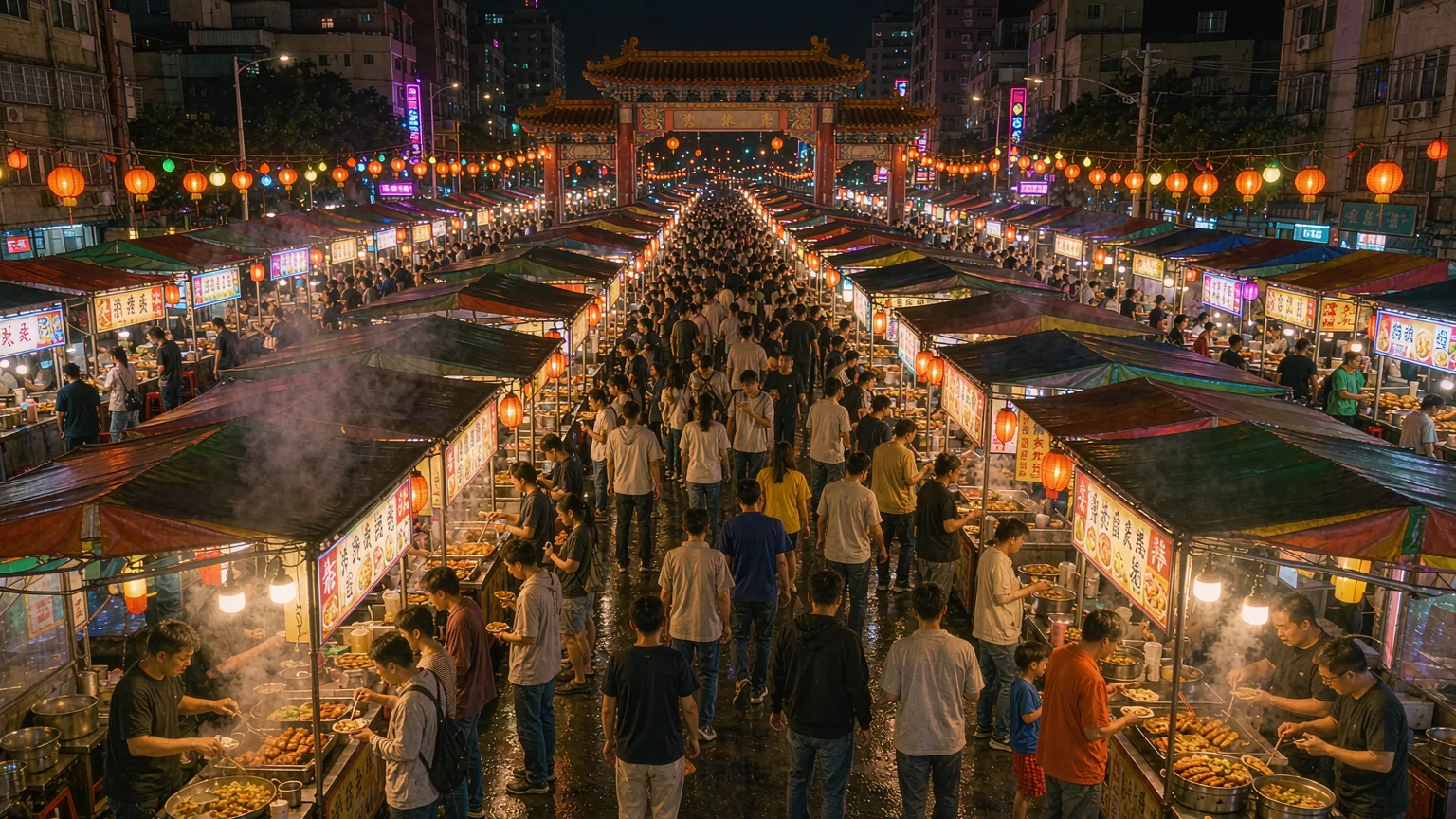
Shilin Night Market: Day One's Street Fire
Coming back from the museum flows straight into the market: oyster omelet, stir-fried squid and giant fried chicken as the opening trio, bubble taro balls and papaya milk to close, then a digestive stroll through the lanes by Cixian Temple.
The market splits into two zones, and any queue of locals is a safe bet. Ending day one here, Jiantan station rides you straight to the hotel, perfect for jet lag.
Chiang Kai-shek Memorial Hall: The Hourly Rite and a Morning Plaza
Catch the guard change on the hour, ten crisp quiet minutes of drill, then take the terrace for a panorama over half the city. Mornings fill with tai chi and dance troupes, far looser than the afternoon.
The underground exhibit hall makes a cool follow-up, then one metro stop carries you onto the Tamsui-Xinyi line toward Taipei 101, wasting nothing on the way.
Taipei 101 and Four Four South Village: The Old Village under the Tower
The sunset slot sells fastest, though daytime slots have their own virtues: thin crowds, clear air, and a chance to scout the Xiangshan trail layout for the evening climb. The 89th-floor loop shows the Tamsui River's bend into town unmistakably.
Four Four South Village at the tower's foot reuses a military-dependents' settlement, old bungalows framed against Taipei 101 in the city's most classic contrast shot, with snack stalls and design shops making a fine lunch.
Xiangshan Trail: Sunset Reserved for the Six Boulders
The trailhead stands at Xiangshan station's exit, twenty minutes of steps to the Six Boulders with the tower looming close; at sunset the tower dims first while the city lights rise, the golden twenty minutes photographers chase.
Descend straight into Xinyi for dinner, the day's climax landing neatly between hill and tower. The full trail takes about an hour, so save leg reserve for the way down.
Longshan Temple and Bopiliao: Old Wanhua on Day Three
Longshan Temple burns brightest in the morning; look up slowly at the caisson ceiling and bronze dragon columns as hourly chanting threads the halls. One lane over, Bopiliao keeps its Qing street lines, the old schoolhouse and halls open free.
The pair runs about two hours, then grab grass tea on Herb Lane. Wanhua's arcades give full shade, so even high noon walks well and the morning program can start late.
Dadaocheng and Dihua Street: Dried Goods and Old Facades
Dihua Street's pharmacies, dried-goods stalls and tea merchants still trade beneath Minnan shophouses and baroque facades in procession. Xiahai City God Temple's matchmaker altar draws the island's longest devotion queues.
Second-floor wooden windows in converted cafes make the street's best resting seats. Come evening the Dadaocheng pier serves its sunset, the levee breeze two degrees cooler, the locals' own golden hour.
Ningxia Night Market: Small Plates, Many Stops
Ningxia packs Taipei's densest stalls, oyster omelets, egg-yolk taro balls and braised platters every few steps. Order small and share, grazing street to street to land at eighty percent full.
Tonight closes the old-town chapters with tofu pudding or sesame mochi; Shuanglian station is one metro stop from the core, banking energy for tomorrow's Beitou.
Beitou Hot Springs: Half a Day of Steam and Soaking
Day four's morning goes to Beitou: the hot spring museum in a century-old bathhouse, then Thermal Valley's steaming jade-green source, a ten-minute boardwalk loop where the strongest sulfur smell meets the bluest water.
In the afternoon, book a private bath for a two-hour slot of three soaking rounds with tea breaks between. The acid spring bites, so keep each soak under fifteen minutes.
Tamsui and Fisherman's Wharf: A River-Mouth Sunset After the Soak
Post-soak, ride the metro straight to Tamsui; a-gei and fish crisps open the palate, the fort's brick arches make an en-route stop, then ferry or bus out to Fisherman's Wharf where the Lovers' Bridge holds the sunset seat.
Linger through the ten minutes when gold turns violet and the lighthouse and bridge lights come up in sequence. Forty minutes back on the metro, the day's steam and hot soup balancing like a couplet.
Jiufen and Jinguashi: Mining-Town Hills on Day Five
Rail to Ruifang, bus up the hill: Jinguashi first for the pit tunnels and dormitory quarters, then into Jiufen's old street for taro balls and moji, teahouse second floors facing the whole flank of Keelung Mountain.
The hill town fills by mid-afternoon, Shengping Theater and the teahouses lighting first at dusk. Descending links to Keelung or straight home to Taipei, the five days closing on hills and sea.
Maokong and Raohe Street Market: Mountain Tea and Pepper Buns to Close
Back in town, the zoo station gondola lifts you to Maokong, the crystal cabin spreading the whole basin below; order a pot of tieguanyin at a hillside teahouse and sit it out to dusk.
Descend to Raohe Street Night Market for the finale, the pepper bun stall by Songshan station queuing year-round, one juice-bursting bite landing the five days' most solid full stop.
| Getting around |
|
| Budget | Entries and soaking around RMB 350, city transport about RMB 100; five days total roughly RMB 1200-1800 pp (about NTD 5500-8300, lodging excluded). |
| Best time | Mar-May and Oct-Dec hold steadiest, keeping both hills and river mouth at their best; summer means early starts to dodge rain, winter belongs to the springs. |
FAQs
Landing at the airport, how should day one flow?
The airport express needs 35 minutes to Taipei Main; give the morning to the museum only, closing with Shilin market at dusk. The museum lies roughly on the way into town, so store bags at the station or hotel, go light, and fight jet lag while viewing the collection.
Which tickets need advance purchase?
Museum tickets and the Taipei 101 sunset slot are safest online; private baths need day-ahead booking on peak weekends; everything else, markets, gondola, buses, is walk-up. Lock those three and the five days run without jams.
Which day is most underrated of the five?
Day four, springs plus river-mouth sunset, gets dismissed as a transition day yet packs the highest experience density: soaking, museum, ferry and sunset on one line. On mixed forecasts protect this day, since it demands the least of the light.
How should budget and payments be arranged across five days?
Five days run about RMB 1500 excluding lodging, with food and soaking the big lines. The transit card covers all metro and buses and tops up at convenience stores, mobile payment works at malls and chains, while markets and hill shops want NTD cash, so carry around NTD 2000 mixed in denominations.