
Seven days is the length that turns Taipei into a specimen: two days north first, the museum and the springs-river-mouth pairing; two days inside the city, old quarters and art settlements; day five back to the skyline, tower, trails and tea hills; and two final days east, mining town and sea cape closing the arc.
The key to a deep itinerary is not seeing more but leaving gaps: each afternoon holds a deliberately elastic stretch, museums on rainy hours, an extra trail on clear ones. Transport rides the metro, rail and buses, with taxis only for the Neihu viewpoint and the Yehliu return. Lock the museum, the Taipei 101 sunset slot, a private bath and two shows in advance, and the week's skeleton holds.
Itinerary at a glance
| 08:30 | National Palace Museum: Day One's Headline Act |
| 18:00 | Shilin Night Market: Closing Day One |
| 10:00 | Beitou Hot Springs and Thermal Valley: Day Two's Steam |
| 15:30 | Tamsui Old Street, Fort San Domingo and Fisherman's Wharf: Dusk at the River Mouth |
| 09:30 | Dadaocheng and Dihua Street: Day Three's Port Memory |
| 13:30 | Museum of Contemporary Art Taipei and Taipei Fine Arts Museum: A Two-Museum Afternoon |
| 09:00 | Longshan Temple and Bopiliao: Day Four in Old Wanhua |
| 12:00 | Treasure Hill Artist Village: An Afternoon on the Slope |
| 16:00 | Chiang Kai-shek Memorial Hall: Day Four's Ceremonial Close |
| 11:00 | Taipei 101 and Four Four South Village: Day Five's Skyline |
| 16:30 | Xiangshan Trail: The Golden Twenty Minutes of Sunset and Lights |
| 09:30 | Maokong Gondola and Teahouses: Day Five's Tea-Hill Adagio |
| 10:00 | Jiufen and Jinguashi: A Two-Town Mining Tale on Day Six |
| 16:00 | Yehliu Geopark: Day Seven's Cape Geology Lesson |
| 18:00 | Raohe Street and Shilin Night Markets: Two Full Stops for the Week |
The route, stop by stop
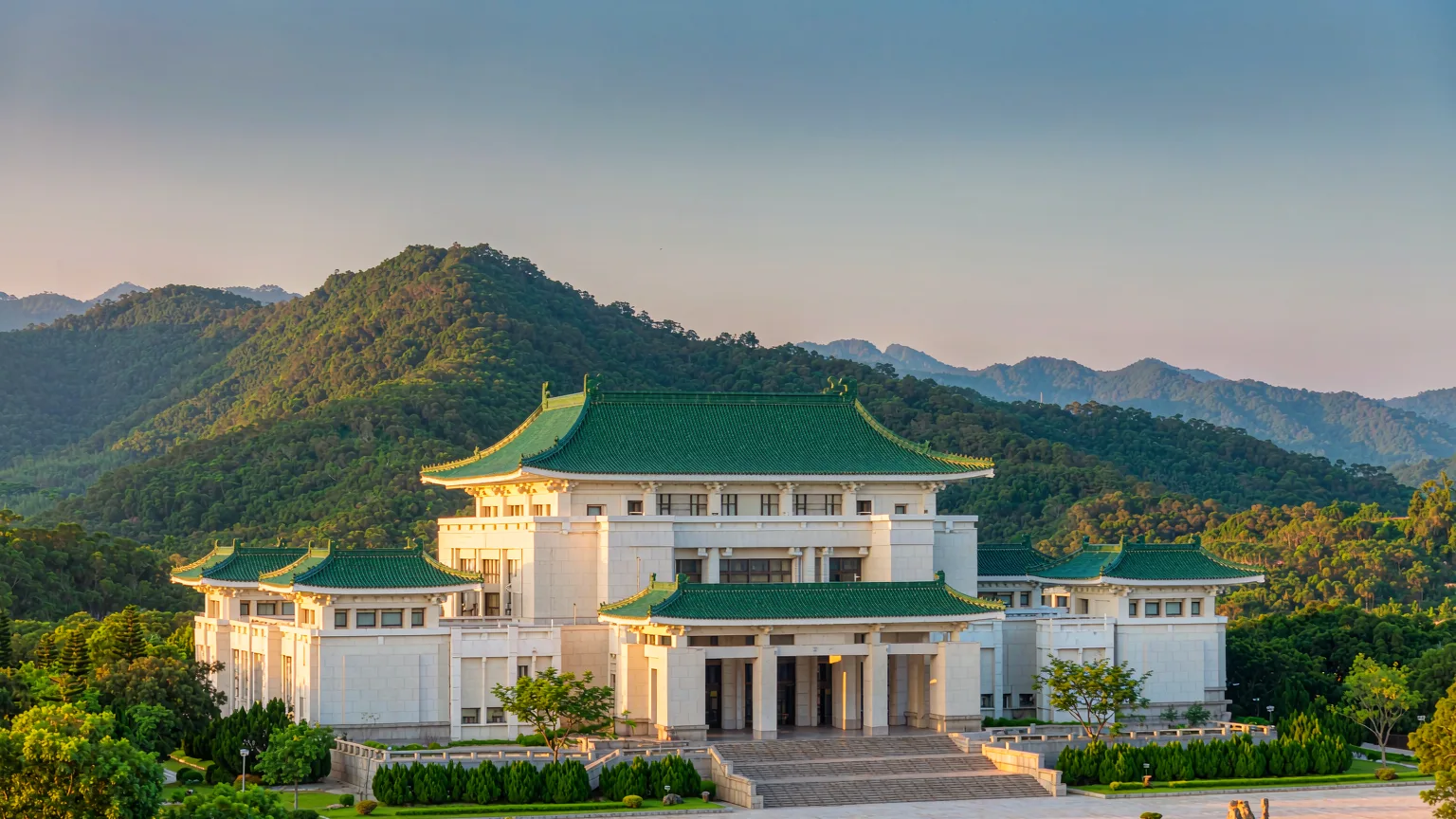
National Palace Museum: Day One's Headline Act
Enter at opening for the Jadeite Cabbage, Meat-shaped Stone and Mao Gong Ding, then work the painting and ceramics galleries along the dynastic line. Nearly 700,000 objects rotate quarterly, and special shows often reward the timing, so check the online calendar before picking the day.
The deep method is audio guide plus double entry: morning for the trio and the main line, afternoon returning to the painting details skipped earlier, with a rest in Zhishan Garden between. Friday-Saturday late openings even let the museum split across two half days.
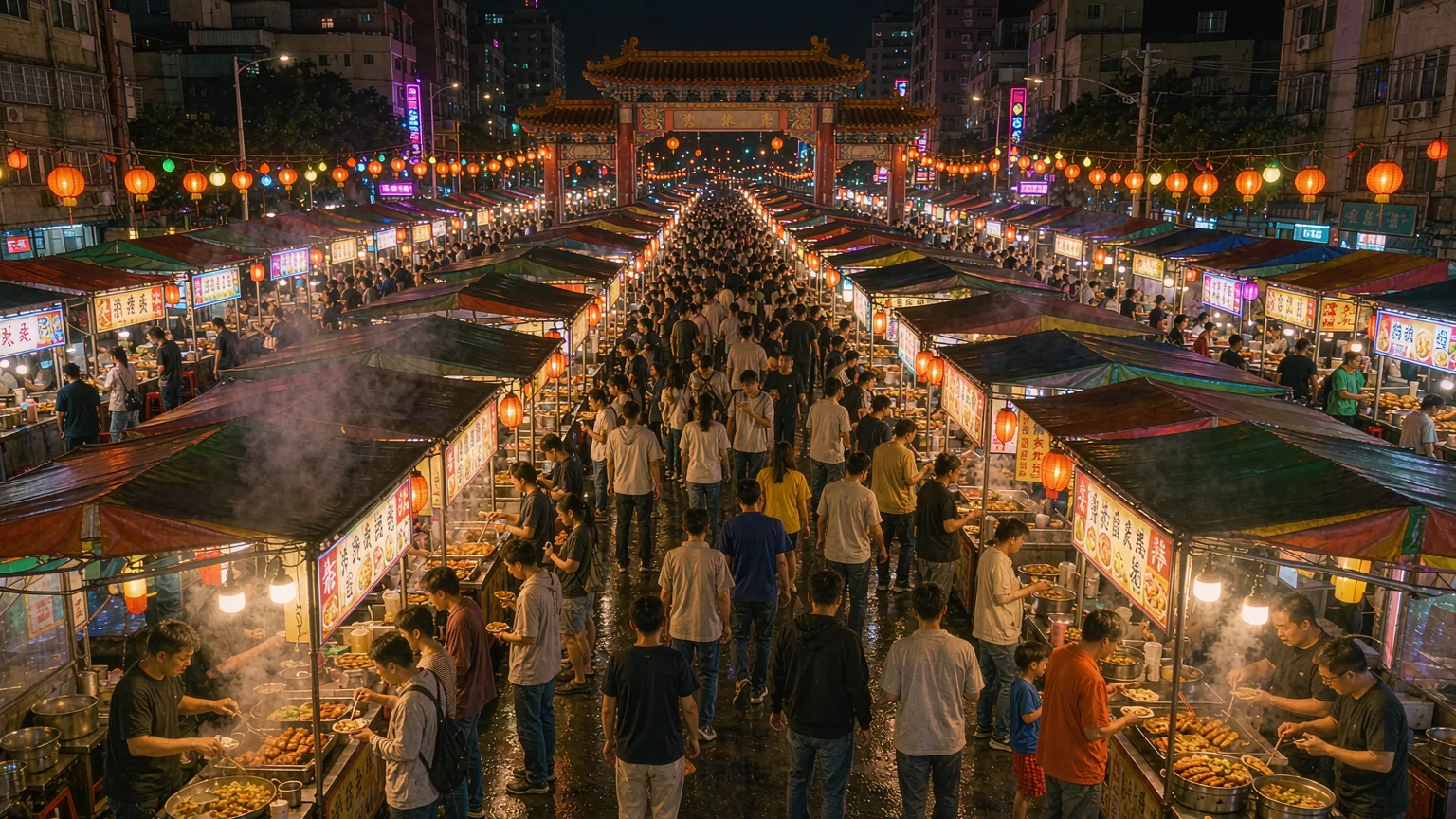
Shilin Night Market: Closing Day One
Downhill from the museum flows straight into the market: oyster omelet, stir-fried squid and giant fried chicken lead, taro bubbles and papaya milk close, then a digestive stroll through the lanes by Cixian Temple before Jiantan station carries you home.
Opening the week with the market sets the tone: food density stays high all along this route, so ration your stomach, with new stalls waiting every one of the six days after.
Beitou Hot Springs and Thermal Valley: Day Two's Steam
After the hot spring museum's century-old bathhouse, walk ten minutes to Thermal Valley, where white steam off the jade-green acid spring makes Beitou's cover photo; the boardwalk loops in ten minutes, water bluest under slanting midday light.
Book a private bath in the afternoon for a two-hour slot of three rounds with tea on the viewing deck between. The acid spring bites, so keep each soak under fifteen minutes and the day's total near an hour.
Tamsui Old Street, Fort San Domingo and Fisherman's Wharf: Dusk at the River Mouth
Post-soak, ride the metro's north end straight to Tamsui; a-gei and fish crisps open the stomach, the fort's four centuries of trading history and brick arches make the en-route stop, and the walls view best before four-thirty.
At dusk, ferry or bus out to Fisherman's Wharf, where the Lovers' Bridge sunset runs gold to violet and the lighthouse and bridge lights come up in sequence. Forty minutes back on the metro, the day's steam and hot soup closing like a matched couplet.
Dadaocheng and Dihua Street: Day Three's Port Memory
Dihua Street runs a procession of Minnan shophouses and baroque facades, the pharmacies, dried-goods stalls and tea merchants still trading; Xiahai City God Temple's matchmaker altar leads the island, with bilingual pictorial guides to the rites.
Second-floor wooden windows in converted cafes make the street's best rests, and tea shops pour oolong samples before you choose. The pier's levee sunset at dusk is old Taipei's own evening ritual.
Museum of Contemporary Art Taipei and Taipei Fine Arts Museum: A Two-Museum Afternoon
The contemporary museum pits red-brick classrooms against new ideas, compact enough for ninety minutes, the Zhongshan station underground mall leading to its door, one metro stop from the fine arts museum at Yuanshan.
The fine arts museum's third floor maps the local art lineage, worth doubled time in biennial years. The two complement each other, and an afternoon across both lays the base for reading the island's contemporary work.
Longshan Temple and Bopiliao: Day Four in Old Wanhua
Longshan Temple burns brightest in the morning, its caisson ceiling, bronze dragon columns and hourly chanting the trio of highlights. One lane over, Bopiliao keeps Qing street lines, the old schoolhouse and halls free, telling the Bangka port founding story.
The pair takes about two hours, then grass tea on Herb Lane. Wanhua's full arcades and morning light suit the brick facades, so give this stretch the unhurried version of the day.
Treasure Hill Artist Village: An Afternoon on the Slope
A veterans' settlement by the Xindian River reborn as a living museum, narrow lanes, vegetable plots and galleries stacked on one slope, the map unfolding by house numbers as settlement history and contemporary art annotate each other.
Some houses still shelter longtime residents, so walk softly; the high platform faces Yongfu Bridge and the river, and Gongguan's snack stalls open at dusk, the village livelier by evening than by day.
Chiang Kai-shek Memorial Hall: Day Four's Ceremonial Close
Evenings loosen the memorial, though the hourly guard change keeps its precision, and the terrace catches sunset dropping onto the two theater roofs, one of downtown's best free views.
When the plaza lamps come on, archways and colonnades change character entirely. The station below rides you straight to the hotel, day four closing on ceremony and clearing the calendar for three days of hills and sea.
Taipei 101 and Four Four South Village: Day Five's Skyline
Morning slots mean thin crowds and clear air, the 89th-floor loop scouting the Xiangshan trail line and the Tamsui River's bend for the evening climb, the sixty-second ascent on the express elevator a show in itself.
Four Four South Village at the tower's foot reuses a military-dependents' settlement, old bungalows against the tower in the city's classic contrast frame; village stalls make lunch, markets run Friday-Saturday, and Xiangshan follows in the afternoon.
Xiangshan Trail: The Golden Twenty Minutes of Sunset and Lights
The trailhead stands at Xiangshan station's exit, twenty minutes of steps to the Six Boulders with the tower looming close; at sundown the tower dims first while the city lights rise, the golden twenty minutes, the city's dearest free show.
Descend the same path after the night view, lit steps notwithstanding, best with company; dinner waits in Xinyi below, the day's climax landing neatly between hill and tower.
Maokong Gondola and Teahouses: Day Five's Tea-Hill Adagio
Transfer at the zoo station to the gondola, the crystal cabin spreading the whole basin beneath as it crosses the ridge; hillside teahouses string along the trails, and one pot of tieguanyin with a mountain view can absorb a full morning.
The tea promotion center's hall is free and sorts tieguanyin from baozhong, while the old tea master's memorial by the camphor trail records a century of local tea, one loop doubling as a proper lesson.
Jiufen and Jinguashi: A Two-Town Mining Tale on Day Six
Rail to Ruifang, bus up: Jinguashi first for the Wushan No.5 pit and Japanese-era dormitories, the helmeted tunnel experience worth its dozen minutes, and the world-famous gold bullion open for close viewing.
Into Jiufen by afternoon, Jishan Street's red lanterns and stone steps winding the contours, teahouse second floors facing Keelung Mountain's whole flank; Shengping Theater and the teahouses light first at dusk, the town's night beating its day.
Yehliu Geopark: Day Seven's Cape Geology Lesson
Buses from Keelung station reach the cape in about forty minutes; the mushroom rocks are millennia of weathering and surf, the Queen's Head thinning yearly, and boardwalks split three zones, the cape's far end emptiest and widest.
Winter monsoon spray sweeps the walkways, spectacular but heed closure signs; return by bus to Keelung for rail, or budget a taxi straight into town, day seven closing on sea wind.
Raohe Street and Shilin Night Markets: Two Full Stops for the Week
Two closing markets each carry a strength: Raohe owns the pepper bun by Songshan station, queues shortest when a batch leaves the oven, one juice-bursting bite, while Shilin owns scale, with arcades keeping most of it shoppable in rain.
Splitting them across the week's first and last days and tasting the contrast is the clumsy but right way to read Taipei's market spectrum. On the final night, pepper bun done, Songshan station rides you home to pack.
| Getting around |
|
| Budget | Entries, soaking and gondola total about RMB 450, seven days of city transport about RMB 150; the week runs roughly RMB 1800-2600 pp (about NTD 8300-12000, lodging excluded). |
| Best time | October-December is prime, with springs, silvergrass and river-mouth skies all live; Mar-Apr calla season runs second; in summer start early everywhere to dodge afternoon storms. |
FAQs
How should the seven days launch from the airport?
The airport express needs 35 minutes to Taipei Main; keep day one to the museum plus Shilin market, following the inbound direction with no backtrack. Store bags at the station or hotel, go light, and beat jet lag while opening the trip.
Which tickets must be locked in advance?
Museum tickets and the Taipei 101 sunset slot are safest online, private baths need day-ahead booking in season, and theater seats often vanish a week out; everything else, gondola, markets, hill towns, is walk-up. Lock those four and the week's skeleton holds.
How should the week's flexible time be spent?
Each afternoon keeps an elastic stretch: rain sends you into a nearby museum or the bath, clear skies add a trail or viewpoint. On the eastern days rain pulls Jiufen forward, and clear skies belong to the Yehliu cape, whose experience hangs hardest on weather.
How should budget and payments be arranged across seven days?
Seven days run about RMB 2200 excluding lodging, with food, soaking and shows the big lines. The transit card covers every metro and bus and tops up at convenience stores, malls and chains take mobile payment and international cards, while markets and hill shops want NTD cash, so carry around NTD 3000 mixed in denominations.