
Wuyuan's culture runs on two spines: Zhu Xi, the Neo-Confucian master whose ancestral home lies here and whose spiritual marker is the county town's Xiyuan garden; and the clans, whose merchant fortunes built the halls and mansions, with Jiangwan and Wangkou the two richest to read. This day chains both spines.
The geography cooperates: garden and old city sit in town, Jiangwan and Wangkou on the eastern line within a half-hour drive. Culture by day, carp dinner back in town at night, the correct close for a culture day.
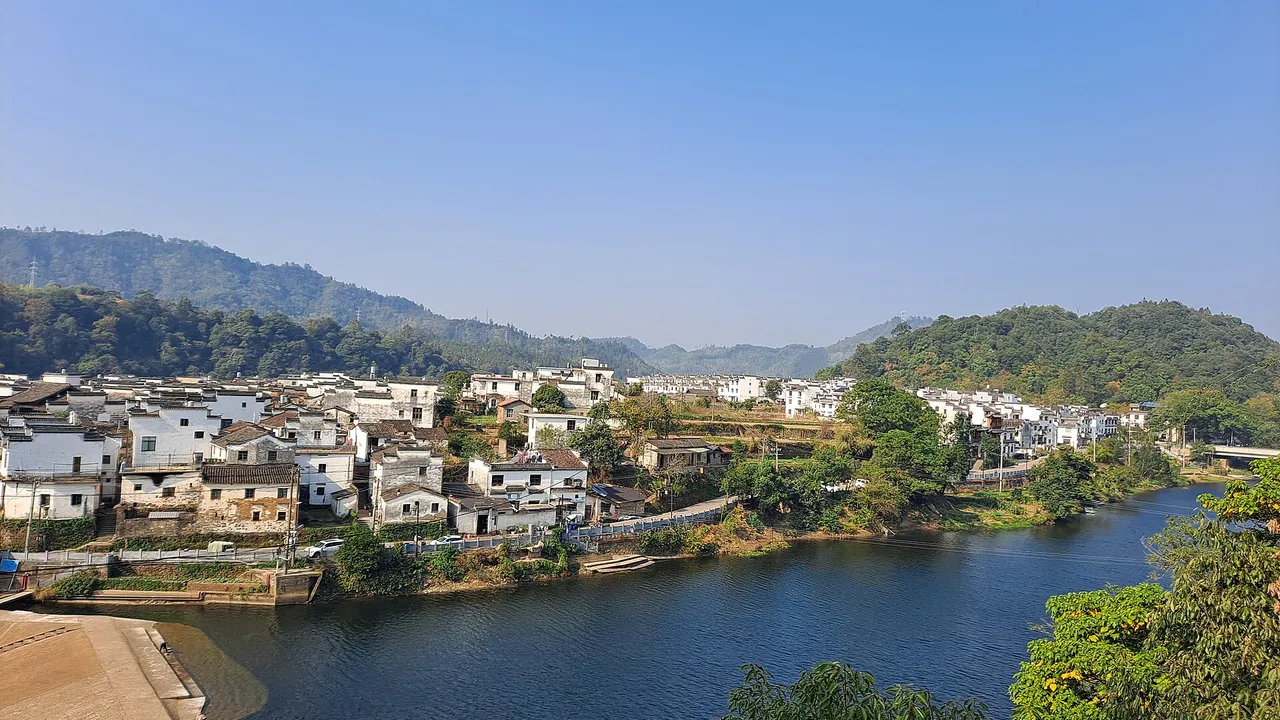
Itinerary at a glance
| 09:00 | The Xiyuan Garden: Zhu Xi's Roots and the Inkstone Workshop |
| 11:30 | Xiangao City: Old Hours inside the County Town |
| 14:00 | Jiangwan: The Grade of Halls and Old Streets |
| 16:30 | Wangkou: The Yu Clan Hall's Woodcarving Summit |
The route, stop by stop
The Xiyuan Garden: Zhu Xi's Roots and the Inkstone Workshop
By the Xingjiang river, the Xiyuan garden honors Zhu Xi, whose ancestral home was Wuyuan. Its Huizhou houses and displays settle two stories: the Zhu family line's ties to the county, and the full passage of Longwei stone, the true material of She inkstones, from quarry to finished block.
The workshop is the garden's liveliest corner: carvers design, hollow and refine on site, a single stone taking weeks. Seeing the making first, the finished pieces in the cases read one layer deeper.
Xiangao City: Old Hours inside the County Town
Noon returns to the Xiangao City district. The morning gates belong to commuters, but midday slows the quarter enough to read the old plaques over the lintels and the tethering stones at wall bases. Xiangao is Wuyuan's old name, and this town is that name made physical.
Lunch inside the district, seeding the afternoon's line: the small eateries often hang local calligraphy and inkstone motifs, an appetizer for what follows.
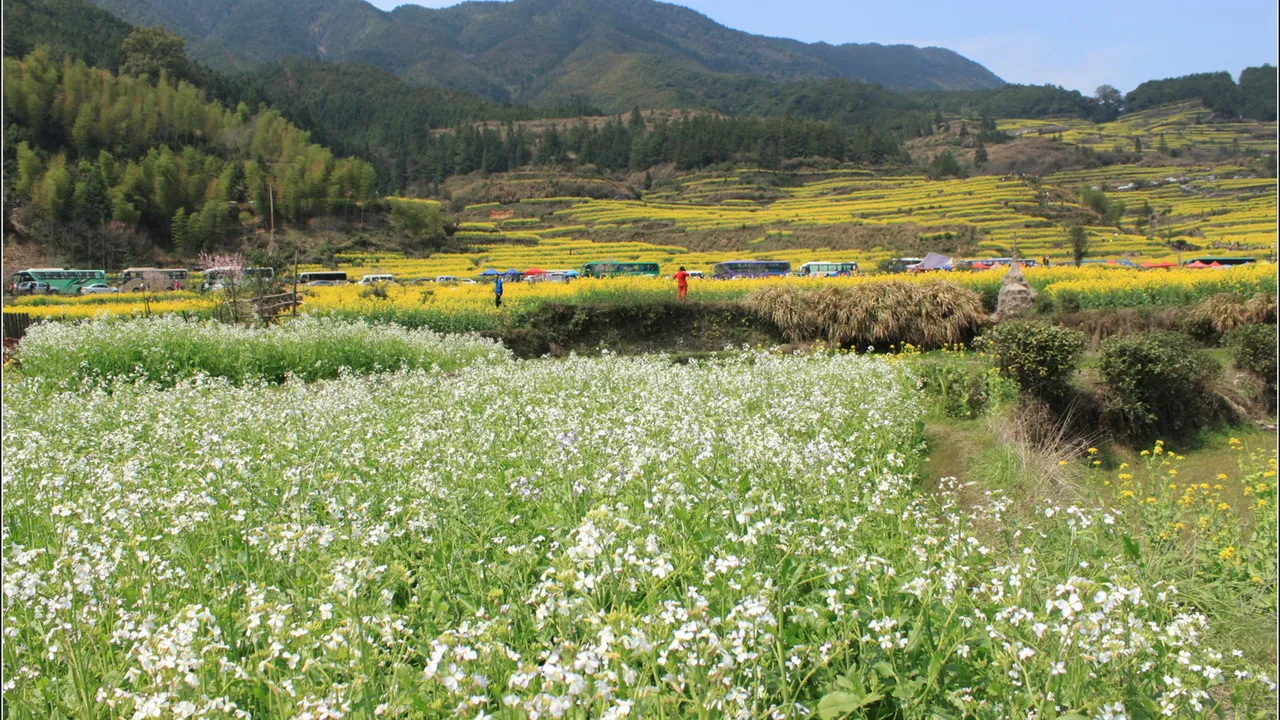
Jiangwan: The Grade of Halls and Old Streets
After a half-hour drive comes Jiangwan, gateway town of the eastern line. The Xiaojiang ancestral hall is the headliner: among Wuyuan's largest, thick beams and careful caisson ceilings advancing bay by bay, so that turning around in the offering hall, the architecture states plainly what ancestor veneration means.
The old street and lanes keep their tea houses and cloth shops, century osmanthus branches reaching over walls. Jiangwan fills two hours, the perfect opening for the eastern villages.
Wangkou: The Yu Clan Hall's Woodcarving Summit
At dusk comes Wangkou, the village strung along the Yongchuan river with bluestone steps still in use. The Yu clan hall is a textbook of Huizhou woodcarving: beams and lintels carved edge to edge with opera scenes and florals, the details dense enough to squint at, hailed by architectural historians as an art trove.
Evening light slants into the hall's light well, richest shadows across the carving. Afterward walk the river bank, villagers washing vegetables and chatting at the steps; the hall's solemnity and the landing's daily life share one threshold, which is Wuyuan in a sentence.
| Getting around |
|
| Budget | The Xiyuan ticket plus combo-sight entries run RMB 200-300 pp with transport; the area pass covers Jiangwan and Wangkou. |
| Best time | Year-round with shaded halls; summer noons turn cool inside the ancestral halls, letting the day weave indoors and out. |
FAQs
What is the Wuyuan area pass, and does this day use it?
Wuyuan sells an area pass, about RMB 210 and valid five days, covering Jiangwan, Wangkou, Likeng, Sixi-Yancun, the Rainbow bridge, Wolong Valley and a dozen more; Huangling and the Xiyuan garden sit outside it and ticket separately. This day's Jiangwan and Wangkou both scan the pass, and anyone continuing to the villages should treat it as essential.
Can one day really cover all four stops?
Yes: one to two hours each for the garden and the old city, two for Jiangwan, one for Wangkou, under an hour driving in total. The key is not lingering over lunch, leaving for Jiangwan by 14:00 so Wangkou closes the day without a rush.
Which matters more, the Xiyuan garden or the Jiangwan hall?
Different species: the garden carries a famous native son plus the inkstone craft, Jiangwan carries clan architecture at full ritual scale. Calligraphy and inkstone fans pick the garden; those after top-grade Huizhou building pick Jiangwan. With time for only one, most travelers find Jiangwan the stronger visual hit and the garden the quieter hour.
Is a guide necessary for a culture day?
Strongly recommended: the sights hide in plaques, genealogies and beam details, and guideless you may see only old houses. The garden's guide costs a few dozen yuan, Jiangwan and Wangkou assemble walk-up groups at the gate, or book a culture-focused guide ahead. The right guide doubles the day's value.