
Five days is Wuyuan's complete length: one day in town to build the coordinate system, one at Huangling for the cover shot, one east for village architecture, two north collecting gallery bridge, gorge, cave and round village. Against three-day sprint versions, this ratio covers every板块 of the region.
Order it near before far, easy before hard: town and the east run on dense buses with no charter, while the two northern days charter. Keep at least half a day unassigned for weather or a bonus village.
Itinerary at a glance
| 14:00 | Xiangao City and the Cultural Square: Arrival Day in Town |
| 09:00 | The Xiyuan Garden: Opening with Zhu Xi and Inkstones |
| 16:00 | Moon Bay: The Trip's First Water |
| 08:00 | Huangling: The Cover Day, Morning to Noon |
| 14:30 | Jiangwan and Xiaoqi: The East Line's Second Half |
| 08:30 | Likeng and Wangkou: A Day of Village Grammar |
| 14:30 | Sixi-Yancun: The Merchant-Scholar Mansions |
| 08:30 | The Rainbow Bridge and Qinghua Old Street |
| 13:00 | Wolong Gorge: Two Hours in the Canyon |
The route, stop by stop
Xiangao City and the Cultural Square: Arrival Day in Town
Arrive in the afternoon to town only. The Xiangao district takes an hour, the cultural square shows the local evening, and dinner means piano-pack carp. The first night's job is sleep, no hard content scheduled.
The town's purpose is the coordinate system: east runs the village line, north the water line, west Huangling. Knowing the terrain makes the next four days' routing legible.
The Xiyuan Garden: Opening with Zhu Xi and Inkstones
Day two opens town-side at the Xiyuan garden. Zhu Xi's roots, the Longwei workshop and Huizhou houses fill two hours with the region's cultural capital, and entering the villages with the question of why this land bred scholars and stones doubles every later sighting.
Lunch on the old street; a rainy afternoon finishes the town's indoor halls, while a clear one moves up the departure for Moon Bay, saving evening light for the water.
Moon Bay: The Trip's First Water
Dusk at Moon Bay closes the town day. The Xingjiang curls a crescent islet, sunset gilds the water, rafts head home, and the whole thing lies twenty minutes from town, an endpoint for a stroll rather than a sight.
Half an hour at the platform, a few silhouettes, back to town, and sleep early: tomorrow's headliner is Huangling.
Huangling: The Cover Day, Morning to Noon
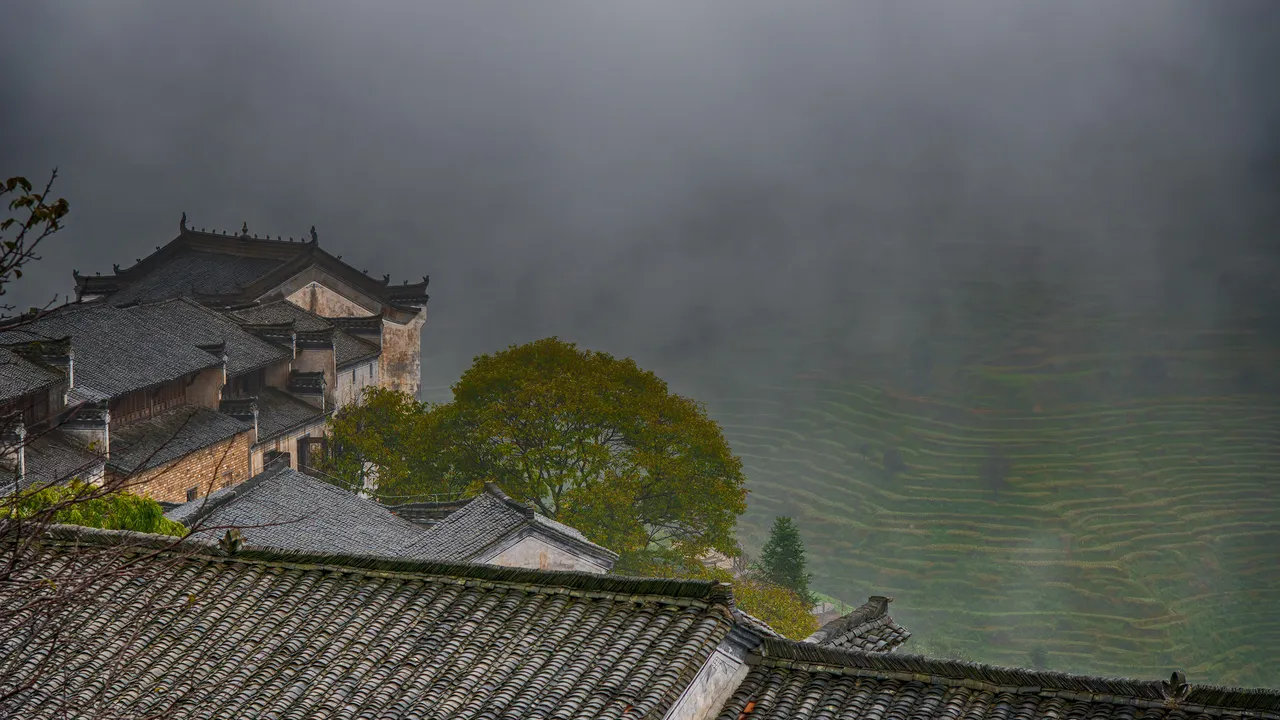
Day three takes the first cableway up Huangling, running Sky Street, the drying terraces, the Wugui mansion and the Leixin bridge in order, rack colors peaking at nine or ten, the bridge's terrace panorama held for late morning.
Lunch on Sky Street and descend by two. The village rewards slowness, but four more stops wait in the five-day frame, so resist lingering past the plan.
Jiangwan and Xiaoqi: The East Line's Second Half
From Huangling drive half an hour to Jiangwan. Give the Xiaojiang hall two slow hours, then continue to Xiaoqi for the camphor grove and chrysanthemum fields, which dusk light flatters at the village entrance.
One day carrying Jiangwan plus Xiaoqi is sensible density; overnight in Jiangwan town or the county seat, activating the area pass tonight ahead of tomorrow's villages.
Likeng and Wangkou: A Day of Village Grammar
Day four opens at Likeng, in early for the dawn version of the water village, then Wangkou for the Yu hall's carving. Both sit on the eastern trunk road, buses and charters equally easy.
Lunch at Wangkou or Jiangwan; the afternoon flexes between a Moon Bay raft ride and plain rest in town, banking legs for the north.
Sixi-Yancun: The Merchant-Scholar Mansions
The afternoon drives north to Sixi-Yancun, first stop of the northern pair. Neighboring mansion clusters put merchant-scholar on display, the Jingxu hall's light wells, lattices and inscriptions rewarding slow study in low, quiet crowds.
Sleep in Yancun or Qinghua; the northern two days start here, and tomorrow's bridge and gorge want an early departure.
The Rainbow Bridge and Qinghua Old Street
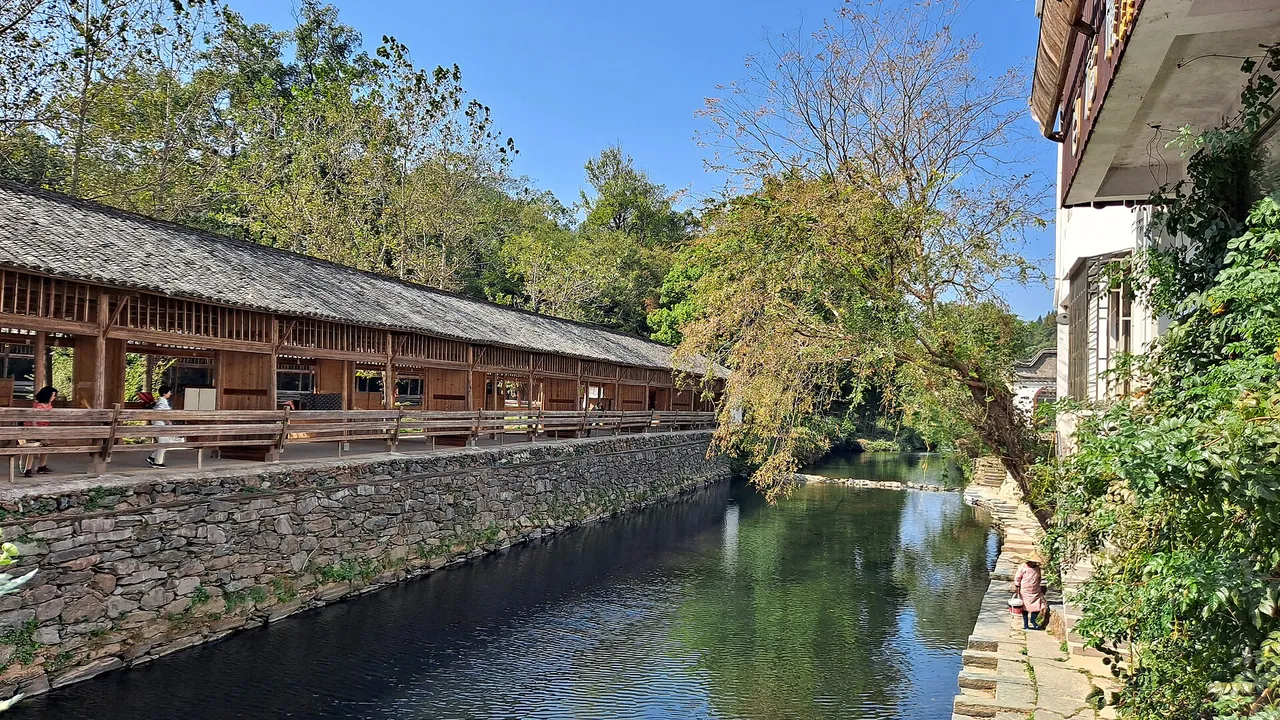
Day five opens at the Rainbow bridge, the Southern Song gallery eight centuries old, its bank wheel and pound still demonstrating Song hydraulics. Before 9:00 the bridge is nearly empty, the day's best shooting window.
Then lunch and restock on Qinghua's old street, the northern line's lunch base, with Wolong Gorge twenty minutes on.
Wolong Gorge: Two Hours in the Canyon
The afternoon walks Wolong's core: falls in chains, green pools, splash platforms close enough to feel the spray. In summer the canyon runs five degrees cool as natural air conditioning, while autumn and winter thin it to a lean dry-season shape.
The core takes two hours; with daylight left, add the round village of Jujing nearby or head straight back to town. Five days closing on water noise is a designed full stop.
| Getting around |
|
| Budget | Pass, Huangling combo and charters run RMB 1500-2500 pp over five days, before long-distance transport and all meals. |
| Best time | Mar-Apr bloom and Sep-Nov racks are the two poles; summer cools in the northern gorges, winter brings ducks and thin crowds. |
FAQs
Are five days in Wuyuan wasteful compared with three?
The reverse is true: three days force a sprint choosing between Huangling and the east, while five cover Huangling, the east, the north and town with controllable daily effort. Wuyuan's scatter is objective fact, and the extra two days mostly buy smooth routing, a necessary cost rather than waste.
How should the five days flex between bloom and drying-rack seasons?
In bloom season (Mar-Apr) expand the east to two days, adding Jiangling at dawn; in rack season (Sep-Nov) keep the frame and stretch Huangling to full day. Winter compresses the northern gorge and adds duck-watching at the lake; summer does the opposite, giving the gorge a deep half day. Keep the skeleton, swap the flesh.
Charter all five days or mix with public transport?
Mixing wins: town, east and Moon Bay carry enough buses, Huangling runs direct coaches, and only the two northern days plus tight transfers truly need a charter. Full charter costs roughly RMB 2500-3000, so mixing saves over half at the price of consulting timetables daily.
Which day can flex as the buffer?
Day four's afternoon, after Likeng and Wangkou, is the ideal buffer: central position, easy return to town, no hard bookings. Clear skies add a Moon Bay raft or one more village; rain means tea and photo-sorting in town. Locking five days solid is unnecessary, and that blank half day is the route's safety margin.