
Seven days is Wuyuan's correct reading: the county packs extraordinary density into small areas, and rushing misses exactly what matters. The structure builds coordinates with town and Moon Bay on days one and two, moves east and to Huangling on three and four, goes north and deep-village on five and six, and holds day seven flexible.
The tempo sets two or three stops per day, with every afternoon for driving, meals and idling. Wuyuan's beauty lives in light and daily life, visible only at this pace. Each day carries a rain alternative, so even a week of drizzle cannot sink it.
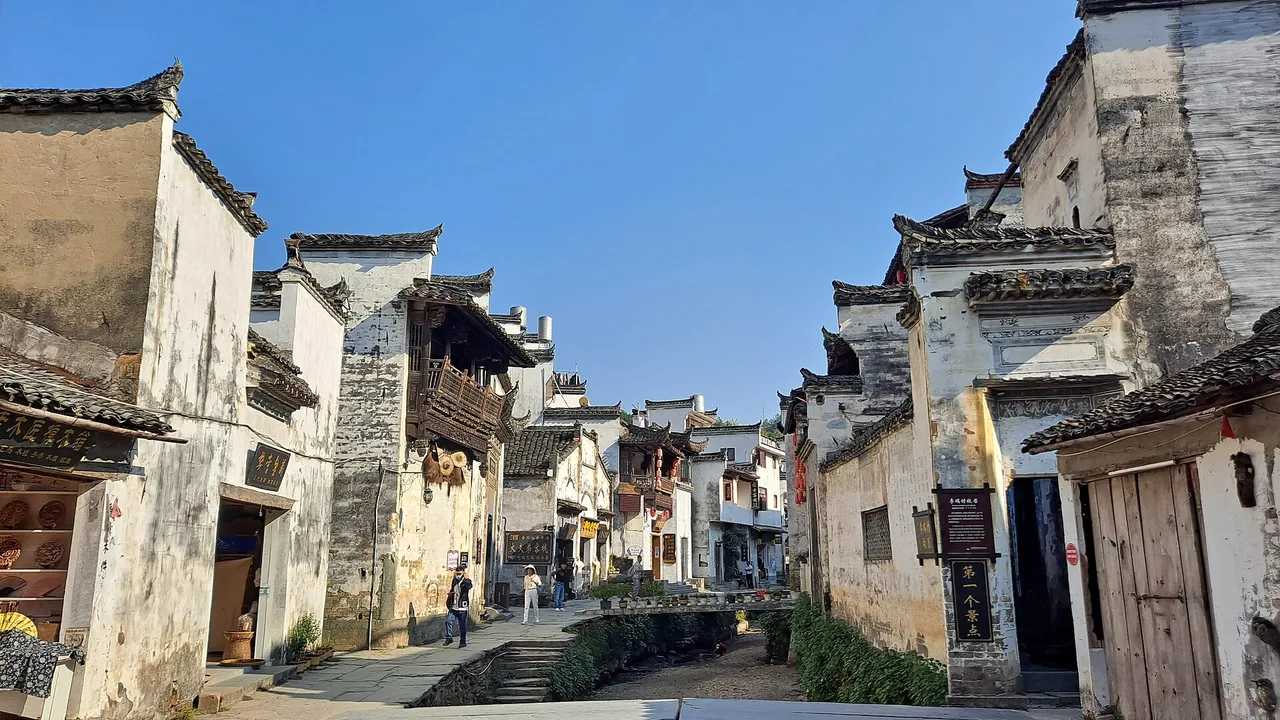
Itinerary at a glance
| 14:00 | Xiangao City: The Arrival Day's First Lesson |
| 09:00 | The Xiyuan Garden and the Cultural Square: Town Day |
| 10:00 | Moon Bay: Overture to the East |
| 11:00 | Likeng: The Water Village Around Noon |
| 14:00 | Wangkou and Jiangwan: Two Halls, Two Lessons |
| 09:00 | Xiaoqi: A Morning of Camphors and Chrysanthemum |
| 08:00 | Huangling's Sky Street and the Racks: The Week's Cover |
| 14:00 | The Leixin Bridge and the Terraces: Huangling's Second Half |
| 08:30 | Jiangling: The Terraces' Deep Day |
| 14:30 | Sixi-Yancun: The North's Merchant-Scholar Opening |
| 08:30 | The Rainbow Bridge: The Gallery's Morning |
| 10:30 | Wolong Gorge: Falls and Deep Pools |
| 14:00 | The Lingshi Caves: Ten Minutes on the Dark River |
| 05:45 | Shicheng's Mist and Jujing: The Finale's Morning |
| 15:00 | Yuanyang Lake and the Return: The Week's Last Light |
The route, stop by stop
Xiangao City: The Arrival Day's First Lesson
Arrive at Wuyuan station in the afternoon and do one thing: walk the Xiangao district slowly. Gates, lanes and shopfronts sketch the county town's base layer, and everything the next six days show in the villages finds a prototype here.
Eat on the old street and stroll the Xingjiang after. No shows, no night chase on the first evening; an early night is the week's first investment.
The Xiyuan Garden and the Cultural Square: Town Day
Day two opens at the Xiyuan garden, where the Zhu family exhibition and the Longwei workshop spend two hours on Wuyuan's cultural capital. Carry the question of why these hills bred scholars and stones into the next six days, and every sight gains a layer.
The afternoon goes to the cultural square and the riverside path, then early rest. The town day looks slack but works as homework for the village lines.
Moon Bay: Overture to the East
Day three opens at Moon Bay, where the Xingjiang's crescent islet reads most complete in morning light, and a raft into the bay adds the arc's water-level dimension. Twenty minutes from town, it is the eastern line's natural first stop.
From the bay drive to Likeng, fifteen minutes, entering the village ahead of the group-flow wave.
Likeng: The Water Village Around Noon
Likeng is the grammar book of Wuyuan's water villages: the Shenming stream threaded by dense stone bridges, with the Shenming pavilion and the Dafu mansion as the two must-reads. Kitchens fire around noon, so eat thick tofu soup over rice on the spot.
Post-lunch crowds peak, which is exactly the cue to leave. The afternoon carries Wangkou and Jiangwan, the east's architecture lessons.
Wangkou and Jiangwan: Two Halls, Two Lessons
The afternoon reaches Wangkou first. The Yu hall holds Wuyuan's densest carving, beams and braces worked without pause, while the Yongchuan landings outside keep their transshipment-era shape. Fifteen minutes on, Jiangwan offers the Xiaojiang hall's ritual scale and the old street.
Read the two halls against each other and the grammar of Huizhou ancestral architecture opens. Sleep in Jiangwan town or Xiaoqi, with more eastern villages tomorrow.
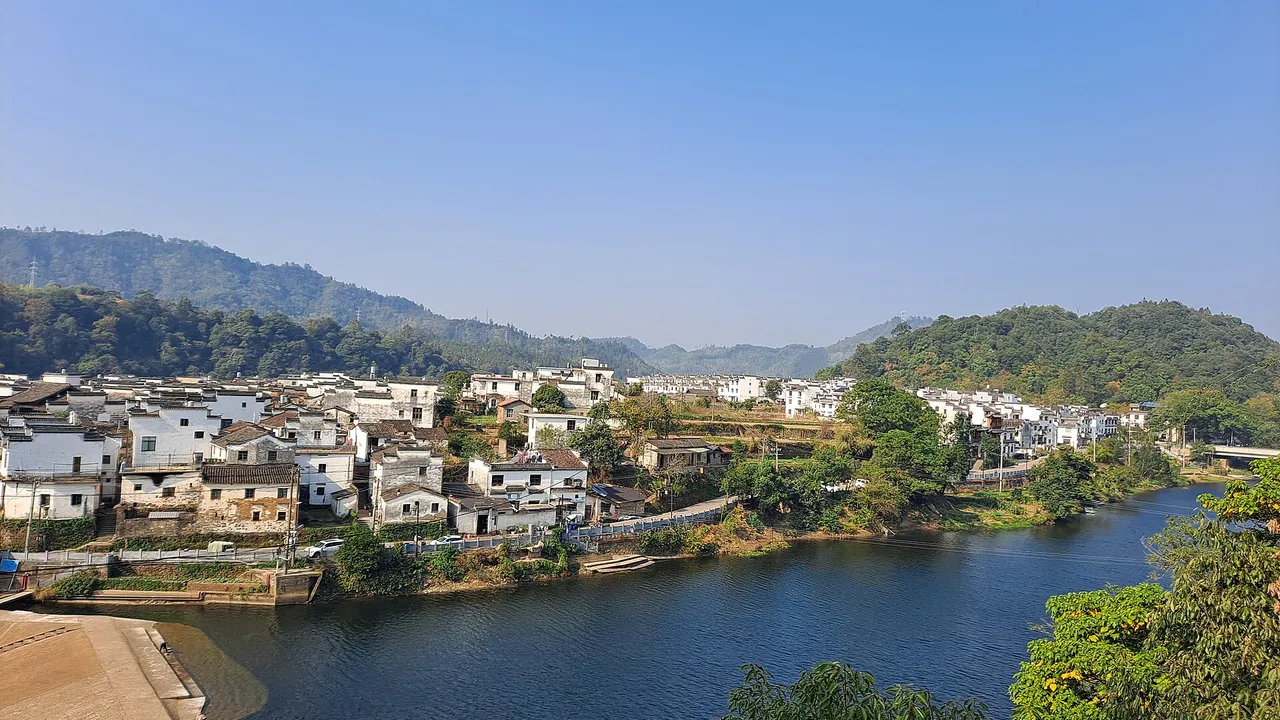
Xiaoqi: A Morning of Camphors and Chrysanthemum
Day four's morning goes to Xiaoqi, upper and lower villages joined, the thousand-year camphor grove at the entrance and scholar's mansions within splitting the sights. In Oct-Nov the chrysanthemum fields outside turn gold, photo-friendly with the owner's nod.
Lunch at a village farmhouse, then leave the east for Huangling, forty minutes, positioning for tomorrow's drying-rack day.
Huangling's Sky Street and the Racks: The Week's Cover
Day five's whole morning belongs to Huangling. Take the first cableway, where Sky Street and the terraces saturate at nine or ten, chili, chrysanthemum and corn arrayed overhead. The Wugui mansion and the trick house show the village's interiors, with tea rooms for pauses.
Huangling is the week's only village that deserves a full day, so move slowly and skip the rush. Lunch on Sky Street and keep the afternoon inside the village.
The Leixin Bridge and the Terraces: Huangling's Second Half
The afternoon takes the Leixin bridge and the terrace paths, a two-hundred-meter skywalk with a glazed mid-section, while the field paths below reach the viewing decks, covering the terraces from eye level and overhead both.
Descend at dusk to sleep at the Huangling base or back in town, both on tomorrow's road to Jiangling, so let the night's room prices decide.
Jiangling: The Terraces' Deep Day
Day six's morning goes to Jiangling. Terraces stack from valley floor to mid-slope; after the deck's panorama, descend the ridge paths into the blooms or rice waves on foot. The bloom peaks at Mar-Apr dawns, while the green terraces hold up in every other season.
Half a day fits Jiangling; eat lunch down the mountain by noon, then swing the route north, about ninety minutes, sleeping in Qinghua.
Sixi-Yancun: The North's Merchant-Scholar Opening
From Jiangling, the afternoon can fold in Sixi-Yancun via the Qinghua area, its mansion clusters putting merchant-scholar on concrete display, light wells and deep-house shadows carrying their own screenplay, in low quiet crowds.
Sleep in Yancun or Qinghua, the northern two days' base, with the Rainbow bridge, Wolong Gorge and the caves all inside a half-hour radius.
The Rainbow Bridge: The Gallery's Morning
Day seven's first half goes north. Dawn empties the Rainbow bridge, eleven gallery rooms in one timber corridor, the bank wheel and pound still turning, the region's oldest-feeling architecture, a Song bridge and Ming-Qing pounds, all at work.
Forty minutes on the bridge, early noodles on Qinghua's old street, then twenty minutes toward Wolong Gorge.
Wolong Gorge: Falls and Deep Pools
Enter the gorge at half past ten, where high-water falls run in chains and the White Dragon's roar rolls between granite walls. Two hours on the core trail, walkways and splash platforms alternating, spray in the face.
Lunch back in Qinghua, then drive forty minutes to the Lingshi caves, linking the north's underground chapter.
The Lingshi Caves: Ten Minutes on the Dark River
The afternoon enters the Hanxu cave, flowstone in lit layers, and the floor's dark river offers the small-boat exit, rock ceilings sliding past the gunwales, the north's magical close. A steady eighteen degrees keeps the cave identical in any weather.
Exit and drive toward Shicheng, sleeping in a village farmhouse to hold tomorrow's mist slot. Northern village lodging is plain, so pack a toiletry kit.
Shicheng's Mist and Jujing: The Finale's Morning
Shoot Shicheng's mist early: over maple-ringed Cheng village, cooking smoke merges with fog until sunrise rakes light through the haze, Wuyuan's most famous annual frame and worth one early alarm.
After the mist, stop at Jujing for the overhead view of China's roundest village from the hillside deck. Both stops done by ten, then rest in town or head straight for the duck lake.
Yuanyang Lake and the Return: The Week's Last Light
The last stretch belongs to Yuanyang Lake, wintering mandarin ducks floating in pairs, liveliest at dawn and dusk. One wide quiet surface closes the week, and from the town gates to deep-mountain maples to this lake, the Wuyuan puzzle completes.
From there, forty minutes to town or the rail station, one final carp dinner, and the week signs off on that fish's clean sweetness.
| Getting around |
|
| Budget | The full week runs about RMB 2500-4000 pp (pass, Huangling combo, charters and beds dominate), excluding long-distance transport. |
| Best time | Mar-Apr bloom and Sep-Nov racks form the skeleton; late autumn adds Shicheng's mist, winter adds the duck lake. |
FAQs
Can the seven days reorder, north before east?
Yes, and weather-led shuffling is smart: the north leans on weather (mist, water volume) while the east stays stable. A solid forecast argues for the north first; an unstable one says finish the east's fixed content early. The one anti-pattern is splitting Huangling and Jiangling across a return trip, which wrecks the flow.
The pass lasts five days but the trip runs seven. How do tickets work?
The pass runs five days from first entry, so compress every pass sight into five consecutive days, placing the town day (garden tickets separately) and the final duck-lake day outside the window. The Huangling combo is independent of the pass. Have the clerk explain activation timing clearly at purchase.
Any advice on spreading energy across seven days?
Structure it as two peaks and two valleys: between the two hiking peaks (Jiangling and the gorge day) schedule a soft village day, and never stack a hard day right after Huangling. Fifteen to twenty thousand steps daily is the norm, and the habit of a one-hour afternoon rest at base beats any extra stop.
Where does the seven-day budget flex?
Three valves: village versus town-chain lodging can differ two hundred yuan a night; charter prices negotiate daily and shared rides save forty percent; alternate scenic-area and town meals. The fixed costs are the pass, the Huangling combo and round-trip rail, everything else bends. Put the weight on chartering and one Shicheng farmhouse night for the biggest experience gain.