
Yantai's natural map reaches far past the beaches: inland, Kunyu Mountain roofs the Jiaodong peninsula as the birthplace of the Quanzhen Daoist school; westward, Penglai Pavilion stands on Danya cliff, one of China's four great towers and the home of mirage legends; and offshore north, thirty-two islands string together the northern archipelago of Changdao.
Three days run inside-out: day one hiking Kunyu with a night in Muping or downtown; day two coach or car to Penglai for pavilion and water city, overnighting there; day three the ferry from Penglai port to Changdao with an evening return. The island's ferry tickets and sailings are the trip's biggest variable, so check before leaving.
Itinerary at a glance
| 08:30 | Day 1, Kunyu Mountain: Morning on the Jiaodong Roof |
| 13:30 | Day 1, the Wuran Temple: An Old Temple and Green Water in the Valley |
| 08:30 | Day 2, Penglai Pavilion: A Great Tower on Danya Cliff |
| 13:00 | Day 2, the Penglai Water City and Tianheng Hill: Sea Defense and Sunset |
| 08:00 | Day 3, Changdao: Into the Archipelago by Ferry |
| 10:30 | Day 3, Jiuzhang Cliff: Sea-Cut Rock Face on Full Display |
| 14:00 | Day 3, Crescent Bay: An Afternoon on the Pebble Beach |
| 15:30 | Day 3, Wangfu Reef: The South Island's Rocks and Legend |
| 17:30 | Day 3, Sailing Back to Penglai: The Islands at Dusk |
The route, stop by stop
Day 1, Kunyu Mountain: Morning on the Jiaodong Roof
Kunyu Mountain straddles the Yantai-Weihai border, its main summit Taibo rising past nine hundred meters among the peninsula's highest points. Original secondary forest covers the massif, streams and falls stringing the valleys, the mountain five to six degrees cooler than town in summer, a natural air conditioner.
Choose between the Taibo summit route, demanding, or the Shimen valley route, water-side and gentle. Start the valley in the morning under full shade and constant water sound, turning back at the source falls, effort at your own dial.
Day 1, the Wuran Temple: An Old Temple and Green Water in the Valley
The afternoon moves to the Wuran temple scenic area on Kunyu's other flank, where a Tang monastery's remains sit beside running water, pools blue-clear and famous across Jiaodong for wading. Paths stay gentle, welcoming children and elders alike.
The temple itself is gone, foundations and legend left, but the valley is the true lead: forest canopy above, pebble-floored pools below. Soak your feet in a shallow pool and the two days' fatigue dissolves in the water.
Day 2, Penglai Pavilion: A Great Tower on Danya Cliff
Day two goes to Penglai, where the pavilion crowns Danya cliff, a byword for fairy land since the Song and ranked beside the towers of Wuhan, Yueyang and Nanchang. The building itself is modest; its grandeur is position, over open sea, the whole cliff appearing afloat on misty days.
Inside, the Eight Immortals exhibits and old steles reward attention; from the second floor the boundary of the Yellow Sea and Bohai can just be made out on clear days. Of the whole route, this stop carries the strongest sense of meaning.
Day 2, the Penglai Water City and Tianheng Hill: Sea Defense and Sunset
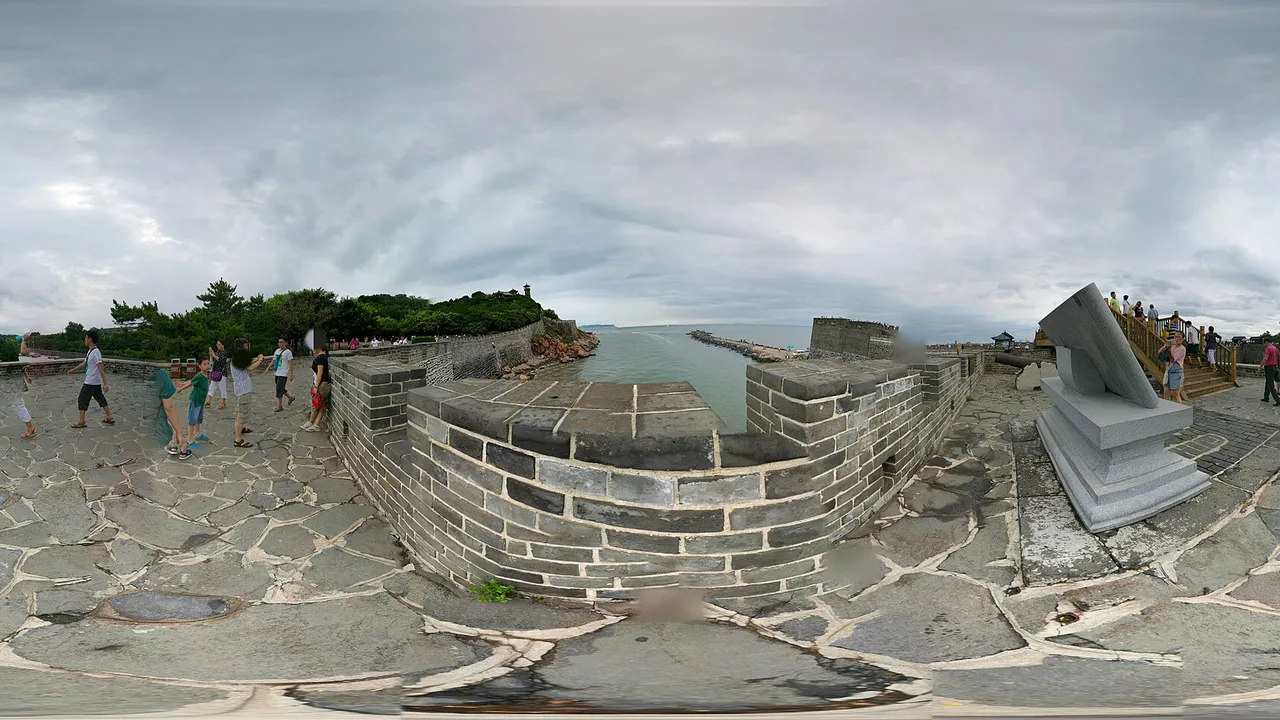
After lunch walk the Penglai water city, a Ming naval port among the most complete ancient naval bases surviving, its small harbor embraced by breakwaters where fishing boats and yachts now share moorings. One circuit of the walls explains the logic of coastal defense at a glance.
At dusk climb Tianheng Hill, the sea cliff west of the pavilion where the Yellow Sea-Bohai boundary marker stands. At sunset the lighthouse lights and the water turns gold, day two's closing frame composing itself.
Day 3, Changdao: Into the Archipelago by Ferry
Day three boards at Penglai port's passenger terminal early, a forty-minute crossing to Changdao. Looking back, the pavilion shrinks while islands surface one by one through the haze; those forty minutes are themselves an attraction.
Changdao strings together the south and north Changshan islands among others, bridged to each other. Settle on the south island first, read the pier and fishing harbor's daily life, then choose to hop north or east.
Day 3, Jiuzhang Cliff: Sea-Cut Rock Face on Full Display
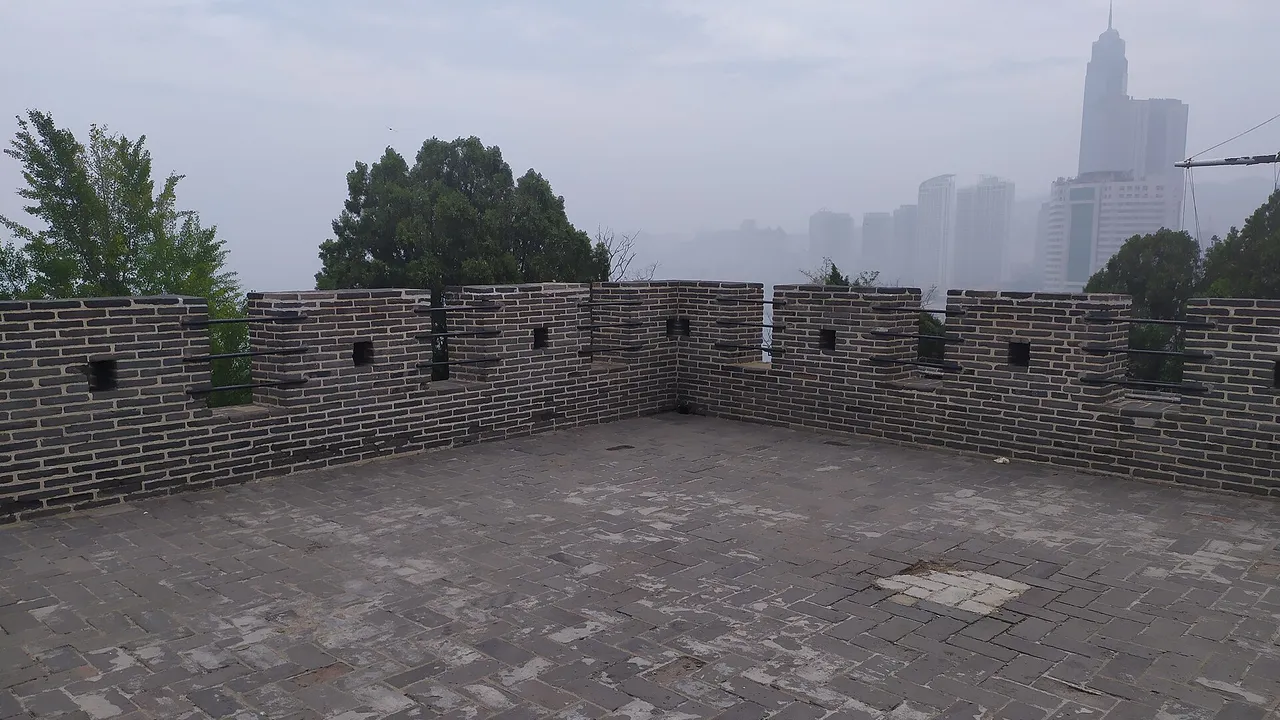
Jiuzhang Cliff caps the northwest of North Changshan island, a sea-cut face of tens of meters where waves have sculpted the strata, with the Fairy cave and One-Line sky tucked at the foot. At low tide you can walk beneath the face; at high tide the boardwalk views from afar.
The geology ranks with the best of China's islands: folds and faults in clean relief, a living textbook. The photo golden hour is afternoon, when side light pulls the cliff's full dimension out.
Day 3, Crescent Bay: An Afternoon on the Pebble Beach
Crescent Bay lies on North Changshan's northeast, a beach without sand, paved instead in wave-rounded pebbles that rattle underfoot. Its spherical stones are rare among China's islands, and removal is expressly forbidden.
The afternoon asks for slowness: pick a flat stone, sit, and watch the sea re-wash the beach on repeat. In clear water visibility runs extreme, blues layered like a palette. Make this the last stop before the ferry, closing the island days on the pebbles.
Day 3, Wangfu Reef: The South Island's Rocks and Legend
On the way back across South Changshan, Wangfu Reef stands at the tide line, a rock shaped like a woman gazing out with a child, named for the fisherfolk legend of watching for the boats. Reef, nets and lighthouse share one frame, the island's most narrative image.
The beach here runs gentle, right for shell-picking and watching boats come home. After four, the light warms the rock; sit a while before heading for the pier.
Day 3, Sailing Back to Penglai: The Islands at Dusk
The evening sailing returns to Penglai: take the rail-side seat and watch Changdao recede, lighthouse and cliff turning silhouette in the dusk. The looking-back view always moves more than the arrival, and three days of mountains and islands file themselves neatly in the wake.
Back in Penglai, coach or car returns you to downtown Yantai for dinner; should the hour run late, an overnight in Penglai with a morning return is the steady fallback.
| Getting around |
|
| Budget | Tickets total RMB 250-350 including Changdao ferry and island transport; meals RMB 100-180 daily; transport RMB 200-300 pp by charter and cab. |
| Best time | May-October suits all three, mountain shade in summer and island swims; Changdao demands calm seas and clear sky, so check marine conditions before committing. |
FAQs
How do I buy Changdao ferry tickets, and what if sailings stop?
Buy via the official account or at Penglai port, a day or more ahead in season; wind and fog halt sailings routinely, so check marine forecasts the night before, and if stopped, pivot to Penglai's surroundings without sentiment. The route places Changdao on the final day precisely to leave weather an exit.
Choosing between Kunyu Mountain and Changdao, how?
By legs and sky: Kunyu offers forest and stream, demanding stamina but forgiving weather; Changdao offers sea-cut landforms and the archipelago, higher spectacle but weather-dependent. With two days, take both; with one, clear sky means Changdao and overcast means Kunyu, a rule that rarely errs.
Is this route manageable with seniors and children?
Workable: at Kunyu take the gentle Shimen and Wuran lines and cut the summit; Penglai's steps yield to your own pace; on Changdao the effort concentrates in walking and boat time, so mind elders for seasickness and stairs. Give children hours for wading and tide-picking and the whole thing runs.
How to choose lodging on Changdao?
Family-run fishing guesthouses dominate, meal-included with seafood aplenty, plain but clean, prices clearly up in season; the pier area of South Changshan is the most convenient base. Not staying over, return to Penglai for far wider choice. Before booking, confirm private bath and air conditioning, the latter non-negotiable in summer.