
Seven days is the slow-read edition of Yinchuan: two days in the old city exhausting towers, mosque and museum, three days along the Helan line reading the Xia, the rock art, two climbs and a glass, the sixth crossing the Yellow River east, the seventh closing on Sha Lake north. One direction per day, about eighty percent of the five-day intensity, with comfort running higher.
The secret of going deep is repetition, not mileage: three different breakfast stalls in the old city, two visits to the winery, one for tasting and one for strolling, and a night market that needs a fresh stomach each night. Seven days carries exactly enough slack for that luxury.
Itinerary at a glance
| 09:00 | Day 1 · Yuhuang Pavilion and the Bell Tower: Straightening the Old-City Axis |
| 14:00 | Day 1 · Chengtian and Haibao Pagodas: One Tower South, One North |
| 09:00 | Day 2 · Ningxia Museum: The Coordinate System for Seven Days |
| 14:00 | Day 2 · Zhongshan Park and the Old-City Shops: The Standard Local Afternoon |
| 08:30 | Day 3 · The Western Xia Tombs and Their Museum: A Full Imperial Day |
| 14:00 | Day 3 · Zhenbeipu West Film Studio: The Afternoon Session and Old Yinchuan Street |
| 09:00 | Day 4 · Helan Rock Art and the Han Meilin Museum: A Full Foothill Morning |
| 14:00 | Day 4 · Suyukou National Forest Park: An Afternoon in the Spruce Belt |
| 09:00 | Day 5 · Zhongongkou: A Foothill Morning Climb |
| 15:00 | Day 5 · Chateau Source Stone: Cellar Tasting and Vineyard Stroll |
| 10:00 | Day 6 · A Huaiyuan Debrief and an Old-City Breakfast Pilgrimage |
| 14:00 | Day 6 · Shuidonggou: Dig Site, Wall and Hidden Tunnels |
| 09:00 | Day 7 · Huangsha Ancient Ferry: A Raft-Borne Farewell |
| 14:00 | Day 7 · Sha Lake and the Lanshan Sunset: A Double Full Stop |
The route, stop by stop
Day 1 · Yuhuang Pavilion and the Bell Tower: Straightening the Old-City Axis
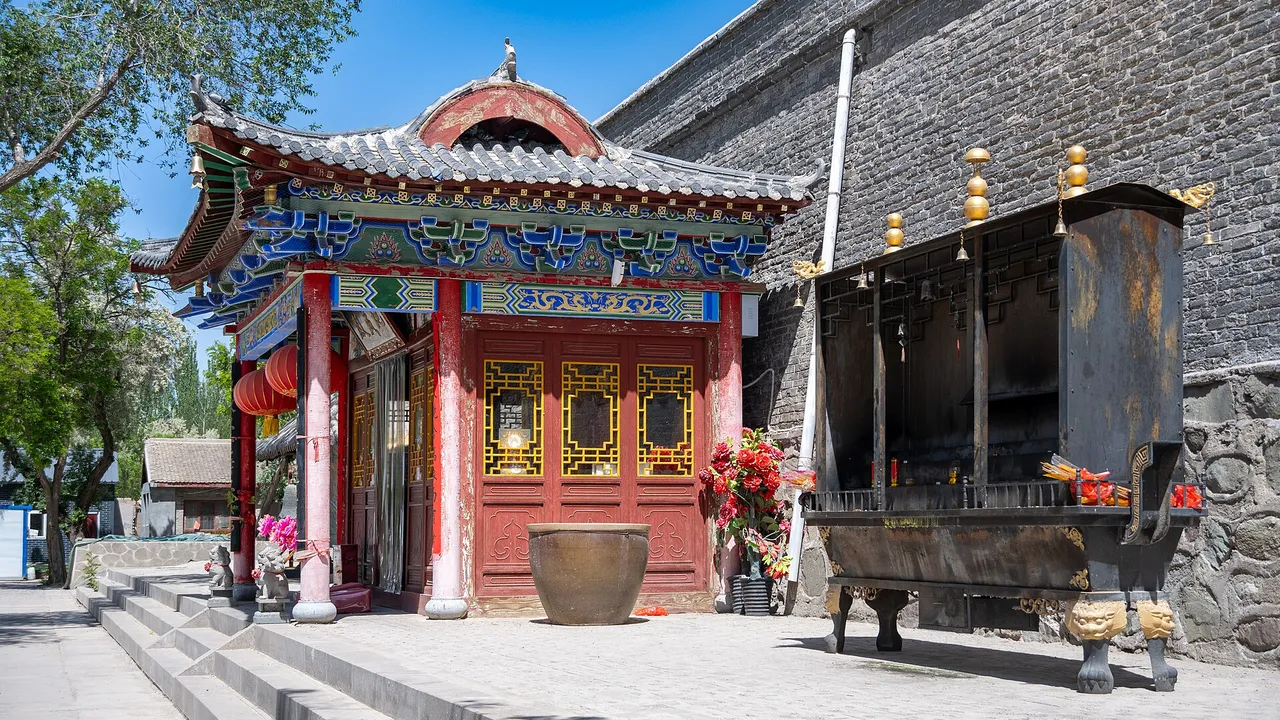
The week's first lesson still starts in the old city. Yuhuang Pavilion and the Bell Tower pin a century of Jiefang Street between them a few hundred meters apart; climb for the city's grain and street order, with halal butcher shops, dry goods and old barbershops below speaking plainer than any exhibit.
Towers in the morning, the week's first bowl of lamb offal soup at noon. The pace opens easy, with day one carrying a single goal: knowing where you are.
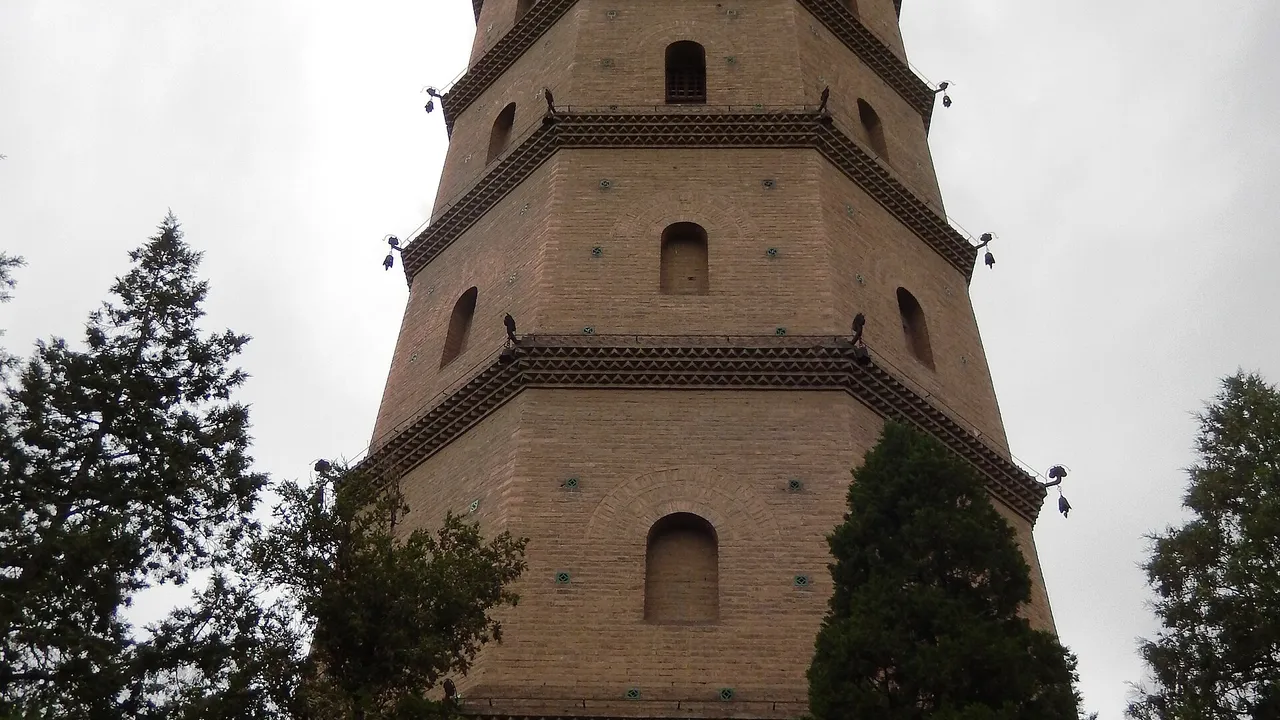
Day 1 · Chengtian and Haibao Pagodas: One Tower South, One North
Pair the old city's two ancient pagodas in the afternoon. Chengtian carries the soft dense eaves of the Xia, Haibao the angular pavilion form handed down from earlier centuries, soft against sharp. Only read together do their dates, forms and rebuild histories outline Ningxia's architectural lineage.
Ten minutes by taxi between them, an hour each, then dusk outside the Nanguan mosque watching the dome light up, closing day one's old-city loop.
Day 2 · Ningxia Museum: The Coordinate System for Seven Days
Give day two's morning wholly to the museum. The chronology halls run from prehistoric rock art to Ming-Qing ferries, with the gilded bronze ox, the Xia document wall and Silk Road coinage as the big three. Read it with the next five days' map in hand: the tombs you see tomorrow and the rock art the day after all have originals or replicas here.
An unhurried two to three hours, then the afternoon at Zhongshan Park and the old-city shops, with the first Huaiyuan night market or a Lanshan sunset after dinner, whichever the legs prefer.
Day 2 · Zhongshan Park and the Old-City Shops: The Standard Local Afternoon
Zhongshan Park is Yinchuan's oldest, complete with pavilions, a lake and boats, its afternoon opera corners and chess tables the realest life on offer. After the park, drift along the old-city streets sweeping eight-treasure tea, liangpi and dry-goods shops, running the standard local afternoon once through.
The way to play it is following: watch where the chess players watch, listen where the bird-keepers listen. A seven-day line needs one unhurried half day like this to set its key.
Day 3 · The Western Xia Tombs and Their Museum: A Full Imperial Day
Day three opens the Western Xia mainline. Enter at opening, museum first, grounds second, absorbing the script, mausoleum systems and Tangut origins before standing under Tomb No. 3's rammed-earth mass. Morning wind and light stay gentle, three hours for museum plus grounds at full ease.
Rest in town through the afternoon and take the Lanshan sunset at night. The deep version of the tombs rewards slowness: copy a few characters off the museum's script chart to carry home.
Day 3 · Zhenbeipu West Film Studio: The Afternoon Session and Old Yinchuan Street
The studio takes the afternoon, walked backward from Old Yinchuan Street: this replica strip carries the densest detail in counters, escort agencies and tailor shops, while tours crowd Ming City. Climb both Qing City's gate tower and Ming City's rammed ramparts for a view over the backlot on the gravel plain.
Two to three hours and a photo goldmine. Return by dusk and put the Xixia district's skewer hotpot on the table, day three's theme being a Ningxia re-imagined.
Day 4 · Helan Rock Art and the Han Meilin Museum: A Full Foothill Morning
Give day four's morning wholly to Helankou. The canyon at opening is near empty, the Sun God and hunting scenes at their deepest relief in dawn light, and the boardwalk rewards an out-and-back two hours. Keep a full hour for the Han Meilin Art Museum at the mouth, its modern translations of the petroglyph vocabulary worth study.
Lunch and rest in the Xixia district, then uphill in the afternoon. The day's theme is the mountain: what the carvings recorded all morning, you meet in person after lunch.
Day 4 · Suyukou National Forest Park: An Afternoon in the Spruce Belt
Suyukou in the afternoon walks the Helan range's vertical zones: cableway or trail lifts you into Qinghai spruce forest, the dark canopy line running to the foot of the cliffs. The mountain sits several degrees below the city, and afternoon light dripping through the branches makes this the coolest block of the week.
The trail round trip runs two to three hours, cableway as the mercy option. On the descent, glance back at the ridgeline and, with luck, watch a herd of blue sheep head home.
Day 5 · Zhongongkou: A Foothill Morning Climb
Day five's climb goes to Zhongongkou, the nearest Helan pass to town, old-name Xiaokouzi, its temples strung along the trail since Ming and Qing times, the veteran weekend foothold of Yinchuan hikers. Enter at dawn, cool wind, pine roar and temple bells arriving together.
The climbing path round trips in two to three hours, the viewpoint being the sensible turnback. Compared with yesterday's Suyukou, Zhongongkou runs more humanist, temples and cliff inscriptions in the lead.
Day 5 · Chateau Source Stone: Cellar Tasting and Vineyard Stroll
The post-climb afternoon goes to the winery. Tasting first in the underground cellar, Cabernet Sauvignon and Marselan trading rounds, then a stroll on the vineyard path with gravel crunching underfoot and quarry strata readable in the rock walls. One winery visit splits in two: drink it clear, then walk it clear.
Dinner at the estate restaurant is recommended, its lamb a cut above downtown renditions. Day five is the most resort-like of the seven.
Day 6 · A Huaiyuan Debrief and an Old-City Breakfast Pilgrimage
Day six's morning is the buffer: first settle the breakfasts missed across three days, a second offal-soup school, beef noodles and fried youxiang, one of each, then pack for the eastern crossing. The half-light schedule exists to bank capital for two heavy days ahead.
Check out or sort luggage by noon and be rolling toward Shuidonggou by one. A buffer day means waking naturally and still running the errands on time.
Day 6 · Shuidonggou: Dig Site, Wall and Hidden Tunnels
The afternoon packs three heritages into one park: a forty-thousand-year Paleolithic site, the Ming rammed-earth wall and three underground levels of garrison tunnels. After the museum's knapped stones, camel cart through Reed Valley, climb the wall to gaze toward Inner Mongolia, then dive into the tunnels, forty millennia in one afternoon.
The circuit runs four hours, lodging near the park or back in town both workable. The tunnels' chill and compression are the trip's most singular bodily memory.
Day 7 · Huangsha Ancient Ferry: A Raft-Borne Farewell
The last day starts on the river. The sheepskin rafts at Huangsha ride steadiest in the morning, the old boatman poling downstream, thirteen inflated skins carrying the week's final hour. Ashore, walk the wetland boardwalks and watch dawn light rake the dunes across the water.
This is the week's only close encounter with the Yellow River, worthy of its most unhurried morning. Ashore by eleven, lunch, then turn north.
Day 7 · Sha Lake and the Lanshan Sunset: A Double Full Stop
The afternoon runs north to Sha Lake, saving desert-and-lake-in-one-frame for last. Boat through the reed channels to the sand island, one dune run is plenty, the real point standing on a dune ridge reading the line where blue water meets gold sand.
Rush back to town by dusk, closing in Lanshan's grandstand if the clock allows, or watching the sunset from the road if not. The week's mountains, river, lakes and tombs all file away on this final night.
| Getting around |
|
| Budget | Tickets total about RMB 900-1100; with charters, lodging and meals, seven days run roughly RMB 3800-5500 per person. |
| Best time | May-Jun and Sep-Oct are best; the week leans hard outdoors, so bank a midday nap and a rain plan every single day. |
FAQs
Are the two extra days over the five-day plan worth it?
Worth it. One bonus day slow-reads the old city and museum, the other covers the buffer and the hill-climb line, dropping the overall intensity below the five-day version. The distances between sites mean each extra day buys real ease, and a sprinting five-day plan never reaches depth.
How do I find a fixed charter driver and negotiate the price?
Book through hotel desks, licensed agencies or online platforms, checking three things: operating credentials, past reviews, and willingness to sign a simple day plan. Price runs per day; settle fuel and tolls up front, week-long charters usually discount, and ad hoc detours bill by the hour.
How does the body survive seven days of outdoor intensity?
Three habits: two liters of water daily at minimum, hide from the noon sun indoors or napping, and reapply sunscreen. The plan already embeds two buffer blocks; cut secondary items when legs complain, that is what the seven-day slack is for. Those with blood pressure or heart concerns should swap both climbs for a winery half day.
What about rain or dust-storm days?
Rain is rare but spring dust storms are not. Rearrange indoor-first: the museums, the Xia gallery, the winery cellar and the studio's indoor streets each absorb half a day; postpone outdoor items rather than canceling, which is exactly what a seven-day frame affords.