
Old Yinchuan is compact enough to walk deep in a day. Start with the twin seals of the old city, Yuhuang Pavilion and the Bell Tower, then follow Jiefang Street west past clusters of halal eateries and dried-goods shops; give noon to the Ningxia Museum and its gilded bronze ox and rock art halls; hide in the Chengtian Temple pagoda yard through the afternoon heat, and land at Lanshan Park by dusk to watch the sun sink from a theater-sized grandstand.
Transport cost is nearly zero: the old-city stops chain on foot, and the museum and Lanshan are a short bus or taxi hop. There is no rail transit, but the city is small, flag-fare taxis cover most hops, and buses cost one to two yuan; moving slowly simply shows you more.
Itinerary at a glance
| 09:00 | Yuhuang Pavilion and the Bell Tower: The Old City's Two Seals |
| 11:00 | Ningxia Museum: The Gilded Ox and the Sun God |
| 14:30 | Chengtian Temple Pagoda: A Thousand Quiet Years Behind the Wall |
| 18:30 | Lanshan Park: Watching the Sunset from the Grandstand |
The route, stop by stop
Yuhuang Pavilion and the Bell Tower: The Old City's Two Seals
Two towers pin the axis of old Yinchuan: the Ming-style Yuhuang Pavilion stands mid-street, and the Qing-era Bell Tower rises a few hundred meters west, the stretch between them the oldest face of Jiefang Street. At this hour the towers are tourist-free, breakfast stalls below drift chili-lamb aroma, and locals carry flatbread through the archways.
Climb for the skyline and street order: east stacks sign upon sign over the shopping street, west shows a faint pagoda tip. The lanes around hold halal butcher shops, dried-goods stores and old barbershops in a row, the plainest entrance to the city's daily texture.
Ningxia Museum: The Gilded Ox and the Sun God
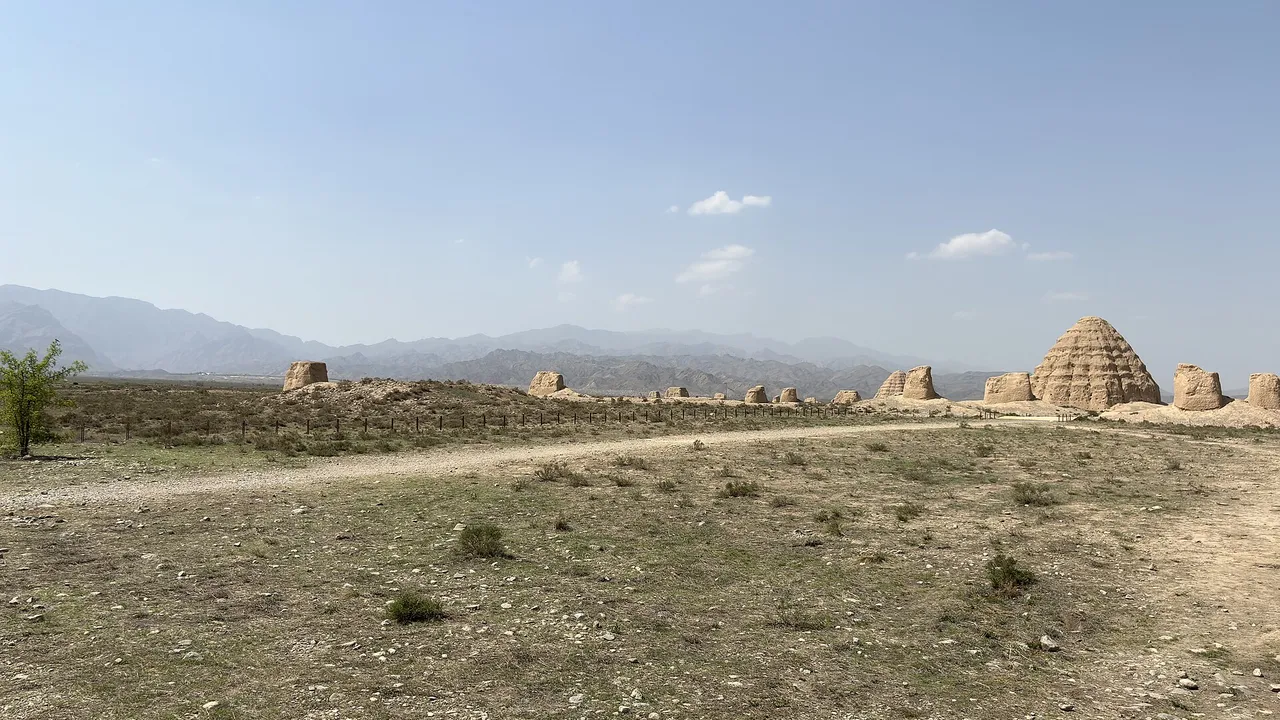
The museum sits by People's Square with halls in chronological order. Three things not to miss: the gilded bronze ox from the Western Xia tombs, cast finely enough to read the musculature; the Sun God panels and rubbings of Helan rock art; and a full wall of Western Xia documents in blocky characters that look almost readable and entirely are not, which is the magic.
After the main sequence loop back through the stone carving and ceramics halls for detail; allow ninety minutes to two hours. Audio guides and timed free tours run daily, and late morning is the thinnest crowd, with lunch easy to find nearby.
Chengtian Temple Pagoda: A Thousand Quiet Years Behind the Wall
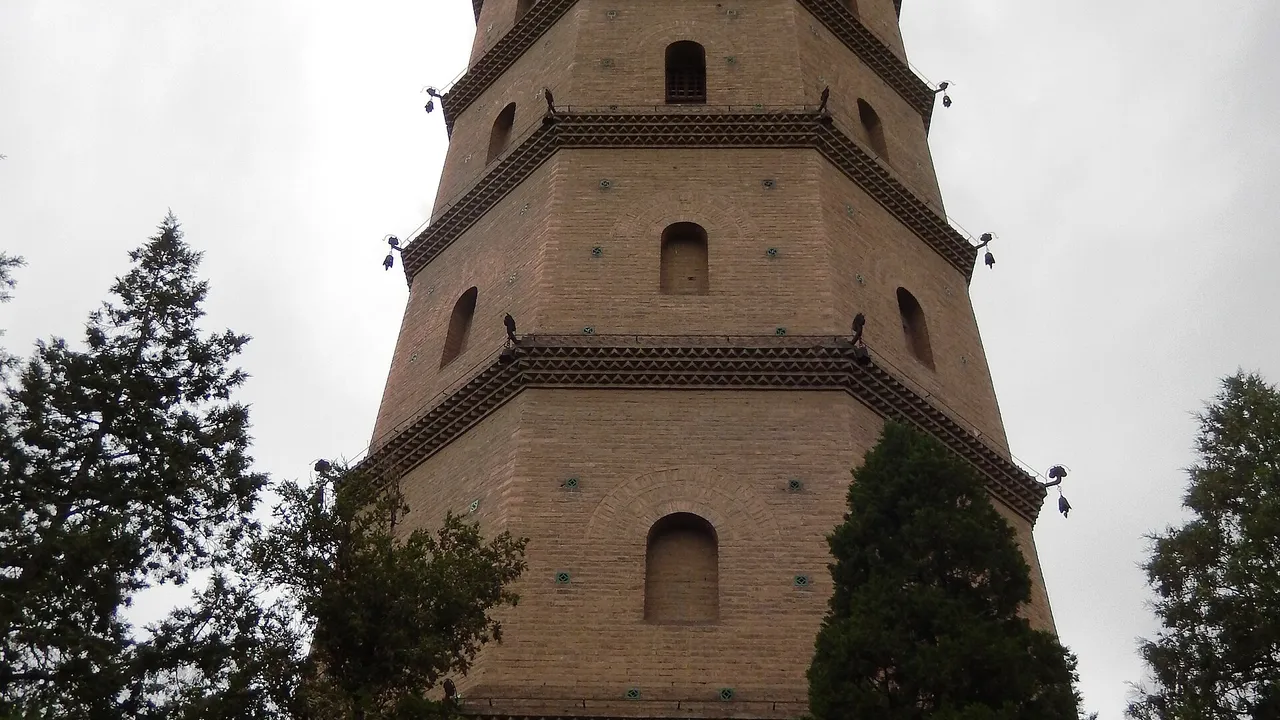
Known locally as the West Pagoda, Chengtian Temple Pagoda dates to the Western Xia era, an eleven-story brick tower of dense eaves and one of the oldest standing structures in Ningxia. The walled yard is tree-shaded with pigeons coming and going, and the exhibit rooms tell the pagoda's ties to a Xia empress dowager. A taxi from the museum takes barely fifteen minutes, and the gate leaves the old city's noise outside.
Mid-afternoon light falls slanting through the eaves, the best hour for photographs. The yard is small, a slow circuit takes forty minutes, and afterward an eight-treasure tea on the old-city streets fills the afternoon gap pleasantly.
Lanshan Park: Watching the Sunset from the Grandstand
Lanshan Park is Yinchuan's own sunset theater: a vast pseudo-Roman grandstand faces the Yuehai lake district, and by early evening every step holds sunset-watchers. The sun drops toward the Helan line, the water throws the glow back, and wind off the lake makes the most relaxed half hour in the city.
The grass slope below suits picnics better, with local kids claiming turf with mats and folding chairs. After the sun goes, walk toward Yuehai where the lakeside path lights up, the day's mileage winds down here, and dinner plans make themselves.
| Getting around |
|
| Budget | Built on free venues and low-priced sights, about RMB 80-160 per person including transport and simple meals. |
| Best time | Year-round, with May-Oct the most comfortable; weekend museum slots book tight and the Lanshan sunset fills every seat. |
FAQs
What is the smoothest order for the old-city stops?
Bell Tower and Yuhuang Pavilion first, taxi to the museum, back to the old city for the pagoda in the afternoon, then straight to Lanshan for sunset. Inside the old city it is all walking, with only two vehicle legs and no backtracking; leave big bags at the hotel desk.
Does the Ningxia Museum need booking, and what if slots run out?
Entry is free but requires real-name booking on the official account; weekend and holiday slots run tight, so book the morning session two or three days ahead. If full, watch for released tickets or shift the museum to a weekday; nothing else in the plan changes.
What order feels best across the day?
Towers and museum in the cool thin-crowded morning, noodles and a rest in the old city at noon, the pagoda yard through the afternoon heat, and the Lanshan sunset at dusk. Outdoors early and late, indoors at midday: the kindest split for a frontier-lake city in summer.
Anything to mind when eating in the old city?
The old city is full of halal eateries: respect halal custom, do not bring outside food or alcohol in, and check whether a place serves alcohol before assuming. QR payment dominates with a little cash as backup; lanes are narrow and weekends busy, so wear your backpack in front.