
Yinchuan's past stacks at least three layers deep: the Tangut legacy of imperial tombs and invented script, the ferry-and-fort strata of the Silk Road through Ming and Qing, and the contemporary film studio's re-imagined West. Take one layer per day: museums and old towers as the base, Western Xia as the summit, the river and the wall as the frontier walk.
Tickets are easy; distance is the catch. The western sites (tombs, rock art) and the eastern dig (Shuidonggou) sit at opposite ends of the city and demand separate days. A charter at RMB 400-500 daily strings the layers together most comfortably.
Itinerary at a glance
| 09:00 | Day 1 · Ningxia Museum: Read the Chronology Before the Road |
| 13:30 | Day 1 · Yuhuang Pavilion and the Bell Tower: Two Towers Mid-Street |
| 15:30 | Day 1 · Chengtian Temple Pagoda: The Oldest Western Xia Structure in Town |
| 18:00 | Day 1 · The Nanguan Grand Mosque: Dusk under the Dome |
| 09:00 | Day 2 · The Western Xia Tombs and Their Museum: An Imperial Day |
| 14:00 | Day 2 · Zhenbeipu West Film Studio: The West as Filmed |
| 09:00 | Day 3 · Helan Rock Art and the Han Meilin Museum: A Prehistoric Gallery |
| 14:00 | Day 3 · Shuidonggou: Dig Site, Wall and Hidden Tunnels |
| 18:00 | Day 3 · Haibao Pagoda: The North Tower After Returning |
The route, stop by stop
Day 1 · Ningxia Museum: Read the Chronology Before the Road
Opening a heritage trip at the museum pays best: the ground-floor chronology strings Ningxia from prehistory through the Ming and Qing, with dedicated zones for Western Xia artifacts, Silk Road coinage and steles. The gilded bronze ox and the Xia document wall are mandatory; meet them here first and every physical echo over the next days lands differently.
Two hours suffices and the audio guide earns its keep. Lunch near People's Square, then transfer to the old city.
Day 1 · Yuhuang Pavilion and the Bell Tower: Two Towers Mid-Street
Sweep the old city's two towers in one go. Yuhuang Pavilion and the Bell Tower stand a few hundred meters apart, Ming-Qing official architecture planted mid-street; climb for the city's grain, sign stacks to the east and a pagoda tip to the west. Halal butcher and dry-goods shops line the lanes below.
The two points chain in a ten-minute walk with twenty minutes atop each, an unhurried rhythm. Push on toward Chengtian Pagoda before dusk.
Day 1 · Chengtian Temple Pagoda: The Oldest Western Xia Structure in Town
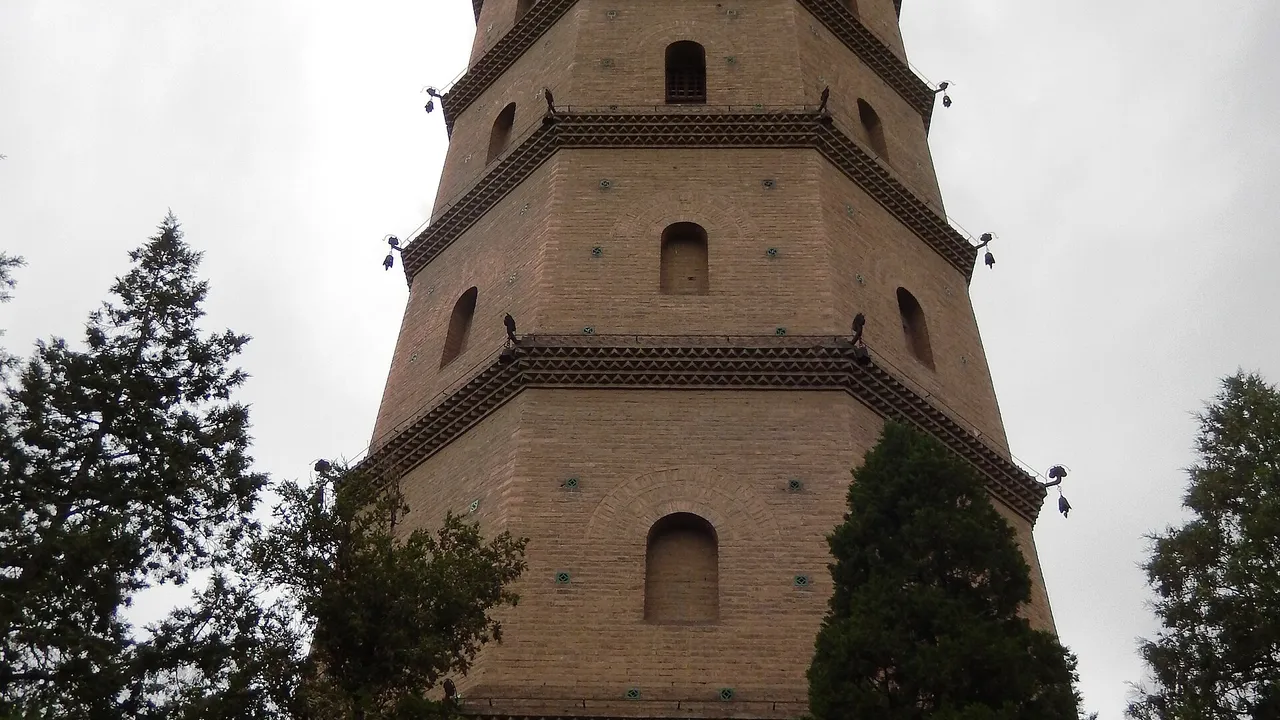
Known as the West Pagoda, Chengtian dates to a Xia empress dowager's regency, its eleven dense-eave stories standing quietly southwest of the old city core. The yard is tree-shaded with pigeons, the exhibit rooms tell of the tower and palace matriarch politics, and the color difference between original Xia bricks and later patching reads as a chronology you can lean into.
Walk the yard slowly for forty minutes as afternoon light slants through the eaves, then an eight-treasure tea in the old city before dusk at the mosque.
Day 1 · The Nanguan Grand Mosque: Dusk under the Dome
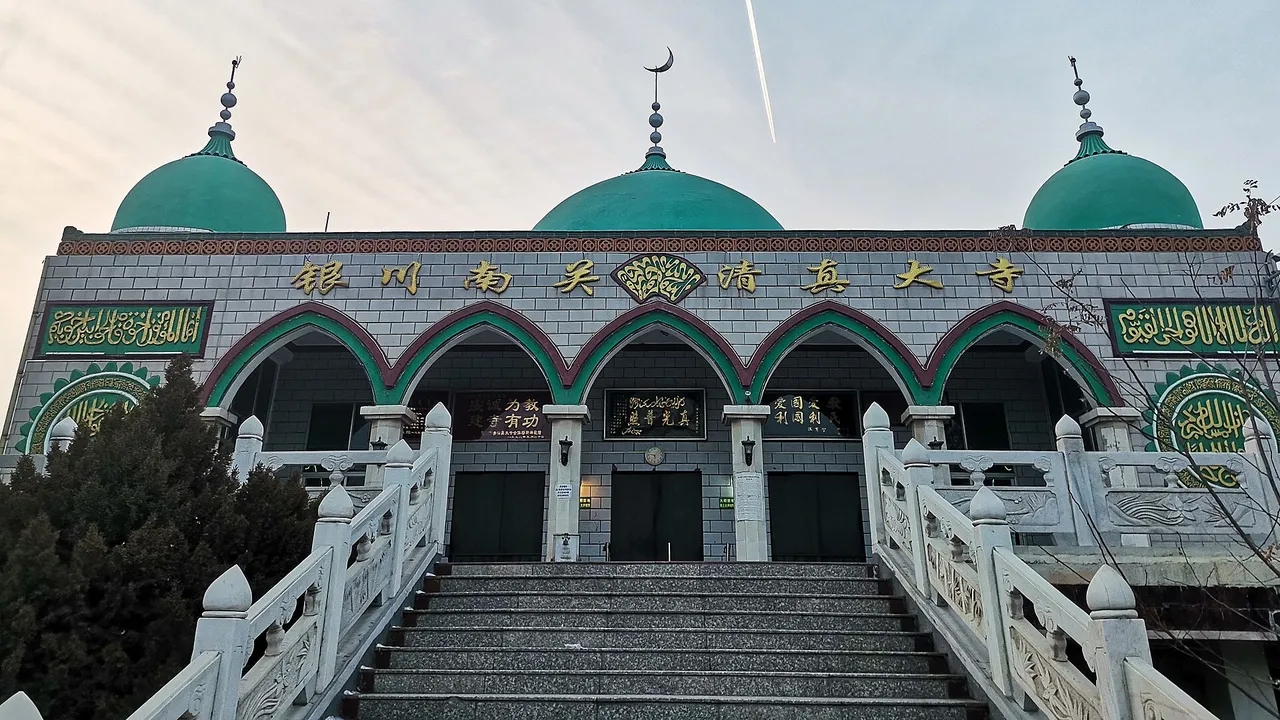
Close day one at the Nanguan Grand Mosque in the old city's southeast. The green dome and twin minarets are a city emblem, the current buildings rebuilt in the 1980s and continuing the pairing of Chinese halls with an Arab dome. Evening light raking the dome is the comfortable photo hour.
Observe mosque etiquette: dress below the knee and not sheer, keep quiet, no noisy photography at prayer times. Finish with dinner around Nanguan among dense halal shops, banking energy for day two's early start.
Day 2 · The Western Xia Tombs and Their Museum: An Imperial Day
Give day two wholly to the Xia. Start with the on-site museum: four zones on Tangut origins, the invented script, Buddhism and mausoleum systems, with carved dragon columns and broken Xia steles as genuine pieces. Then shuttle into the grounds and walk the Tomb No. 3 path to the foot of the rammed-earth tower, the giant hailed as an Oriental Pyramid.
Museum plus grounds runs three hours in wind and no shade. If appetite remains, lunch in the Zhenbeipu town on the way back primes the afternoon studio.
Day 2 · Zhenbeipu West Film Studio: The West as Filmed
The afternoon studio looks apart from heritage but is really its fourth layer, the imagination of the Northwest: Red Sorghum's distillery court stood here, A Chinese Odyssey's city gate rose here. The ramparts of Ming and Qing cities are genuine Ming frontier fort remains, movie sets and real antiquity sharing one wall.
Two hours cover the three zones, the reward living in details: prop nail holes in adobe walls, the counter joinery of Old Yinchuan Street, all worth a close look.
Day 3 · Helan Rock Art and the Han Meilin Museum: A Prehistoric Gallery
Day three digs deeper in time. The Helankou petroglyphs run from the Spring and Autumn era through the Western Xia, sun gods, hunts and faces ranked along the canyon walls on an easy boardwalk. After the grooves, the Han Meilin Art Museum at the mouth blows the vocabulary up into contemporary work, and the old-versus-new pairing is the full play here.
Morning light photographs the carvings best in a relaxed two hours. Then comes the long drive east, so stock water and snacks for the car.
Day 3 · Shuidonggou: Dig Site, Wall and Hidden Tunnels
The afternoon at Shuidonggou packs three heritages into one park: a forty-thousand-year Paleolithic site, a Ming rammed-earth wall, and the underground garrison tunnels. After the museum's knapped stones, ride the camel cart through Reed Valley, climb the wall remnant to gaze across the borderlands, then descend into the tunnels' three subterranean levels, forty millennia of defensive history in one day.
Internal transport legs charge separately, with combo tickets the better deal. The full circuit runs four hours; the ride back downtown takes about an hour, with dinner waiting in the city.
Day 3 · Haibao Pagoda: The North Tower After Returning
If energy remains back in town, circle the Haibao Temple in the old city's north. Known as the North Tower, this pavilion-style brick pagoda may date as far back as the Sixteen Kingdoms era through successive rebuilds, its crisp angular silhouette a deliberate contrast to Chengtian's soft eaves. The temple yard is small, an unhurried hour covers it.
Three days of time layers converge here: a Sixteen Kingdoms tower, Xia tombs, Ming-Qing ferries and a contemporary studio, all left standing on the ground. Celebrate the time travel with hand-torn mutton in the old city.
| Getting around |
|
| Budget | Tickets total about RMB 350-450; with charters and meals, three days run roughly RMB 1100-1700 per person. |
| Best time | Apr-Jun and Sep-Oct run steadiest; the tombs and rock art are fully outdoors, so compress the midday hours. |
FAQs
How should the weight split across the three days?
Light, medium, heavy: old-city walking on day one, the western tombs on day two, the east-west crossing on day three. Save the legs for the last day, give bookings to the museum and the tombs, and keep dusk free for sunsets or old-city strolls, and the rhythm holds.
Do the tombs and museum need reservations?
Buy tomb tickets online a day ahead in season, shuttle included; the free Ningxia Museum requires account booking and closes Mondays. The studio and rock art sell on site, though online purchases skip holiday queues.
If films are not my thing, can I skip the studio?
You can, though you would lose a layer of the Ningxia story: the studio's Ming and Qing ramparts are genuine frontier fort remains. If truly indifferent, swap the afternoon for a climb at Zhongongkou or Suyukou and return before dinner; day two's rest stays intact.
What about clothing and gear on this route?
Outdoor share runs high: sun shirt, wide hat and trail shoes are the base, with a fleece for big daily swings; dress below the knee and not sheer for the mosque; the tunnels are narrow and dim, no headlamp needed but keep your phone light ready. QR payment covers everything, with a little cash as backup.