
Yinchuan's nature reads as one mountain, one river, one lake city: the Helan range holds back the desert in the west, the Yellow River irrigates the frontier south in the east, and wetlands stitch the city's lake-district base. Three days cut cleanly across all three: the western line uphill, the eastern line to the river, the third day collecting lakes in town.
Transport is the budget's biggest line: both outer lines run thirty-some kilometers from town, and a daily charter at RMB 400-500 is the relaxed choice. Shuttles cover the main sites on limited schedules, so plan by the rule of one vehicle per day and never jam the east and west lines together.
Itinerary at a glance
| 08:30 | Day 1 · Suyukou National Forest Park: Into the Helan Interior |
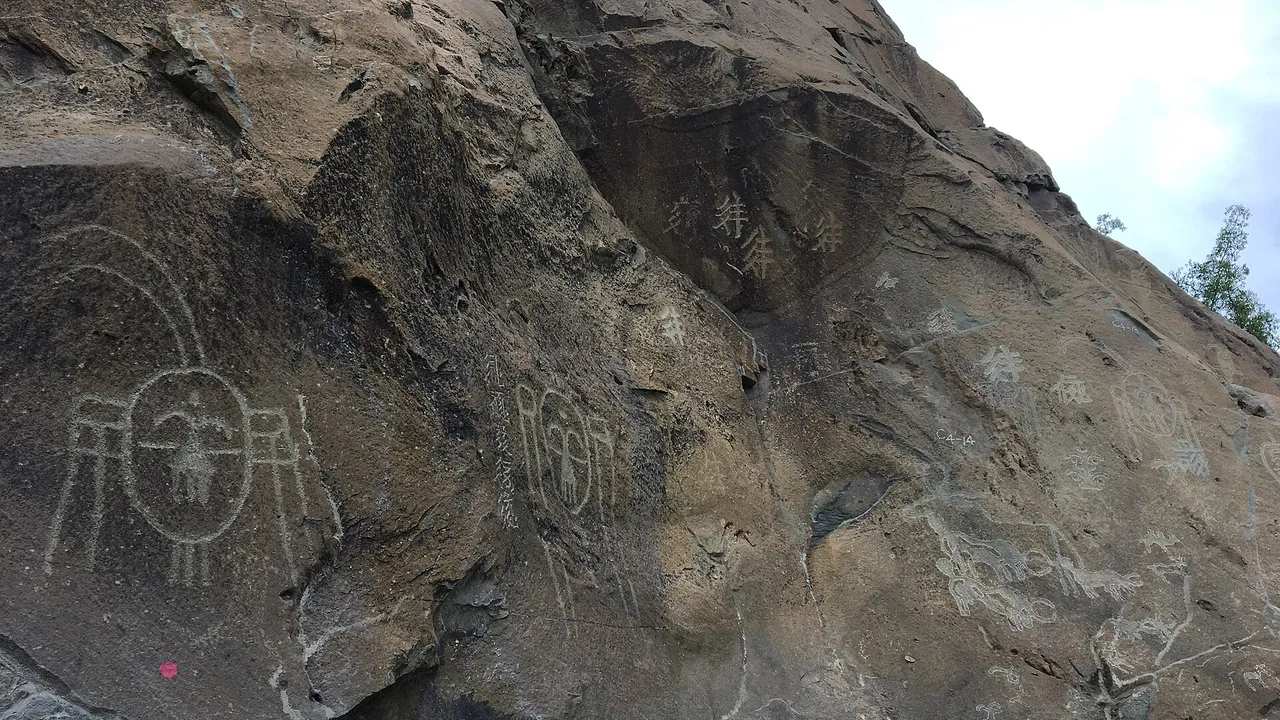
| 13:30 | Day 1 · Helan Mountain Rock Art: The Ancients' Gallery |
| 18:00 | Day 1 · Chateau Source Stone: A Quarry-Side Glass to Close |
| 09:00 | Day 2 · Shuidonggou: A Forty-Thousand-Year Camp and the Hidden Soldiers' Tunnels |
| 14:30 | Day 2 · Huangsha Ancient Ferry: Where the Yellow River Bends |
| 08:30 | Day 3 · Yinchuan Forest Park: A Morning Walk in the North |
| 10:00 | Day 3 · Yuehai National Wetland Park: The Lake City's Water Parlor |
| 13:00 | Day 3 · China Flower Expo Park: The Transition from Blooms to Shoreline |
| 15:30 | Day 3 · Yuehai Grass Skiing Ground: Spending the Last Energy on a Slope |
| 18:30 | Day 3 · Lanshan Park: The Sunset Full Stop |
The route, stop by stop
Day 1 · Suyukou National Forest Park: Into the Helan Interior
The western line enters the range at Suyukou. The park straddles the mountain's divide with a real elevation gain: arid shrub at the foot, then cableway and trails lifting you into conifer country where Qinghai spruce runs dark green to the rock walls. On clear days the ridge line frames the Mongolian steppe beyond.
The trail round trip takes about three hours, halved by the cableway. The Helan range is blue sheep country; sweep the cliffs and odds are high you will spot herds, livelier versions of the rock art figures.
Day 1 · Helan Mountain Rock Art: The Ancients' Gallery
Coming down the mountain, turn into Helankou, where thousands of petroglyphs line the canyon and the Sun God face is the headliner. The boardwalk runs gentle; identifying hunting, dancing and face motifs takes an unhurried two hours, and the Han Meilin Art Museum at the mouth carries the vocabulary into modern work, well worth the stop.
Afternoon side light carves the grooves deepest, which is exactly why the rock art follows Suyukou. With luck, blue sheep appear on the cliffs, echoing the herds of the morning.
Day 1 · Chateau Source Stone: A Quarry-Side Glass to Close
Save the west line's last stop for the winery. The quarry-reclaimed grounds photograph best at dusk, the setting sun warming the rock walls as vines run down to the mountain's foot. The tasting flight rotates Cabernet Sauvignon and Marselan through the glass, an owner's manual to the eastern Helan terroir.
Even teetotalers should sit an hour: the trail circles a small lake and the rock walls still show quarry strata. Mountain, carvings and glass close on one table, the most complete evening of the three days.
Day 2 · Shuidonggou: A Forty-Thousand-Year Camp and the Hidden Soldiers' Tunnels
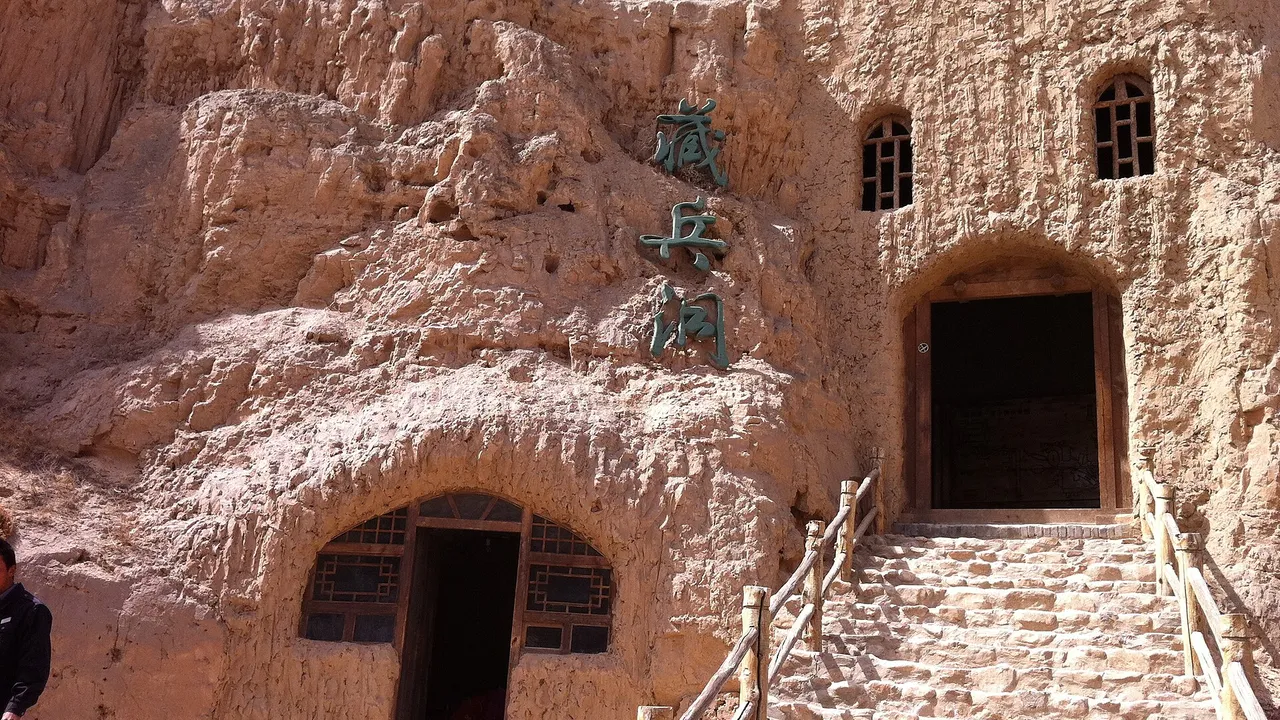
The eastern line opens at Shuidonggou, among the earliest excavated Paleolithic sites in China, its museum laying out forty-thousand-year-old knapped tools with reconstructed scenes. Beyond the dig, Ming-era wall, the Hongshan fort and the hidden soldiers' tunnels form a second act: the tunnels are troglodyte garrison works on three levels, complete with trap mechanisms and storage chambers, chilling to walk.
Internal transport is part of the show: camel carts, horse carts and boats rotate through the legs, stringing the loess gullies into one route. Museum plus tunnels runs about four hours.
Day 2 · Huangsha Ancient Ferry: Where the Yellow River Bends
In the afternoon reach Huangsha, where a Ming-era ferry crossed this stretch of the Yellow River. The park folds desert, wetland and river into one frame: dune sledding above, birdlife boardwalks below, and the classic experience a ride on a sheepskin raft, where the old boatman's chant starts and the Yellow River simply flows beneath you.
The river reads best at dusk, the low sun gilding the water gold-red. If pressed, drop the dune rides and keep the raft and boardwalks, two hours for the essentials.
Day 3 · Yinchuan Forest Park: A Morning Walk in the North
The last day stays in town. The Forest Park is Yinchuan's morning-exercise home ground, tree belts, paths and lakes in layered order, with the clearest air around eight. One lap takes an hour, loosening the legs after two heavy days.
What you watch here is local life: tai chi circles, diabolo spinners, bird-cage walkers, each claiming a grove. It is the only pure rest block of the three days, and slowing down is how a lake city is actually read.
Day 3 · Yuehai National Wetland Park: The Lake City's Water Parlor
South of the Forest Park lies Yuehai, wetland country carrying the memory of Yinchuan's legendary seventy-two linked lakes into the present. Boats thread the reed beds, boardwalks push out over the water, and migratory birds rotate through spring, summer and autumn, with free telescopes on the observation tower.
Take the forty-minute boat line: reeds close in and open out on both sides, the city skyline flickering behind the reed tips, the standard way this lake city introduces itself.
Day 3 · China Flower Expo Park: The Transition from Blooms to Shoreline
The afternoon Flower Expo Park is the legacy ground of the national flower expos, seasonal bloom fields, garden vignettes and big water assembled together. In season, cherry spring or chrysanthemum autumn, one flower field can stop you in your tracks; off season the paths and shoreline still make a fine walking base.
It suits a picnic or half an hour of nothing, bridging noon and afternoon. The grounds are large, and renting the park's sightseeing cart saves real legwork.
Day 3 · Yuehai Grass Skiing Ground: Spending the Last Energy on a Slope
The grass skiing ground sits beside the Yuehai district, one of Yinchuan's few light-thrill rides: board on, dive down the grass slope, and two or three seconds of weightlessness buy a whole run of laughter. It works for adults and kids, per-ride pricing is low, and it plays the role of seasoning in the day.
If grass skiing is not your thing, the wetland and lakeside paths start next door; rent a family cycle and ride the shore for an hour, equally worth the afternoon.
Day 3 · Lanshan Park: The Sunset Full Stop
The finale still belongs to Lanshan Park. After the Helan ridgeline, the river bend and the reed beds, sitting in this theater-like grandstand waiting for sunset feels entirely different: the first two days watched nature itself, today watches how a city lives with it.
The sun drops toward the Helan line, Yuehai water throws the light back, and the stands fill by degrees. Every sunburned hour of the three days turns worth it in this half hour.
| Getting around |
|
| Budget | Tickets and internal shuttles total about RMB 450-600; with charters and meals, three days run roughly RMB 1200-1800 per person. |
| Best time | May-Jun and Sep-Oct are best; winter strips the mountain and wetlands bare but empties them of crowds, and summer outdoor hours must dodge midday. |
FAQs
How do the three days route with the least backtracking?
Split by geography: the western line takes Suyukou, the rock art and the winery in one day; the eastern line takes Shuidonggou and the ancient ferry; day three chains the Forest Park, Yuehai and Lanshan in town. East and west point opposite ways; forcing them into one day burns three hours of driving.
Do the scenic areas need advance tickets?
Tickets at Suyukou, Shuidonggou and the like sell on site, with online prebuy wiser on holidays; the Ningxia Museum requires advance booking; winery tastings want a phone or account reservation in season. Combo tickets generally beat the sum of singles, so compare at the window first.
Which season suits this route best?
May-June and Sep-Oct run steadiest: kind temperatures, birds on station, vines in shape. Winter is bleak but emptiest and cheapest on rooms; summer works if every outdoor hour hugs morning and evening. Dust storms favor spring, so check forecasts before setting out.
What should I mind around the water activities?
Wear life vests throughout on rafts and boats, with phone lanyards or waterproof pouches mandatory; seniors and toddlers should judge the day's wind and chop, and stop when crews say stop. Wetland boardwalks are slick, so wear grippy shoes, and in summer pair sun protection with insect repellent.