
A day in Yiwu answers one question: what does this city actually look like? The answer has two layers. One lives in the International Trade City, seventy-five thousand stalls and over two hundred thousand kinds of goods, where bargaining in a hundred-plus languages happens daily. The other sits in town and hills, the Yiwu River threading through and Jiming Mountain the locals' after-dinner climb. Half a day each, and you have seen Yiwu.
The day runs heaviest in the morning: the Trade City's scale deserves your freshest hours, so pick one or two districts and go deep rather than exhaustive. A local lunch restores you; the afternoon at Yiwu Heart and the riverside greenway stays loose; and dusk on Jiming Mountain watches the skyline and its foothill lights come on together.
Itinerary at a glance
| 09:00 | Trade City District 1: The World of Toys, Accessories and Artificial Flowers |
| 12:00 | A Local Yiwu Restaurant: Lunch the Yiwu Way |
| 15:00 | Yiwu Heart: The New City's Shopwindow |
| 17:00 | The Yiwu River and Jiming Mountain Park: A Dusk Close |
The route, stop by stop
Trade City District 1: The World of Toys, Accessories and Artificial Flowers
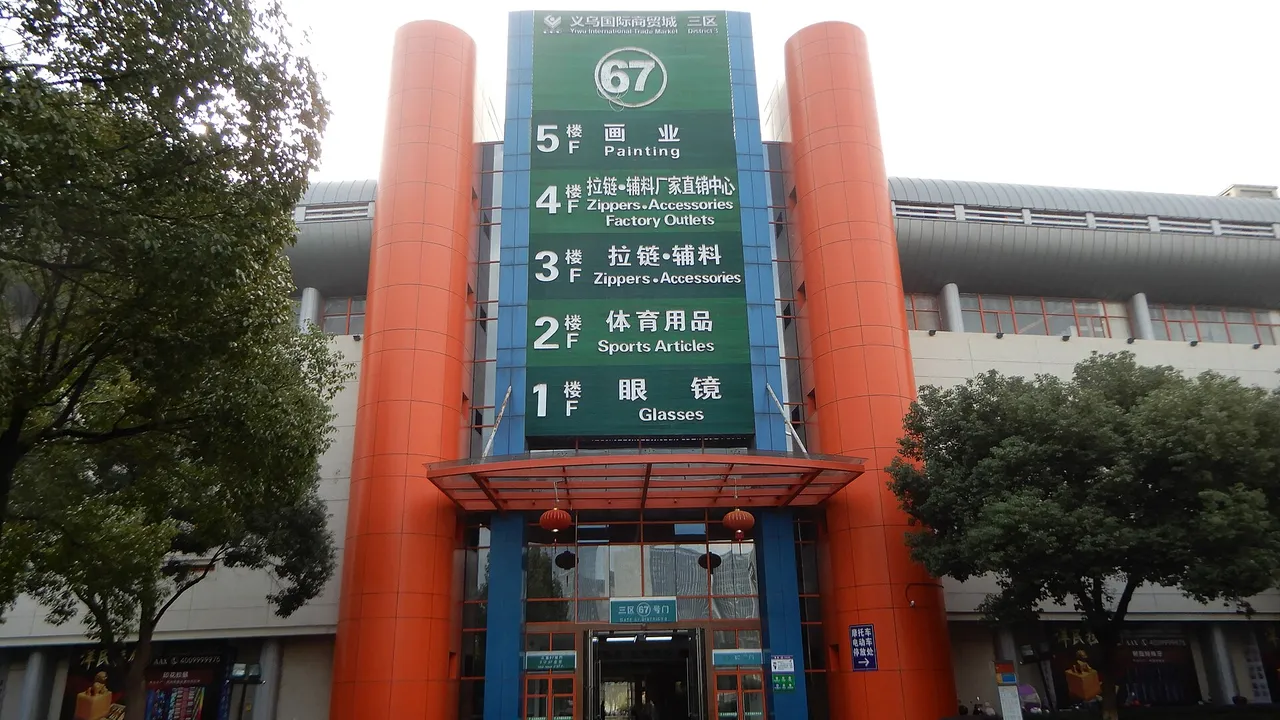
The International Trade City is Yiwu's heart, Districts 1 through 5 strung along Yinhai Road, each a colossal building in its own right. District 1 is the friendliest entry for walk-ins: artificial flowers on the first floor, jewelry on the second, toys and crafts on the third, with Christmas goods packed into one zone of the third floor, two-thirds of the world's Christmas ornaments shipping out from here. The aisles run past sight, and buyers sprint past with handcarts.
Walk it like this: pick one central aisle and follow it to the end, the widest lane with the densest stalls, then change floors. Ask prices freely, since many stalls sell small retail lots or split orders if you ask kindly. Do not attempt all five districts in a day; it is impossible and unnecessary.
A Local Yiwu Restaurant: Lunch the Yiwu Way
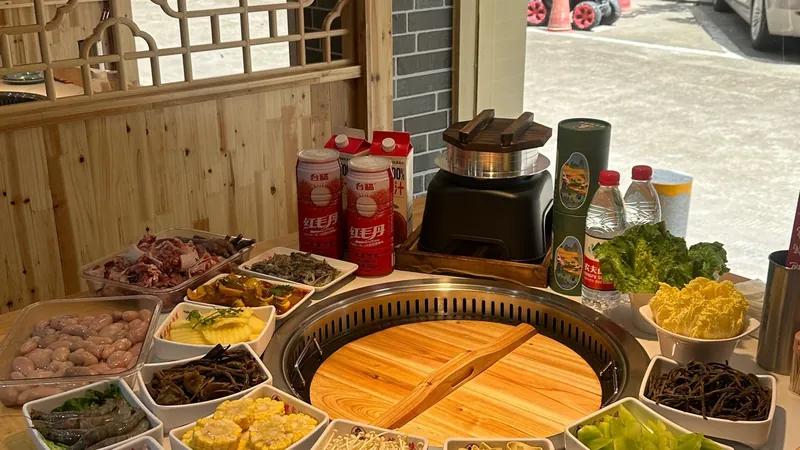
Out of the Trade City at noon, find a local Yiwu restaurant. Three dishes define the table: Shangxi beef offal soup, rich and chili-warmed; Fotang cold-sliced lamb dipped in soy, right in any season; and Donghe meat pancakes, thin wraps of minced pork and scallion griddled to order. One meat, one soup, one pancake is how locals host.
Yiwu cooking runs mild and fresh overall, the heat concentrated in that one ladle of offal soup. Restaurants near the Trade City turn tables fast, queues thickening after half past twelve, so sit before noon for the easy pace.
Yiwu Heart: The New City's Shopwindow
Slow the afternoon at Yiwu Heart. This new complex displays where local consumption lands: international brands, local select shops, upper-floor dining and a skating rink under one roof. Its meaning is not shopping but reading where the world's supermarket spends its earnings.
The dining floors run busiest, and the basement corridors link the office towers, so after three the after-work crowd streams through the mall, the best vantage on local daily rhythm.
The Yiwu River and Jiming Mountain Park: A Dusk Close
Reach the Yiwu River by evening. The riverside greenway runs clean and wide, joggers and strollers thickening as the wind rises, lights coming on across the water story by story. Follow it to the foot of Jiming Mountain Park and climb: a modest height, twenty minutes up, with a summit platform facing the skyline.
After sunset the city lights arrive with the hilltop breeze, the closing move locals love most. A taxi at the foot ends the day.
| Getting around |
|
| Budget | The Trade City and parks are free; add RMB 80-150 pp for meals and RMB 30-60 for local transport, roughly RMB 150-250 for the day. |
| Best time | Year-round; weekday mornings from 9 to 11 buzz with foreign buyers, some stalls close weekends, and the parks and riverside ignore the calendar. |
FAQs
Can ordinary visitors shop at the International Trade City?
Yes. The Trade City runs on wholesale, but most stalls accept small retail or split orders, with Districts 1 and 5 the friendliest. Say you want only one or two pieces when asking prices and sellers quote directly; buy more for trade prices. Some stalls take bulk only, so leave politely and try the next one, no one pursues.
What differs across Trade City Districts 1 to 5?
By category: District 1 holds flowers, jewelry, toys and crafts; District 2 bags, umbrellas and hardware; District 3 stationery, sporting goods and electrical goods; District 4 socks, daily necessities, hats and scarves; District 5 apparel, textiles and the imported-goods city. For what Yiwu is, go to District 1; for daily goods, District 4; for imported food, the import mall in District 5.
Will I meet many foreign buyers, and what if we share no language?
Weekday mornings run dense with foreign buyers, delegations from the Middle East, Africa and Latin America an everyday sight, with translators and freight agents weaving between them. It is Yiwu's normal trade ecology and nobody bothers anybody. Without a shared language, bargaining on a calculator's screen is the standard move, or ask the young English-speaking clerk many stalls keep for exactly this.
Does this route suit families with children?
Yes, with trade-offs: the Trade City's long aisles and handcarts mean held hands, and the toy floor is both heaven and a display of hazards, so look freely but think about luggage space before buying. Yiwu Heart offers a rink and children's zone in the afternoon, and Jiming's steps stay gentle. Expect about fifteen thousand steps; strollers work in the Trade City but not up the hill.