
Yiwu's cultural narrative runs on one spine: from the drum-rattle peddlers trading chicken feathers for sugar to the world's small-commodity hub. This route strings three stations of that spine: the city museum tells the whole arc, Xiuhu and the Da'an pagoda mark the county town's origin, and Fotang preserves the commercial heritage of the river-shipping era, today's Trade City being simply that story's newest chapter.
The day runs museum in the morning, old town in the afternoon: two honest hours inside, lunch back by Xiuhu, then three hours for Fotang. The town sits fifteen kilometers south, smooth by taxi or bus, and watching sunset from the floating bridge before heading back closes the narrative cleanly.
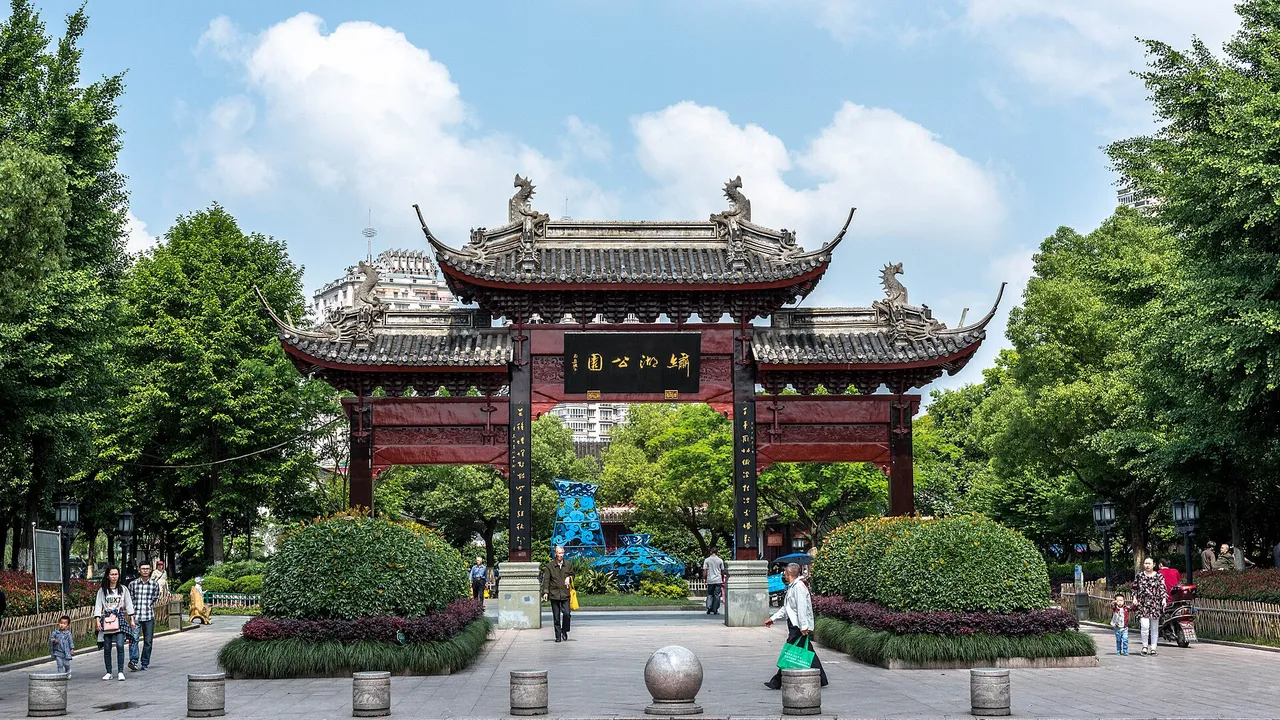
Itinerary at a glance
| 09:00 | Yiwu Museum: Understanding the Chicken-Feather Trade |
| 11:30 | Xiuhu Park and the Da'an Temple Pagoda: Where the County Town Began |
| 14:00 | Fotang Ancient Town: The Wuqi Ji Residence and the Old Street |
| 17:00 | Wanshan Bridge and the Yiwu River: Sunset on a Floating Bridge |
The route, stop by stop
Yiwu Museum: Understanding the Chicken-Feather Trade
Enter at opening and go straight to the trade-history gallery. Drum rattles, peddler shoulder-poles, the ledgers of chicken- and duck-feather swaps: in the sixties and seventies Yiwu farmers rattled village to village trading sugar for feathers to resell, and this livelihood grew into roadside markets and finally the International Trade City. Grasp that chain and everything in Yiwu gains a footnote.
The historical galleries run from Bronze Age bronzes to Song kiln wares, proof that this land accumulated long before the commodity era. Two careful hours suffice, weighted toward the modern trade hall.
Xiuhu Park and the Da'an Temple Pagoda: Where the County Town Began
Move to Xiuhu at midday. This Song-era lake once watered and anchored the county town, and the hexagonal seven-story Da'an Temple Pagoda on its shore stands as Yiwu's oldest above-ground structure. Circle the lake once and watch the tower frame against high-rises, past and present less than a hundred meters apart.
Lunch options ring the lake, noodle shops, quick kitchens and mall dining all in walking range; then half an hour on a lakeside bench sets up the afternoon run to Fotang.
Fotang Ancient Town: The Wuqi Ji Residence and the Old Street
The afternoon belongs to Fotang, a river town that rose on water transport, its old street keeping pre-Republican storefront order. The headliner is the Wuqi Ji residence, a three-story brick-and-timber mansion where carved wooden doors meet Western-style railings, physical proof of a Fotang merchant's wealth and worldview.
The old street itself rewards slowness: soy-sauce gardens, pharmacies and bamboo shops still trading under old signs, stone steps by the river dropping toward the former ferry crossing. When the smell of tofu-skin noodles drifts out of some doorway, take it as snack time.
Wanshan Bridge and the Yiwu River: Sunset on a Floating Bridge
The day closes at Wanshan Bridge, a floating crossing of linked boats spanning the Yiwu, a living fossil of the Fotang port and still a daily walkway for locals. At dusk the river turns red, the bridge swaying gently on the water, the old town at its most tender.
The bridge reads best within half an hour of sunset, waiting until the first lamps come on both banks. A forty-minute taxi returns downtown for dinner, and the day's culture line stands complete: the narrative from the museum, the evidence from the town, the afterglow from the bridge.
| Getting around |
|
| Budget | The museum is free with booking, Xiuhu and Fotang's old street free; add RMB 60-120 pp for meals and RMB 40-80 for the day's transport. |
| Best time | Year-round; the museum closes Mondays except holidays, and Fotang's street lives fullest on weekend mornings. |
FAQs
Does the museum need booking, and how long does a visit take?
Entry is free with real-name booking through official channels, usually same-day. Two hours fits: the modern trade-history hall deserves the weight, while the antiquities galleries can take a brisk pass. Closed Mondays except holidays, so schedule around it.
How does Fotang compare with famous water towns?
Fotang lacks the polished completeness of staged old towns like Wuzhen or Zhouzhuang, but its edge is authenticity: a working soy garden, pharmacy and barbershop on the old street, the floating bridge crossed daily, no gates or ticketed folk performances. Expect disappointment if you want restored perfection, satisfaction if you want a town still living in itself.
Does this route suit seniors?
Yes. The museum offers elevators and benches, Xiuhu circles flat, and Fotang's slabs run even though long, so pace it in segments with teahouse breaks at the town mouth. The floating bridge sways slightly, so unsteady legs should hold the rails or view from the bank. The day stays relaxed; just leave generous taxi time for the return.
What should I look for inside the Wuqi Ji residence?
Three things: the woodcarving, with opera figures on beams and doors carved finely, seen in detail rather than whole; the East-meets-West traces, Western railings and glass set into a traditional mansion, evidence its owner had seen the world; and the spatial scale, three stories extraordinary in a rural house of its era, best grasped by standing in the courtyard and looking up once around.