
Yiwu is a city defined by its commercial narrative, yet that commerce predates the Trade City: from chicken-feather peddlers to boat gangs on the Yiwu river, to merchant mansions in Fotang, to today's five-district market matrix, it is a thread you can walk. Three days, one segment each: Fotang first, then museum and Xiuhu, then Fenshuitang and Niansanli.
The line runs low-threshold and high-depth: entries near zero, walking the daily radius of Yiwu people themselves. Two or three anchors a day with institutionalized naps; rain swaps Fotang for museum and exhibitions. It suits travelers drawn to business history, architecture and street life.
Itinerary at a glance
| D1 09:00 | Fotang Old Street: A Commercial Street of the Shipping Era |
| D1 11:00 | The Wuqi Ji Residence: A Merchant House of Three Stories |
| D1 14:00 | Wanshan Bridge and the Old Wharf: An Afternoon on the Floating Crossing |
| D1 16:00 | Shuanglin Temple: Half an Hour Uphill from Town |
| D2 09:00 | Yiwu Museum: Explaining the Commercial Genes |
| D2 11:30 | Xiuhu and the Da'an Pagoda: A County Town Grown from a Lake |
| D2 16:00 | Jiming Mountain Park: The Locals' Dusk Hill |
| D3 09:00 | Chen Wangdao's Former Residence at Fenshuitang: Where a Book Was Born |
| D3 14:00 | Niansanli Old Street: The Market a Drum Rattle Built |
| D3 18:00 | The Yiwu River at Night: Gathering the Three Days |
The route, stop by stop
Fotang Old Street: A Commercial Street of the Shipping Era
The three days open in Fotang. This old street, raised by the Yiwu river port, keeps its continuous storefronts intact, soy garden, pharmacy, bamboo shop and cloth store still trading under old signs. The morning street belongs to locals: shoppers, noodle eaters, a haircut, a rhythm untouched by tourism.
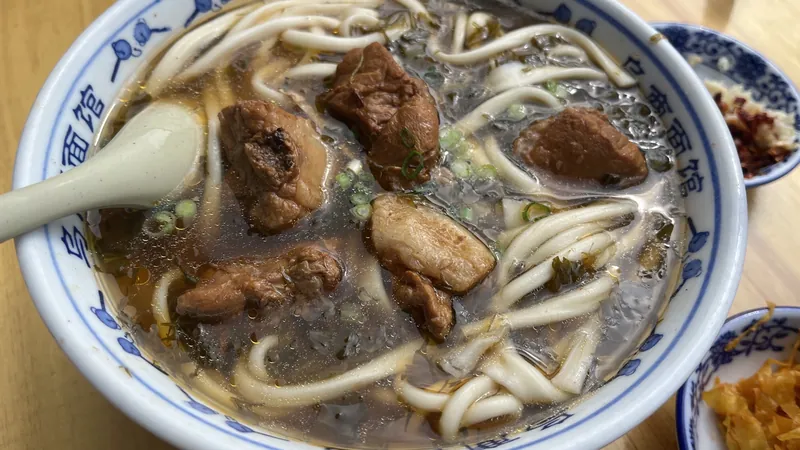
Walk to the river and read the port steps and the old ferry site; understanding Fotang takes one image, boats docking, carriers climbing, shopfronts unloading. Tofu-skin noodles for breakfast, griddle cakes for snacks.
The Wuqi Ji Residence: A Merchant House of Three Stories
The morning's headliner is Wuqi Ji, a three-story brick-and-timber mansion miraculous in height for its rural era, its carved doors and windows fine, Western railings and glass set into the traditional frame, a Fotang merchant's travels written into the house.
Forty minutes of slow looking: the ground floor for layout and courtyard, upstairs for carving detail and Western touches. The house sits quiet with clear interpretive panels, better read than photographed.
Wanshan Bridge and the Old Wharf: An Afternoon on the Floating Crossing
After lunch, Wanshan Bridge: a floating crossing of linked boats spanning the Yiwu, living evidence of the port, locals bicycling and shoulder-pole carrying across just as the function has run for centuries. Stand mid-span, watch the river pass underfoot, feel the bridge sway.
Both banks reward the walk: north to the old street's end, south toward open country. Afternoon light lies on the water, fishing boats and egrets in frame. No time limit here; sit until you feel like moving.
Shuanglin Temple: Half an Hour Uphill from Town
Before dusk, climb Yunhuang Mountain for Shuanglin Temple. This old monastery's history interweaves with Fotang's, the mountain once the sanctuary of the Liang-dynasty master Fu Dashi, and though the halls stand rebuilt, the air of the gate and the mountain views persist. Ten minutes by taxi from town to the foot, twenty on foot uphill.
The grounds stay quiet with few visitors, dusk light entering through the mountain gate. This is the only hillside temple of the three days, closing the narrative of water town and old streets with a forest full stop.
Yiwu Museum: Explaining the Commercial Genes
Day two returns downtown for the museum. The trade-history gallery lays the whole arc from chicken feathers to the world's supermarket: drum rattles, sugar shoulder-poles, photographs of the early roadside markets, up to the scale model of the International Trade City. The port mansions you saw yesterday in Fotang find their place in the narrative here.
A brisk pass through the antiquities galleries, Bronze Age to Qing local finds, shows the land's depth. Two careful hours, weighted to the modern hall.
Xiuhu and the Da'an Pagoda: A County Town Grown from a Lake
Midday moves to Xiuhu, the origin of Yiwu's civic story. The Song pagoda Da'an stands at the shore; circle the lake once and read the old-photo boards, how a county town grew into the world's supermarket in forty years, an answer that begins at this water.
Lunch lakeside, noodle kitchens or mall dining in walking range, then a quiet sit with no afternoon obligations, saving legs for Jiming Mountain at dusk.
Jiming Mountain Park: The Locals' Dusk Hill
Climb Jiming at dusk: twenty minutes of steps to a summit platform facing the skyline, the Yiwu bending between towers. The old town, Song pagoda and museum of these three days get gathered into one panorama here.
Wait for the lights after sunset before descending, the trail lit throughout. Ending day two with the panorama lets day three's Fenshuitang and Niansanli be read as sources under a full-picture eye.
Chen Wangdao's Former Residence at Fenshuitang: Where a Book Was Born
Day three opens west of the city at Fenshuitang village. Chen Wangdao, translator of the first complete Chinese version of The Communist Manifesto, worked in this village's old house, the famous tale of truth tasting sweet set between the ink and the brown sugar of his family's firewood room. The residence and its displays stand well restored, the lanes clean and quiet.
An hour for the exhibition, half an hour more for the village. Fenshuitang matters beyond the famous son: it keeps the original texture of a Yiwu hill village, pond, trees, old houses and new farmhouses side by side.
Niansanli Old Street: The Market a Drum Rattle Built
The afternoon heads northeast to Niansanli, the heartland of the chicken-feather peddler tradition and a birthplace of Yiwu's first roadside markets. The old street runs short, but the memory of drum rattles and sugar poles lives in the town-history boards and aged storefronts, with the old houses around Huqingmen worth a slow look.
Here the museum narrative lands on the ground: peddlers walked out of these lanes and rattled Yiwu's commercial genes across the country. Maihu griddle cakes and tofu balls from the street make afternoon tea.
The Yiwu River at Night: Gathering the Three Days
Back downtown, walk the Yiwu riverbank one last time as the light strips come on, high-rises and their reflections merging across the water. Three days from Fotang's floating bridge to this downtown reach, the same river stringing the shipping era to the global trade era.
Dine riverside or in the commercial strips, then sort three days of tickets and photos. The line's conclusion lands best here: Yiwu's commerce did not grow from nothing, but from a port, peddlers, merchant houses, and a village built for schooling.
| Getting around |
|
| Budget | Entries run nearly free (a few house museums RMB 10-20); three days of meals cost RMB 200-350 pp and transport RMB 150-250. |
| Best time | Year-round; the museum closes Mondays, Fotang's weekend-morning market runs liveliest, and rain swaps days indoors. |
FAQs
Which day is least dispensable of the three?
Day one, Fotang. It is the most complete physical site of Yiwu's commercial civilization, old street, mansions, floating bridge and wharf together; cut it and the route keeps only panels, no artifacts. With two days, keep Fotang and the museum day, merging day three's two sources into a brisk half day.
Is Chen Wangdao's residence worth a dedicated trip?
Depends on interest. For modern and translation history, it is the city's single most important site, curated earnestly with strong sense of place; for trade history alone, the link runs looser, so pair it with Niansanli in one day rather than a dedicated half day. The village's rural texture earns its keep regardless.
Does the three days need a guide?
Optional. The museum and Fotang keep complete signage, fully workable solo; with zero background in trade history, a half-day guide (about RMB 150-200) unlocks the old street's and mansions' details. Local culture-bureau accounts occasionally list free public tours worth watching for.
How does this route combine with a shopping itinerary?
They complement naturally: heritage days run south and west, shopping days run the Trade City and Yiwu Heart, no overlap. The common blends are two heritage days plus one shopping day or the reverse; after a Fotang evening, lodge near the Trade City and walk in next morning to buy. Three full heritage days suit return visitors who have already sourced here and now come for the culture.