
Zhengzhou's heritage stacks three layers: the downtown Shang foundation with modern labor memory, Mount Song's Buddhist, Taoist and Confucian estates, and Xinzheng's ancestor narrative. Three days, one each: museums and walls downtown, then Dengfeng, closing at the gnomon site and Xinzheng.
Dengfeng owns the legs: Shaolin, the pagoda forest, the academy and Zhongyue Temple spread across Mount Song's flanks, smoothest by charter or self-drive, workable by public transport with timetable care. Sleep night one downtown and night two in Dengfeng to cut doubling back.
Itinerary at a glance
| 09:00 | Henan Museum: The Heritage Line's Civilizational Datum |
| 13:30 | The Shang Capital Site Museum and Wall: The City's Foundation |
| 16:30 | The Erqi Memorial Tower: Where Modern Heritage Lands |
| 08:30 | The Shaolin Temple Compound: The Chan Patriarch's Court in the Morning |
| 11:00 | The Pagoda Forest: Seven Centuries of Masters' Stupas |
| 14:00 | Songyang Academy: The Confucian Thread of Mount Song |
| 19:30 | The Shaolin Zen Music Ritual: A Night in the Valley |
| 08:00 | The Gnomon Platform: China's Oldest Surviving Observatory |
| 10:30 | The Zhongyue Temple: The Largest Temple Complex of the Five Peaks |
| 13:30 | The Hometown of the Yellow Emperor: Closing the Ancestor Narrative |
The route, stop by stop
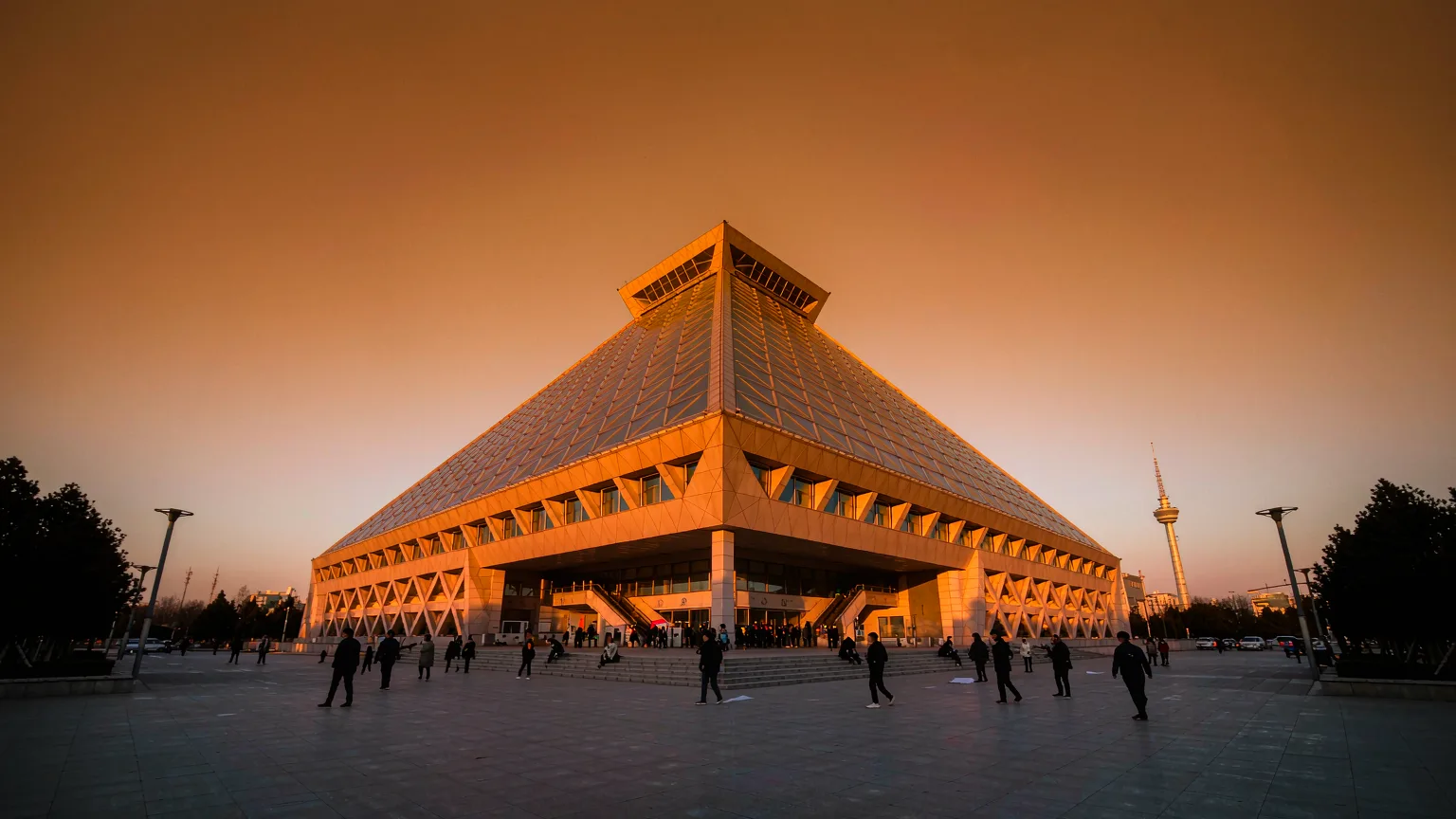
Henan Museum: The Heritage Line's Civilizational Datum
Open the three days at Henan Museum to raise the timeline: from the nine-thousand-year Jiahu flute to thirty-six-century Shang bronze, the Central Plains sequence gains coordinates on which the coming walls, pagodas and temples can all hang.
Hunt the exhibits that echo the route: astronomical instruments tied to Dengfeng, bronze hoards tied to the Shang capital; view with questions, and revisit after the three days to double the yield.
The Shang Capital Site Museum and Wall: The City's Foundation
The afternoon joins the site museum to the wall walk, the starting point of Zhengzhou's heritage story: rammed-earth ramparts from thirty-six centuries ago still ring downtown, with bronze hoards proving an early Shang capital stood here.
Exit onto the wall and verify the stacked-city idea underfoot; light before dusk softens over rammed earth as the old-town skyline opens above, the most direct picture of what this city is.
The Erqi Memorial Tower: Where Modern Heritage Lands
Day one closes at the Erqi Tower, snapping the timeline from the Shang to the modern: the memorial to the 1923 rail strike stands at the city's geometric center, free to climb, its labor-history exhibits framed against the old town through the windows.
Dehua Street at the tower's foot settles dinner among the old houses. The day's three stops, civilization, foundation, modernity, ground the next two days on Mount Song and in Xinzheng.
The Shaolin Temple Compound: The Chan Patriarch's Court in the Morning
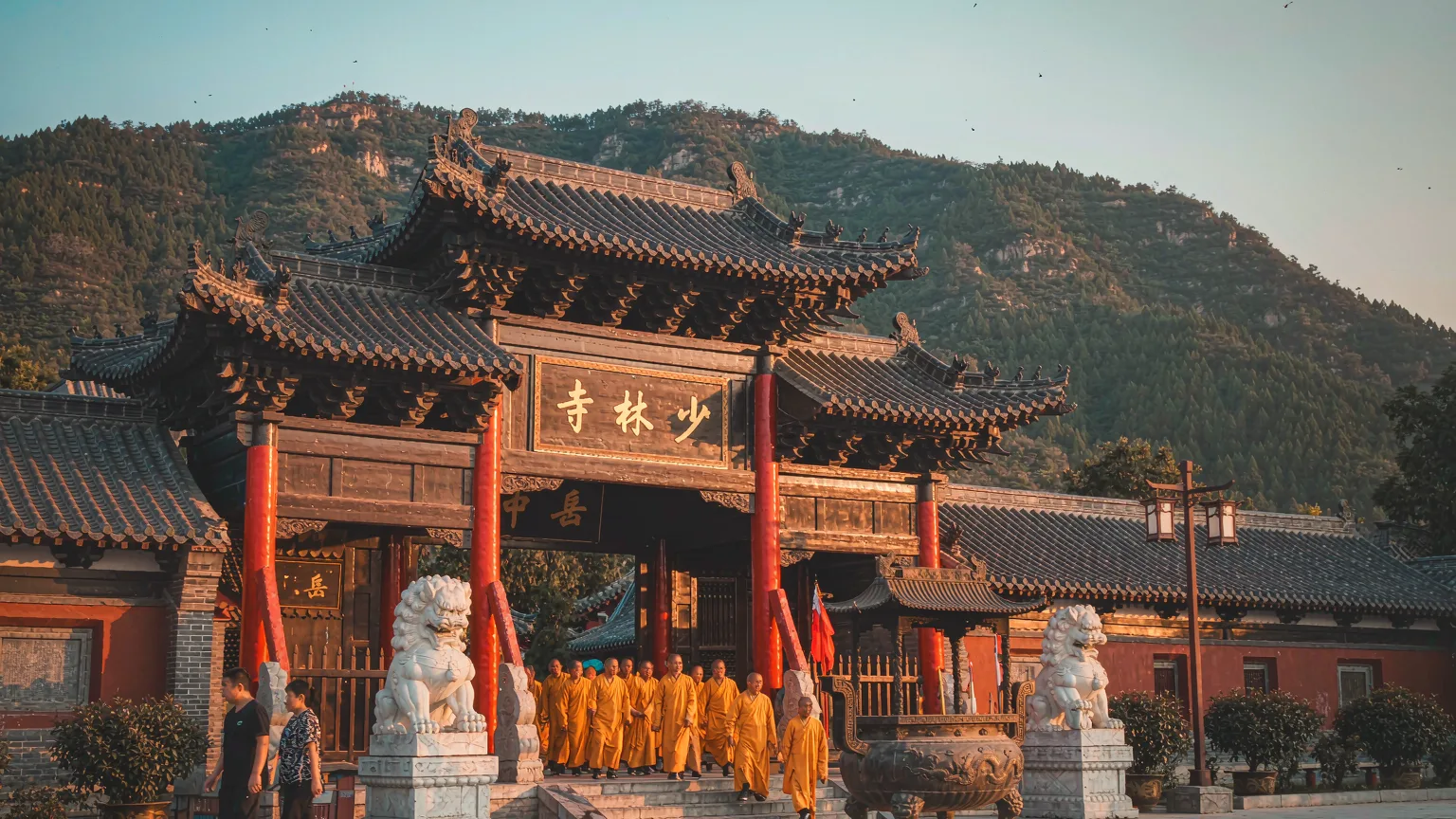
Day two's heavyweight is Shaolin. Enter with the first wave before eight thirty, and the compound's gate hall, great shrine and sutra library keep their millennium-old order before tour buses land; the training-yard kung fu shows run to timetable.
The temple's layers run far deeper than the word kung fu: Chan patriarch steles, imperial plaques, and the floor dents of monk training in the Thousand Buddha Hall, all genuine. Reserve two full hours for the compound.
The Pagoda Forest: Seven Centuries of Masters' Stupas
Ten minutes along the path from the compound lies the pagoda forest, two hundred-odd funerary stupas of eminent monks, their forms evolving from Tang to Qing in one view, the temple's quietest corner and the most direct lesson in lineage.
Each stupa's tiers and inscriptions mirror the monk's standing, detail-rich, with layered depth photographing best in frontal light. It remains a graveyard, so keep quiet and respect the boundary lines.
Songyang Academy: The Confucian Thread of Mount Song
The afternoon's Songyang Academy completes Mount Song's Confucian thread. One of the four great academies of the Northern Song, where the Cheng brothers lectured and the famous snow-stand-at-the-door story unfolded, its grounds hold cypresses thousands of years old and the towering Great Tang stele.
The academy rewards one slow hour. Link Shaolin's Chan, Zhongyue's Tao and this Confucian thread and the logic of Mount Song as the center of heaven and earth closes, exactly the design intent of day two.
The Shaolin Zen Music Ritual: A Night in the Valley
Day two's night belongs to the music ritual, a landscape-scale show staged in a Mount Song valley: bells, stream water, light and hundreds of performers flooding the gorge with Chan imagery, seating that rotates with the plot, Dengfeng's headline night event.
Dine nearby first, the town's mutton soup and laomo pancakes answering the local evening; the show runs about seventy minutes, with the town's hotels twenty minutes away after the finale.
The Gnomon Platform: China's Oldest Surviving Observatory
Day three opens at the gnomon platform in Gaocheng town. Built under the Yuan astronomer Guo Shoujian, it is China's oldest surviving astronomical structure, measuring the tropical year by shadow, the very core of the historic monuments cluster named the Center of Heaven and Earth.
The ratio of the stone measuring rod to the tower reads only on site: one stone scale, one tall platform, measuring out the length of a year. Dawn visitors are rare, and the three days' most staggering stop is often the quietest.
The Zhongyue Temple: The Largest Temple Complex of the Five Peaks
A short drive from the gnomon sits the Zhongyue Temple, the principal temple of Mount Song, the central of the Five Peaks: an axis running nearly a kilometer with halls rising tier by tier, the largest of the five-peak temples and the strongest statement of Taoist order.
Three must-sees inside: the Han stone guardians, the Song iron men and the ancient cypress grove, ninety minutes down the axis. The morning's two stops join astronomy and faith, standing up Mount Song's full depth.
The Hometown of the Yellow Emperor: Closing the Ancestor Narrative
Day three's afternoon returns to Xinzheng. The Hometown of the Yellow Emperor memorializes the city as the legendary sovereign's seat, its surname plaza tracing the origins of the hundred family names, and the annual ancestor-worship ceremony drawing the global Chinese narrative to this spot.
The grounds open free and two hours cover them. Placed last on purpose: from Shang capital to Mount Song to the first ancestor, the Central Plains narrative closes on the question of where we come from, an ideal companion for the ride home.
| Getting around |
|
| Budget | Entries total about RMB 300-450 pp including the Shaolin area and the show, before meals and lodging. |
| Best time | Apr-May and Sep-Oct treat the mountain kindest; the Shaolin area crowds hard in peak season, so start early. |
FAQs
Is three days too rushed? Does Shaolin deserve a full day?
Not rushed; a full Shaolin day actually relaxes: two hours in the compound, one in the pagoda forest, Sanhuangzhai or the kung fu shows filling the afternoon, the music ritual at night. Half-day compound plus forest compresses acceptably, but the night show would be lost.
With so many Mount Song heritage sites, which are essential?
Rank by irreplaceability: the Shaolin compound with its forest, the gnomon platform, Songyang Academy and Zhongyue Temple, standing for Chan, astronomy, Confucianism and Tao respectively; the full center-of-heaven-and-earth narrative rests on them, so cut in this order when time runs short.
Is the Dengfeng line manageable for seniors?
Moderately demanding but fixable: shuttle carts inside Shaolin, skip Sanhuangzhai entirely, walk only Zhongyue's front axis, and the gnomon grounds run flat; the music ritual offers seated tiers, so pick the sitting section. The core trade is dropping all summit-type items.
What is the smoothest exit after Xinzheng?
Xinzheng adjoins the airport and the southern rail corridor: for flights, head straight to the airport; for rail, Zhengzhou East sits on the way. Staying one more night downtown means an hour back by taxi or intercity bus, so design the final day as tour-then-depart.