
Seven days read Zhengzhou from transit stop into destination: two downtown days raising the Shang frame, two on old-town blocks and opera, then Mount Song's three teachings and astronomy, closing on the river, the drama city and ancestry, each layer rising on the last.
Each day carries one anchor plus one or two light stops: museum day, neighborhood day, Shaolin day, mountain-path day, river day, drama day, ancestor day. Sleep all seven near Erqi Square; the two Dengfeng nights can stay on the mountain to kill the commute.
Itinerary at a glance
| 09:00 | Henan Museum: First Lesson in the Civilizational Datum |
| 14:00 | The Shang Site Museum and Wall: The City's Foundation |
| 09:30 | The Confucian and City God Temples: Day Two's Temple Morning |
| 14:00 | The Erqi Tower and Dehua Street: Where Modern Memory Lands |
| 10:00 | Pingdeng Street Heritage Quarter: Day Three's Craft Lesson |
| 19:30 | The Henan Yu Opera Grand Theatre: A Night of Clapper Song |
| 08:30 | The Shaolin Compound: Day Four's Chan Patriarch Court |
| 11:00 | The Pagoda Forest: A Stupa Taxonomy Lesson |
| 13:30 | Sanhuangzhai: Day Five's Hanging Path |
| 14:00 | Songyang Academy: The Confucian Thread of Mount Song |
| 08:30 | The Zhongyue Temple: Day Six's Taoist Axis |
| 14:00 | The Gnomon Platform: The Yuan Astronomy Site |
| 09:00 | The Yellow River Culture Park and the Emperors Monument: Day Seven's Great River |
| 14:00 | Only Henan Drama Fantasy City: The Contemporary Narrative in the Wheat |
| 14:00 | The Hometown of the Yellow Emperor: Where the Week Closes |
The route, stop by stop
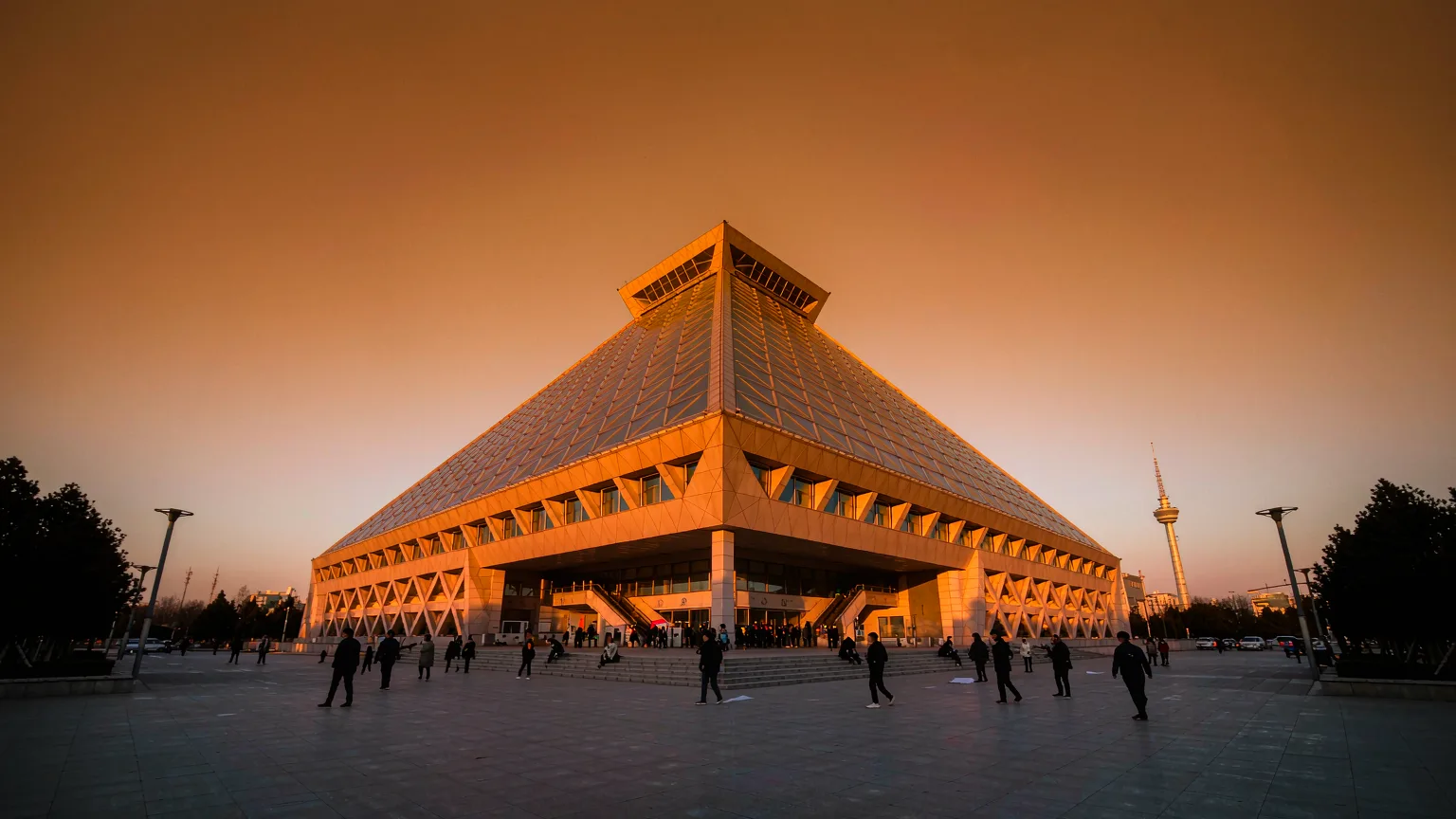
Henan Museum: First Lesson in the Civilizational Datum
The seven days' first lesson sits in Henan Museum. The main hall runs era by era, Jiahu bone flute, Fu Hao's owl zun, the lotus-and-crane square hu, the Four Deities mural, most of the nine flagship treasures on one line, raising a timeline on which the next six days can all be hung.
View with questions: astronomical instruments echoing Mount Song, bronze hoards echoing the Shang capital, then revisit after the week to double the yield; add the ancient music concert when a session falls.
The Shang Site Museum and Wall: The City's Foundation
Day one's afternoon goes to the city's bedrock: Shang ramparts from thirty-six centuries ago still ring downtown, the museum built against the wall, bronze hoards and rammed-earth profiles turning the words Shang capital into physical evidence.
Exit onto the wall walk and watch three millennia of cohabitation, traffic outside, old courtyards within, the most primary site in the city, straighter than any guide script.
The Confucian and City God Temples: Day Two's Temple Morning
Day two's neighborhood morning starts on East Street with the paired temples. The Dacheng Hall's bearing and the City God opera stage's Ming-Qing detail form the old city's signature architecture, ninety minutes combined.
Traditional events often open the Confucian courts, children practicing calligraphy on open days, and the glazed screen wall is the City God temple's photo prize; sweep the old shops along East Street after, taking in the old town's street life.
The Erqi Tower and Dehua Street: Where Modern Memory Lands
The afternoon's Erqi Tower snaps the timeline from Shang to modern: the memorial to the 1923 rail strike at the city's geometric center, free to climb, labor-history exhibits framed against the old town through the windows.
Dehua Street at the tower's foot is the century-old port's root, worth a photo-wall pass before dinner; return to the square at dusk when the joined towers light up, the old city's closing image.
Pingdeng Street Heritage Quarter: Day Three's Craft Lesson
Day three's morning goes to Pingdeng. The short lane inside the old south gate fills with heritage workshops: clay, sachets and woodblock prints all hands-on, a few tens of yuan to make and carry, turning two days of viewing into something in the hand.
Deep travel should do two: pull a woodblock print and shape a clay figure; the masters are often inheritors themselves, and a craft lesson with chat out-remembers any exhibition.
The Henan Yu Opera Grand Theatre: A Night of Clapper Song
Day three's night belongs to Yu opera. The provincial grand theatre is the art's top stage, Hua Mulan and Marshal Mu Guiying in constant revival, the clapper song's flight with Henan humor landing far harder live than on any recording.
Subtitle screens carry non-speakers through familiar historical plots; supper nearby after the finale carries the echo back to the hotel.
The Shaolin Compound: Day Four's Chan Patriarch Court
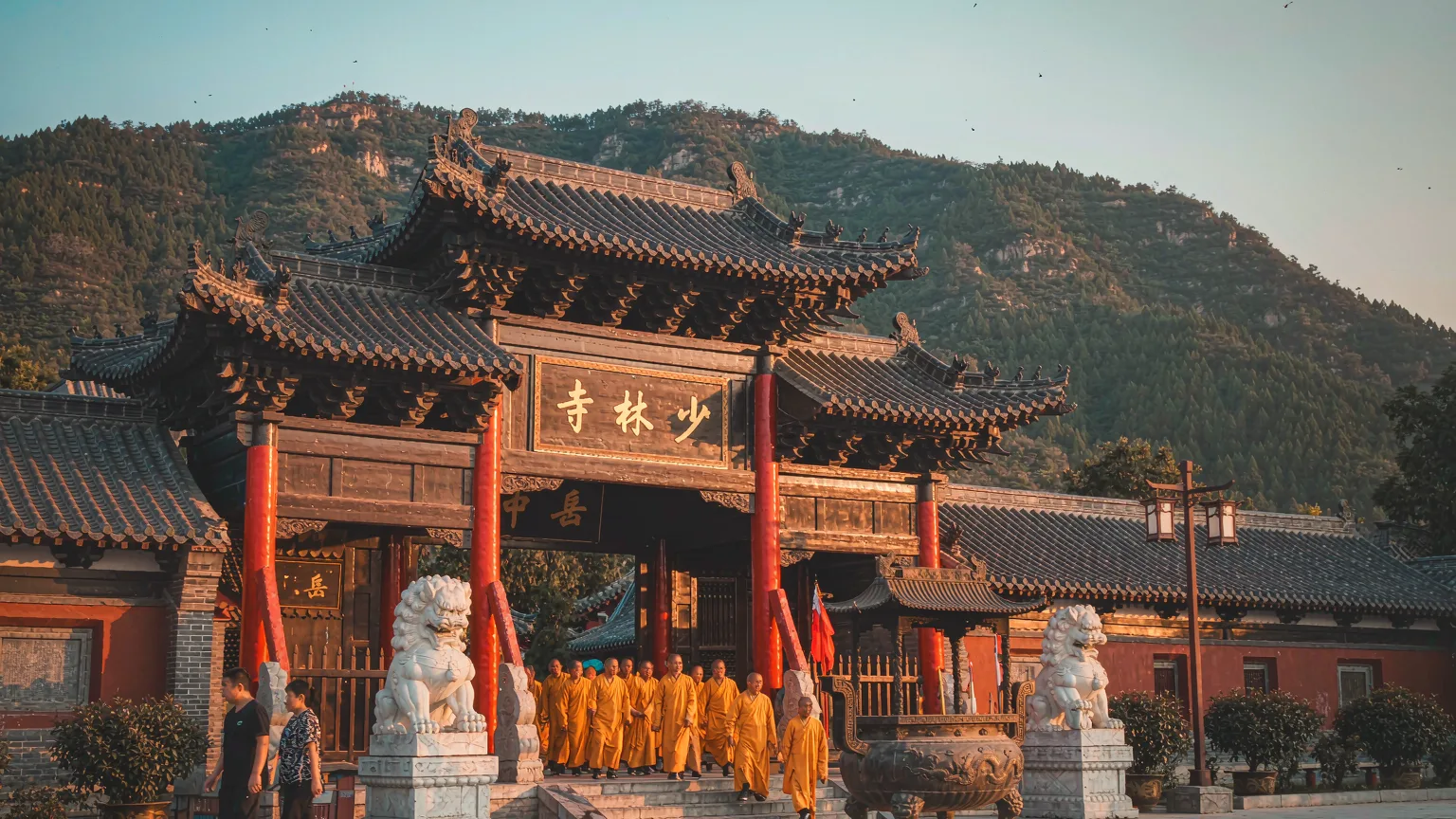
Day four climbs Mount Song, entering before eight thirty for the compound, its gate-to-library order most complete before the buses land, kung fu shows running to timetable.
Shaolin's layers run deeper than kung fu: Chan patriarch steles, imperial plaques, and the monk-trained dents in the Thousand Buddha Hall floor, all genuine; reserve two hours for the compound.
The Pagoda Forest: A Stupa Taxonomy Lesson
Ten minutes along the path from the compound lies the pagoda forest: two hundred-odd masters' stupas running Tang to Qing in one sweep, each tower's tiers and inscriptions mirroring the monk's standing, the most direct lesson in monastic lineage.
It remains a graveyard, quiet and within the boundary lines; frontal light gives the layered depth; compound plus forest make the mountain's core three hours.
Sanhuangzhai: Day Five's Hanging Path
Day five completes Mount Song's geology: the Sanhuangzhai path pinned to a vertical cliff with hundreds of meters below, the Book Cliff's quartzite pinnacles cutting the sky opposite, the mountain kindest before eight for both light and crowds.
The path runs about five kilometers one way, with turnback points to match your legs, the bridge ending it for the height-shy; spend the morning's legs here and rest downhill, banking strength for day six's river.
Songyang Academy: The Confucian Thread of Mount Song
The afternoon's Songyang Academy completes the three teachings' Confucian leg: one of the Northern Song's four great academies where the Cheng brothers lectured, the very stage of the snow-stand-at-the-door story, with millennia-old imperial cypresses and the towering Great Tang stele.
One slow hour suffices for the compact grounds; with Chan at Shaolin, Tao at Zhongyue, Confucian learning here and astronomy at the gnomon, the center-of-heaven-and-earth narrative stands complete.
The Zhongyue Temple: Day Six's Taoist Axis
Day six's morning walks Zhongyue Temple, the principal temple of the Central Peak: an axis running nearly a kilometer with halls rising tier by tier, the largest of the five-peak temples and the strongest statement of Taoist order.
Three must-sees, the Han stone guardians, the Song iron men and the cypress grove, ninety minutes down the axis; the morning's faith axis meets the afternoon's science in deliberate contrast.
The Gnomon Platform: The Yuan Astronomy Site
Day six's afternoon reaches the gnomon in Gaocheng town, built under the Yuan astronomer Guo Shoujian, China's oldest surviving astronomical structure, measuring the tropical year by shadow: one stone scale, one tall platform, one year's length.
The ratio reads only on site, so take a guide; the core of the center-of-heaven-and-earth monuments and the fitting last stop of the Mount Song heritage.
The Yellow River Culture Park and the Emperors Monument: Day Seven's Great River
Day seven's morning goes to the river. The Zhengzhou reach is a raised river, its surface riding level with the viewing terrace, silt-yellow currents hauling whirlpools northeast, while the hundred-meter Emperors monument faces the water, mass and river amplifying each other.
Two hours over the riverside path and monument plaza take in the river's geography and the ancestor narrative together; leave by midday and hand the afternoon to the drama city.
Only Henan Drama Fantasy City: The Contemporary Narrative in the Wheat
Day seven's afternoon into night belongs to Only Henan: dozens of theaters inside rammed-earth walls on themes of land, grain and inheritance, the main theater and Li Family Village cycle at the core, audiences moving show to show.
Deep travel should grant half a day plus the night: the spaces and daytime plays first, the lit earth walls and wheat fields another work entirely after dark, and about an hour back downtown after the finale.
The Hometown of the Yellow Emperor: Where the Week Closes
The last afternoon runs to Xinzheng, where the Yellow Emperor's hometown closes the week on the question of where we come from: a surname plaza tracing the hundred family names, and the worship square holding the grand ceremony each lunar March, the ancestral narrative's living site.
Free entry, two hours covering it; from Shang foundations through the mountain's three teachings to the first ancestor, the Central Plains narrative closes its loop, and Xinzheng's adjacency to airport and rail lets the week end without a wasted meter.
| Getting around |
|
| Budget | Entries total about RMB 900-1200 pp including Shaolin, the drama city and shows; all-in runs RMB 3800-5200 pp before long-distance transport. |
| Best time | Apr-May and Sep-Oct are ideal; the lunar March worship season and late-October Song foliage mark two peak windows. |
FAQs
Might seven days repeat or drag?
Not if layered by theme: museum, neighborhood, Shaolin, mountain-path, river, drama and ancestor days each hold a post, same subjects different angles; the real risk is fatigue, so one anchor a day and empty evenings for the market or rest.
Are two nights in Dengfeng worth it?
Yes, especially with the music ritual's night show: the finale-to-Zhengzhou ride runs a hundred minutes, and sleeping in Dengfeng converts those two hours into sleep; the town has ample hotels, hillside guesthouses cost more but feel better, by budget.
Which stops truly need a guide?
The institutional sites need guides most, the gnomon above all, stratified narratives reading nowhere without one; Shaolin, Zhongyue and the academy carry strong signage and work self-guided; on a budget, concentrate guides on the gnomon and museum special shows.
The best season, and a weather fallback plan?
April-May and September-October are ideal, summer climbs wanting dawn starts and winter closing the cliff path; the rain fallback swaps museum, drama city (mostly indoor theaters) and opera days against the mountain and river days, and seven days of structure flexes enough that weather never locks the plan.