
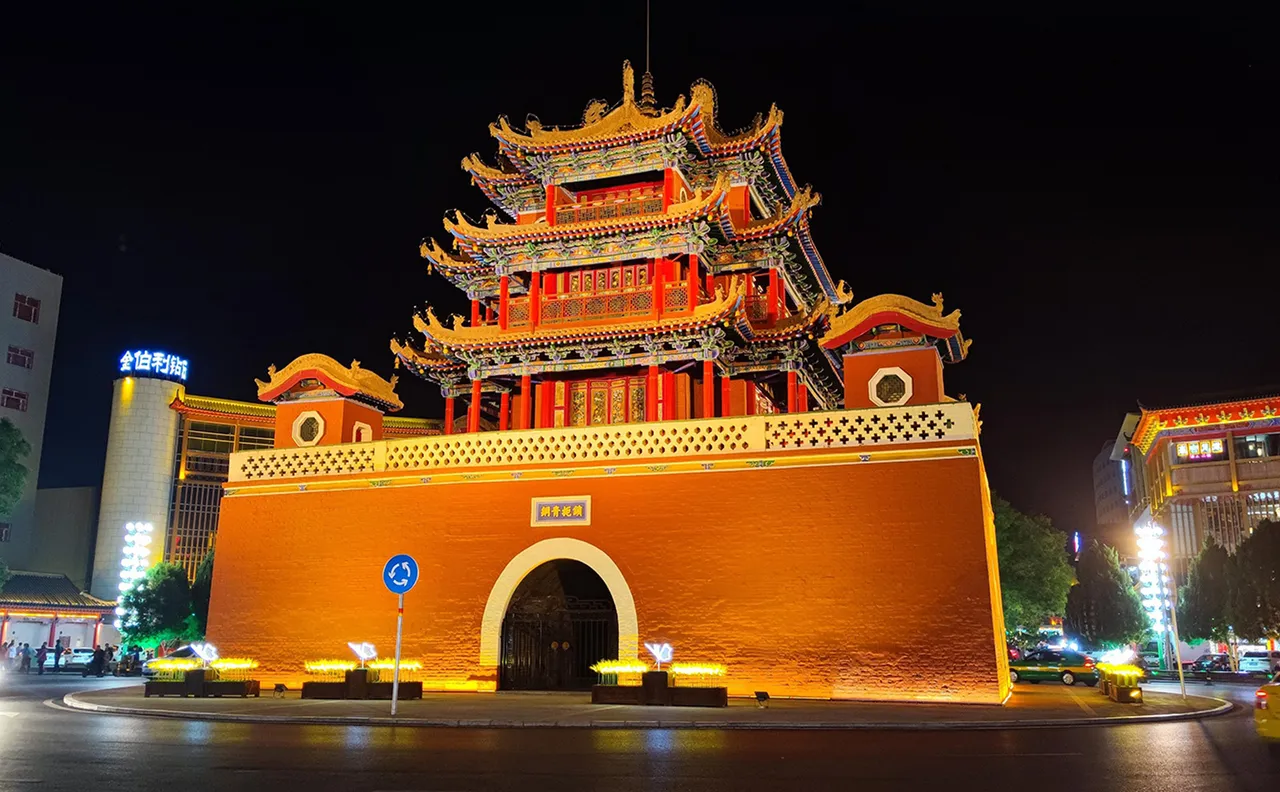
Most visitors to Zhongwei make a beeline for Shapotou, but the small city itself deserves a day. The old town radiates from the Drum Tower, with the Gaomiao Security Temple, old lanes and the densest snack streets within a few minutes' walk. The Gaomiao sits atop a raised platform on the old city wall, housing Confucian, Buddhist and Taoist figures in one temple, a living sample of three teachings under one roof, while the underground hells of sculpted figures deliver a different kind of shock.
The day is simple: climb the Gaomiao in the morning, eat haozi noodles near the Drum Tower at midday, wander the old lanes and the Rouyuan Gate relics by the river in the afternoon, then sweep the Red Sun Square night market at dusk. Walking plus short taxi hops, an easy pace, kind to your wallet, and the best way to understand Zhongwei.
Itinerary at a glance
| 09:00 | Gaomiao Security Temple: Three Universes in One Building |
| 11:00 | The Drum Tower District: A Proper Introduction to Haozi Noodles |
| 14:00 | Old Town Wander: Wall Relics and Everyday Lanes |
| 16:00 | By the Yellow River: Reading Zhongwei's Water from the Riverside Road |
| 18:30 | Red Sun Square Night Market: Every Zhongwei Snack in One Sweep |
The route, stop by stop
Gaomiao Security Temple: Three Universes in One Building
Built in the Ming dynasty atop a rammed-earth platform, the Gaomiao stacks its halls upward more than thirty meters, floating like a pavilion in the sky from afar. Its signature is the three teachings in shared halls, with Confucius, Laozi and the Buddha each in place, a rare surviving sample of folk belief merging all three.
The bigger shock is below ground: a tunnel from the platform leads to a full floor of sculpted tableaux of the eighteen levels of hell, complete with blade mountains, boiling cauldrons and demon wardens, crafted in the Republican era with detail that leaves visitors frightened and fascinated at once. Allow an hour; tickets run 20 to 30 CNY.
The Drum Tower District: A Proper Introduction to Haozi Noodles
Ten minutes on foot from the Gaomiao stands the Zhongwei Drum Tower, a Qing-era structure straddling the crossroads with all four arched passages still open to traffic, the absolute center of the old town. The lanes around it hide the city's most authentic flavors, and lunch target number one is haozi noodles.
Haozi noodles knead wild wormwood-seed powder into the dough, giving thin, springy strands served in tomato-and-egg or meat-sauce broth, about ten CNY a bowl. The old-school shops sit in the small streets near the tower, and the ones locals queue for at noon are always right; pair it with eight-treasure tea to cut the richness.
Old Town Wander: Wall Relics and Everyday Lanes
The afternoon has no agenda, just walking. Old Zhongwei keeps fragments of its Ming-Qing fortifications, with wall remnants and former gate sites scattered between residential blocks, ivy climbing the grey brick, old men playing chess outside courtyard gates. This unpolished street life is the entire pleasure of small-city wandering.
You will pass local markets selling fruit, dried goods and hand-shaped steamed buns. In selenium-sand melon season, July to September, have one cut open on the spot at half a yuan to one yuan per jin, prices unimaginable in eastern cities. When your feet tire, find an old teahouse, order a pot of eight-treasure tea with a plate of seeds, and settle in the way the old town intends.
By the Yellow River: Reading Zhongwei's Water from the Riverside Road
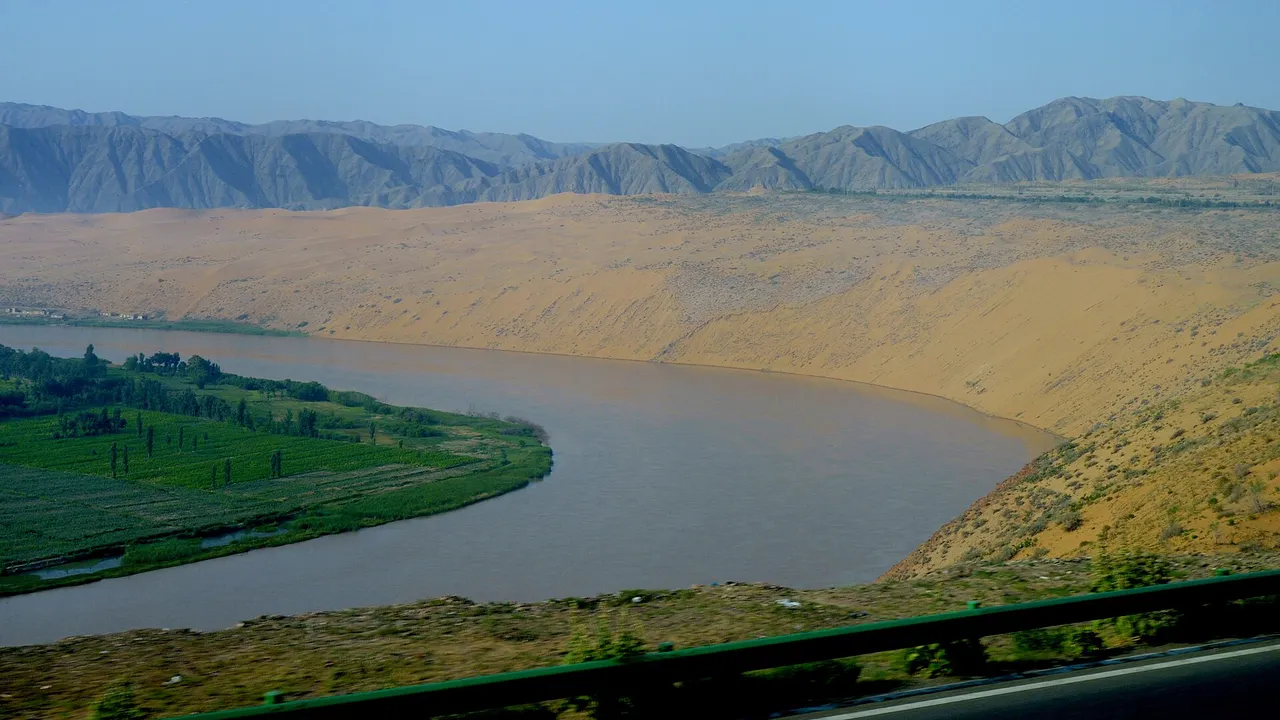
Twenty minutes north of the old town brings you to the Yellow River, where the riverside path is Zhongwei's own evening living room. The river runs wide and calm here with oasis farmland across the way; some swim, some fly kites, some set fishing rods. Unlike the rushing stretch at Shapotou, the urban reach shows the mother river in a rare gentle mood.
The Yellow River bridge stands along the path, and the bridgehead is the sunset spot. From June to September you may find local hide-raft operators running short ten-minute drifts at prices well below the scenic area, a light second serving of the Yellow River.
Red Sun Square Night Market: Every Zhongwei Snack in One Sweep
After six thirty the stalls around Red Sun Square open right on time, Zhongwei's loudest late-night food scene. Stalls run from one end to the other: stir-fried latiao noodles flying in iron woks, lamb skewers crackling over charcoal, chilled noodles and fermented sweet rice in a row, with selenium-sand melons and seasonal fruit ruling the far end.
The tactic is small portions, many stalls: two skewers, one plate of fried latiao, one bowl of chilled noodles, one glass of apricot-drink infusion, thirty to forty CNY per person and completely stuffed. The shopping district borders the market for a post-dinner stroll and tomorrow's road snacks, wrapping the old-town day neatly.
| Getting around |
|
| Budget | About 150 to 250 CNY per person excluding hotels: Gaomiao tickets 20 to 30 CNY, food and drink 80 to 120 for the day |
| Best time | Works year-round, with cool mornings and evenings even in summer; the night market peaks after six thirty |
FAQs
Is the Gaomiao worth a dedicated visit?
Very much so. It is a rare three-faiths complex in the northwest, the underground hell sculptures are an experience found nowhere else, tickets are cheap, and one to two hours suffices.
Is half a day enough for old Zhongwei?
Half a day covers the main points but skips the riverside dusk and the night market; give it a full day with the Gaomiao in the morning, lanes and river in the afternoon, market at night.
Is the underground section scary, and can kids enter?
The sculptures are quite realistic; young or timid children might best see only the upper halls, while most kids over ten find it fascinating rather than frightening, at the parents' discretion.
When is the night market least crowded?
It is thinnest right at the six-thirty opening when stalls are freshest; seven thirty to nine is peak, so arrive at opening for clear shots and an easy meal.