
Beihai's countryside hides in three kinds of water: mangrove fishing villages on the tide flats, banana-grove hamlets on the volcanic island, and island-dotted reservoir water. Three days chase no completeness, only slowness, watching Tanjia families dig the tide, islanders dry nets, and reservoir households ferry to market, the everyday no tour bus stops for.
The shape runs one fishing village, one sea island, one lake island, a rural sample a day. Effort stays deliberately slack, village walks and rides capped at half days, afternoons left to daydreaming, sweet soup and talk with locals.
Itinerary at a glance
| D1 08:30 | Golden Bay Mangroves: The Tide-Flat Lesson of the Tanjia Villages |
| D1 14:00 | Qiaogang Style Street: The Lane Fabric of a Returnee Village |
| D1 18:30 | Waisha Seafood Island: Village Dinner and the Homebound Fleet |
| D2 09:00 | The Crossing and Shengtang Village: A Hamlet in the Banana Groves |
| D2 14:00 | The Island Loop: Dripping Water Village and the Shoreline |
| D2 18:30 | The Nanwan Quarter: Islanders' Evening Tables |
| D3 05:30 | Five-Color Beach: The Wave-Cut Platform at Village Dawn |
| D3 10:00 | Shiluokou and Departure: Slow Hours on the Last Beach |
| D3 15:30 | Star Island Lake: Households on Reservoir Islands |
The route, stop by stop
Golden Bay Mangroves: The Tide-Flat Lesson of the Tanjia Villages
The three days begin on the flats. The ebb-tide mud at Golden Bay was the Tanjia villages' ancestral granary; follow the guide digging sandworms and reading mudskipper burrows, and within half an hour the phrase living off the sea gains a tactile meaning.
The fishing-village display beside the boardwalk re-creates Tanjia boat houses and gear, worth a look before leaving. Lunch at a village terrace nearby, sandworm congee with coconut rice, ingredients straight from the morning's flats.

Qiaogang Style Street: The Lane Fabric of a Returnee Village
Read Qiaogang differently in the afternoon: skip the snack rankings, read the village fabric. The returnee quarter's streets run square, self-built arcade houses doing small business at ground level, the fishing harbor one block over, the village's livelihood legible at a glance.
Step into the residential lanes behind the main drag, drying nets, shrimp-paste jars at doorways, chess players under trees, truer scenery than any signboard. Chat with the fisherfolk, most happy to talk landings and catches.
Waisha Seafood Island: Village Dinner and the Homebound Fleet
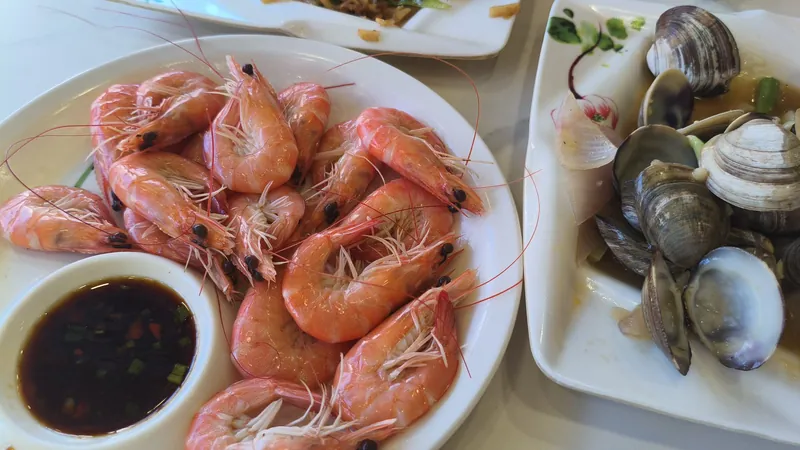
Night one dines on Waisha. Pick a terrace thick with locals, nothing lavish, one steamed fish and one plate of snails sufficing. Walk the embankment after, homebound boats lighting up one by one into the basin, the fishing narrative's most moving scene.
With the island crossing tomorrow, collapse your luggage into backpack mode tonight, island guesthouses being simple, light travel best.
The Crossing and Shengtang Village: A Hamlet in the Banana Groves
Cross to the island on day two and head straight for Shengtang village. The hamlet grew around the century-old church, lanes lined with banana groves and coral-stone old walls, chickens crossing the road at island time.
Walk the village slowly for an hour, reading lintels, the church-side vegetable plots and drying yards. Buy water at the village shop and chat with grandmothers at their doorways, they will point out the best angle for the church.
The Island Loop: Dripping Water Village and the Shoreline
Rent an e-bike after lunch and ride southwest to Dripping Water village. The hamlet clings to the cliff line, papaya and banana filling every yard, and past its edge open the ochre cliffs and wide flats of Dripping Water Screen.
The roads run gentle but the island sun is fierce, so keep loops under two hours. Stop and shoot at will, fishing boats, groves and volcanic rock in one frame only cycling collects.
The Nanwan Quarter: Islanders' Evening Tables
Dinner returns to Nanwan, closer to islander life than the tourist terraces: stir-fry houses writing menus on blackboards, seafood priced by the day's landings, neighboring tables filled with workers off shift.
Order from the blackboard, not from any article. Walk the bay's arc after, fishing-boat lamps mixing with guesthouse lights, the island night running soft and long.
Five-Color Beach: The Wave-Cut Platform at Village Dawn
Day three's dawn goes to Five-Color Beach. Villagers and photographers already work the flats before sunrise, the wave-cut platform reading orange-red and blue-grey in first light. Beyond the sunrise, watch villagers gathering what the tide delivered, the difference between this and the sightseeing version.
After sunrise, breakfast and checkout, bags at the desk. Two light stops remain for the morning, pace slack, no regrets before the boat.
Shiluokou and Departure: Slow Hours on the Last Beach
By mid-morning Shiluokou runs thin with visitors, fine sand and flat beach made for barefoot wandering. Sit and watch boats come and go, replaying three days of flats, hamlets and groves.
Reach Xijiao wharf an hour before sailing. Looking back from the deck, Weizhou shrinks to a blue-green smudge, the rural three days closing inside that smudge.
Star Island Lake: Households on Reservoir Islands
Back in Beihai, skip downtown and charter north toward Star Island Lake in Hepu. Hundreds of islands dot this reservoir, once a filming site for the CCTV Water Margin, and a boat threading the isles finds the lake's quiet a different texture from the sea entirely.
Households and fish rafts sit on the islands, and the boatman is often a resident, conversation outscoring scenery. Return to Beihai by dusk, the three days' waters, tide-flat sea, island sea and reservoir lake, finally merging.
| Getting around |
|
| Budget | RMB 700-1200 pp: return ferries about RMB 240-360, island fee RMB 98, cycling and experiences extra. |
| Best time | April-May and October-November ride kindest; summer groves blaze green but the sun punishes, so cycle at dawn or dusk only. |
FAQs
How does the rural line differ most from the coast line?
Pace and lens: the coast line moves at attraction density, the rural line at life's pace, one core area a day with afternoons mostly blank. Choose the coast to tick Beihai off, the rural line to live inside its ordinary, or splice both into four or five days.
Is island cycling safe, and what if I cannot ride an e-bike?
The loop runs flat and quiet, though sun and sudden gusts are real risks: helmet on, speed low, noon avoided. Non-riders manage entirely on shuttles plus walking, with no loss of reach, only freedom, and the village lanes demand walking anyway.
Is Star Island Lake worth the detour?
For travelers sated with sea and wanting different water, yes: the lake islands' hush and fisher households exist nowhere on Beihai's coast. On tight legs or budget, drop it and rest downtown, the itinerary still whole.
Any etiquette for talking with people in fishing villages and hamlets?
Greet before shooting, buy something small before chatting; harvests and family talk fine, income figures rude; thank helpers without paying; and on foraging, stay with the guide, never alone on strange flats.