
To eat Changbaishan seriously as pure nature, three days is the passing grade. The north slope delivers the lake's classic angle with waterfall and springs, the west slope trades over fourteen hundred steps for the open panorama, and between them come Mojie's dawn mist, the sunken valley forest and the Lushuihe pine woods, with hot water returning your knees every night.
The route's logic runs on lodging: two nights in Erdaobaihe beside the north slope, then move west for the final day, threading the west slope and Jinjiang Canyon and exiting from Xianrenqiao or Songjianghe with no retracing. The iron rule of lake luck applies to both slopes: whichever sky opens, watch the lake from that side.
Itinerary at a glance
| 08:30 | Heaven Lake from the North Slope: The First Wager of Three Days |
| 11:00 | Changbai Waterfall: Day One's Main Course |
| 13:00 | Julong Hot Springs and the Sunken Forest: Day One's Closing Pair |
| 06:00 | The Mojie Scenic Area: Day Two's Misty Overture |
| 10:00 | North Slope Reprise or Forest Recovery: Day Two's Flexible Hours |
| 13:30 | Lushuihe National Forest Park: Pines and a Float |
| 08:30 | Heaven Lake from the West Slope: The Straight Answer of 1,442 Steps |
| 12:30 | Jinjiang Grand Canyon: The West Slope's Afternoon Geology Class |
| 17:00 | Xianrenqiao Hot Spring Resort: Three Days Closed in Hot Water |
The route, stop by stop
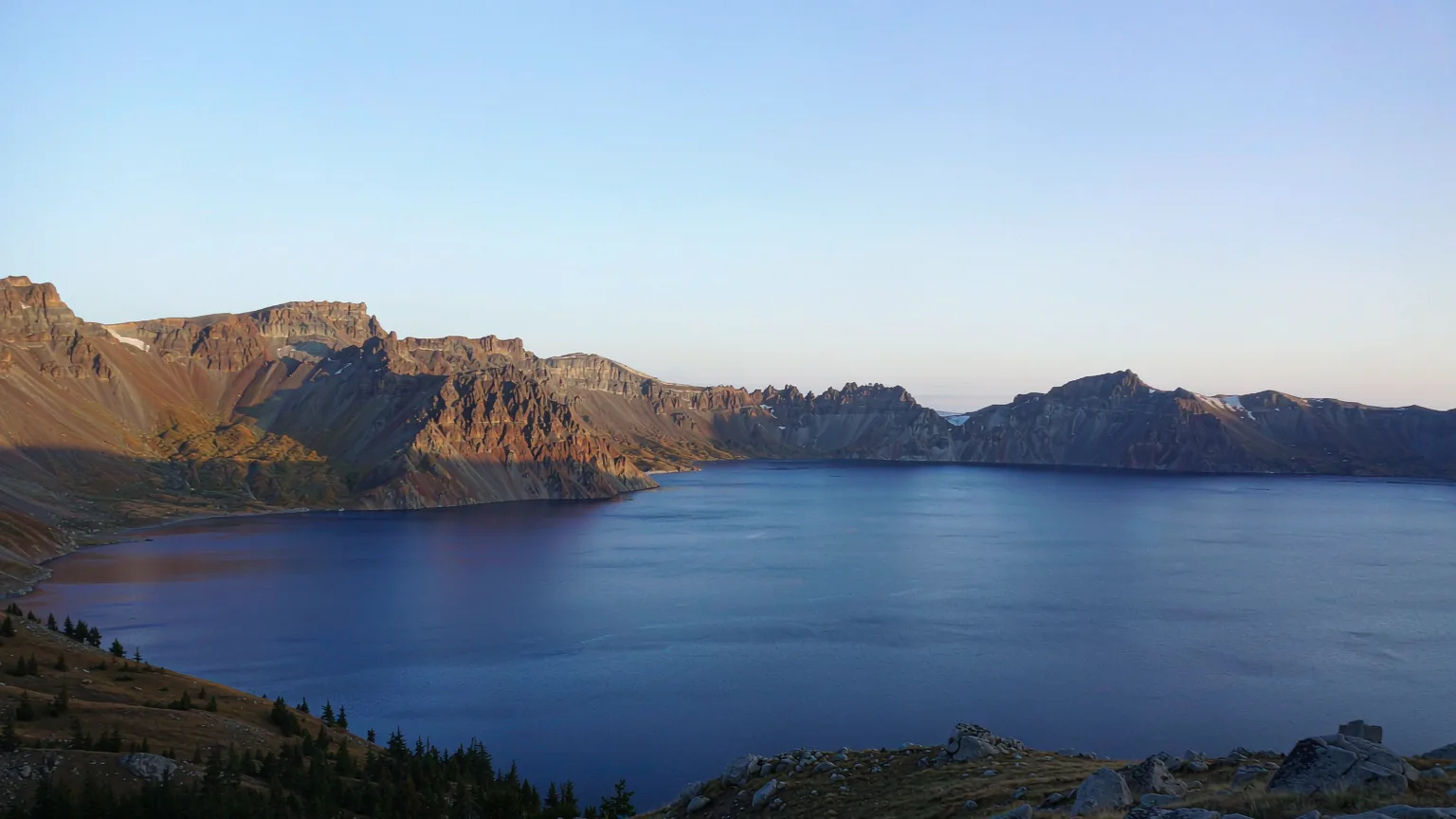
Heaven Lake from the North Slope: The First Wager of Three Days
Day one hits the north rim early, before the cloud builds. Once the shuttle-to-jeep flow is familiar, moving through the mountains on the next two days gets much smoother. The lake lies at over 2,500 meters ringed by sixteen peaks, and the moment the sky opens the whole caldera goes quiet.
No luck? No anxiety, that is what three days are for: the west angle comes tomorrow, and Mojie's dawn offers its own substitute. Close day one with the waterfall and springs, soak your feet in town, and refuse to redline the pace.
Changbai Waterfall: Day One's Main Course
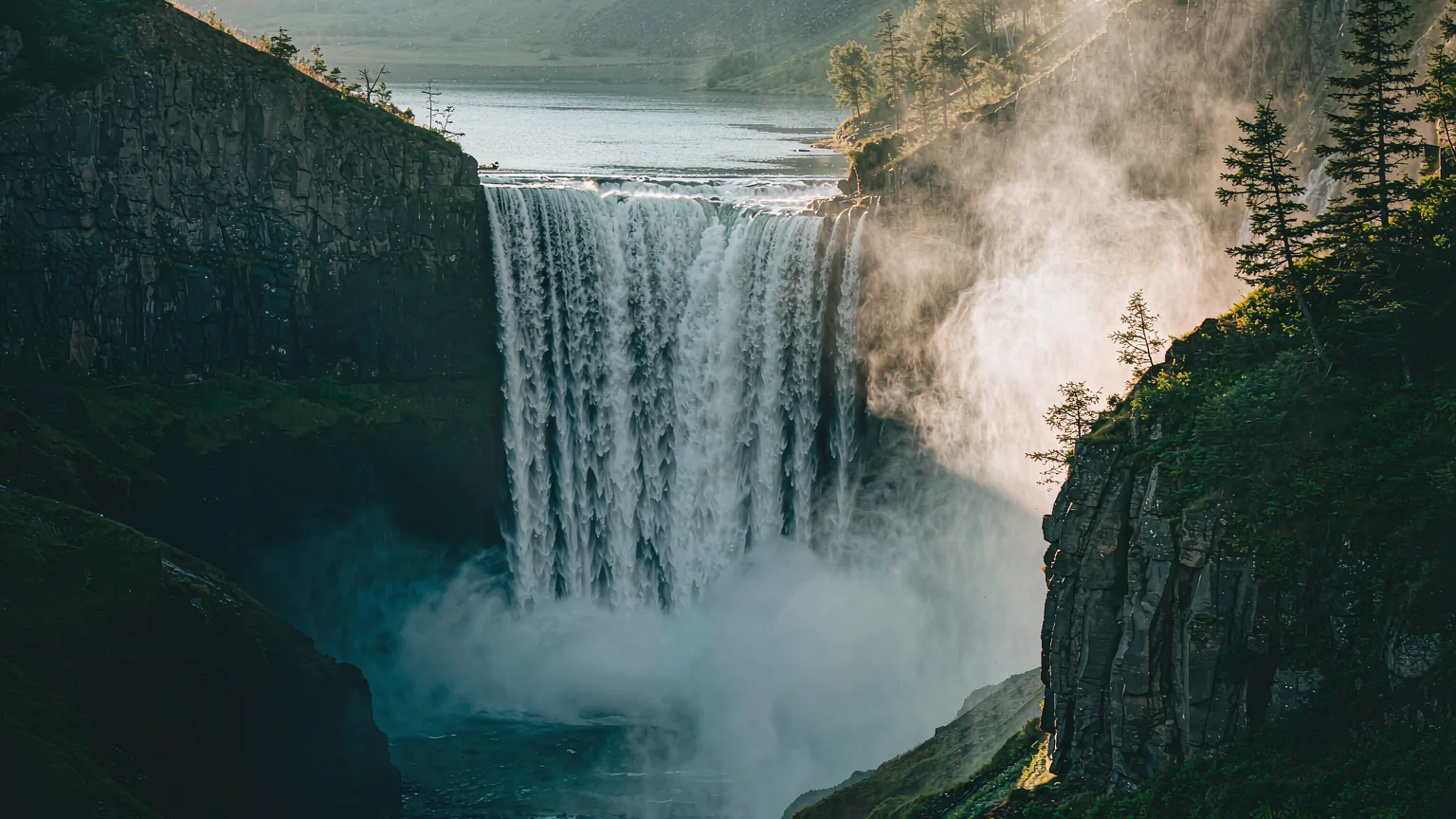
Down from the rim, straight to the falls: a bit over a kilometer of boardwalk to a sixty-eight-meter drop that announces itself early. At high water the roar swallows the crowds, and in late September the Erman's birch turns gold on both sides, the north slope's most photogenic stretch.
The Julong spring belt steams at the falls' feet, white vapor drifting up the valley. Keep the round trip inside an hour and save your legs for the sunken forest.
Julong Hot Springs and the Sunken Forest: Day One's Closing Pair
The springs share the waterfall line; steam a bag of eggs at the vents for afternoon tea, then ride the shuttle to the sunken forest entrance. The valley forest is a collapsed-strata wonder, canopy spreading below the rim boardwalk, ninety minutes round trip, the woods several degrees cooler than outside.
Exit after the pair and find a Korean-style diner in town, then a hot soak. Day one's assignment, lake, falls, springs and forest, already exceeds most visitors' entire day trip.
The Mojie Scenic Area: Day Two's Misty Overture
Mojie is a riverside belt near Erdaobaihe where morning cold and spring water cook up river fog that hangs on the trees as rime, the half hour around sunrise being the magic window. Summer gives less mist but lovely dawn light; winter can deliver whole trees of rime, the full reason photographers set alarms here.
Walk the boardwalk forty minutes to an hour, shooting the mist against the light. Then back to town for breakfast, either re-entering the north slope for corners missed yesterday or simply resting half a day.
North Slope Reprise or Forest Recovery: Day Two's Flexible Hours
Day two's morning stays flexible: if fog sealed the rim yesterday, buy another jeep ride and bet again; if the lake is banked, walk the north slope's lesser corners, or spend a gentle half day in town museums and the greenway, banking legs for tomorrow's steps.
Lunch on an iron-pot stew in town, be back at the hotel by three to pack, and confirm tomorrow's car or shuttle time. The move west takes around two hours, so do not run it into the dark.
Lushuihe National Forest Park: Pines and a Float
Day two's afternoon heads north to Lushuihe, the most proper old-growth experience at the mountain's foot: mother Korean pines counted in centuries, cool shade below, the air thick with resin. Summer brings a gentle float on the Biquan River, friendly to first-timers; winter recasts it all as snowy forest.
The park is large and easiest by private or chartered car, two to three hours for the core. Return to Erdaobaihe for the second night and another soak.
Heaven Lake from the West Slope: The Straight Answer of 1,442 Steps
Day three moves west at dawn and hands the morning's best legs to the summit. The 1,442 steps are a famous self-test, steep but well broken with landings, forty minutes to an hour for ordinary legs. At the top the trade reveals itself: the west side frames the lake in panorama, boundary stone and all sixteen peaks with nothing withheld.
Down hurts knees more than up, so strap them on at the base. In heavy cloud, check the live feed at the gate before committing; the steps offer no shelter, and wind-rain up there is misery.
Jinjiang Grand Canyon: The West Slope's Afternoon Geology Class
En route from the west gate, Jinjiang Canyon cuts deep through volcanic rock, water and wind carving a rift the boardwalk follows in a loop, rocks shaped like beasts and towers. The light inside runs deep, richest at three or four in the afternoon when the slanting sun enters the gorge.
The loop takes just over an hour on gentle grades. It is the last natural sight of the three days; afterward, dinner in Songjianghe town or the resort, with one more soak if time allows.
Xianrenqiao Hot Spring Resort: Three Days Closed in Hot Water
From Songjianghe toward Fusong, Xianrenqiao town sits on the way, its resort famous for radon springs, indoor and outdoor pools in a quiet valley. After a day of steps, sinking into hot water is the route design's most fitting close.
Stay the night and exit via Fusong next morning, or soak and catch an evening shuttle or car to the rail station. The outbound side travels looser than the inbound; book tickets on that principle.
| Getting around |
|
| Budget | Both slopes' tickets, shuttles and summit jeeps run about RMB 380, two days of chartered car RMB 600-900, with two nights and meals, three days total roughly RMB 1,300-2,000 pp. |
| Best time | June to September with both slopes open is ideal, mid-September foliage is peak; winter carries high closure risk on the west steps, so switch to the north slope plus snow programs. |
FAQs
How likely is it to miss the lake all three days?
Low but real, since mountain fog is simply the default. Strategy: schedule each rim attempt in the day's best weather window, retry from the west after a failed north view, and use the live camera feeds at the gates. Two hits in three attempts is the working odds, and most visitors who plan three full days do see the lake.
Do the two slopes share one ticket or sell separately?
Separately. North and west each sell their own entry-plus-shuttle bundle, summit jeeps ticketed per slope, with any combo discounts following that year's policy. Buy north while based in Erdaobaihe, west after moving; a same-day cross-slope ticket generally does not exist, so budget two admissions into the plan.
Are the west slope steps friendly to bad knees?
Not exactly, but compromises work: slow in segments, knee straps on beforehand, trekking poles mandatory, with fifty minutes up being the realistic pace. With an old injury, turn at the mid-level platform or decide after the gate's live feed; the north slope's jeep-to-rim is the reliable stand-in for the panorama.
How should the three days change in winter?
Two core changes: the west steps often close for ice, switching the rim to the north slope jeep with full anti-slip gear mandatory; Lushuihe's float halts, replaced by Mojie's dawn mist plus snowy forest walks. Slot resort skiing into day two's afternoon, keep the Xianrenqiao soak, and three days still run full.