
Changchun runs on three keywords: the Manchu State, cinema and forest. A single day can walk through all three. The Museum of the Imperial Palace of the Manchu State is unavoidable for the modern history of the Northeast, where the last emperor Puyi sat as a puppet for fourteen years; the grounds are compact but the content is heavy, so give it three full hours.
There is no need to choose between Jingyuetan and the film studio in the afternoon. Jingyuetan sits in the southeast suburbs with direct light rail, so set out before noon for a lap of the forest. Back in town, the Film Studio Site Museum and Zheyoushan face each other across Hongqi Street, one holding the memory of New China's cinema, the other a recently viral retail complex. Light rail plus metro covers the whole day; in winter, cut your walking in half.
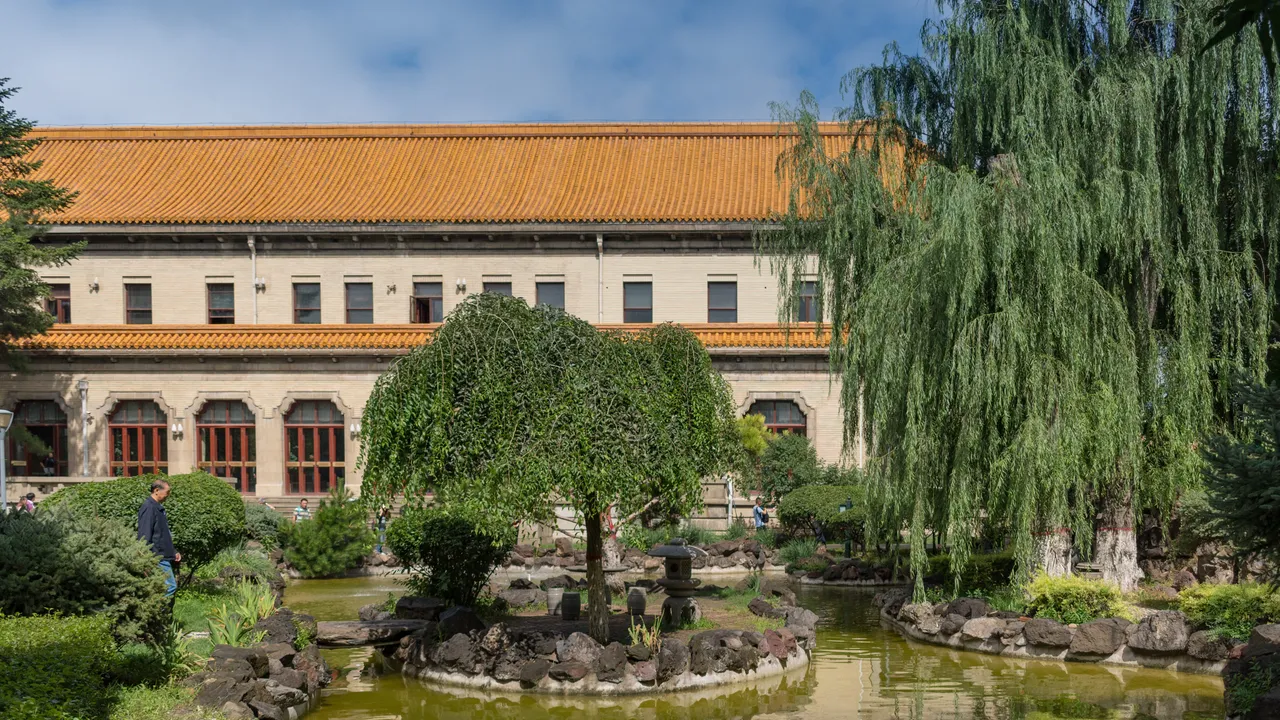
Itinerary at a glance
| 08:30 | Museum of the Imperial Palace of the Manchu State: The Puppet Emperor's Fourteen Years |
| 11:30 | Jingyuetan National Forest Park: A Man-Made Sea of Trees |
| 14:30 | Changchun Film Studio Site Museum: The Cradle of New China's Cinema |
| 17:30 | Zheyoushan Hill Complex: An Evening Inside the Cave Town |
The route, stop by stop
Museum of the Imperial Palace of the Manchu State: The Puppet Emperor's Fourteen Years
This was never a palace in the classical sense; it is where Puyi lived and worked as chief executive and then emperor of the Japanese-controlled Manchu State. Jixi Tower housed him and Empress Wanrong, the small office in Qinmin Tower is where he signed away what remained of his authority, and Tongde Hall, built later, keeps its crystal chandeliers and underfloor heating exactly as installed.
Visit with a question in mind: why does an emperor's residence look so much like a cage? The exhibition runs from his restoration fantasies to his capture by the Soviet army, and the adjacent Museum of the Northeast's Fall to Occupation fills in the fourteen years with objects and footage. Three hours minimum; history lovers should budget double.
Jingyuetan National Forest Park: A Man-Made Sea of Trees
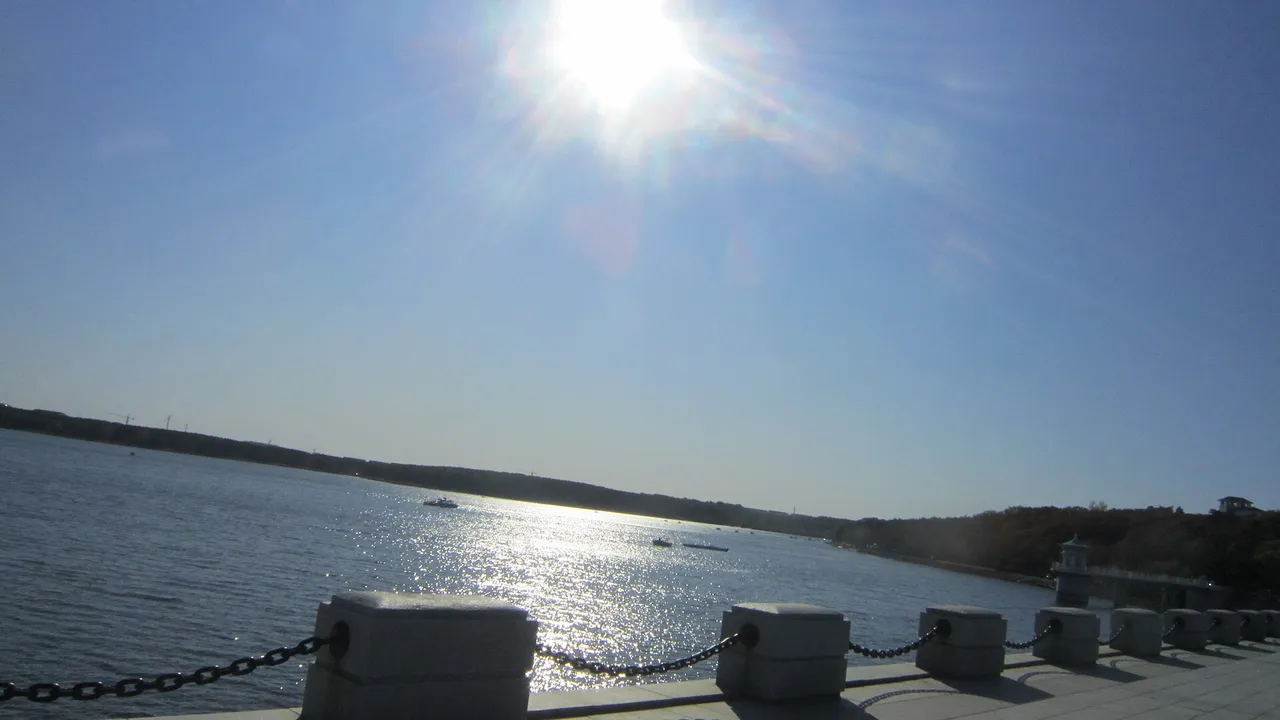
From the palace, light rail line 4 to a transfer onto line 3 puts you at Jingyue Park station in about an hour, moving from a history site straight into a forest lung. The lake formed behind a dam and curves like a crescent moon; it is twinned with Sun Moon Lake in Taiwan, and the eighteen-kilometer loop road circles through stands of black pine and Scots pine.
With limited time, walk the classic stretch from the Goddess Square to the lakefront, then rent a sightseeing bike for an hour of lakeside riding. In winter the park turns into a ski and snow base with activities on the frozen surface; dress heavily, since the lakeside wind bites harder than in town.
Changchun Film Studio Site Museum: The Cradle of New China's Cinema
The studio grew out of a Manchu-State-era plant, was reorganized after 1945 as the Northeast Film Studio, and became the cradle of New China's cinema, producing heroes and classics across three decades. The museum now fills the original soundstages and mixing building, with vintage projectors, props and storyboards arranged by decade.
Half the fun is recognizing faces: the familiar stars and lines of old films all trace back here. The dubbing workshops hold visitors longest, since the sight of voice actors mouthing classics is collective memory made physical. Two hours, and film fans will stall in the prop rooms.
Zheyoushan Hill Complex: An Evening Inside the Cave Town
Across the street from the film museum, Zheyoushan packs a mountain village into a shopping complex: indoor switchback paths, caves, pavilions and a lookout tower, with shops terraced along the slope so that climbing feels like walking a miniature town of the Northeast. The moment the lights come on is its best hour.
Eat dinner on the hill, where street snacks and Northeastern restaurants line the paths, and climb the tower for a view over Hongqi Street at night. Tour groups thin after nine, locals take over, and the whole place relaxes. Metro and buses on Hongqi Street make the exit easy, and your step count resets to zero here.
| Getting around |
|
| Budget | Tickets and meals run about RMB 250-400 pp: roughly RMB 80 for the palace museum, RMB 30 for Jingyuetan and RMB 90 for the film museum; check posted prices on site. |
| Best time | May to September is most comfortable; December to February drops below minus 20 degrees Celsius, though the snow scenery has its own charm, so bring full winter gear. |
FAQs
Can I really fit both the palace museum and Jingyuetan in one day?
Yes, if you hold the clock: enter the palace at 8:30, leave for Jingyuetan at 11:30 with an hour on the light rail, return to Hongqi Street for the film museum at 14:30, and close at Zheyoushan. The cost is a highlights-only lap of the lake; a full loop or skiing needs another visit.
Do I need to book palace museum tickets in advance? How do non-locals buy?
Yes. Book with real-name registration on the official account and enter with ID or passport; in peak season reserve a day or two ahead. If slots run out, cancellations drip back and weekday mornings succeed most often, otherwise aim for an afternoon slot.
Does this route still work in winter?
It works, and winter has its own appeal: both museums are fully indoors, and Jingyuetan's snow and ice activities are annual highlights. Daylight lasts only about seven hours and darkness falls by mid-afternoon, so shift everything earlier and dress for minus twenty.
Is Zheyoushan worth it, or just commercial hype?
Worth it with the right expectations: it is a retail complex selling the experience of a hill town indoors, not a sight as such. With one day in the city, a pass through the lights and architecture suffices; to shop the small stores and eat properly, come after 9 pm when the crowds thin.