
Changchun's cultural base is two histories: fourteen years of the puppet Manchu State, and the founding years of New China's cinema. Both have first-rate on-site venues, since the palace is the original site and the film museum occupies the studio's own soundstages; real objects beat any survey text. This day is built around those two places.
The midday transfer is deliberate breathing room: three hours inside the palace leave you heavy, so the street-level walk along Xinmin Street resets the mood while adding the ministries' civic scale. The afternoon film thread warms things up, and the day closes under Zheyoushan's lights, from the heaviest to the merriest.
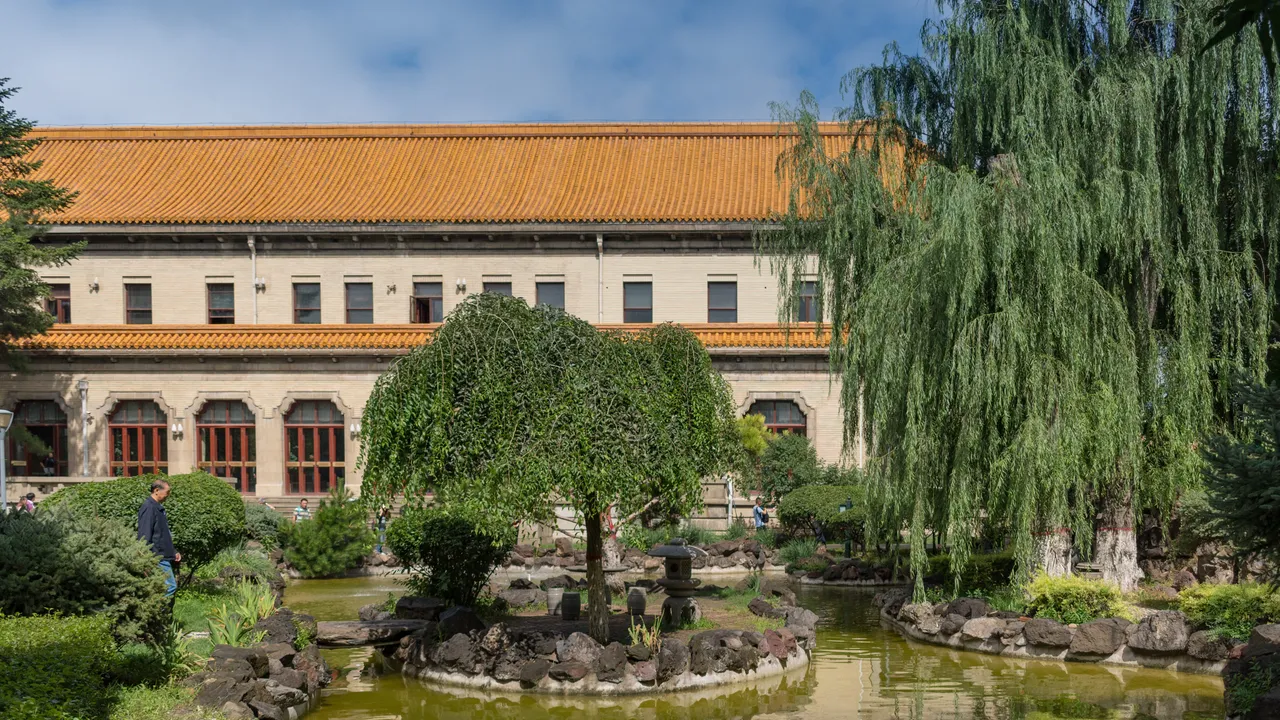
Itinerary at a glance
| 08:30 | Museum of the Imperial Palace of the Manchu State: Fourteen Years with a Guide |
| 12:30 | Xinmin Street and Culture Square: The Ministries at Street Scale |
| 14:30 | Changchun Film Studio Site Museum: From Film Plant to Film History |
| 17:30 | Zheyoushan: From History to the Present |
The route, stop by stop
Museum of the Imperial Palace of the Manchu State: Fourteen Years with a Guide
On a culture day, go deeper. Enter at opening and start with the buildings themselves: Jixi Tower holds the rooms where Puyi and Wanrong each lived in isolation, Qinmin Tower the signing office and audience hall, and Tongde Hall the late-regime mix of extravagance and unease, with an air-raid tunnel below whose damp cold is itself an exhibit.
The Museum of the Northeast's Fall to Occupation is the second half, running from the 1931 incident to liberation with dense objects, photographs and oral-history video. Do palace first, museum second; the concrete texture of the emperor's life anchors the larger history. Four hours is not excessive.
Xinmin Street and Culture Square: The Ministries at Street Scale
After lunch, move to Xinmin Street. Unlike the palace's closed compound, the puppet power organs lined up here as offices: the general affairs bureau building mimics a miniature parliament house, and the military and economic ministries hold their own frontages, hybrid roofs glimpsed behind poplars.
The street's north end meets Culture Square, where the Geology Palace rose on the foundations of the puppet state's never-finished grand palace; the formal palace Puyi never got became a geology school's teaching building. From the square, looking down the axis explains half the era's urban planning. Forty minutes to an hour of walking.
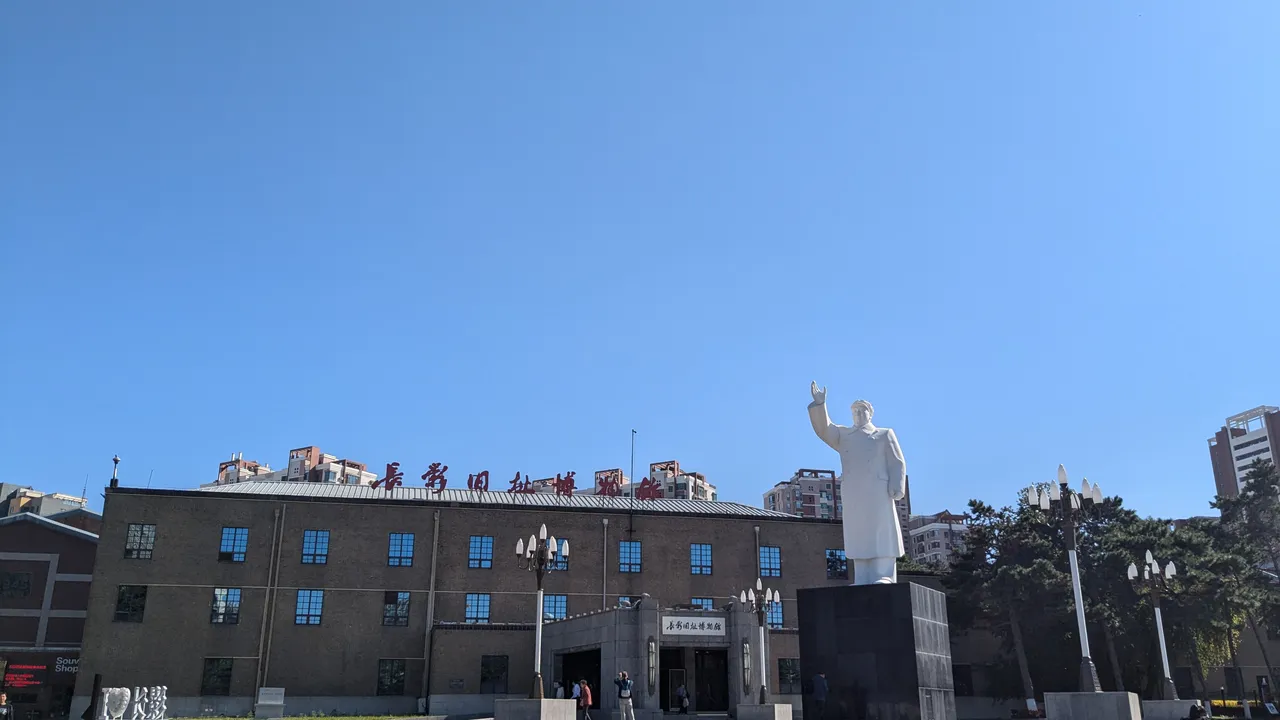
Changchun Film Studio Site Museum: From Film Plant to Film History
The afternoon starts from cinema. The museum's site was one of Asia's largest studios, and its dubbing workshop gave generations of Chinese their first foreign films speaking Chinese; the exhibition line runs through print processing, mixing rooms and the prop depot, tracing how a film was made.
On a culture visit the point is not nostalgia but the system: how a studio was at once factory, school and propaganda unit, answered by the soundstage trusses, the title-machine type trays and the production office schedules. In two hours, the original-voice comparison recordings in the dubbing hall deserve their own ten minutes.
Zheyoushan: From History to the Present
Close the culture day on Hongqi Street, where Zheyoushan is the right landing: a sample of the city's current consumer culture and viral aesthetics, hill architecture, national-trend shops and street performance under one roof. In the design shops, note how local creators recycle film and industrial motifs, echoing the two histories you walked through.
Eat on the hill at a Northeastern kitchen with a lit stove. The day ran from puppet-era heaviness through cinema's golden years into tonight's bustle, and the timeline closes in the caves' lantern light.
| Getting around |
|
| Budget | Mostly paid museums, about RMB 200-300 pp: roughly RMB 80 for the palace, RMB 90 for the film museum, the rest meals and transit. |
| Best time | Works year-round in climate-controlled halls; in peak season the palace's morning slots fill fast, so book two days ahead. |
FAQs
Do one ticket cover both the palace and the occupation history museum?
Yes, both sit in one compound, one ticket covers all zones, and the entrance is shared. Tour the palace buildings first, rest twenty minutes at the park's food point, then take the occupation museum; the combined content is heavy and digests better in segments.
Is this route too heavy for someone without deep history interest?
The design already balances mood: a heavy morning, a street walk at noon, a clearly warming film museum in the afternoon, and a purely festive evening at Zheyoushan. If four hours still run long, compress the occupation museum to its one-hour core line and give the saved time to the studio.
Why is the provincial museum not on this route?
The Jilin Provincial Museum sits toward Jingyue, strongest in painting, calligraphy and Northeastern folk relics, and deserves its own half day. It is not on the way between the palace and the studio, and squeezing it in would cost depth at both original sites. With an extra day, pair it with Jingyuetan as a perfect complement.
Is photography allowed inside the museums?
Both museums allow flash-free photography, with no-shoot signs in some special exhibitions and replica rooms; follow posted rules. Several palace rooms are deliberately dimmed to protect objects, so phone shots blur, and the audio guide's stories matter more than the pictures.