
Changsha's cultural wealth stacks in four layers: the Western Han tombs of Mawangdui, the Three Kingdoms Zoumalou slips, the Song-era Yuelu Academy that still teaches today, and the Ming wall of Tianxin Pavilion. Taking one strand of each in a single day runs from tombs to academies, slips to ramparts, the city's skeleton read end to end.
The homework is booking: free slots at the Hunan Museum need days of advance stalking, while the Jiandu and Changsha museums admit free with ID and the academy sells at the gate. The four stops split east and west, chained by metro plus two taxis, a looser rhythm than it sounds.
Itinerary at a glance
| 08:30 | Hunan Museum: Two Readings of Mawangdui and Hunan |
| 12:30 | Yuelu Academy: The Hunan School of Thought in Its Hall |
| 16:00 | Changsha Jiandu Museum and Tianxin Pavilion: From Three Kingdoms Paperwork to the Ming Wall |
| 19:00 | Changsha Museum: A Period Written by the Northbound Xiang |
The route, stop by stop
Hunan Museum: Two Readings of Mawangdui and Hunan
Enter at opening and take the Mawangdui galleries from their third-floor start: the sheer silk robe, the T-shaped silk painting and the cloud-patterned lacquers lined up in sequence, ending before Lady Xinzhai and the reconstructed pit. The exhibition narrates from banquets and dress to views of death and life, far richer than any object list.
The Hunan People galleries, often skipped, answer a question: how these mountains and lakes shaped a people famous for endurance, patience and grit. After both floors, the city's own behavior acquires its footnote.
Yuelu Academy: The Hunan School of Thought in Its Hall
After lunch, cross the river and give the afternoon to Yuelu Academy. Founded in the Northern Song, its heart is the lecture hall where Zhu Xi and Zhang Shi once co-lectured to crowds said to have drunk the horse pond dry. The Seek Truth from Facts plaque has hung for a century, predating its fame as any school motto by half a century.
The Imperial Sutra Library on the rear slope still collects books, an unbroken line of learning, and the compound still teaches as part of Hunan University. Walk slowly: the gate couplet, the hall's plaques and the stele corridor take two hours to read properly.
Changsha Jiandu Museum and Tianxin Pavilion: From Three Kingdoms Paperwork to the Ming Wall
Taxi back into town for the Jiandu Museum first. In 1996, one old well at Zoumalou yielded over a hundred thousand Wu-kingdom bamboo slips, more than every previous slip find in China combined: household registers, tax rolls and letters on wood and bamboo, a visit straight into a Three Kingdoms county office. Free entry, thin crowds, the city's most underrated museum.
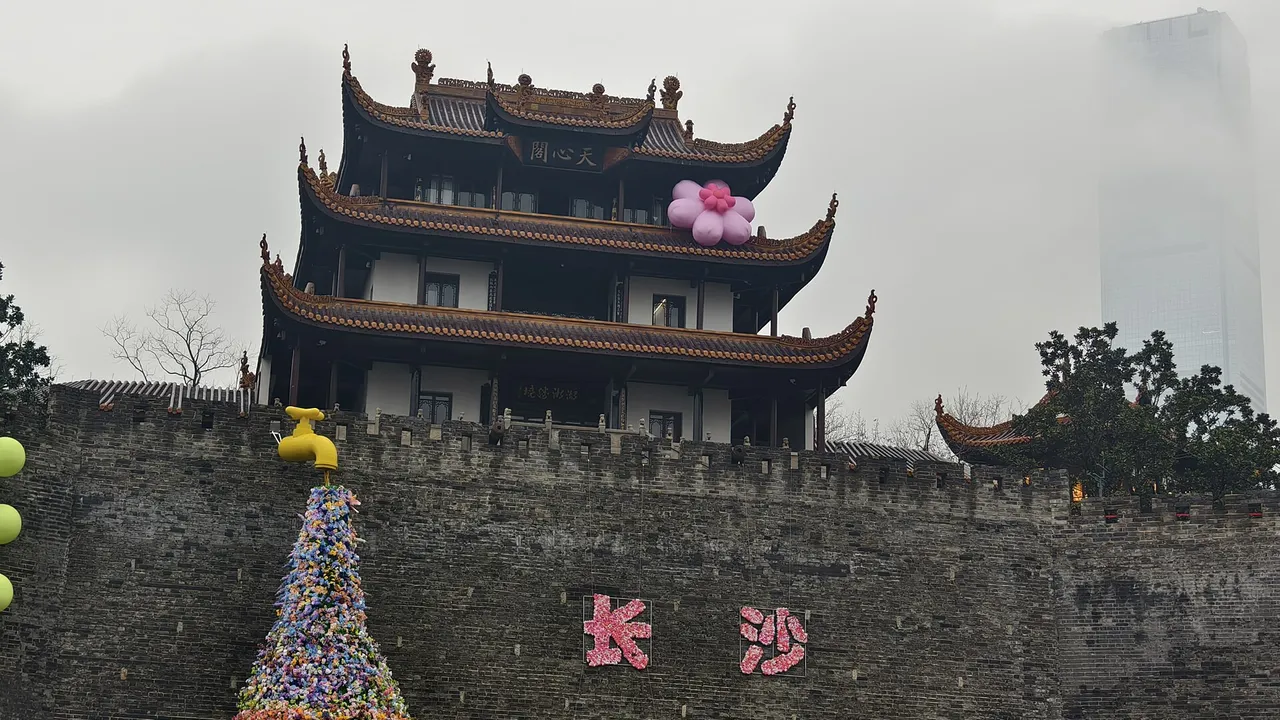
Ten minutes on foot brings Tianxin Pavilion, the city's only surviving Ming wall with its three-tiered eaves. Climb at dusk, when the old slopes and the new skyline layer themselves into the fading light, the loosest possible ending for a culture day.
Changsha Museum: A Period Written by the Northbound Xiang
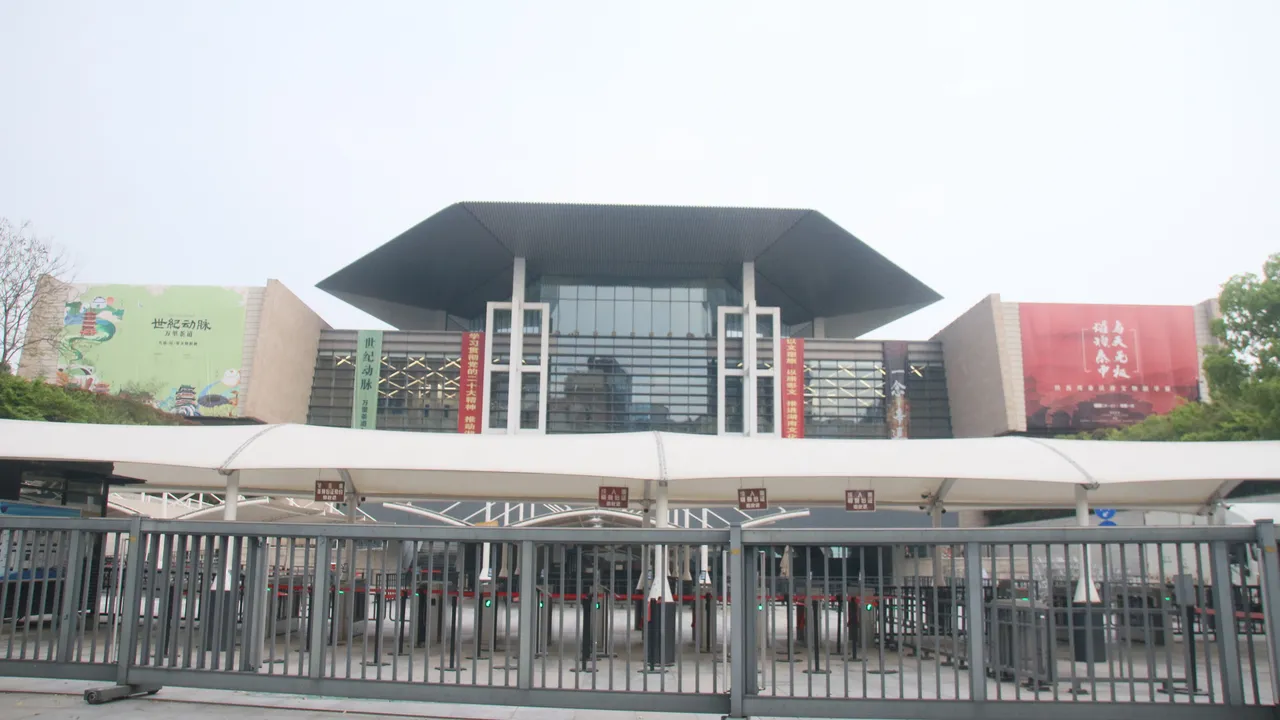
Twenty minutes by taxi from the pavilion reaches the Binjiang Culture Park. The Changsha Museum's building reads as a stone polished round by the river; its permanent exhibition runs from Shang-Zhou bronzes to modern upheavals, complementing Mawangdui, and only the two together complete Hunan's history.
The park also holds the city library and concert hall, with free or cheap civic performances many evenings. Dinner in the Beichen Delta block nearby, and the lit Fisherman's Wharf across the water writes the day's period.
| Getting around |
|
| Budget | The line runs on free booked museums; only the academy ticket of about RMB 40 and the pavilion climb of about RMB 32 cost money, near RMB 100 pp total. |
| Best time | Year-round with climate control; the two big museums mostly close Mondays, so dodge or swap the day. |
FAQs
Are four venues in one culture day too rushed?
Intensity tapers: the morning museum is the heavy lift, the academy runs at garden pace, the slips museum is small and quiet, and the pavilion is merely a climb for the view. Set a two-hour alarm at the museum and the rest flows; you will still have energy for an evening show.
If Hunan Museum tickets are gone, what substitutes exist?
First substitutes are the Jiandu and Changsha museums, proper institutions, free and unbookable-hassle, whose Wu slips and bronzes hold their own; the academy and pavilion sell at the gate with no booking. Push the museum to your final day and retry, since cancellations leak tickets.
Is a guide at Yuelu Academy worth it?
Yes, since seventy percent of the academy lives in its texts and allusions: the couplets, plaques and steles carry a scholarly lineage invisible without a guide, who costs tens of yuan or nothing on volunteer runs, gathering by session at the entrance, better value than any self-guided code.
Is this culture route manageable with seniors?
Only two spots strain: the stone paths inside the academy and the pavilion stairs. Pace the academy in three seated segments, and one platform level of the pavilion already buys the view, no need for the top. All venues run elevators or wheelchair access, and the museum pair is especially senior-friendly.