
The label of internet-famous city covers Changsha's depth, yet this is an old city whose site has not moved in two millennia: Han tombs, Three Kingdoms slips, Jia Yi's residence, a Song academy, Ming walls and kilns, every layer intact. Three days unfold in reverse chronology, starting with the most famous, Mawangdui.
The major museums cluster downtown while day three heads north to Wangcheng, where the Tongguan kilns were a Tang export-porcelain powerhouse and Jinggang an old river port. The only early alarm is the museum booking; everything else admits at arrival, keeping the pace in hand.
Itinerary at a glance
| 第1天 09:00 | Hunan Museum: The Mawangdui Han Tombs Exhibition |
| 第1天 14:00 | The Jia Yi Former Residence: A Western Han House on Taiping Street |
| 第1天 16:00 | Tianxin Pavilion: The Old-City View from the Ming Wall |
| 第2天 08:30 | Yuelu Academy: Where the Hunan Character Was Made |
| 第2天 11:00 | Aiwan Pavilion and Lushan Temple: From Qingfeng Gorge to the Old Mountain |
| 第2天 15:00 | The Mountain's Modern Heroes: Between the Huang Xing and Cai E Tombs |
| 第2天 18:00 | The Head of Orange Isle: Dusk on a River Sandbar |
| 第3天 09:00 | Tongguan Kiln National Archaeological Park: A Tang Export-Porcelain Site |
| 第3天 14:00 | Jinggang Old Town: The Old River Port on the Xiang |
| 第3天 19:00 | Back to Town: Night at the Du Fu River Pavilion and a Three-Day Period |
The route, stop by stop
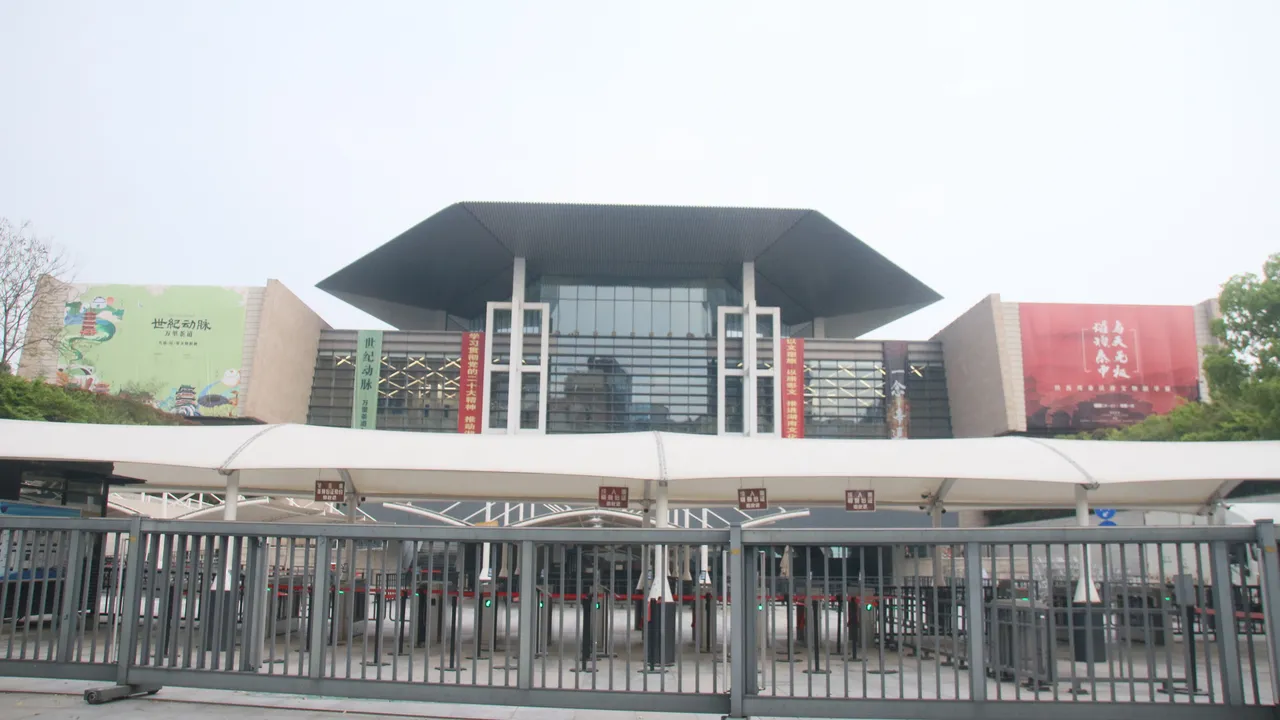
Hunan Museum: The Mawangdui Han Tombs Exhibition
Three days start at the ceiling. The Mawangdui route walks from banquet lacquers to silk painting and Lady Xinzhai, the forty-nine-gram sheer robe the crowd's fixed point, cloth thin as cicada wing yet densely woven, every warp and weft readable behind the case.
Give it two and a half hours and add the Hunan People galleries, which place Mawangdui inside the coordinates of the whole region. Lunch after, and the afternoon stays inside the old town on foot.
The Jia Yi Former Residence: A Western Han House on Taiping Street
Inside Taiping Street's bustle hides a quiet courtyard. Jia Yi, the Western Han essayist, lived here in exile, his Rhapsody on the Owl fixing Changsha on the map of displaced literati. Restored through the ages on an unmoved footprint, it is called the city's oldest surviving ground relic.
The old well and steles reward a slow look; entry is free and crowds thin. Emerge onto the old street, saving snacks for dusk and reading the street's bones first: granite paving, old doorways, guild-hall sites.
Tianxin Pavilion: The Old-City View from the Ming Wall
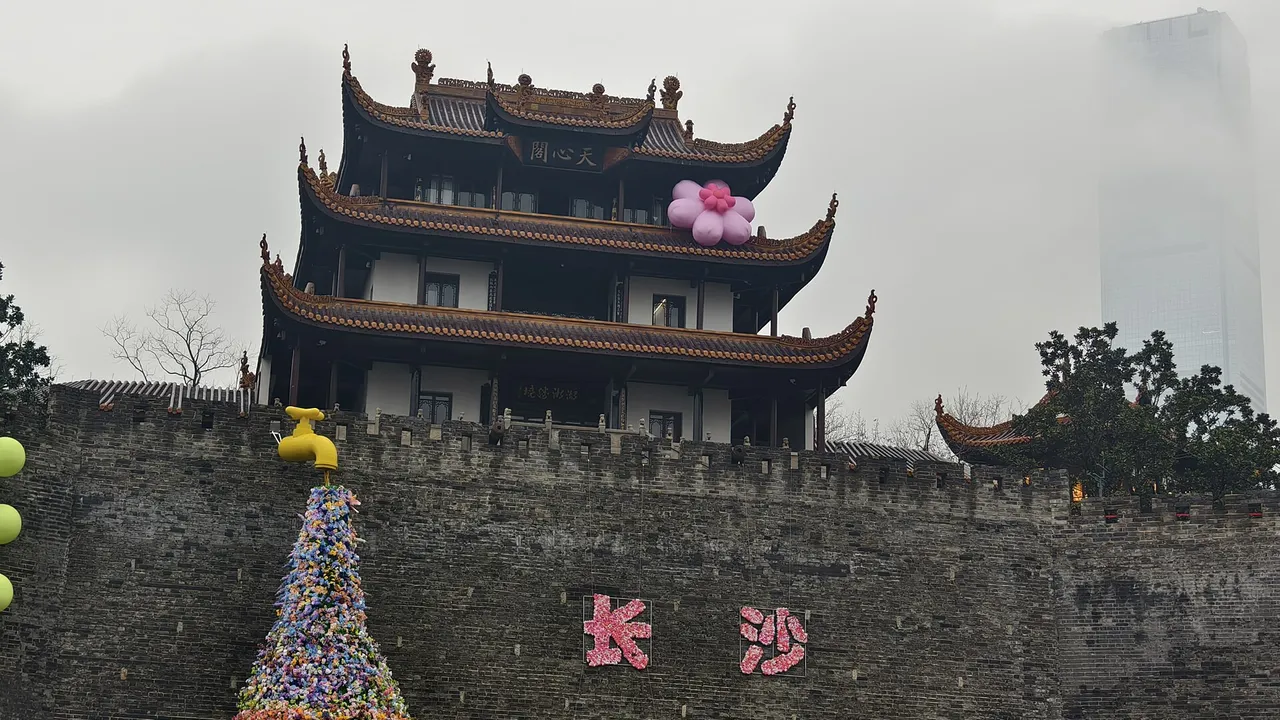
Twenty minutes on foot from the old street reaches Tianxin Pavilion. This Ming wall proves the city site unmoved for two millennia, and in Qing times it was the town's highest point, the Taiping siege playing out below. Climb the three tiers and read the old city's slopes beneath the upturned eaves.
The wall at dusk empties out, slanting light layering the brickwork. The park is free, the climb a few tens of yuan, and ending day one here pins down the very idea of the city.
Yuelu Academy: Where the Hunan Character Was Made
Day two crosses the river and climbs. Founded in the Northern Song, Yuelu is the only one of China's four great academies still teaching; the Seek Truth from Facts plaque in the hall and the Only Chu Holds Talent couplet at the gate are the two keys to modern Hunan's eruption of talent.
Two hours focus on four points: the gate, the hall, the sutra library and the stele corridor. Morning light rakes the courtyards before the crowds, the hour when the academy most resembles itself.
Aiwan Pavilion and Lushan Temple: From Qingfeng Gorge to the Old Mountain
Behind the academy the path climbs into Qingfeng Gorge, where Aiwan Pavilion stands by the stream, birthplace of Du Mu's maple-dusk line and unphotographable when the leaves turn in late autumn. Twenty minutes higher sits Lushan Temple, a Western Jin monastery under ancient trees, Buddhism's headwater on this hill.
Continue up to the Yunlu Taoist retreat on the summit for the city-and-river panorama. The right way up Yuelu runs from the south gate through academy, pavilion and temple as one ascending line, deeper than any shuttle ride.
The Mountain's Modern Heroes: Between the Huang Xing and Cai E Tombs
The mountain's upper half buries the modern era's leading figures: the tombs of Huang Xing and Cai E line the paths, both generals of the 1911 revolution laid to rest here, the source of the saying that one Yuelu holds half of modern history.
The tombs and memorials open free, solemn and hushed. Descending to the south gate passes them in sequence, reading inscriptions along the way, a stretch of downhill that outweighs any hall above.
The Head of Orange Isle: Dusk on a River Sandbar
Day two ends on Orange Isle. After the descent, taxi or ride line 2 one stop onto the isle and walk to the thirty-two-meter granite statue of young Mao Zedong facing the river, the setting of the poem's line about ten thousand hills turned red.
The headland is windy at dusk, the sunset pressing the river to gold with skylines on both banks. After this stop, the city's geography of mountain, water, sandbar and walls stands fully assembled.
Tongguan Kiln National Archaeological Park: A Tang Export-Porcelain Site
Day three heads north to Wangcheng. Tongguan was a Tang export-porcelain powerhouse that pioneered underglaze painting, and the Black Stone shipwreck yielded over fifty thousand pieces, many fired here. The park assembles dragon-kiln remains, a museum and workshop zones, the shard displays revealing how much millennial kiln workers loved to draw.
The grounds run large; two hours on foot plus the in-park carts fits. The hands-on wheel workshop fires and mails your piece, skippable when time is short.
Jinggang Old Town: The Old River Port on the Xiang
Twenty minutes south of the kilns lies Jinggang, a prosperous Qing-era port on the Xiang whose frame of eight streets, four lanes and seven wharves survives, granite streets lined with old pawnshops, smithies and pastry workshops. Heavier on life than the internet-famous towns, it shows elders shelling vegetables at every doorway.
Three things to see: the old Hongtaifang building, workshops working in real time, and the worn stone steps at the river wharf. The sunset and homeward boats close three days of history on the right frame.
Back to Town: Night at the Du Fu River Pavilion and a Three-Day Period
Returning from Wangcheng, land the evening at the Du Fu River Pavilion on the Xiang's bank. The poet lived his late years in Changsha, and the pavilion raised in his memory becomes the east bank's most photogenic tower when lit, facing the Yuelu you walked two days ago.
The riverside promenade never empties; sit on the embankment facing the far lights and replay the three days: Han tombs, slips, academy, wall, kilns, port. The city's skeleton now stands up.
| Getting around |
|
| Budget | Big museums run free on booking; the academy about RMB 40, the pavilion about RMB 32, the kilns and old port tens more, some RMB 250-400 pp across three days. |
| Best time | Spring and autumn best, with Aiwan's maples in late November; the two Wangcheng sights crowd on weekends, so aim for weekdays. |
FAQs
Which of the three days is hardest, and how to adjust it?
Day two costs the most legs, the academy plus pavilion plus climb plus descent running near twenty thousand steps. Two fixes: turn back at Lushan Temple, skipping the summit, or push Orange Isle to day three's evening and finish early. The museum and Wangcheng days run light, no change needed.
Between the Hunan Museum and the Jiandu Museum, which one?
The Hunan Museum, whose Mawangdui ranks nationally. The slips museum is the high-value fallback, and if the museum booking fails, substitute it directly, the Three Kingdoms slips equally striking. Three days fit both normally, so no either-or is forced.
Is a day charter to Tongguan and Jinggang worth it?
Yes. Neither has a metro link, buses run near two hours each way on sparse schedules, and a one-day charter halves the time. For small groups, pooled or app-hailed rides per leg cost about the same, though the charter wins when the clock matters.
What season suits this route best?
Autumn wins: red maples at Aiwan, cool mountains, kinder sun in Wangcheng. Spring runs second with an umbrella for rain. Summer's shaded hill pairs well with air-conditioned museums, but downtown swelters; winter river wind cuts the outdoor stretches at the isle and port. Skip the October Golden Week, crowds dilute everything.