
Seven days answer what the five-day version left hanging: what lies at the plain's edge? Two directions. Northwest, beyond Dujiangyan, the green folds of the Longmen fault zone, Longchi, Hongkou, the Longxi valley; south, the tea and liquor belt at the foot of the Qionglai range, Pingle, the kilns, the liquor villages. These two days turn Chengdu from a city into the center of a geographic unit.
The seven-day rhythm is engineered: day five's blitz is the sole intensity day, while six and seven ride the light template of ride-look-eat. The virtue of western Sichuan travel is margin, and this itinerary builds margin into its structure. The seven-day budget runs about a third above the five-day, with the increase all in transport and two extra nights outside the city; entries barely rise, since the sights of days six and seven are free or cheap. Both the Dujiangyan deep-read day and the Qionglai day suit a hired car, together around six hundred yuan, buying full control of the timetable, worth it especially for families. Lock only three things ahead: the blitz day's entry and cable car, Sanxingdui's new-hall ticket, and the last return train from Qionglai on day seven. Everything else finds slack in transport this dense; minimizing rigidity is the engineering that keeps a seven-day frame intact.
Itinerary at a glance
| DAY1-5 | Days One through Five: The Full Five-Day Frame |
| DAY6 | Day Six: Reading Dujiangyan Deeply, with Jiezi or Hongkou |
| DAY7 | Day Seven: Qionglai's Liquor and Tea, Pingle, the Kilns and the Wine Village |
The route, stop by stop
Days One through Five: The Full Five-Day Frame
The five-day frame executes as written, city, water-mountain, Sanxingdui, flex day, Emei blitz. One adjustment: returning from the summit on day five, stop in Leshan for dinner before the run back to Chengdu, a rail en-route stop that makes the double heritage literal and spreads the day's fatigue across seats.
The five-day block runs unchanged, but the seven-day version should redistribute your energy budget: with two more days ahead, every forced-march element can be downgraded. If the summit holds no obsession, swap the Emei blitz for a half-day Leshan boat plus an urban hot-spring soak, banking the energy for day six's hills and valleys.
Day Six: Reading Dujiangyan Deeply, with Jiezi or Hongkou
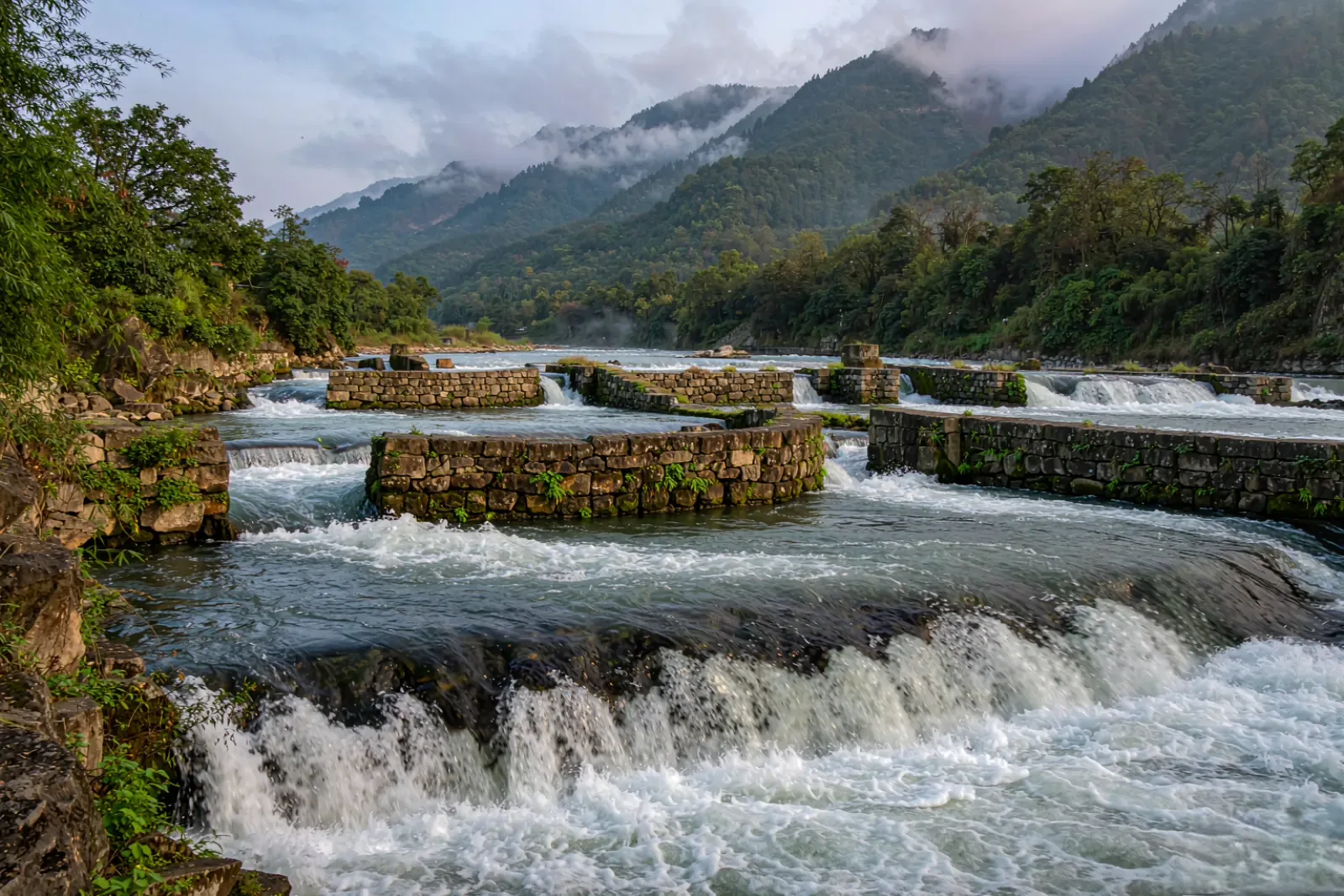
If day two explained the weir's principles, day six reveals its price: the path from the Two Kings Temple to Qinyan Tower carves twelve great repairs, Li Bing through the Qing, into the cliff, and the love story behind the Anlan bridge's first builder outshines the bridge. The afternoon picks Jiezi, a Qing market town on the Weijiang with a lone Ming pagoda for burned texts, or Hongkou, valley drifting and hiking in summer only.
The day's thesis: Dujiangyan is not a sight but a civilization system still running, and seeing the system's cost is what actually finishes the visit.
The cliff path at the Two Kings Temple holds the best vantage points over the fish-mouth levee, and local photographers haunt them at dawn; following their lenses beats hunting angles alone. Beside the pagoda-shaped furnace in Shuzi old town, old teahouses set bamboo chairs along the Weijiang river, and a few-yuan bowl of jasmine tea is the cheapest luxury of the whole week.
For lunch on the deep-read day, the old diners near the Two Kings Temple exit serve the classic climber's meal of ginkgo chicken and old-style cured pork at forty to fifty a head. If the afternoon goes to Shuzi old town, the last bus back leaves around six, and a taxi to the county town runs half an hour at a negotiable fare.
Day Seven: Qionglai's Liquor and Tea, Pingle, the Kilns and the Wine Village
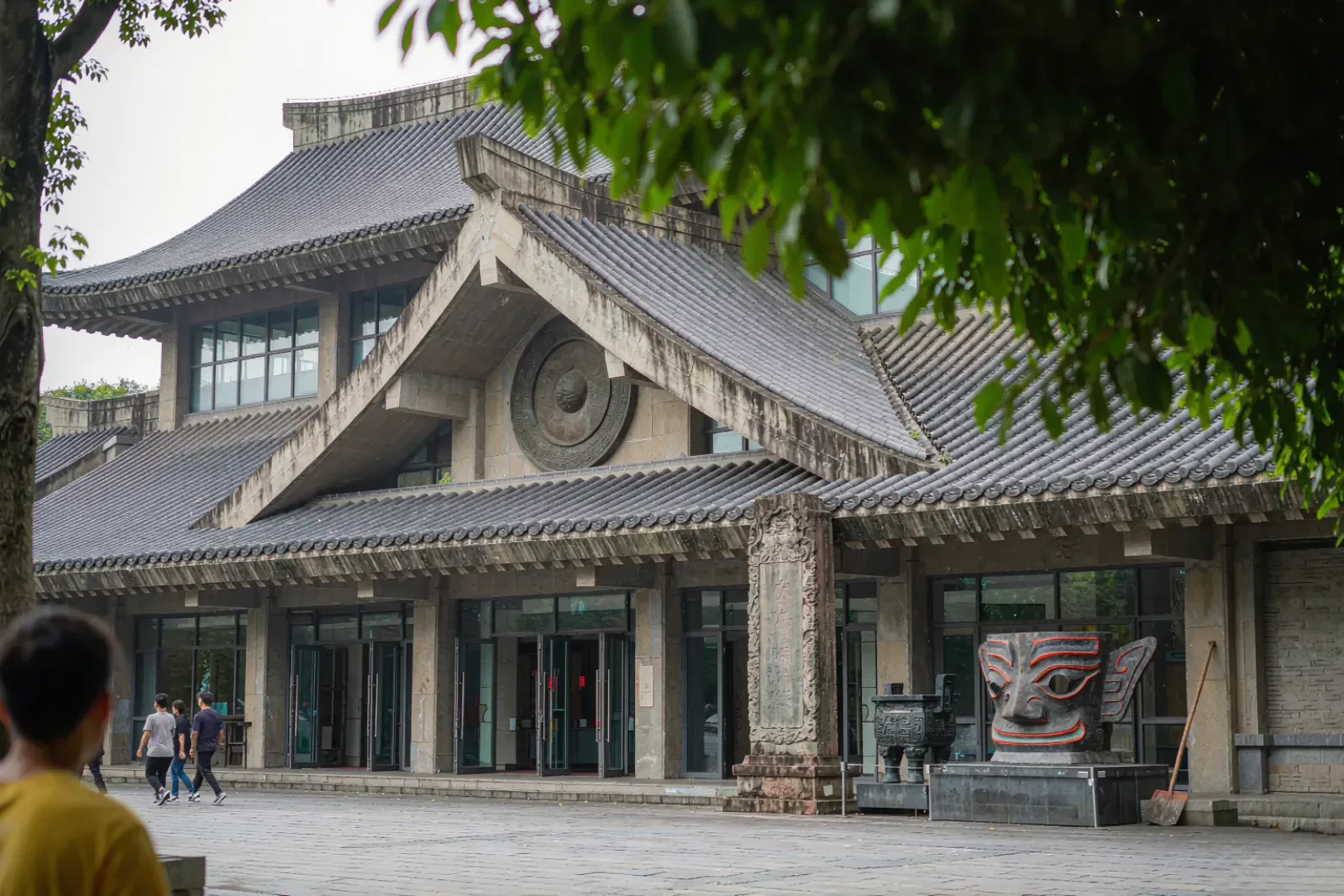
The last day runs south to Qionglai: the free kiln park in the morning, dragon kiln and sancai glazes; a bowl of milk-broth noodles by the Baimo in Pingle at noon; an afternoon of cycling or bamboo rafts in the old town. Liquor-curious travelers take Daliang's underground cellars and the free tasting, an intro course to the kingdom of Sichuan spirits.
Qionglai is one of the Tea Horse Road's springs, and tea with liquor are the direction's two great products. Seven days touch every edge of the plain: Dujiangyan's water, Sanxingdui's gold, Emei's clouds, Qionglai's spirits. The return rail takes thirty minutes; even an evening flight stays safe.
Keep generous slack for the Qionglai return: buses from Pingle old town to Qionglai station run hourly, while a taxi covers it in under twenty minutes. The estate's tasting is free, but drivers should switch to the juice version without ceremony; the afterglow of Sichuan baijiu on a return road is no joke.
| Getting around |
|
| Budget | About RMB 2500-3800 pp including all entries and intercity transport, excluding hotels. |
| Best time | Mar-May and Sep-Nov; days six and seven stay light-outdoor, no crash points anywhere. |
FAQs
Do days six and seven repeat earlier Dujiangyan content?
No repetition, two entries: day two studies the waterworks itself, day six its repair history, human stories and satellite settlements, Jiezi or Hongkou. Like seeing the Great Wall, then the village of its keepers, not the same thing. Still bothered? Give day six's afternoon to Qingcheng's back mountain, the half you skipped on day two.
Does this route suit kids?
Yes, and seven days beats five for kids: the blitz is the only intensity day, replaceable for children with a Leshan half-day plus hot springs, while the other six run look-eat-stroll. Add a pottery session at the kilns, 30-60, and Jiezi's riverbank flies kites. No altitude, no long hikes.
If day seven ends at the airport, when do I leave Qionglai?
To Shuangliu, leaving Pingle at 16:00 stays comfortable, thirty minutes by rail plus forty on the metro; to Tianfu, leave Qionglai station by 14:30, the airport line from Chengdu South transferring smoothest. International flights add an hour each; Qionglai liquor can be left at airport storage or couriered.
Does the seven-day plan need a hired car?
Not for the whole run: only two legs reward a car, the Qionglai-Pingle direction and the Jiezi side trip on the deep Dujiangyan day, while rails, park buses and taxis cover the rest. Day rates run 500-800; book only the two days that need it.