
Chengdu's history wears two skins: above ground, three thousand years of sitting on the same address; below, the gold of ancient Shu. The route starts with the Golden Sun Bird at Jinsha, moves through the Sichuan Museum's Zhang Daqian and shadow-puppet holdings, reads a poem at Du Fu's cottage, and closes with face-changing at night, the whole timeline from myth to street life.
The pacing matters: morning museums tax the brain, so a quiet proper lunch intervenes; the cottage's gardens dissolve fatigue; and the evening show handles the adrenaline. The best-balanced culture line in the city.
Itinerary at a glance
| 09:00 | Jinsha Site Museum: The Sun Bird and a Sea of Ivory |
| 12:00 | Lunch near Qingyang Palace and the Transfer |
| 13:30 | Sichuan Museum: Zhang Daqian's Dunhuang and Bashu Bronze |
| 15:30 | Du Fu Thatched Cottage: A Garden Built Around One Line |
| 19:00 | Sichuan Opera Night: Face-Changing, Fire-Spitting and the Rolling Lamp |
The route, stop by stop
Jinsha Site Museum: The Sun Bird and a Sea of Ivory
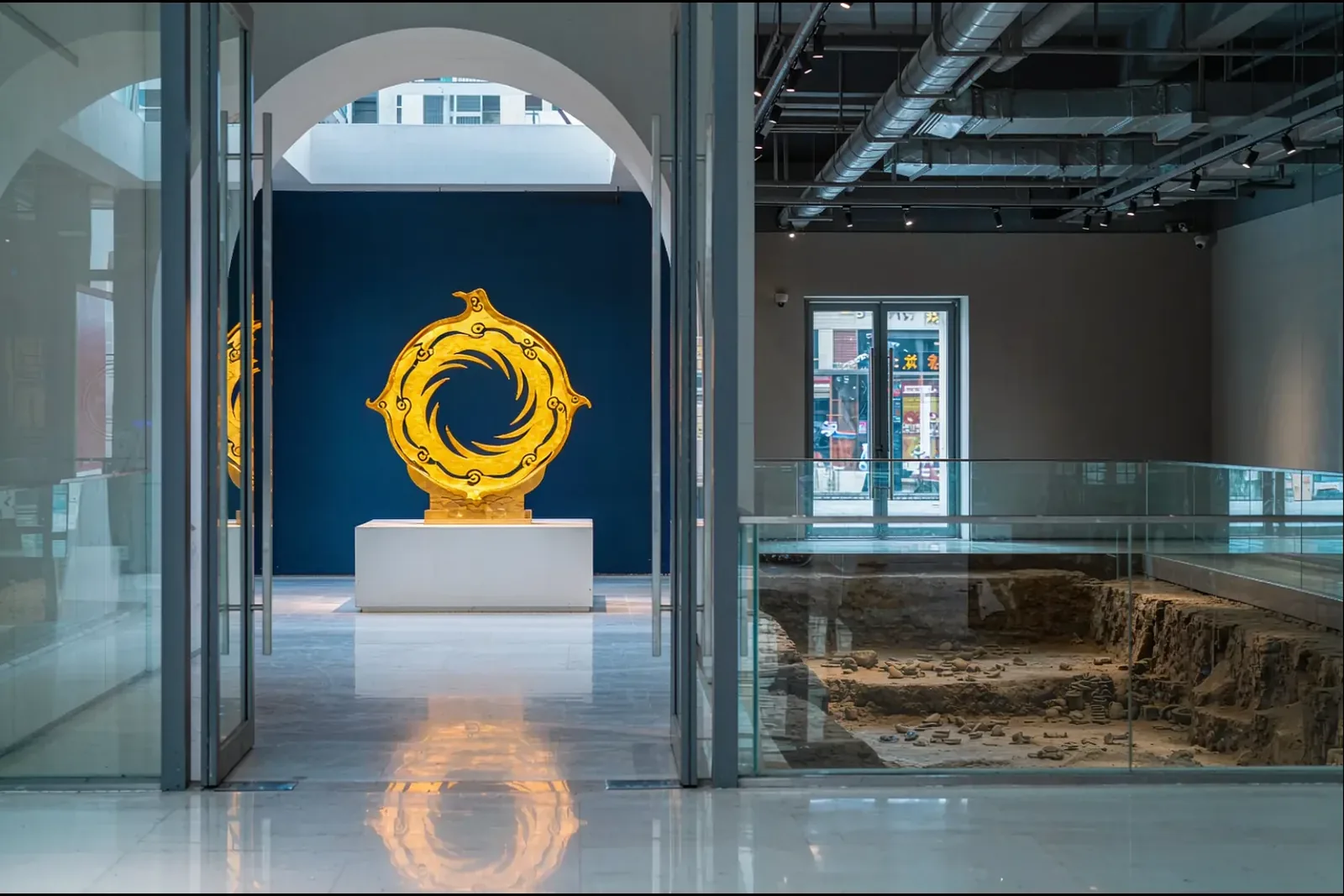
Jinsha is the capital site of Shu three thousand years back, with two essentials: the in-situ trenches of the Relics Hall, where eighty-plus ivory tusks lie in excavation position under glass and the sacrificial layers of gold read like stratigraphy; and the Sun Bird in the display hall, a 0.02-centimeter gold foil cut with twelve rays of rotation, the prototype of China's cultural heritage emblem.
Ancient Shu fascinates precisely because it left no writing: every reading comes from the objects themselves, the gold mask, jade zhang blades, ten-section jade cong, each one asking who these people were. Carry that question through the halls and no audio guide is needed.
Walk the two halls in reverse order: study the objects in the exhibition hall first, then match them to their find-spots in the pit hall, and the ivory and gold will land with real force. The banyans and the forest of ancient timber between the halls make free shade; once the late-morning sun hardens, drink water on the walk across.
Lunch near Qingyang Palace and the Transfer
The road from Jinsha to the museum passes Qingyang Palace, a Taoist temple with a token RMB 10 entry and twenty minutes of reward in its Hunyuan Hall and Bagua pavilion. Lunch settles around Songxianqiao, where old kitchens cook inherited west-Sichuan food, ginkgo chicken stew and fish in broad-bean paste, RMB 50-80 pp.
Afterward it is a ten-minute walk along Huanhua Creek to the museum, the street canopied in paulownia shade, one of the few Chengdu walks where the approach already feels like a park.
Sichuan Museum: Zhang Daqian's Dunhuang and Bashu Bronze
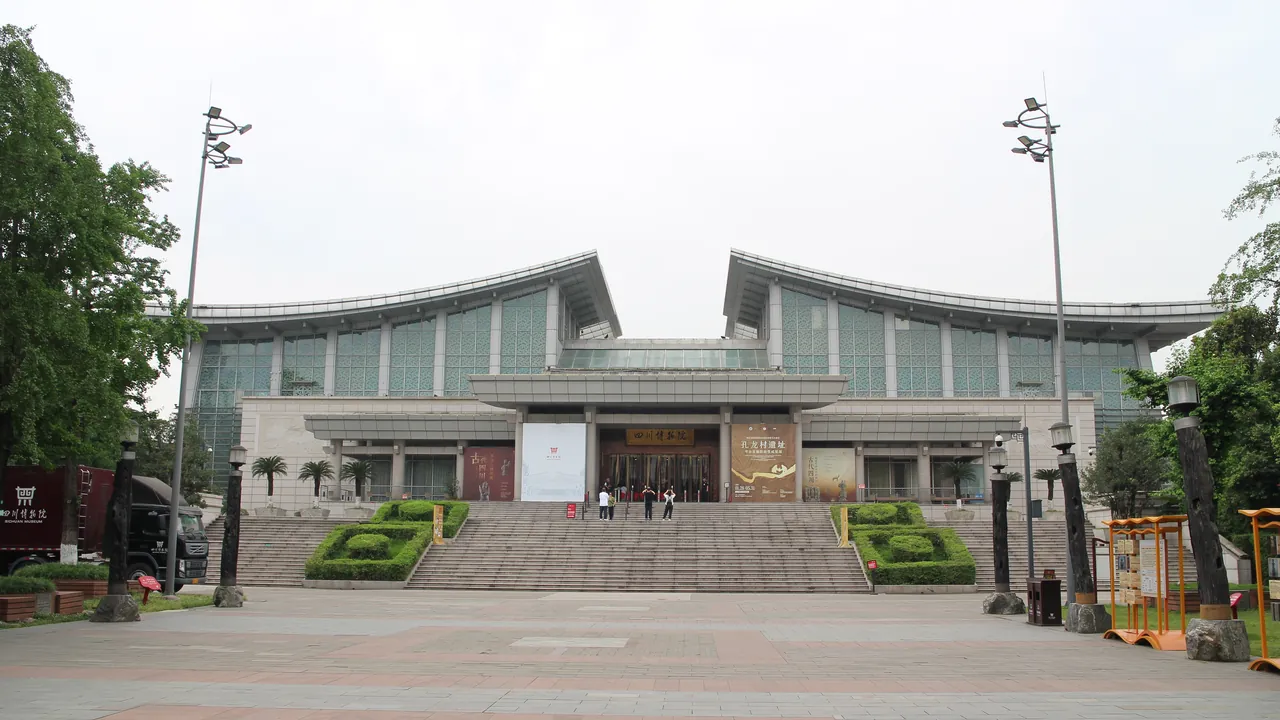
Three draws define the museum: the Zhang Daqian hall holding over a hundred of his original Dunhuang copies, the only place to study his style's turn at the source; the Bashu bronze gallery, where boat-coffin burials and Ba people's weapons form their own system; and a shadow-puppet and marionette collection ranking top three nationally, a whole wall of puppets like theater frozen mid-scene under the lights.
Free entry buys the right to backtrack: the Zhang Daqian hall deserves two passes, color first, line second.
Du Fu Thatched Cottage: A Garden Built Around One Line
The cottage marks where the poet-sage lived in exile, its grounds now a garden complex rebuilt and re-rebuilt from the Ming on. Three essentials: the thatched replica raised to Du Fu's own lines, the stone likenesses of the poet across dynasties in the Gongbu Shrine, and the red-wall bamboo corridor by Huanhua Creek, as famous as Wuhou's wall with a fraction of the crowd.
Reading poetry here is a local habit: at the end of the Flower Path, by the screen wall, someone often stops and recites, Good rain knows its season. Recite nothing yourself if you will not, stand in the wind through the bamboo and half the syllables return on their own.
Sichuan Opera Night: Face-Changing, Fire-Spitting and the Rolling Lamp
The culture day ends on a stage. Shufeng Yayun on Qintai Road is the veteran tourist house, full production values, with face-changing, fire-spitting, the rolling lamp and hand shadows all in one evening; Furong Guocui at the Jinjiang Theater runs more local and cheaper. Both share one truth: face-changing headlines the second half, but the first half's opera excerpts, high-pitch and string tunes, are the art's foundation.
After the show, a bowl of sweet-water noodles or wontons on Qintai Road stamps the whole three thousand years with a chili seal.
A ticket tip: at Shufeng Yayun the middle price tier with center-rear seats beats the front row, since face-changing hides in wrist and collar movements that sit too close to see. After the show the Qintai Road night stalls are just lighting up, and an order of sugar-oil fritters makes the right midnight snack.
| Getting around |
|
| Budget | Tickets (Jinsha plus the Cottage) and a show run about RMB 300-450 pp. |
| Best time | Year-round; both stops mix halls and gardens, making this the ideal rainy-day Chengdu route. |
FAQs
If choosing only one, Jinsha or Sanxingdui?
By time budget. Sanxingdui shocks at a higher magnitude, the bronze standing figure and sacred trees are world-class wonders, but it sits in Guanghan, half a day minimum round trip. Jinsha is in town and continues the same civilization, done by noon. One-day plans take Jinsha; save a separate day for the Sanxingdui pilgrimage. That is the standard answer.
Do the cottage and Wuhou Shrine overlap?
No, the temperaments differ completely: the shrine is court and state, the cottage a poet's courtyard, one reading events and the other a single life. Three-day-plus plans standardly give each two hours. The one-day culture route picks the cottage because its timeline chains with Jinsha and the museum.
Is face-changing a magic trick or opera?
It is opera, or rather a fiercely guarded Sichuan skill: faces swap under cover of song and gesture, the method still a trade secret. The right distance is the first three rows, close enough to catch the edge of the craft, and never shove a phone into the performer's face; masters shorten audience play when respect runs thin.
Does this route suit hosting foreign friends?
Excellent fit: Jinsha and the museum carry full English labels, the cottage's poems stand on bilingual steles, and Sichuan opera runs on gesture and music, low language barrier. One tip: book the English-guided show, with the narration on, the humor crosses the language line.